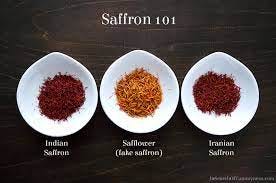
Herbs for Cancer — Saffron, what can’t this spice do?
Combining Allopathic and Holistic Therapies (Cancer Herbal Series: I)
For starters, it doesn’t make you fly … that’s right folks, sorry to break it to you, but I still haven’t found the cure to land living, yet.
However, with news this good, it just might make you feel as though you could, fly that is.
On a more serious note — I know, not as much fun! — saffron really is a powerful spice and well worth the price.
Sadly, cancer is a six-letter-word that changes, well, Everything. True, that we have given it so much power that even the thought of it makes many people shudder, and not without good reason; however, as I have mentioned before and must stress again, cancer exists within our bodies on a regular basis. Our bodies are more than capable of maintaining our health and wellbeing so long as we do our part — no, there is no guarantee, but the better we take care of ourselves (and our environment) the better chance we give ourselves and our bodies.
Cancer becomes more of a problem when optimal functioning within our bodies starts to break down. This can happen for any number of reasons, and some people might be more or less sensitive or prone to various diseases, disorders, or syndromes — also for any number of reasons. Like so many things though, I truly do believe there IS hope that oftentimes resides within our grasp, and once again it varies person to person.
Some of us need to focus more on our energy pathways, our emotions, our trauma(s). Others need to focus on their mental game and health. Many need to focus on the physical aspect of improving their health and figuring out their uniqueness — in particular turing on and off their genetic predisposition(s). Still yet, some of us need to shift our spiritual focus, as in perhaps we need to have one. Most of us likely need to think of combining two or more of these and then some. Some day, we will talk about epigenetics as well as the power of a spiritual practice, but for today let’s focus on the spices of life, and in particular this delightfully dainty yet super powerful saffron.
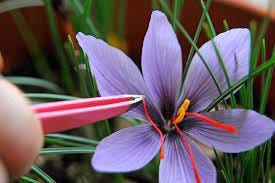
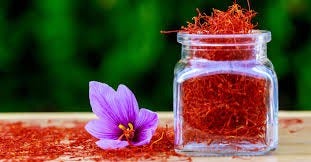
A simple Google search will inform you that saffron comes from the Crocus sativus flower and apparently is a part of the iris family (Iridaceae)! It is also called the saffron crocus.
The saffron comes from the part of the flower called the stigma, which I don’t know if you remember from science class and I had to double-check myself, is the very top part of the pistol that is technically part of the ‘female’ reproductive part of the flower and no, not all flowers have stigmas but that’s a whole other conversation, lol PLANT SEX!
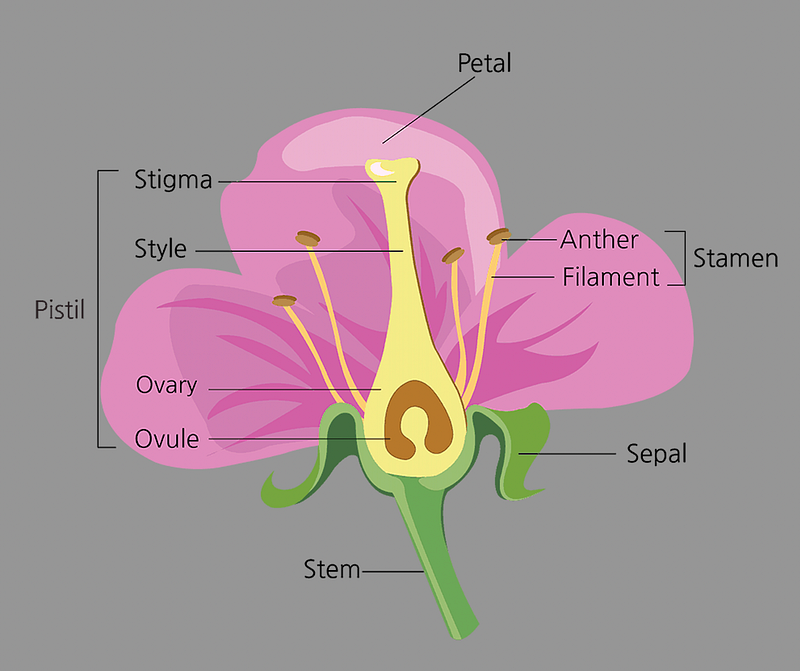
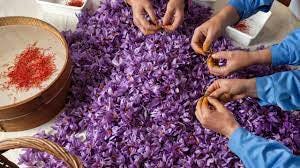
Before we start diving more into plant anatomy, let’s bring it back to the actual point of this article … saffron. It is not only beautiful, time consuming to harvest, and used for many things including cooking and skin/hair care products since ancient times, but it also has amazing properties that just might change your world — not in the same way as Aladdin’s magic carpet, but perhaps just as magically!
As you might be able to decipher from the coloring, saffron is loaded with antioxidants — which, hopefully, we all know the benefits of including antioxidants in our diet?!?!?!
“Higher dietary intake of antioxidants is associated with significantly lower lymphoma risk. Note I said DIETARY intake, not supplementary intake. Antioxidant supplements don’t appear to work…” (1)
So yes, saffron is great for supporting the body against oxidative stress and inflammation, but it is also highly beneficial for soooooo much more. To get us started, check this out! ⏬🔻⏬🔻⏬🔻⏬🔻⏬🔻⏬🔻⏬🔻
An article published in 2020 based on scientific study results says “Saffron has selective toxic and preventive effects on cancerous cells and without adverse effects on normal cells and prevents tumor formation. Saffron appears to reduce the toxic effects of anticancer drugs…”
Better still, “considering the observed effects of saffron on the removal of cancer cells, saffron extract can be used in the treatment and prevention of cancer after confirmation in human clinical trials. According to the high IC50 of saffron extracts in normal cells, its toxicity against non-cancerous cells is low and its use is safe.” (2)
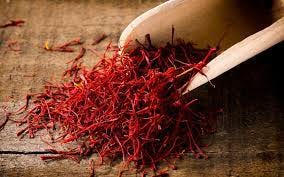
Additionally, saffron has been used to help with all kinds of ailments including but not limited to “…cough, pertussis, asthma, heartburn, insomnia, hardening of arteries, flatulence, Alzheimer’s disease, shock, hemoptysis, pain, alopecia, dry skin, as an aphrodisiac and expectorant” (3).
Saffron is touted for its many benefits for health and wellness as well as various beauty regimens. It is one of the more expensive spices to purchase soooo making it last, in the form of an herbal infusion or tincture, can still offer the many wonderful benefits at a reduced cost — as it tends to last longer. To make your own tincture check out my previous article: A ‘Better’ use for your Saffron? and also reference Where do I find/buy my Herbs and Teas? to help get you started.
As this article in Science Direct quickly, concisely, and effectively summarizes from the research, “saffron has selective toxicity against cancer cells, through inhibition of RNA and DNA synthesis and increasing apoptosis. Crocin has been considered as the most important anticancer agent of saffron that plays a role in gene expression and apoptosis in cancer cells.” (4)
If you recall, apoptosis is cell death. The fact that saffron Not Only targets cancer cells but also specifically affects their ability to multiply and then also increases cancer cells to die is pretty Damn significant! In fact, it really should make one pause and perhaps take note, that if there was a pharmaceutical drug that could do this we would not only have heard of it, but everyone would be clamoring to get it no matter what the cost!
Furthermore, saffron is considered safe for most people to use even in larger doses, and it has very few, if any, side-effects — like most herbs and unlike most if not all over-the-counter and/or prescription drugs; however, there can always be exceptions *so be careful, do your research, check with your Doctor, etc.*
Although we could dive more into saffron and the science, we shall leave this as an introduction. As I hope in the same way to inspire you to keep reading and hopefully share HolisticNerd, I hope in addition that we all start thinking outside the box, do some digging into the natural world and what amazing things it has to offer, and heal ourselves and one another :)
Without further ado… perhaps try to find ways to incorporate life-saving herbal remedies into your everyday life with the help of a trusted healthcare member :)
PS — Just a few tips. Please read. —
Anything underlined in people’s articles/stories are links you can click on — such as my about page listed below. Bold and italic are just for emphasis.
You can also comment, highlight, and even clap up 50 times — helping a story become more viewed/popular!
For only $5/month or $50/year you can become a member and your membership fee directly supports writers on Medium that you read — it changes people’s lives, including your own!
🙏🏼 If you would like to sign-up, please click this link as it directly helps me, HolisticNerd — you are awesome — thank you, Thank you, Thank You! 🙏🏼
Please see my about page for my educational background, additional info about me, and any additional disclaimers.
Also, enjoy the references section at the end for resources used to support this article formatted in APA style as well as a ‘You might also be interested in’ section of related articles.
(Note: Any links/books/etc. mentioned in the article are NOT affiliate links, and I do NOT earn any commission.)
🙏🏼 🙏🏼 Thank you for reading the above article & information🙏🏼 🙏🏼
❤ With all the Love, Grace, and hopes for a Better, Brighter, Happier and Healthier tomorrow, as well as to Your Health & Wellness, Happiness, and Well-being. ❤
With Love, Light, Prayers and Blessings ❤ Your Idealistic HolisticNerd ~ ❤ Mind ❤ Body ❤Spirit/Soul ❤ ~
You might also be interested in:
Most Recent Articles:
Series:
Hopefully coming soon:
- Essential Oils and Pet Safety
- More personal stories about Life, Trauma and Recovery, Emotional Abuse, Mental Health, Self-awareness and improvement, etc.
- Coffee, Tea, Self-care, God, Health & Wellness, Fitness, Humanity, Philosophy, Kindness, and so much more :)
- More about Cancer and Holistic additions to consider.
References:
- Greger, Michael, Stone, Gene. (2015). How Not to Die: Discover the Foods Scientifically Proven to Prevent and Reverse Disease. New York: Flatiron Books.
- Shakeri, M., Hashemi Tayer, A., Shakeri, H., Sotoodeh Jahromi, A., Moradzadeh, M., & Hojjat-Farsangi, M. (2020). Toxicity of Saffron Extracts on Cancer and Normal Cells: A Review Article. Asian Pacific journal of cancer prevention : APJCP, 21(7), 1867–1875. https://doi.org/10.31557/APJCP.2020.21.7.1867
- Bahmani, M., Rafieian, M., Baradaran, A., Rafieian, S., & Rafieian-Kopaei, M. (2014). Nephrotoxicity and hepatotoxicity evaluation of Crocus sativus stigmas in neonates of nursing mice. Journal of nephropathology, 3(2), 81–85. https://doi.org/10.12860/jnp.2014.16
- Alireza Milajerdi, Kurosh Djafarian, Banafshe Hosseini. (2016). The toxicity of saffron (Crocus sativus L.) and its constituents against normal and cancer cells. Journal of Nutrition & Intermediary Metabolism, Volume 3, 23–32. https://doi.org/10.1016/j.jnim.2015.12.332.