
Have I Lost My Sense of Humor?
The truth about knowing better, doing better, and my missing funnybone

Something shifted in me, and I’ve noticed recently that things other people seem to find funny don’t seem funny to me anymore. It came to a head on Monday, and I posted on Facebook that I felt like I’d completely lost a large portion of it, at the least. After being asked which part, I revised my statement. Maybe it’s not so much my sense of humor that’s gone missing, but my tolerance for bullshit?
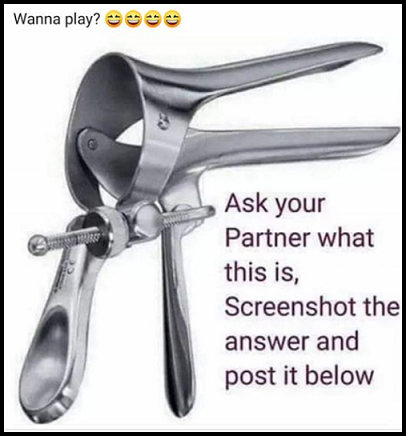
Several months ago, someone posted a meme in a group I’m in, encouraging women to send a photo of a speculum to their partners then share their responses in the comments. Among the replies were a lot of men using words like “vagina spreader,” “vagina stretcher,” and “that thing for your pussy.” Everybody seemed to think this was a hilarious exercise in mens’ ignorance. Except me. I shrugged it off- perhaps I was being too sensitive, a wet blanket ruining the fun of men not knowing what a vulva is or that a speculum allows a doctor to look at your cervix.
Sometime during the same month, another viral post with the most ridiculous things men had actually believed about periods came across my feed. I’m not saying that I found zero humor in some of the anecdotes. Largely, though, it felt increasingly sad and horrifying that there are so many men out there who have no idea how close to half the bodies on earth actually work.
To be honest, the idea of having grown sons who don’t know how periods work or what happens when a woman gets her annual exam is mortifying to me. I would be beyond ashamed to find out that my children didn’t know the basic functions of the human body or care enough about their partners to know about basic medical procedures. Additionally, when is the last time you met a woman who didn’t know how a prostate exam was performed? Why do we find it cute/funny/acceptable as a society that men don’t make the same effort?
The thing that finally pushed me over the edge this week was a comment on a friend’s photo of her 13 year old daughter in a two-piece suit, on which someone commented that she was going to have to watch out for the boys soon!
These types of comments increasingly rub me the wrong way, and this one was like the straw that broke the camel’s back. They are almost always brushed off as tongue-in-cheek or as a normal/common thing people say about little girls in bikinis. When it comes to little boys, people are much more likely to comment on their charming behavior, mischievous eyes, or dimpled cheeks than their bodies in swimwear.
In the wake of the #metoo movement, of #yesallwomen, and of my growing awareness and vocality about rape culture and living as a woman in America, these types of comments bother me more and more. I see the comments and I wonder: at what age does it become okay to start sexualizing our kids? When does it become appropriate to comment about their romantic preferences and future dating habits? At what point does a comment tip from being a joke to exhibiting the fact that we expect men to act like predators, coming after our bodies?
I know that there are folks who will say I’m just taking things too seriously. But misogyny doesn’t just perpetuate itself. These kinds of jokes and offhanded comments are not doing anything to change the way we look at each other, the way women are viewed as sexual objects, or the entitlement people feel to comment on other people’s bodies.
I started writing a piece about the words we use and the way we comment on girls bodies (rather than their athleticism, intelligence, or compassion). As I scrolled through pages and pages of stock photos trying to find a girl in a bikini or two-piece, all I could find were photos of women. Photos tagged “girl” were decidedly not.
Even when I did manage to find a shot of a younger-looking woman or teenager, they were posed provocatively, which is the opposite of what I needed.
On my Facebook post about my missing funnybone, my mom replied that she has noticed that she doesn’t find anything that’s even the slightest bit mean funny anymore. I reply that it’s like a switch got flipped and the world became too cruel for anything mean to be comical anymore.
Another friend commented with a tumblr post from punkgender that read:
one of the worst things about becoming educated on social issues is when people are like ‘you used to have a sense of humor’
no i used to have internalized prejudices which i’ve worked really hard to overcome and i realize now that your [sic] jokes are shitty
And there it is. The real issue is that I know a lot more than I used to, and am experiencing the reality of “know better, do better.” Knowing better means that I can’t just shrug off ignorance. I don’t think it’s a bad thing to hold people to a higher standard.
I chose to listen to my marginalized friends when they told me that certain words or phrases or jokes were hurtful to them. Rather than explaining away my behavior, I chose to sat in my discomfort, and to learn and change. There is so much negativity in the world, I’m just not going to contribute to it any longer.
Ironically, when I react to offensive or unfunny things by not finding them funny, people often get offended. They take it as a personal insult that I am not laughing at their joke, and whether I’ve implied judgement or simply not chuckled, they question me. Who are you, the humor police? Why does everyone have to be so politically correct all the time? I was just kidding, can’t you take a joke?
I can take a joke, I love jokes. But I don’t think it’s okay to say sexist or racist things because people “know you’re joking.” I no longer have any tolerance for people continuing to exhibit hurtful behavior and then claiming it’s okay because they “didn’t mean it that way” or “it’s normal.”
I recently had to block someone on Facebook partially due to their inability to discern/unwillingness to recognize the difference between intent and impact. If your “jokes” are impacting people negatively or contributing to oppression, the spread of mis-information, or generally distasteful attitudes toward other humans, the impact starts to matter a lot more than your intent.
In other words, I still think things are funny. Just not the cheap, mean, belittling crap a lot of people seem to think is funny. I’m not okay with giving people leeway or the benefit of the doubt over and over while they prove that they don’t care how their language impacts other humans.
It turns out my funnybone is alive and functioning, it’s just not where I thought it was.
Don’t miss a thing! Sign up for my weekly newsletter here.
You might also enjoy…


