
Stop Calling Children “Underage Women” and Adults “Girls”
Words matter: women are not girls, and girls are not women
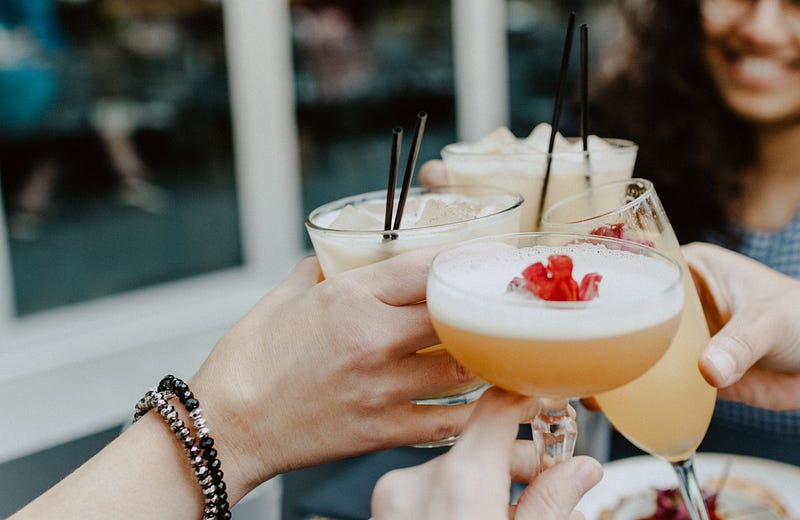
Last week my best friend and I met for drinks after work. We sat outside at a local cocktail bar/restaurant. Both in our mid-late 30s, her freckled face and apple cheekbones mean she gets carded more often than I do, but we are decidedly womanly.
After a long week, I was more than ready for a cocktail, and waited eagerly as our server approached.
“Have you girls decided?”
We had an immediate, simultaneous, and visceral reaction to being addressed as girls by a waiter who looked almost young enough to be our son. Our eyes met in silent distaste as we gave our drink orders. After he walked away, she half-jokingly said “I guess that’s how he spent his tip today.”
Women are not girls.
Throughout the course of our several hours of being served adults-only beverages, he called us “girls” at least two more times. When we left, my friend wrote on her receipt: “please don’t call women girls.” We intentionally left quickly, slipping out before he would see the note. As if we had something to be embarrassed about or sorry for. As if asking not to be reduced to a term that implicitly implies immaturity is not a completely reasonable request.
I hope that one day, I’ll be bold enough to look someone in the eye, and tell them “Please don’t call me a girl, I’ve been through a lot to be the woman I am!” Being called a girl is infantilizing and reduces my existence to something less than what it is. I suppose they see it as a compliment, perhaps some un-requested commentary on a youthful appearance? I love my grey hair, and frankly I spent most of my 20s waiting to be in my 30s. I have always been more comfortable as a woman than I was as a girl.
In her video, “Girl” vs “Woman”: Why Language Matters, Mayim Bialik explains:
When we use words to describe adult women that are typically used to describe children, it changes the way we view women — even unconsciously, so that we don’t equate them with adult men. In fact, it implies that they’re inferior to men.
Maybe if we start using language that elevates women and doesn’t equate them with sweet, small, cuddly, tender things, we’ll start treating them as more than that as well.
We don’t call men boys, because it’s diminutive, and because when a male human passes his teen years, people automatically begin to see him as a man. When is the last time you heard a female manager refer to a group of employees as “boys?” Never? I thought so. Maybe guys, but that doesn’t carry the same sexist history or weight as breaking out “girls” in a business meeting.
I am a successful woman who has put a lot of effort into self-love, building stability for my family, and making a life for myself I can be proud of. When you call me a girl, you are steamrolling the maturity I’ve earned, and the accomplishments I’ve achieved.
Girls are not women.
This week, Jeffrey Epstein, absurd billionaire and largely disgusting human, was indicted for sex trafficking. Immediately, the words “underage women” started popping up everywhere. Over 90 times in the last 4 days, radio announcers and TV news anchors have used this ridiculous oxymoron to describe Epstein’s victims.
“Underage women” is a strange and un-necessary euphemism. If you really think about it, it becomes more and more strange that anyone feels the need to use it at all. Accurate descriptions for these victims include “girls,” “minors,” “underage girls,” or “underage victims.” So, what does it say to them when we repeatedly insist on describing them as women? In an article on Slate, Tracy Clark-Flory says:
But the insistence by many on instead calling them “underage women” — or in some cases, “young women” — reveals a disturbing cultural impulse: a need to empathize with (certain) accused men.
Is calling these victims “girls” too blunt? Too unpleasant to think about? If it’s unpleasant for people to speak or print the words, how unpleasant must it be for the girls who actually experienced Epstein’s assaults?
The words we use matter.
I’ve written before about how much language matters. With the reporting on Epstein’s case utilizing the word “women” in any way to refer to his victims, we face the same passive, insidious suggestion that these acts were somehow less violent, less reprehensible, less his fault than they really were.
Describing any sexual act with a minor as “sex” is a misnomer at best. If our goal is to show support to the victims of heinous acts, and not to their abusers, we must change the language we are using.
In a letter to the Judge regarding bail on the Epstein case, the Department of Justice States:
As charged by the grand jury, the facts underlying the charges in the Indictment arise from a years-long scheme to sexually abuse underage girls. In particular, beginning in at least 2002, the defendant enticed and recruited dozens of minor girls to engage in sex acts with him, for which he paid the victims hundreds of dollars in cash.
The legal words for what Epstein is accused of do not include “women” anywhere. Because these victims were not women. There is no such thing as a “child prostitute,” there are children who are sex-trafficking victims. “Sex with children” does not exist, only molestation and child sexual abuse.
Words shape the way we view the world, and create expectations and norms, even if we don’t always realize it.
As a culture, it’s past time to transform how we talk about girls and women. Calling child rape and sex trafficking victims “underage women,” creates an unspoken implication that they should have some responsibility for their own safety and well being. It perpetuates a perverse undercurrent that they somehow should or could have prevented their assault at the hands of a full-grown man.
The words you use matter. Words perpetuate positive and negative stereotypes. When reporters use inaccurate words, they reinforce false equivalencies and their reporting becomes less accurate. When we refer to women as “girls,” we remind them that they are seen as less than. It’s time to do better.