
Have Churches Become Just Another Social Gathering?
The Sunday Medicine
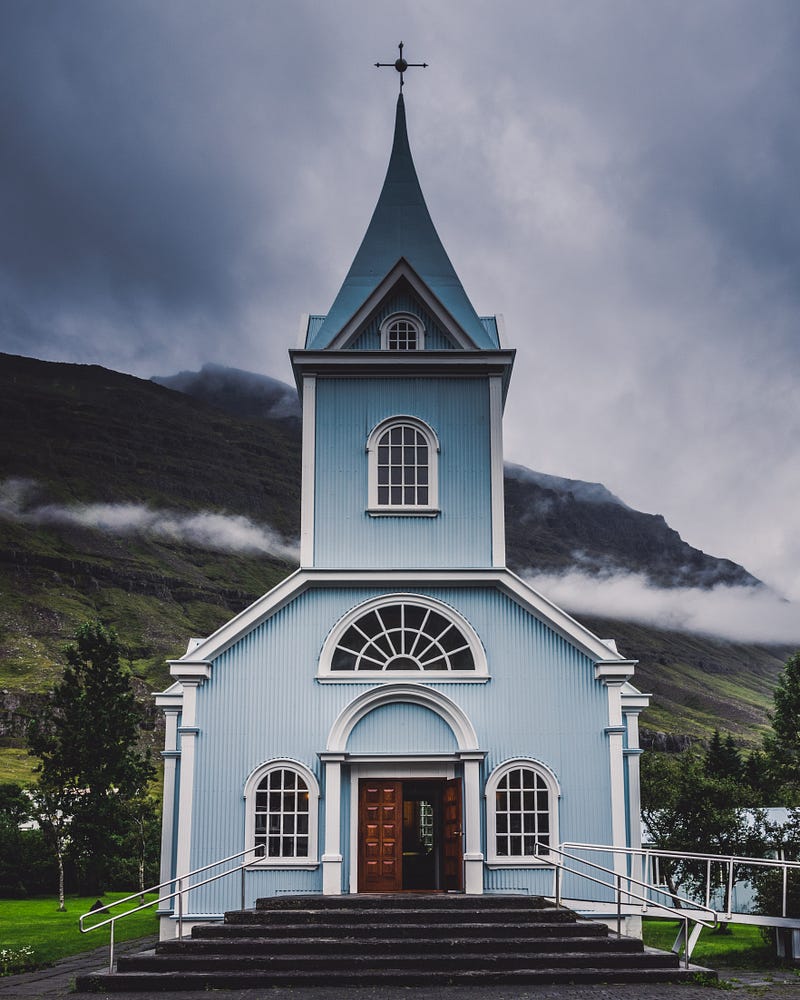
Every now and then, people come together in small or large groups for social purposes or to promote community. These social gatherings could be formal or informal and are usually organized for specific reasons. Whether it’s a company-organized end-of-the-year celebration or a community-organized meet and greet, the purpose of the gatherings is usually precisely stated.
Religious people of the Christian extraction also organize gatherings; religious gatherings. The most popular and most important of these gatherings happen on Sunday. Hundred of millions of Christians all around the world gather every Sunday to worship, to pray, and to listen to the teachings of Jesus. The Christians understand these gatherings as a strictly religious affair, “We are gathered in the name of the Lord,” they would say.
The Christian religious gathering is backed by scriptures. Paul encouraged Christians should gather occasionally to exhort one another.
Hebrews 10:25(KJV) — Not forsaking the gathering of ourselves together, as the manner of some is; but exhorting one another: and so much the more, as ye see the day approaching.
Although St. Paul the Apostle advised the Jewish Christians in Jerusalem to always gather, he didn’t offer any advice or leave specific instructions on the nature of these gatherings. There was no guideline on how these gatherings should be conducted, what activities are permitted in these gatherings, how they should end, or even how frequent the gatherings should be.
Most Christians agree that Sunday is the day of worship, an act linked to laws made by Emperor Constantine I of the Roman Empire in 321 AD. Aside from Sunday as a day of worship, there is virtually no agreement on any other aspect of these religious gatherings. Congregations have total freedom to choose the nature of their Sunday gatherings and what activities are permitted or not. This explains the reason for the disparities in the way different churches conduct their Sunday services.
As the Christian sects are different, so are the many ways in which they conduct their services. Go from a catholic church to an Anglican church, from a protestant church to a Pentecostal church; the difference between the way these sects conduct their meetings would leave you wondering if they worship the same God or not. Sometimes the difference can be as stark as the difference between religions. The Catholics, Orthodox, and Anglicans conduct their Sunday worship service in a very solemn manner. Prayers are said, order and decorum are maintained in a manner that is befitting of persons who find themselves in the presence of the most revered deity in the universe. The Catholics, Pentecostals, and other sects that maintain a semblance of decorum are not the focus of this article. Instead, this article will focus on the new-age/new-generation Pentecostal churches that conduct their services in a manner that makes it indistinguishable from the conduct of a party or a secular gathering.
Galatians 5:1 makes it clear that Christ has set us free. Of the many freedoms Christ conferred on his followers, one of them is the freedom of worship. People are free to worship in any way they deem fit, as long as it isn’t sinful or doesn’t violate the rights of any individual. But is there a limit? When does the church service stops being just a religious gathering and starts being just another gathering?
On entering these churches, the level of noise is similar to the noise obtained in nightclubs. The singing is loud, with the speakers almost bursting through the roof. The prayers are noisy and loud. Usually, in the prayer sessions, a lot of people are speaking in tongues simultaneously, resulting in a messy cacophony of unintelligible but loud sounds. This is in direct defiance of the instructions Paul gave to the Corinthians.
1 Corinthians 14:27–28; If anyone speaks in a tongue, two — or at most three — should speak at a time, and someone must interpret. If there is no interpreter, the speaker should keep quiet in the church and speak to himself and to God.
The nightclub-magnitude noise is accompanied by unbridled dancing and extravagant displays. This is not surprising. When the music is stimulating and loud, people you do not expect people not to move their bodies in rhythm. Dancing in itself isn’t bad. David danced in the presence of God and the bible doesn’t record that it wasn’t accepted by God. What is concerning about the dancing is the complete lack of decorum, and the absence of moderation as encouraged in Philippians 4:5. Dance patterns that people do at bars, nightclubs, and other secular spaces are also imported into the church. Watching the singing and dancing sessions in these churches, it is difficult to tell if one is at the club or in God’s presence.
The sheer ridiculousness of the singing and dancing also extends to the extravagant displays of divine intervention. Yes, extravagant displays. How else might one categorize it when a pastor invites a ‘corpse’ in a coffin to the altar so that he can command the ‘corpse’ to rise from the dead in the presence of everybody? Yes, these things actually happen. What was supposed to be a day of solemn worship and devotion in the sacred place of God’s presence has been turned into a clown house or a circus. These Christians have forgotten that if God is all-powerful, then he doesn’t care about a circus to demonstrate his power.
There are no hard and fast rules regulating the dress codes people should wear to church. As such, people should be permitted to dress as they wish, within the bounds of modesty. However, the fact that there are no strict rules is not an open call for competition. When members try to outdo each other every Sunday by putting up their best show in order to appear good-looking before other members, then the parallel lines between a church gathering and a fashion contest begin to look blurry. Unfortunately, this is the type of competition that goes on in numerous new-age Pentecostal churches. The church has been turned into an avenue to make a fashion statement.
Considering the manner in which church gatherings are conducted, and the disposition of the worshippers attending these services, it is within the bounds of legitimacy to ask if churches are still the holy place of worship that the early Christians dreamed them to be. It seems that somehow the goal and purpose of going to church have stealthily shifted. The original purpose of gathering together with fellow Christians was to edify one another through worship and the word of God. These days, that no longer seems to be the case. Motivations range from a desire to show off to people in order to prove a point, to a need to ‘have fun in God’s presence’, a thinly veiled excuse for people who can’t go to the secular dancefloors to get their chance at practising the latest dance in town. Others go to meet up with colleagues or catch up with old acquaintances. These are not unique to churches. Social gatherings serve to give people a chance to dance and let loose, connect with people, show off to members of their community, and compete with each other.
And so, as the lines between social and secular functions get blurrier, have churches — at least new-age Pentecostal churches — just become another social gathering?
Writing isn’t easy, but so is reading. Together, we can keep the lights on for each other. Subscribe for $5 monthly and get unlimited access to all my stories, and also to many others on Medium. Click here to subscribe.