
Why We Should Ditch White Weddings
Feel free to skip the first 3 paragraphs
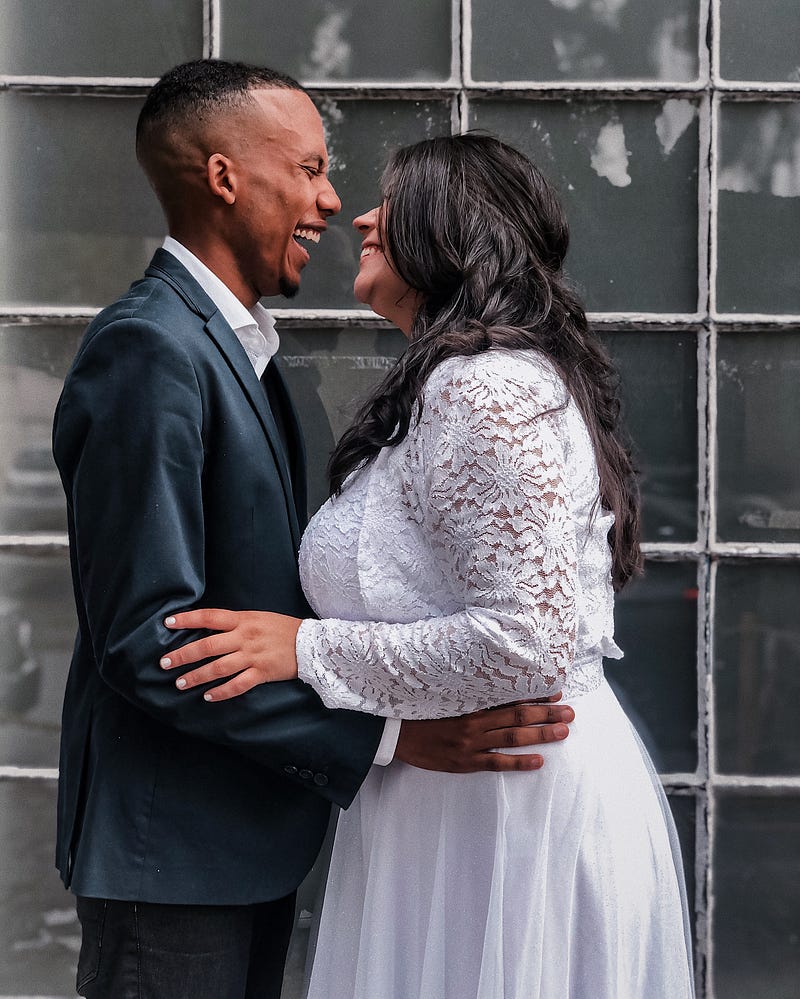
Saturday 1st of April, a lovely couple got married in a church somewhere in sub-Saharan Africa, just like millions of couples before them, and billions of couples after them will do. The ceremony was extravagant, the bride looking radiant in her beautifully sewn wedding dress. The white dress was made from a special fabric carefully handpicked, particularly for this occasion. As the bride would like to say, ‘My wedding is a once-in-a-lifetime occasion and I want it to be perfect’.
Oh, and perfect it was! The occasion itself was joyful. The guests were regaled with amazing music that put everyone on their feet, their happy feet I should say. There was a lot of singing, a copious amount of dancing, and generous laughter permeated the air as the groomsmen made jokes and relived funny moments from their history with the groom. Everybody had plenty of fun and a lot of talking points to go home with.
Finally, the guests were treated to a sumptuous three-course meal. It was a mouthwatering delicacy of peppered beef and chicken chops for an appetizer. For the main meal, the chef went out of his way to provide multiple options.
The guests had to choose between fried rice and peppered protein stock with coleslaw on the side, a hot meal of vegetable soup served with stockfish, tilapia, and beef, and a richly prepared egusi soup made with an excessively ungodly amount of protein. Both soups could be eaten with pounded yam or semolina, which the menu had on offer. For dessert, guests were served some baklava with ice cream topping.
The wedding industry is one industry that never goes out of business. It’s always booming, even in times of economic recessions. Most countries in sub-Saharan Africa are Christian dominated and 62% of the sub-Saharan African population is Christian. For this population, the church wedding is a big deal and marriage is not considered consummated if it is not done in front of an ordained priest or pastor.
First, let’s try to define the parameters a little. The terms church wedding and white wedding are often used interchangeably. Church wedding comes from the fact that the wedding is most often conducted in church. Traditionally, the bride wears a flowing white dress that symbolizes purity.
This is probably where the term ‘white’ wedding comes from. Some theories suggest that it is referred to as the white wedding as a nod to the white colonizers who introduced it into the African culture along with the Christian religion.
Whichever theory is right, there are two major features of a white wedding. First, it is mostly done in a religious setting. These days, that is always not the case. People opt to do these ceremonies in alternative locations such as the beach, or a park, to mention but a few. Secondly, the ceremony has to be officiated by an ordained religious official, usually a priest or a pastor. This condition is non-negotiable.
In the sub-Saharan culture, the white wedding is the final stage in a multiple-stage process that forms the marriage ceremony. The first stage is eponymously named; the introduction. In this stage, the groom and his family officially go to the bride’s family to be officially introduced to the family and her broader relations. This is an occasion on its own and there are traditional rites that follow.
In the second stage, there is the traditional marriage. In this stage, the couple is officially married according to the traditional rites and culture of their tribe or clan. This is a more elegant ceremony, full of pomp and flair. It is done in the presence of friends and well-wishers, as well as relatives and elders of both families who bear witness to the couples joining together in matrimony. Unlike the white wedding, it is officiated by the elders of the couple’s tribes. Finally, there is the white wedding.
Considering the multiple ceremonies that constitute the marriage process that couples have to studiously participate in, it becomes obvious that the white wedding is surplus to requirements for multiple reasons.
The simplest reason is the cost implication that these white weddings entail. In sub-Saharan Africa, marriage is a major business, and getting married is expensive. From the introduction, the couple spends a lot of resources on mobilizing relatives, on attires and costumes for this event, and on feeding every guest that attends this occasion.
Between the introduction and the traditional marriage, the groom spends thousands of dollars on paying for the dowry and other mandatory obligations that the family demands. For the traditional wedding, money is also spent to organize this event. The financial demands in this stage are outrageous because a lot of resources are spent on attires and costumes, on the design and set-up of the location to make it fit for a traditional ceremony, and on providing food for all the guests that show up.
By the time the couple gets to the stage, their bank account is bleeding profusely. A lot of couples go into debt to fund these expenses. Imagine starting your married life by putting your financial future in serious jeopardy.
After mortgaging your financial future to successfully conduct all the traditional rites and traditional wedding ceremony, while feeding thousands of guests and putting smiles on their faces at the detriment of your own pocket, just when you think it’s all over you suddenly realize that you have to repeat the same ceremony, you have to get married the second time, only this time in a church.
Seriously, what is the white wedding? It is merely only a repetition of the wedding ceremony that you already conducted in front of your relatives. It beats my imagination why you have to get married twice in the same week to the same person in front of the same audience just to wear different attires. This sends a message that the white wedding invalidates your culture and tradition or at the very least supersedes it.
Surprisingly, many couples who go through the white wedding stage do not fully understand the implications of the ceremony they engage in. In the sub-Saharan African context, the white wedding is borrowed culture. It is the traditional wedding of another man’s culture; the western-Judeo-Christian centric culture.
Once you realize this, it becomes unjustifiable why a person has to subjugate their culture in favour of a foreign culture. Why does your wedding have to be done according to the traditions of two different cultures when one of them is not yours?
In simple terms, the white wedding is a relic of colonialism. We wouldn’t be having a conversation about this practice if it wasn’t for the colonization of the continent. However, considering how popular it is in sub-Saharan African society, it has neocolonialism written all over it. It begs the question of the enduring effects of colonialism in our society, and the numerous ways that the colonial mindset continues to influence or limit the practice of our culture.
If the traditional marriage had been scrapped in favour of the white wedding, that is a different conversation. But the current practice has placed the white wedding (the traditional wedding of another man’s culture), above the traditional weddings of the indigenous cultures.
One can’t help but wonder if this is the result of a cultural inferiority complex that has permeated this aspect of African existence. These are questions that should be investigated so that at the very least, we can become conscious of the unconscious processes at play in our lives.
To unmarried couples especially in sub-Saharan Africa who are thinking of tying the knot, my advice to you is that your traditional wedding ceremony is enough. Ditch the white wedding! This will save you money, time, and resources.
Even more importantly, you will play your part towards elevating your culture and giving its deserved seat on the table with the Western-Judeo-Christian culture, thereby helping to preserve and propagate your culture.
In the next article in this series, I will suggest an alternate proposal for how wedding ceremonies should be conducted in the right way, in a way that respects all cultures. Tune in.