
Gun Pointing Sullies America’s Day
It exposes three issues with America: distrust, fear, and misplaced anger.
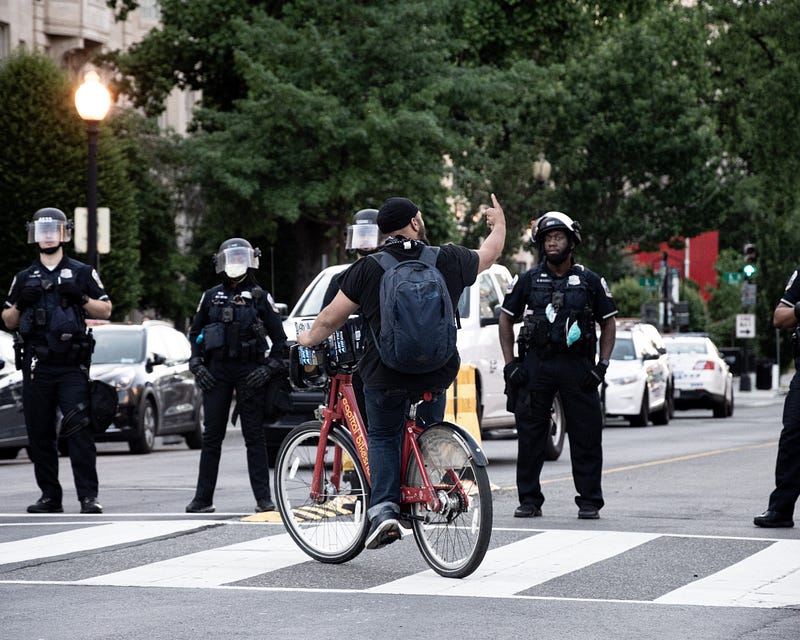
This day 244 years ago, America fought hard and celebrated for “Life, Liberty, and pursuit of Happiness” – the freedom it stood for. The Declaration of Independence famously asserts that “all men are created equal”. Today, we are seeing a very much different America, one that is ever near perfect yet flawed as it always is.
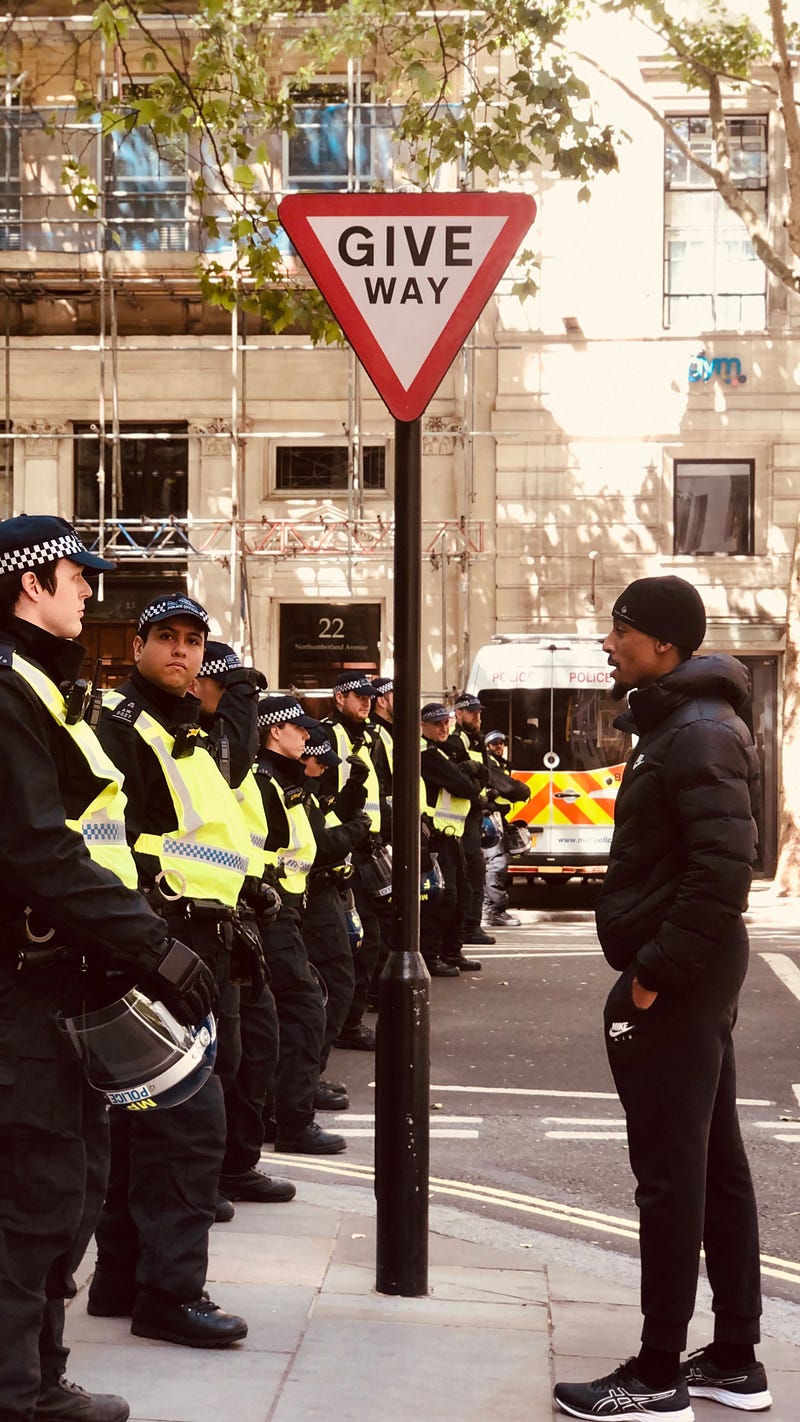
Racism and Police Brutality have become the talk of the town. Every policeman is thrown into the limelight and suddenly become target of much vitriol.
Sometimes rather indiscriminately.
Then the St. Louis couple pointed guns at protesters. Shortly after, another couple was filmed pulling gun on a black woman. The incidents became a sort of a sentiments litmus test when the media picked them up, some reported the couple as innocent and afraid of the “mob” while others portrayed them as racists and white supremacists pointing rifles at a docile crowd.
At this point, the players of each parties are acting based on less than logical emotions, and then defending their actions afterwards by rationalization.
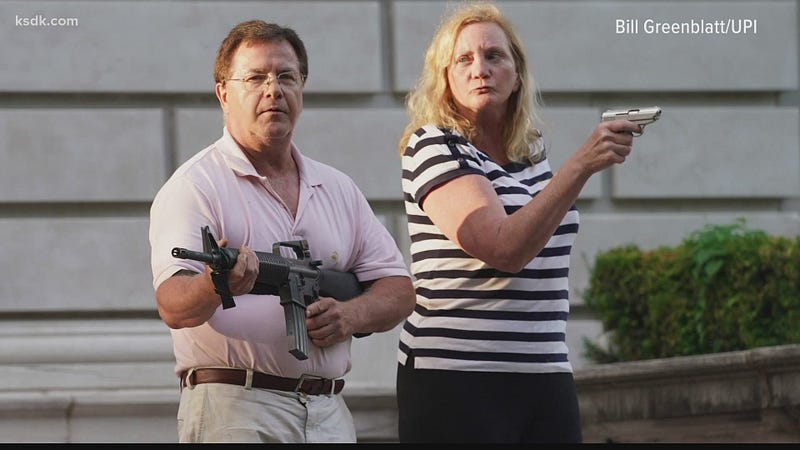
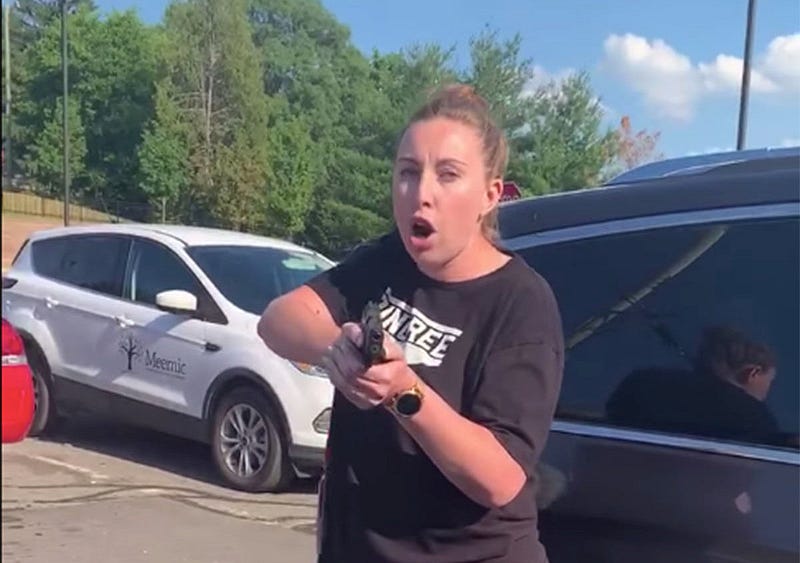
The fear in their eyes reveals total paranoia, so much the slightest provocation warrants pointing a gun.
Recently, I made a statement about how lax gun laws may have played a role in perpetuating excessive force. This societal “thorn” is definitely worth investigating.
Like thorns on the stalk of the rose, guns are hurtful weapons believed to protect the beautiful yet fragile American dream. But thorns cannot save the rose from larger forces. Worse, they may even invite them.
A fellow reader posted a succinct yet compelling comment illustrating the acute awareness of guns:
“The role that guns play as a catalyst for police violence absolutely bears more scrutiny. In England or Australia, police have almost zero expectation that someone they pull over may have a gun. When they’re talking to someone who is agitated, reaching into a glove box, or putting hands in pockets after repeatedly being told not to – the instant calculus is entirely different for U.S. cops.[…]”
Of course, not all readers resonated with me. Many more in fact did not.
Most notably, two commentators defended the need for guns. One from Minnesota highlighted the lost hope for tighter gun laws, due to mainly lack of trust. Another recounted a personal story of her mother saving her childhood self from robbers in a house break-in one night.
I empathize with the points they presented to the table. While I do not argue against the need for guns nor for disarm (for it is far too complex to debate a meaningful conclusion, much less cursorily write), I call for tighter gun laws. I stand firm on my statement that lax gun laws perpetuate fear over respect which fosters the very orientation and culture in law enforcement.
However, the discussion invariably led to division, between those who see the immense need for personal arms, and those who see the longer term value to fight for a disarmed society. From here the situation could have easily escalate into a mindless haranguing of opinions that sought to fracture the community, luckily Medium patrons are better than that. Soon we heard each other out, accepted differing views, and settled.
I am genuinely grateful for such dialogues on Medium.
I reread the threads, and came out with a common ground. There is no single enemy here in this protest, not the police. The true enemies are distrust, fear, and anger. These emotions are hard to ignore, especially if shared.
Distrust in the government; distrust in the cops; distrust in the people.
In light of the protest some argued the need for self-appointed “defenders of the shop-owners”. Vigilantes. More often than not, vigilantism causes more problems, and is a sure hint of distrust in authority.
It all comes down to trust. For any institutional change.
If one does not trust the government, federal or state, he will naturally not be willing to disadvantage himself against the common peeps. There is no choice, no change, nor progress.
Without trust, authoritative are forced to compel people to elicit compliance.
Without trust, there can never be agreement to enforce any policy.
Without trust, there will be clashes between the people and the authorities.
Without trust, there can be no equality.
Without trust, there can be no meaningful firearm reduction.
Without trust, there will be bloodshed.
Trust is the single glue of society. Are our governments' state and federal a failure? With its untrustworthy corrupt shady politicians and a very lengthy history of being that? Is America hopeless? Luckily, people are not backing down without a fight, protesting on the streets for change. Until we make meaningful changes to our society and leadership, America will not stop protesting and rightfully so.
Here is how I think best to restore trust:
- Dependability — the crisis management of coronavirus has exposed the undependable authorities to the core, and people can see that.
- Equality — racial discrimination has for far long plagued this country.
- Competency — ineffective and inconsistent policing is the reason behind “defunding the police”, until the structural problem within law enforcement is solved.
Fear of the other
America has an unhealthy conviction on matters concerning ethics, morality, and justice. Outwardly virtuous, these self-written code of law are intrinsically arbitrary. Instead of protecting people and society, these ideals hide the fact that they are used to exact power over the “other” people; people of other race, religion, nation, etc.
Instead of celebrating differences, America is concertedly penalising it.
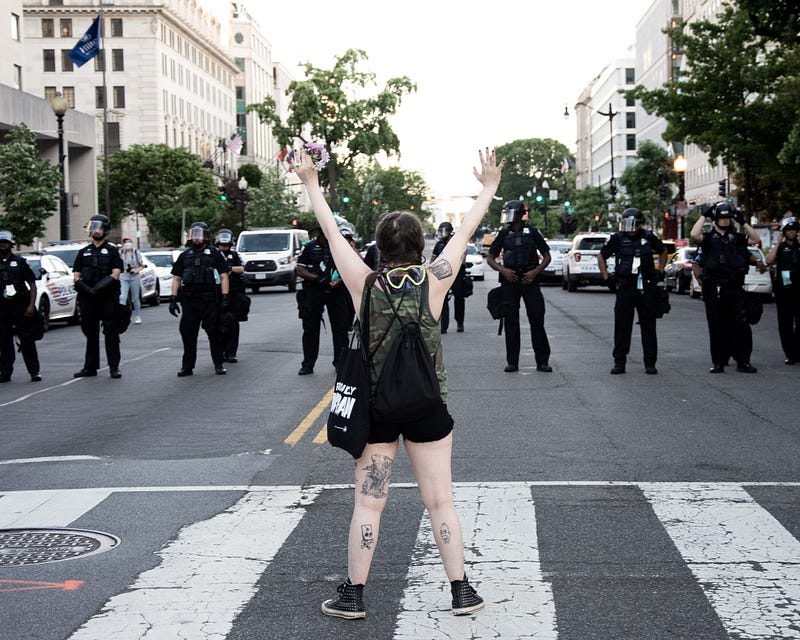
The unacceptance of differences seem to goes against the reputation of America, the melting pot of diversity, the land of meritocracy, where dreams come true. Surely, this “fear of the other” is not true?
The reality is sadly far from reputation. For this country, a certain colour of the skin is superior, a certain faith is more morally upright, actions by a certain nation is more humane. The African customs are uncivilised; the Muslims terrorists; the Chinese totalitarian; etc.
Because fear of the other is fertile soil for bigotry.
“But from where we stand, acceptance of differences continues unaddressed, under the same shadow America may destroy all – freedom and equality – that it stood for.”
The media business is fanning the flames by reporting on these subjects with prejudice and bias. One can say this fear of the “other” is the lesser evil of free press; free world, which America has fought for with blood, sweat and tears. Indeed, generations of Americans enjoy and prosper under the shadow of liberty since today 244 years ago (July 4, 1776) from the British Empire. But from where we stand, acceptance of differences continues unaddressed, under the same shadow America may destroy all – freedom and equality – that it stood for.
“Because fear of the other is fertile soil for bigotry.”
Here is how I think best to break the fear of the other:
- Proper training — although fear is inevitable in policing, police should be trained well to respond to it. In Spain, officers are trained to fire a warning shot, then aim for non-vital body parts to incapacitate, before resorting to lethal force in their rules of engagement.
- Cultural conversations — for true assimilation of different races, interaction is vital. Encourage interspersing and discourage enclaves to increase intermingling. Go make some friends beyond your own race.
- Media awareness — critical thinking. Here I illustrate why haters have a point.(yet to publish this article)
Shared anger breeds violence
Shared experience are self enforcing. Even when they are misplaced.
The legacy of George Floyd is undeniable. Although not unique, his death sparked an ongoing movement not just in America, but on a global scale. One could point to a multitude of factors that led to this impact: the divisive words from President Trump, the preceding shooting of Ahmaud Arbery while he jogged, the ubiquity of video in social media, and most significantly, the shared experience during a pandemic unlike anything before. If it is anything to go by, this pandemic is a global shared experience, as is the unprecedented movement against discrimination. Something about being unanimously quarantined for two month and the urge to fight for equality.
Similarly, the power of protest comes from a shared voice, fueled by a shared misgiving, injustice, and anger.
But not all who are hot-headed are clear-headed.
“Every policemen are thrown into the limelight and suddenly became targets of much vitriol.
Sometimes rather indiscriminately.”
Anger is dangerous. Misplaced anger is more so, even common in community. Currently, it’s estimated that 7.8 percent of the US population has poor anger control. Avoidance, irrationality, personality disorders, obsessive compulsive disorders, paranoia, antisocial personality disorders, and narcissistic personality are but some real consequences of poor anger management to communities.
Disgruntlement, anxiety, and generic bad mood can often be the morphed into something else, selectively picked into something bigger than what is really is. When anger is misdirected, it can results in unintended alienating of fellow loved ones, blurring lines of finger-pointing, and becoming susceptible to manipulation.
As with the case of the commentor who had a close shave with the house break-in robbers, it is not difficult to imagine that her childhood resentment would later shape her entire mindset about personal arms, and then curiously be misdirected at the police in recent times. (her argument was the incompetence and malice of the police warrants the civilian to be armed.) a bit of a caveat, the last statement is only my conjecture.
Misdirected anger also indirectly fuel the vicious cycle of various social vices, a self-fulfilling, self-enforcing, self-perpetuating prophecy of sort. Because anger rids the mind of reasoning, and turn on the fight or flight mode by default, we make decisions based on emotion; let whatever makes our blood boil rule the head.
The danger is in being manipulated or instinctively fall into lashing out at innocent parties because of not seeing a situation clearly, then by channeling this energy towards undeserving sources/provocations will make all the effort a lost cause.
Perhaps instead of allowing it to run high, we should sit back and let the emotions cool. Here’s how I think best to cool off:
- Recognise coping mechanism — Know that your unusual actions are not yours, and they may be your coping mechanism. Instead, find a better one, periodically release bottled up tension, take some time to do things alone, such as go for a walk/jog, or simply count to ten.
- Locate the source— Look deep down and see, in a sort of a psychoanalytic way, what is exactly causing you to feel this way. A point of time in your life? A childhood trauma? Consider reaching out to a therapist or psychiatrist.
- Recognise provocation — is this what would normally cause you to become angry? if not, perhaps you may have misidentified the source of anger. It is only the provocation.
End
Again, I might expect that this is an oversimplification of the problem America is facing, pointing to abstract psychological aspect of societal, instead of tangible to-do steps.
“trust, acceptance, and cool-headedness”
But do not underestimate the influence the mindset have on reality. Trickle to a cascade, slowly but surely. Much less assume that trust, acceptance, and cool-headedness can be easily achieved. In fact, they may be just what America needs most right now.
With the November 11th elections looming, the next two quarter will be dominated with political rhetoric. For that, there will be white noise to take in. There is no better time than now to address these issues to make sure what sticks to the end shall be good for America.
Till then, Happy 4th July, America.
Feel free to drop by, connect, or say Hello on my Medium and Twitter for more people perspectives.
Or, read more:


