
Coronavirus
Don’t Be a Pu*** and Wear a Mask
The whole hoo-ha about side effects is a sign of privilege. Even when jogging, wearing a mask is not bad as people make it out to be.
Key points:
- Jogging With a Mask
- The Mask Problem
- The Second Wave of Spanish Flu
“This is a hoax. It’s a fraud.”
LAST week, Orange county resident spoke out against face mask mandate at an county town hall. About 100+ residents were given allocated time to air their gripes as seen in the following video. The speakers exhibited flair and creativity, by insinuating conspiracy theories, appealing to God, conjuring up Police brutality imageries, to outright denial of the coronavirus in articulating what is essentially a petty excuse for not wearing masks.
They succeeded. Orange county officials retracted the mask mandate resigning to the public pushback. In official statements, the county’s decision was to stay consistent with the rules of the state, and encouraged residents to stay home and practice social distancing.
This, however, does not diminish the importance of face coverings.
Jogging With a Mask
TWO years ago when I first went to China, it was near the end of winter. The air was turning thick and wet, exacerbated by the smoggy winter air.
On the subsequent months, I would go out for a jog to sweat it out and keep the body energised. As the weather turned hot nearing summer, the air became humid and warm. It felt like a wet towel to the skin — while stuck in the sauna. Breathing became heavy. Not long after it was altogether impossible to head out, nor stay in without air conditioning. It was not just me; my roommates can attest to the dire heat. It peaked at 110°F.
However, when I do head out for a jog (at night), I still wore a mask. I breathed heavily through the cloth damp with water vapour and sweat. It was uncomfortable, but tolerable. And from where I was running, others do the same too. The mask was after all, saving me from the polluted air; my discomfort was trivial in comparison.
“The mask was after all, saving me from the polluted air; my discomfort was trivial in comparison.”
Unlike the U.S., China’s smoggy air was a hazard to health. Although it got better in the summer, the city would soon plunge into grayness again at the turn of the season. Quite literally, people are breathing in smoke particulates all year round, if not for the mask.
Many other less privileged countries, like Laos and Cambodia who burn coal daily for their livelihood, face the same hazardous air. And the people have no qualms about wearing masks.
Saliva droplets
To put things into perspective, smoke particulates are about the same size as saliva droplets at micron-size.
While the social distancing rule of 6 feet may prevent visible droplets from reaching you, it does not prevent it from lingering in the air, especially not the smaller ones.
A research by Japanese Association of Infectious Diseases on micron-sized droplets found that not unlike smoke particulates, saliva droplets from sneezing and coughing in a classroom-sized area can stay in in the air for up to 20 minutes, which were demonstrated to infect up to 20 persons in a superinfection case.
What can you do then to stop such a spread?
Mask saves lives
Masks are effective barriers to contain the spread of virus by infected saliva droplets.
The following chart shows an outdated graph, but still telling of the effects of wearing masks in the early stages of the pandemic.
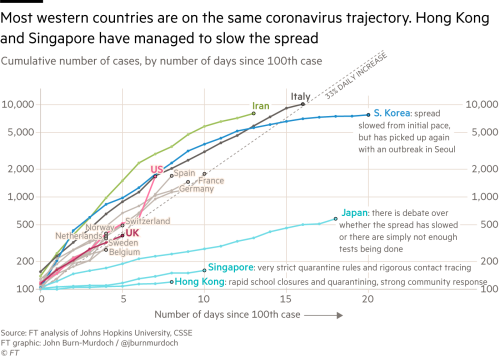
Here we can see that both Japan, and Singapore have few cases. Not to mention Hong Kong, who has since the start of the pandemic encouraged wearing of mask, have a case count so few that they appear insignificant in the numbers of other countries.
Due to a shortage of masks, Singapore began to discourage it’s citizens from wearing masks indiscriminately. Instead, they recommended WHO guidelines, which was to wear them if sick. Soon, they saw a rise in cases again.
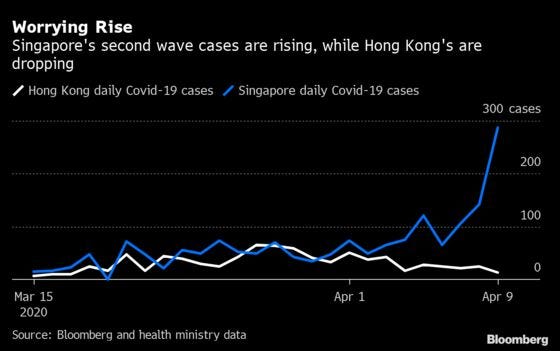
The second wave forced Singapore to resort to some of Hong Kong’s drastic early moves, including encouraging mask-wearing for all.
Granted, this is not the full story, as the second wave appears to be a localised transmission within the migrant worker cluster, separate from the community.
Nevertheless, the government has given the word to enforce wearing of masks, retracting the previous statement on WHO guidelines. WHO also changed its stance to encourage wearing of masks.
They can agree, masks save lives.
The Mask Problem
WHEN cities in America reopened, people gathered as if the pandemic is over. Some refuse to wear a mask.
All over the city, bars, stores, and people themselves are bending or ignoring social distancing rules, irking officials trying to keep the coronavirus curve flat.
This is alarming at best, suicidal at worse.
We only need to look at history to find the horrors of complacency in pandemic and let the death toll of the second wave do the talking.
The Second Wave of Spanish Flu
COVID-19 has so far traced the Spanish flu in the U.S. to a creepily accurate degree.
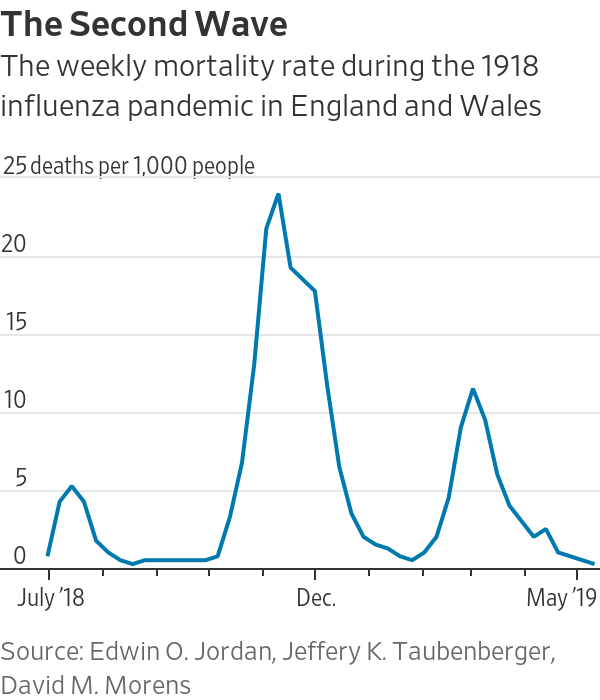
Starting form March 1918 and subsiding by summer of 1919, there were 3 different waves of illness during the pandemic. The pandemic peaked in the U.S. during second wave. in the fall of 1918. This highly fatal second wave was responsible for most of U.S. deaths attributed to the pandemic.
The second wave killed 20–50 million people, which in comparison with the the first wave at 3–5 million, is about ten folds more. Using naive postulation, the COVID-19 death toll could reach 1.2 million if the pandemic were to play out the way it did.
While more often than not history repeats, I surely hope it won’t this time.
Wear Your Masks
IF I haven’t been clear, let me reiterate, please wear your masks.
The pandemic has not ended. Hundreds of thousands of people are dead, and many more will within the millions infected. Unless you do something about social distancing and wear masks to curtail the spread, cities reopening would only accelerate if not guarantee the second wave.
It is not just about the sick and old anymore. Hospital staffs would be stretched thin, the economy would suffer, the societal fabric could reach a breaking point. The virus amplifies inequalities. Just look outside the windows at the looting and protests. What is to say they are not precipitates of shared experiences, both racism and quarantine?
“The virus amplifies inequalities.”
Surely, lives matter more than jogging without masks right?
So please, again, seek within yourself any last remaining empathy in your soul and bear a little inconvenience to wear your masks if you don’t want to die; more importantly, if you don’t want others to die.
References:
https://www.reddit.com/r/Coronavirus/comments/fqzwah/team_led_by_president_of_the_japanese_asso_for/
Feel free to drop by, connect, or say Hello on my Medium and Twitter for more people perspectives.
Or, read more:


