
Gula
A plethora of meanings in several languages
Today’s New York Times Spelling Bee letters:
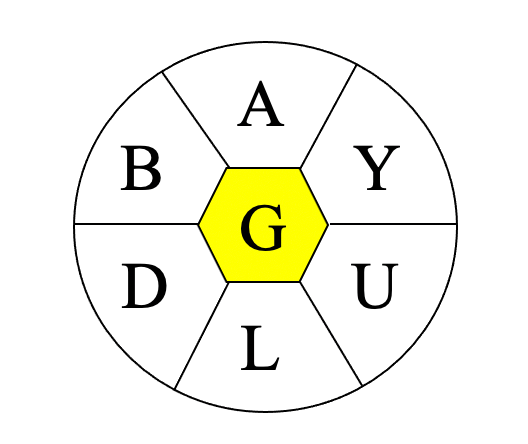
A, B, D, L, U, Y, and center G (all words must include G)
Merriam-Webster says…
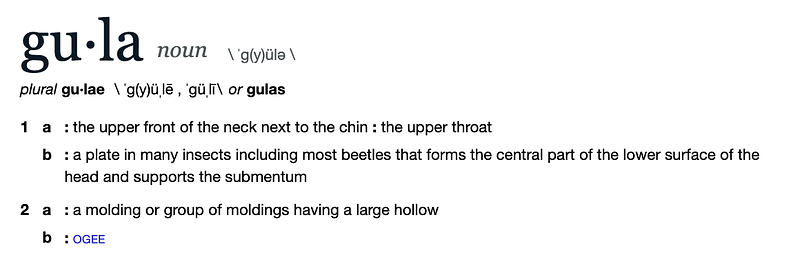
Silly little dictionary! Don’t you know gula can’t possibly be a word if the New York Times says it ain’t?
For further fascinating facts, check out the Spelling Bee Master.
What’s your favorite dord* from today’s puzzle?
My Two Cents
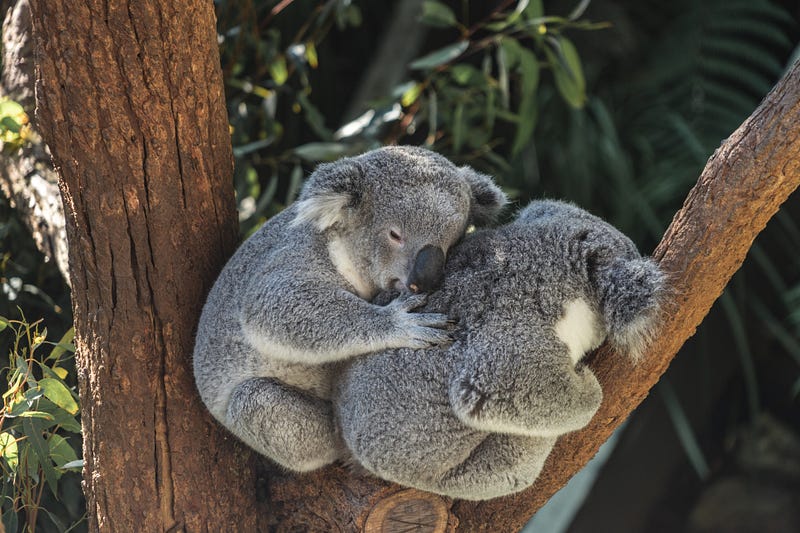
Today I didn’t clickbait the title or the subtitle; I did it with the photo. Who can resist koalas? No one, that’s who! And I’m not even going to make you read the entire article to tell you the connection between gula and koalas. (But please keep moving down anyway at a nice slow rhythm that will make the algorithm think you’re reading.)
According to experts, the word koala comes from gula, a word in Dharug, an Australian Aboriginal language traditionally spoken in the region of Sydney, New South Wales. Gula became koola, and the oo → oa at some point, likley because of human error.
In 1911 koalas and wombats were still considered to belong to the same family, as the Britannica noted in it’s early-century edition:
The first family, Phascolomyidae, is typified by the wombats; but according to the view adopted by Mr H. Winge, and endorsed by Professor Max Weber, is also taken to include the koala.
Well, Winge & Weber were wrong! (How’s that for some awesome alliteration?) Today the wombat’s status has been moved to the Vombatidae family. Here’s a picture of some wombats, to keep you reading some more.

Oh, wait, these are The Wombats, an English indie rock band formed in Liverpool in 2003.
I meant wombats with a lowercase w…
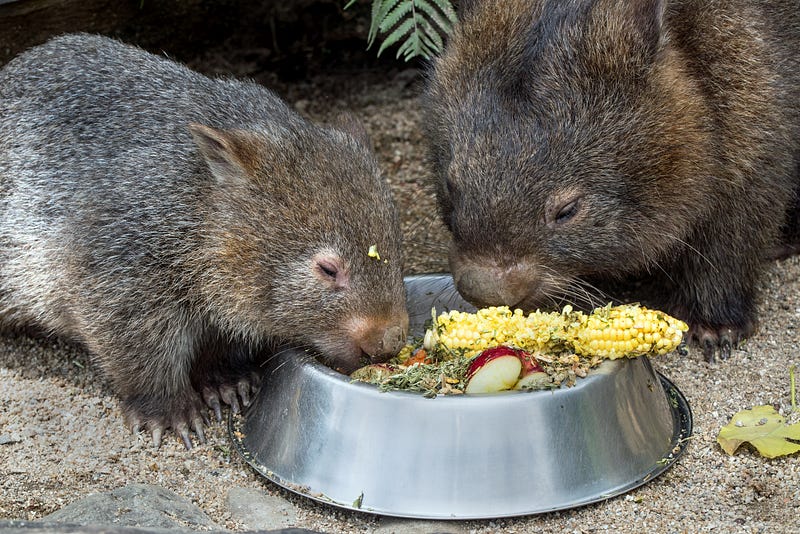
Thank you, David Clode.
In English
Our friends at Merriam-Webster explain that gula comes from Middle English, from the Latin gula meaning “throat” or “gullet”, the same Latin term that originated the word gluttony. Which is one of the meanings of gula in Spanish (more about that later).
Entry 2 for gula refers to architecture: “a molding or group of moldings having a large hollow” or “ogee”. Ogees typically have a double curve, like this…
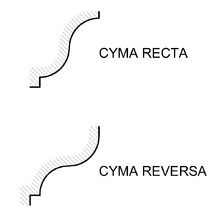
…with the bottom one corresponding to the term gula. Perhaps because when joined with its mirror image, it forms an arch…

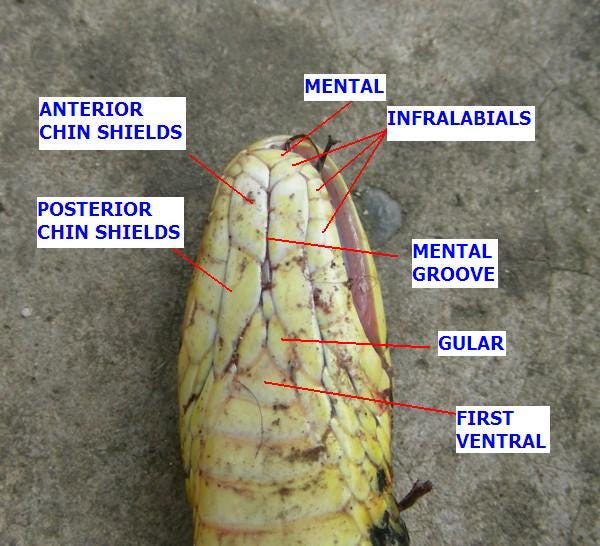
…that looks like the gular scales some snakes have.
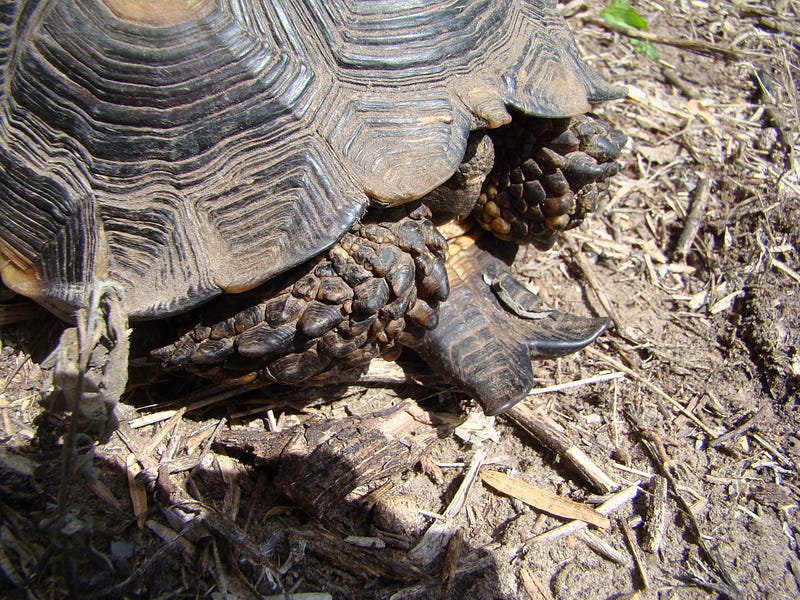
Other reptiles also have gulas; the gular projection on a turtle (seen below jutting out between the front legs) is the most anterior part of the plastron, or underside of the shell.
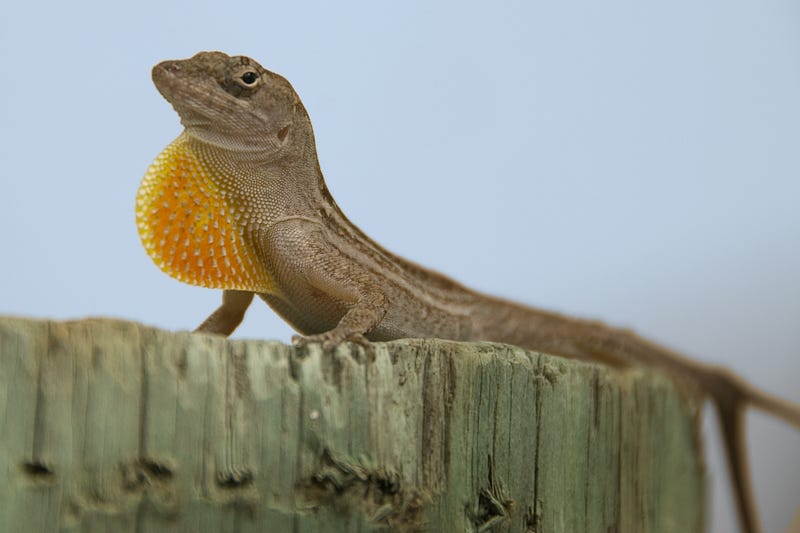
Some lizards have a gular fold on the front part of their throats. Like this male anole.
But wait, there’s more! Buy now, and we’ll include two for the price of one, and charge you only for shipping. Wait… that’s a different “But wait, there’s more!”. Sorry.
Reptiles are not the only ones that come with the gula feature.
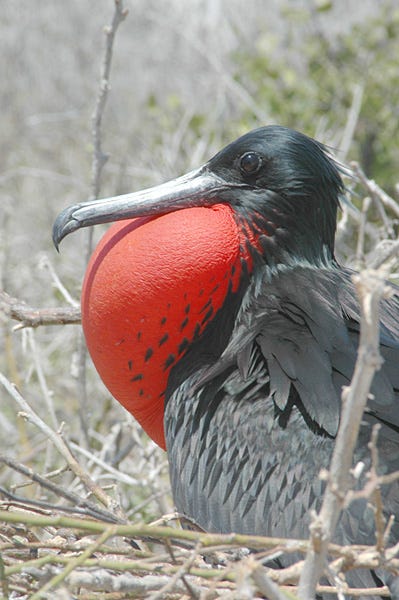
That’s a male frigatebird showing off its red gular skin, a featherless area that joins the lower jaw of the beak to the bird’s neck. I know what you’re thinking, and you’re right: what you’ve been uncouthingly calling a “pouch” on pelicans actually goes by the couthingly-named gula. That’s why the Australian pelican below is so upset.
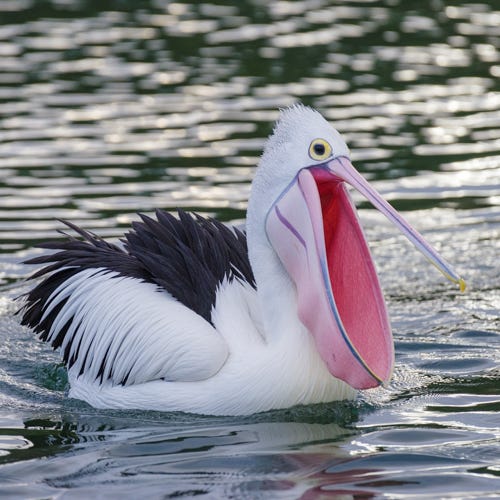
Next time you run into an Australian pelican, or any pelican for that matter, just wave and yell “Nice gula, mate!” That will certainly make their day.
En español
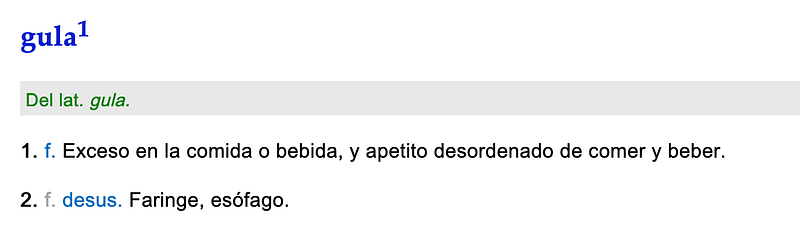
As I mentioned earlier, in Spanish the word gula means “excessive eating and or drinking”. In one word, gluttony. Also, archaically, the term was a reference to the esophagus. Don’t believe me? Here, see for yourself!
In some Christian denominations, gluttony is considered one of the seven deadly sins. Here is how it was depicted by Dutch painter Hieronymus Bosch, known for his fantastic illustrations of religious concepts:

The seven deadly sins were the subject matter of the 1995 movie Se7en, starring Brad Pitt, Morgan Freeman, Gwyneth Paltrow, Kevin Spacey, and R. Lee Ermey. In the film, Pitt partners with Freeman to track down a serial killer who uses the seven deadly sins as an inspiration for his murders.
Aside from gluttony, the other six deadly sins are pride, greed, wrath, envy, lust, and, of course, writing about Medium in an article published in Medium.
Back to gula in Spanish… I’m sure my eagle-eyed readers quickly noticed that there is a superscript with the number 1 right next to the entry.

And that’s because there is another definition of gula…
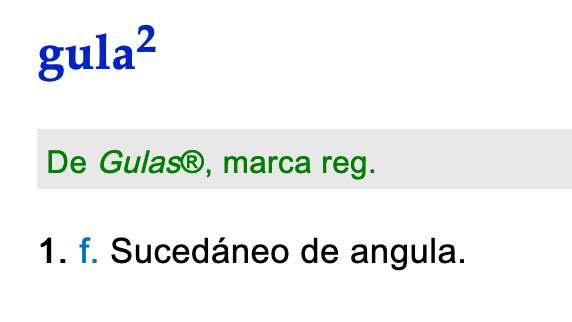
I’ll translate: 1. feminine. eel substitute. (Nouns in Spanish have a gender, sometimes two.)
The text in green explains that the word itself, used usually in the plural form, came from a trademarked product. Sort of like kleenex or dumpster.
The high prices of eel in Spain, combined with its scarcity, have made this eel substitute very popular. Gula is produced from surimi paste made from Alaskan pollock. About 10 pounds (5 kilos) of fish are needed to make 2 pounds (1 kilo) of surimi paste. The food industry in Spain has gradually improved the quality and similarity in taste over the years, to the point that some people prefer gulas over the authentic eels.
Here is a picture of some gulas fresh out of the can.
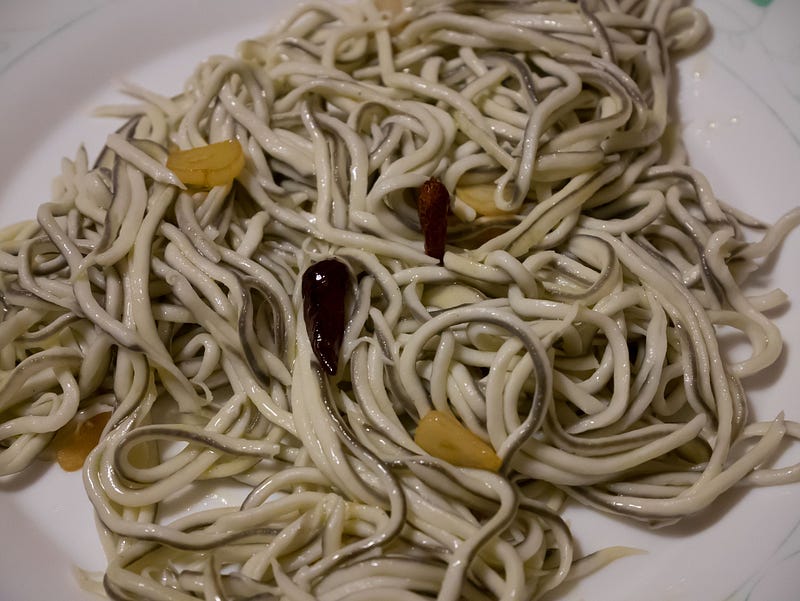
Trust me, it tastes much worse than it looks.
Now you know! Whether you are talking koalas, throat pouches, double-curved moldings, one of the seven deadly sins, or fake eels, beware of using the word gula… because the editors of the Spelling Bee decided that gula is a dord*.
You can check out my previous entry on another dord* here:
*What the heck is a dord, you ask? Here’s the answer: