
WEEKLY BUSINESS ROUNDUP
Global Business Week: How to Invest in the booming Chip-Tech Industry?
The state of Financial markets & Economies, Weekly Charts, Business Trends & Statistics
It was a huge miss on the U.S Jobs report to end the week — with the consensus expectation for 720,000 jobs to be added, the economy was only able to eke out 235,000 jobs. Although it was a major risk-off event, the markets were able to digest it relatively well with some of the other mixed messages they have been getting recently. U.S. equity markets ended the Friday flat-to-lower. To offset the risks, Investors have been buying defensive and technology stocks and selling recovery sectors like travel, industrials, and financials.
This has led to more and more record highs for the Nasdaq and the S&P 500, while the Dow Industrials have essentially been flat for the past month. U.S. Treasury bond yields have been creeping higher amid the economic uncertainty. The Nasdaq outshined the other major indices this week, up 1.5%. The S&P 500 also closed higher on the week, up 0.6%. On the commodities side, Oil prices steadied after OPEC+ agreed to stick to their existing policy of gradual output increases for an additional 400K barrels of oil production per day to be returned to the market each month.
Given the very weak NFP print on Friday, the overwhelming expectation is for the Fed to be passive and dovish. And this was reflected in the strongly bearish reaction that we saw in the benchmark Dollar Index (DXY). Closing the week @ 92.11, DXY is perilously close to a really big support zone ?in the 91.82–91.93 region. The immediate bullish sentiment seems to have subsided and the bias has turned neutral to slightly bearish in the wake of these events. Follow-up action around this support area would dictate the next move. Not much in the way of U.S data next week, but ECB & BoC rate decisions should keep USD majors on the move.
Cryptos have been on the move, primarily led by Ethereum. The second-largest crypto has continued to perform well with its diverse use case portfolio. While ETH has posted gains of over 130% since July bottom, its peer Bitcoin has only managed around 70%. At the time of writing, BTC is tentatively hanging to the psychological level of $50k, while Ethereum trades close to $4k. The Alt. coin push led by Ethereum has helped other coins like Cardano, which continues to chart new highs — currently trading close to $3. The bullish momentum continues to nudge along the digital assets.
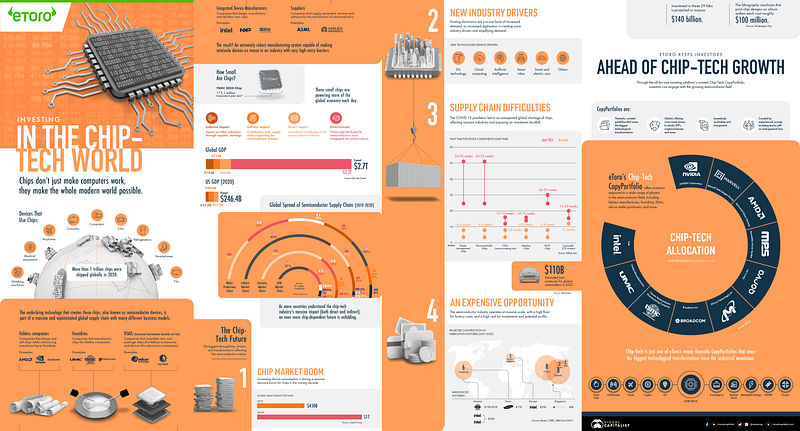
Today’s featured infographic (above) breaks down the importance of the semiconductor industry, and where moves are being made in it. The pandemic put focus on our increasingly digital world and personal electronics. Even as consumption of major purchases like vehicles slowed down, more than 1 trillion chips were shipped globally in 2020 — putting the global semiconductor field was front-and-center in the minds of politicians, executives, and investors.
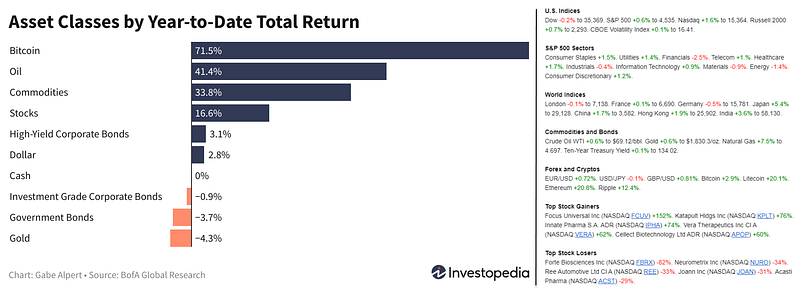
And finally, before moving on to some other statistics, here are the weekly & YTD numbers from various markets and different assets (Figure 1).
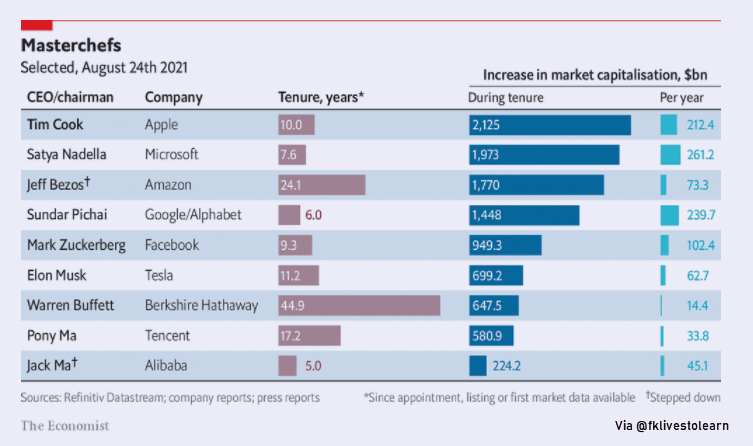
Which CEOs Created the Most Value?
Tim Cook has created more value for shareholders ($2 trillion) in his 10-year tenure as Apple CEO than any chief executive in history (Figure 2). Even Warren Buffett, who has led Berkshire Hathaway for the past 45 years, and Jeff Bezos, who stepped down from his 24 years at the helm of Amazon earlier this summer, trail Cook. Helped along by pandemic tailwinds, Apple (and the rest of FAMGA) have reached new heights, outperforming the S&P 500 by more than 30 percentage points in 2020.
The Social Token Paradox
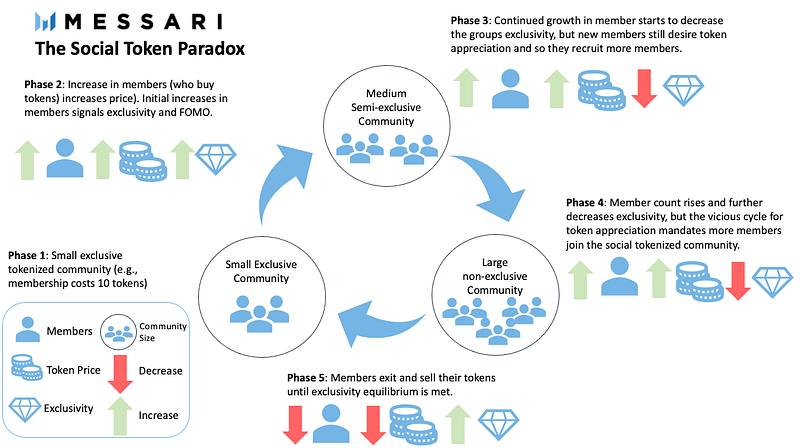
In a recent article, Gaby Goldberg discusses what she calls the “Social Token Paradox” — a problem that arises within social tokens communities based on exclusivity. The challenge is that social tokens need to appreciate by including new members and yet these membership gated communities must keep their groups exclusive otherwise the social and utility value will decrease. Thus, the social token paradox is born (Figure 3). This paradox does not occur with non-membership-based tokens. For example, each new buyer of Bitcoin adds value, increases the scarcity of Bitcoin, and therefore all members are aligned. New nodes or members of the network increase the value of the network.
Mortgage Refinance Boom in the U.S
A combination of historically low mortgage rates and soaring home prices has led to a surge in mortgage refinances in the United States. According to Equifax data published by the New York Federal Reserve, mortgage originations nearly hit $1.2 trillion in Q4 2020, with refinances accounting for roughly 60% of that total. The refinance boom became even more apparent in early 2021, as existing homeowners refinancing their debt accounted for a whopping 70% of $1.3 trillion in mortgage originations in the first three months of the year, according to Freddie Mac.
As the following chart (Figure 4) shows, mortgage refinances in Q4 2020 and Q1 2021 even surpassed the level seen during the refinance boom of 2003, albeit only in nominal terms. It also needs to be noted that back in 2003, only 30% of mortgage originations went to borrowers with excellent credit scores, while such super-prime borrowers accounted for more than 70% of origination volume in the past twelve months, making the current boom less worrisome than the 2003 refinance frenzy, which contributed to the financial crisis of 2008.

Supply Chain Costs Skyrocket
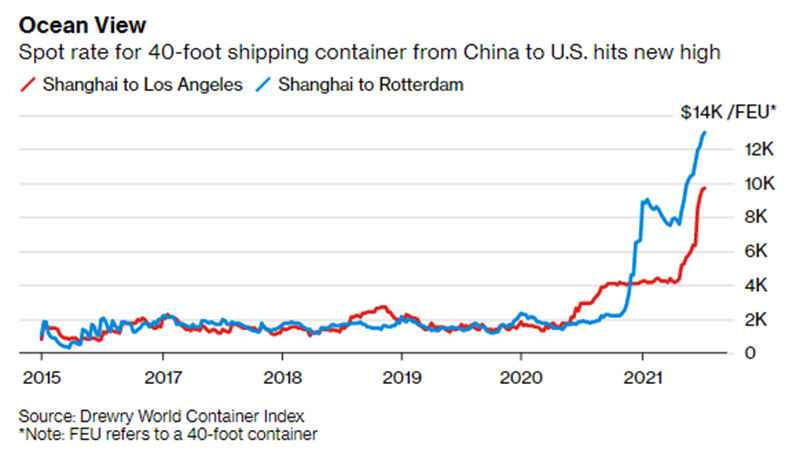
Shipping container rates from China to the US and Europe have surged in recent weeks (Figure 5). Factors like Covid-19 outbreaks, severe weather events, and a shortage of containers in Asia have led to bottlenecks at ports. In early August, shipping rates for the China-US East coast route topped $20,000 — a 500% increase over last year, according to Freightos. Emerging supply chain & logistics tech companies are aiming to drive efficiencies in the space by streamlining and automating processes across the shipping, warehousing, and distribution journey.
Diminishing Role of USD in the Global Economy
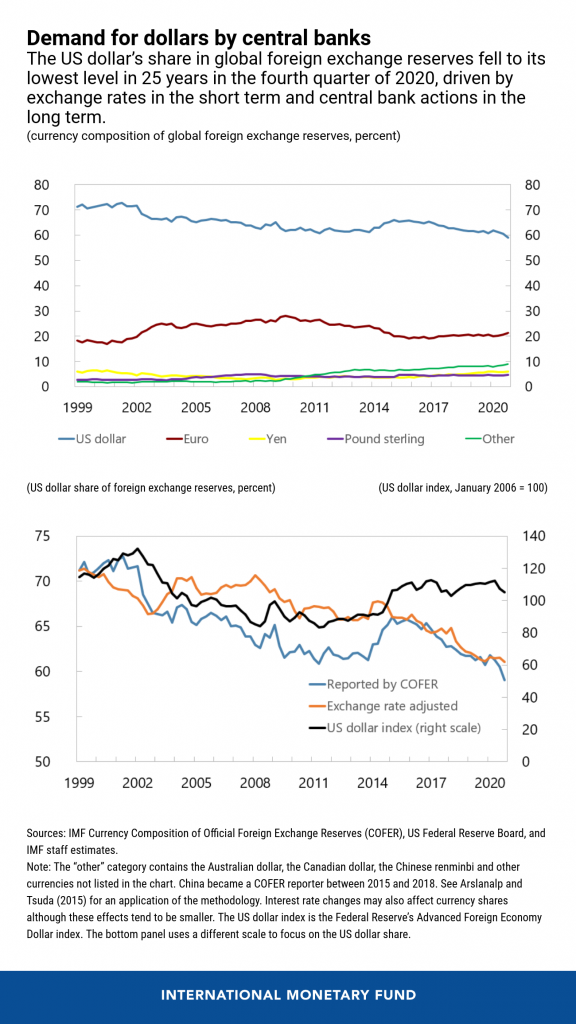
The share of US dollar reserves held by central banks fell to 59% — its lowest level in 25 years during the fourth quarter of 2020, according to the IMF’s Currency Composition of Official Foreign Exchange Reserves (COFER) survey. Some analysts say this partly reflects the declining role of the US dollar in the global economy, in the face of competition from other currencies used by central banks for international transactions. If the shifts in central bank reserves are large enough, they can affect currency and bond markets.
The following chart (Figure 6) looks at the recent data release from a longer-term perspective. It shows that the share of US dollar assets in central bank reserves dropped by 12 percentage points, from 71 to 59%, since the Euro was launched in 1999 (top chart), although with notable fluctuations in between (blue line). Meanwhile, the share of the Euro has fluctuated around 20%, while the share of other currencies including the Australian dollar, Canadian dollar, and Chinese renminbi climbed to 9% in the fourth quarter (green line).
Apple’s Global Revenue
For the first time ever, Apple will allow media apps like Spotify and Netflix to link to their own websites to collect payments. The companies have complained for years that Apple’s restrictions forcing users to pay for subscriptions only through Apple’s app store were unfair and anti-competitive. The move will allow the companies to bypass Apple’s lucrative 15–30% cut of their subscriptions (Figure 7). The adjustments follow an investigation by Japan’s antitrust regulator but Apple says it will apply the changes globally. They will take effect early next year. Governments around the world have questioned the power Apple holds over third-party firms that distribute their subscription services through Apple devices.
Smart Contract Platforms are Flourishing
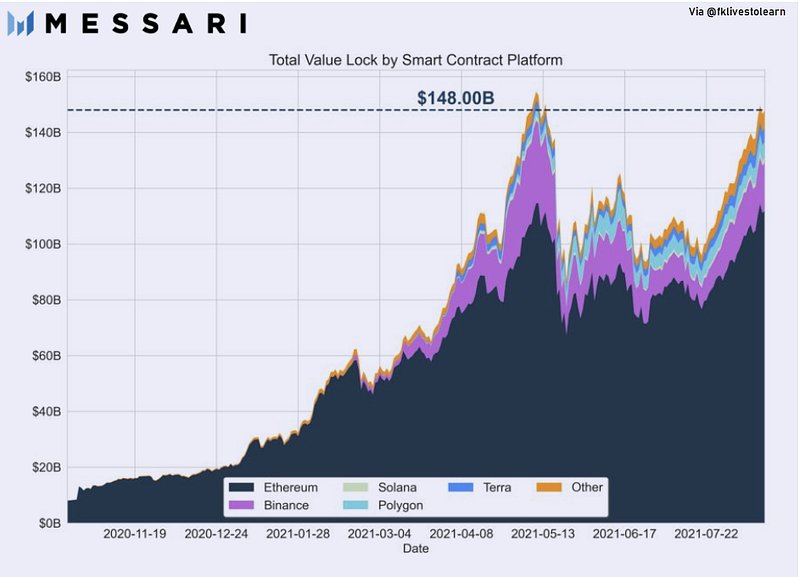
The scaling wars have been dominated by side chains and other layer 1s to date, with Polygon gaining the most traction among the biggest names in DeFi and the Metaverse. Sushiswap, Aave, and Curve have all expanded to Polygon, with SushiSwap deploying on several other chains as well. Axie Infinity now runs on a custom-built sidechain called Ronin to insulate the popular play-to-earn game from Ethereum’s costly fee fluctuations. Dapper Labs launched an independent layer 1 to escape Ethereum’s notorious fees. DeFi ecosystems have also sprouted on newer networks like Solana, Terra, Binance Smart Chain (BSC), and Avalanche. Each has benefited directly from rising Ethereum fees, as indicated by their recent increase in on-chain activity and total value locked (Figure 8).
Another Record for Global App Spending
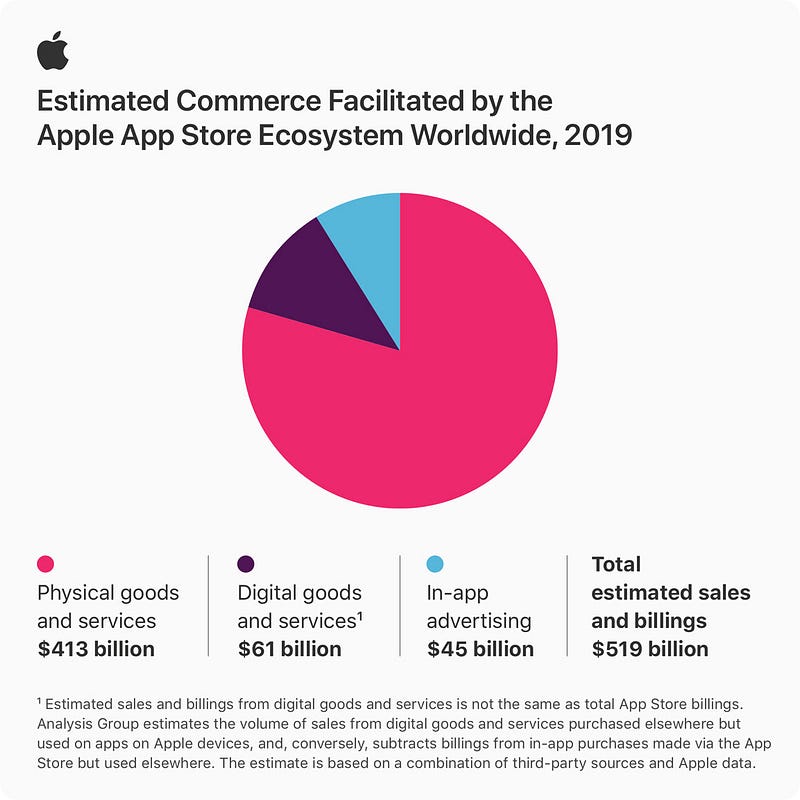
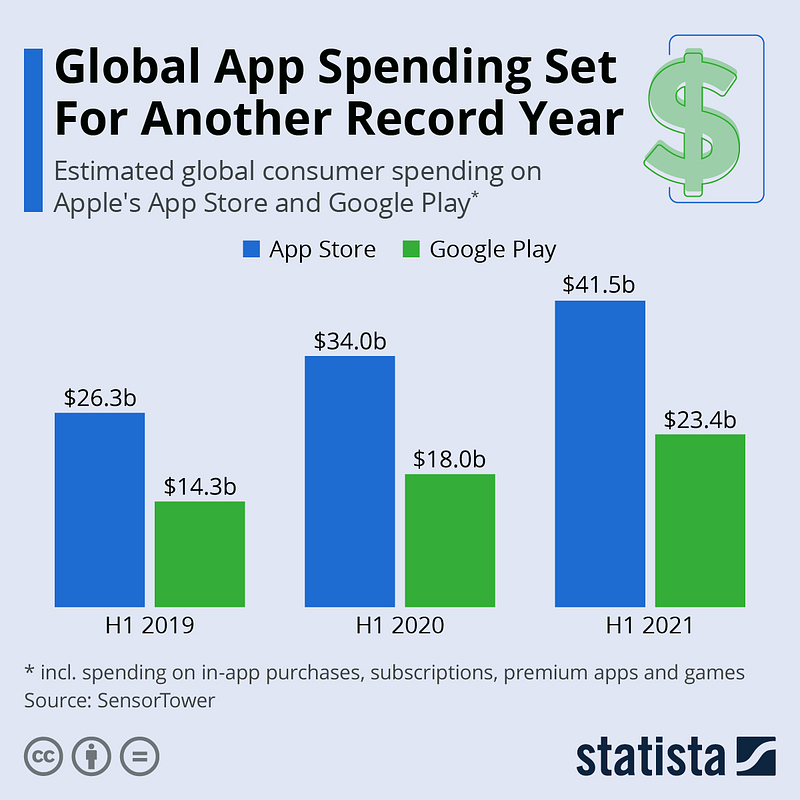
Ever since the App Store was launched in 2008, Apple has taken a 30% cut on app sales, in-app purchases of digital content & subscriptions made via iOS apps (the latter dropping to 15% after the first year), which has lately drawn the attention of competition watchdogs, especially in cases where Apple competes with third-party app makers (e.g. Apple Music vs. Spotify). The following chart (Figure 9) explains why Apple is fighting so hard to protect its slice of the App Store pie.
According to estimates from app analytics firm SensorTower, App Store revenue amounted to more than $40 billion in the first half of 2021. Assuming most of that total qualifies for Apple’s commission, that amounts to at least $10 billion in revenue in just six months, which even for Apple is no small change. An expert witness called in the company’s court case against Fortnite maker Epic Games estimated that Apple earned $22 billion in App Store commissions last year at an astounding profit margin of almost 80%. Apple of course disputed these estimates, arguing that its true profit margins are considerably lower.
Market Humor: Records Highs on Dovish Tone

Previous Edition of GBW
