
HOW TO PAINT IN WATERCOLOUR
No Floods, no Droughts
Getting The Right Amount of Clean Water in Your Brush; and the Right Amount of Paint
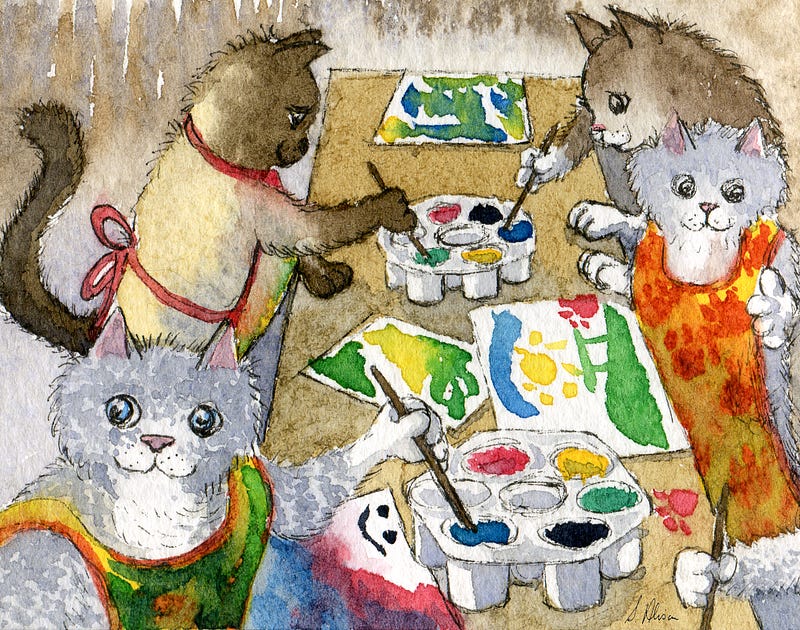
One of the more difficult things to get right when painting in watercolour is the amount of clean water in your brush before you mix up your paint.
If you have too much water the paint dilutes to wishy-washy, it gets out of control, it spills over where it’s not wanted, and generally runs around the place making a mess.
Getting the right amount of water, though, is just a knack, and, as soon as you find your knack, you won’t worry about it again.
There are, in fact, several ways to control the amount of water/paint on your brush.
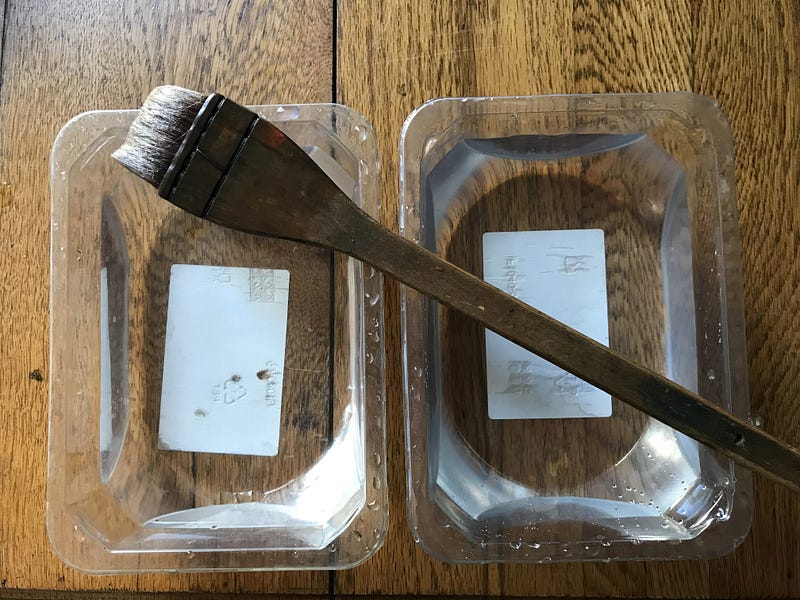
Always start with two containers of clean water, and always change water when it gets too much colour in it.
Dunking the brush in the water and simply dragging it over the rim of the container will get a lot of the water out, but, unless you’re about to mix up a very large pool of colour, it will still probably have too much water in it.
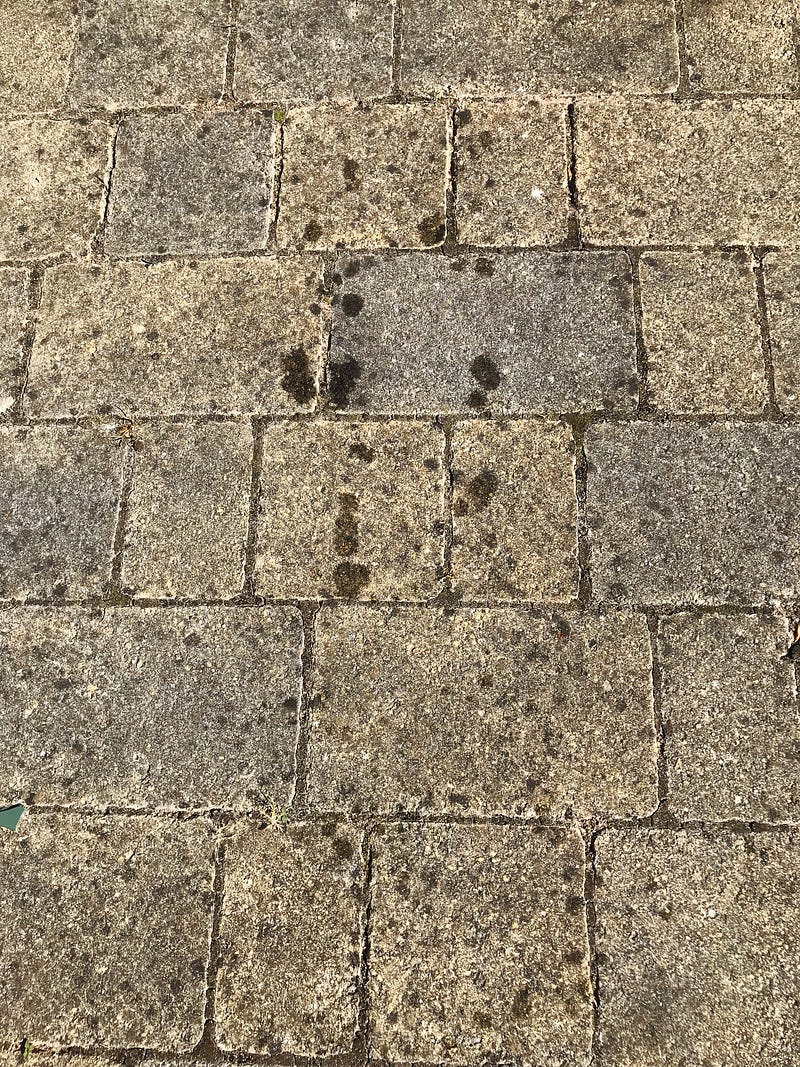
My preferred method of getting just the right amount of water in my brush is to swish it around in the clean water before I’m ready to mix the paint, and then to flick my brush so the excess water flies off.
It usually does so in an artistic arc and, depending on the strength of the flick, I can end up with exactly the right amount of moisture in the brush. It just needs a little practice.
This is fine if the floor doesn’t mind. Some floors do mind, however, so you might need to cover them with newspaper first.
I went outside to see what kind of pattern flicking my brush would get — those are the darker spots above. It was such a hot day, though, the splashes were drying as soon as they hit the ground. But, anyway, you can see it would be quite a spread.
So, indoors, your floor needs to be able to handle it. It’s always going to be clean water, and not painty water, so there is that.
But there are other methods.
- You can run the water-laden brush through your fingers to remove excess water.
- You can do the same thing using kitchen towel.
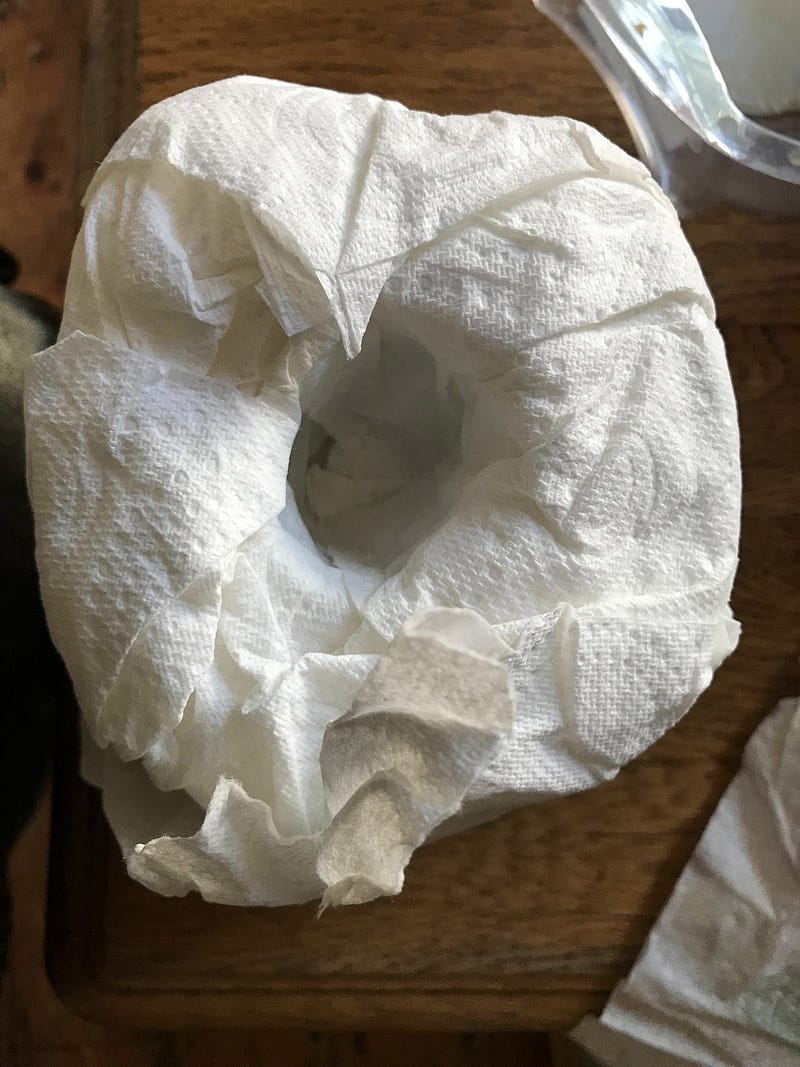
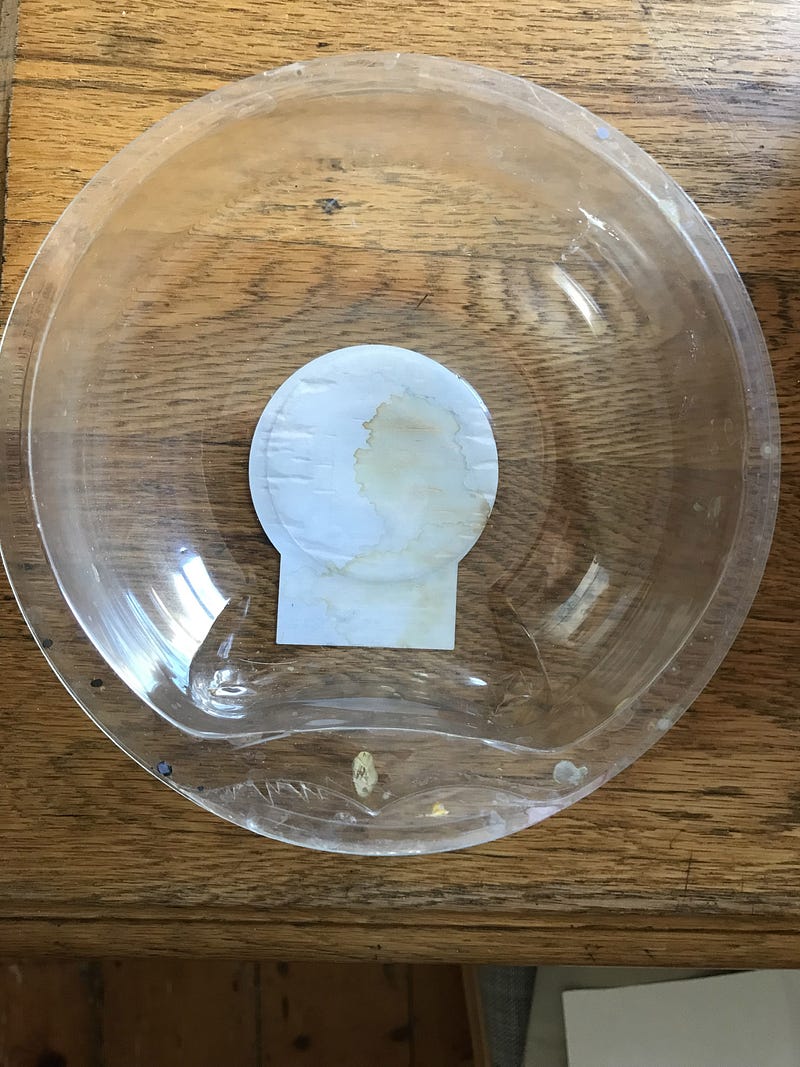
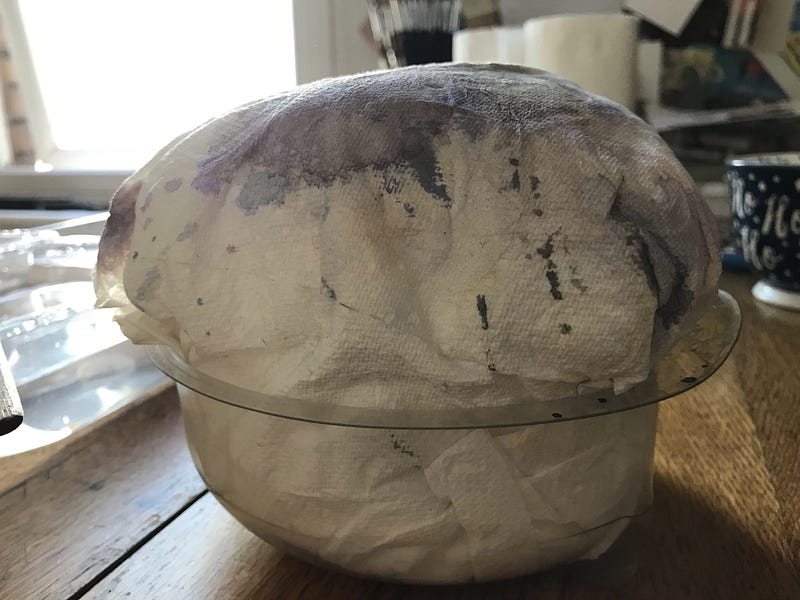
This thing — above — is useful for dabbing your brush onto when it has too much wet paint on it. It probably has a technical term, but I don’t know what it is. I’ve never called it anything.
It’s a toilet roll wrapped in kitchen towel and stuffed into an empty veg container. And it’s particularly good when the liquid that needs to be removed is paint and not just clean water — in which case, I can’t flick it on to the floor.
Every now and then I change the outer layer of kitchen towel for clean ones.
Anything absorbent can be used, including tissues, sponges, and some types of cloth.
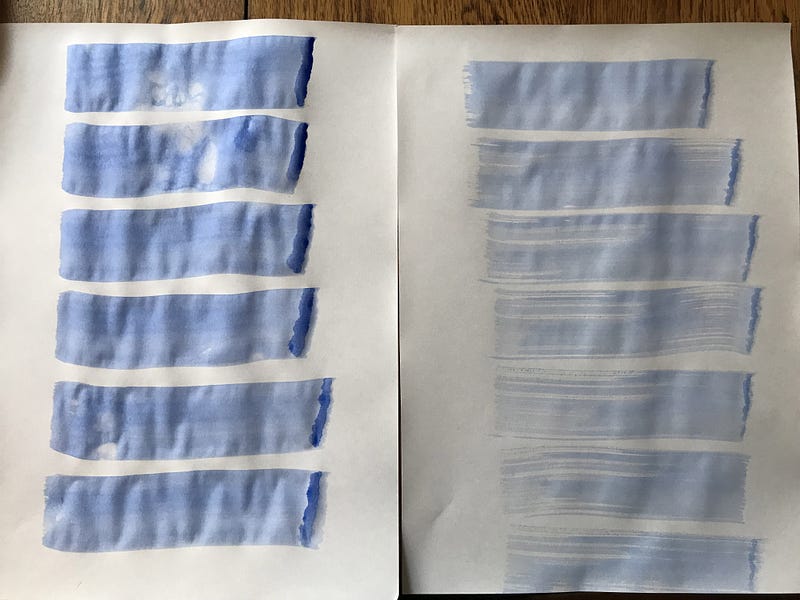
Another way I often use to get exactly the right amount of paint on my brush, is by brushing off the excess onto scrap paper and then I can also see if it’s the colour I want. Above are two sheets of scrap paper I’ve used to dry a brush enough to use it on my actual painting.
I wouldn’t normally do it as tidily as that, but that’s to illustrate how the colour changes as you go along.
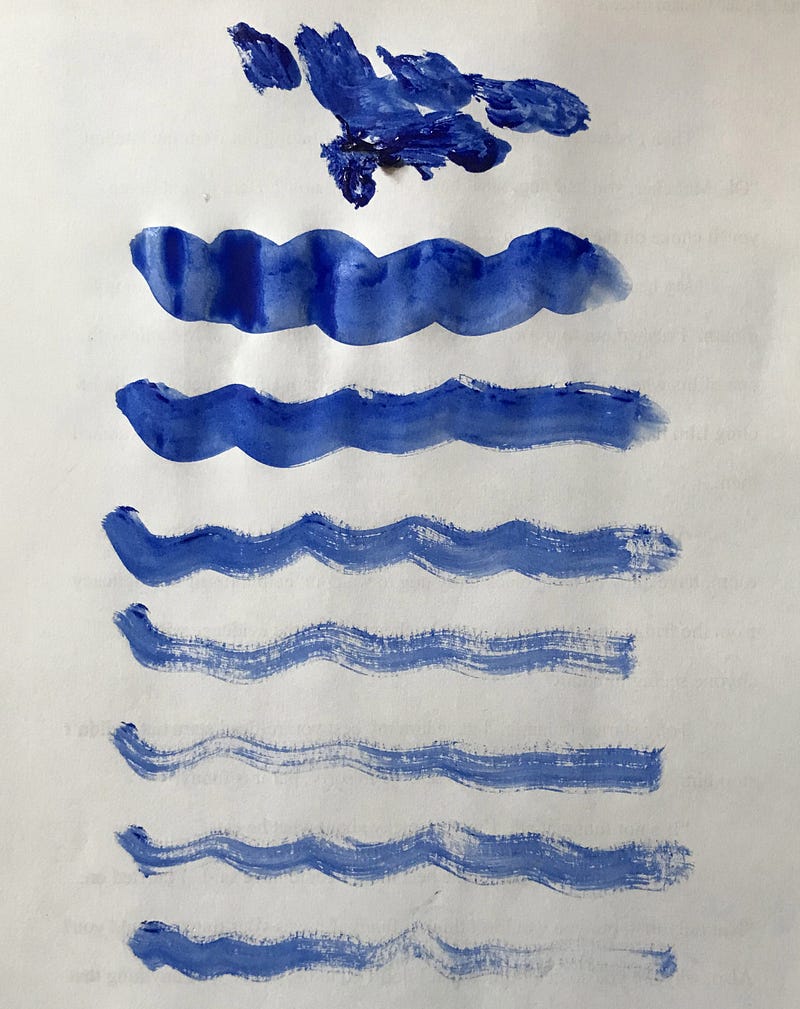
If there is too little water on your brush, the paint won’t mix properly and you’ll be in danger of dragging unmixed paint around your paper. That would look unsightly.
One of the main reasons to use watercolour is its marvellous property of transparency so that the white of the paper shines through the paint.
The paint needs to be mixed properly to be transparent and fresh — if it’s not mixed properly it might as well be poster paint.
If you do end up with too much water, or pools of paint, on your painting, you can remove it with a clean brush or kitchen towel — by allowing it to soak up like a wick, rather than by dabbing it.
Before you get to your painting, though, if you’ve tried your paint on scrap paper to make sure it’s the colour you want, you won’t end up with too much water or paint on your picture. This is, in general, actually the most reliable method.
Scrap Paper Rules!
If you have too much water on your palette, then simply blot some of it up with kitchen towel to get your palette under control again.
More ways of making sure you have the right amount of water or paint on your brush will arise as we go through painting various pictures.
All paintings and photos by Susan Alison
A useful session on the gear you need:
How to start painting: