
AI Revives John Lennon’s Final Song
Learn how Generative AI was able to ‘extricate’ Lennon’s voice from an old cassette tape recording
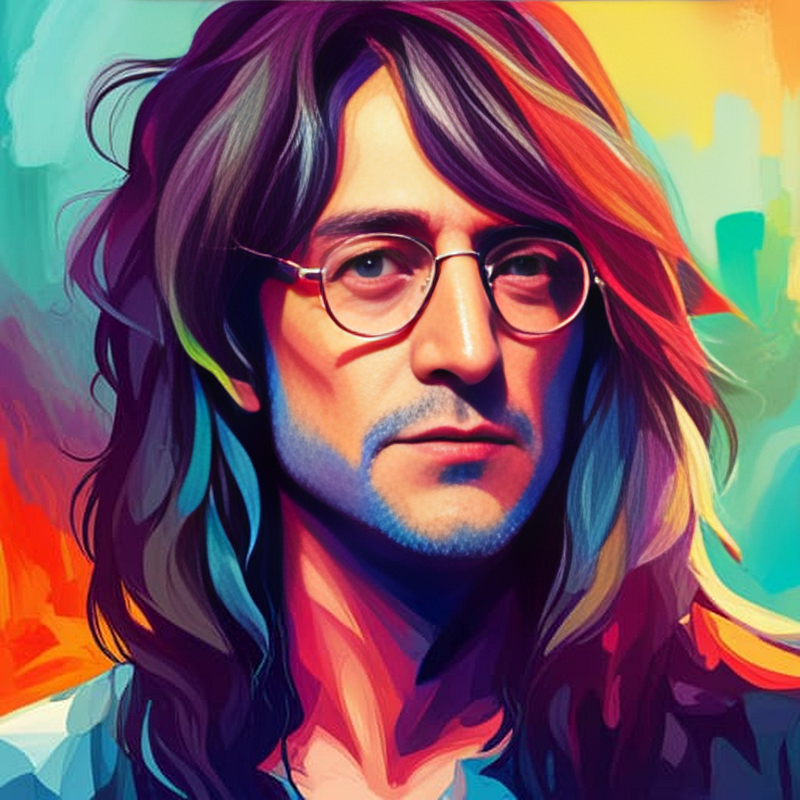
Today I’ve got a mind-blowing scoop that I believe will make your eardrums tingle with excitement. The Beatles are back, and they’re bringing us a never-before-heard gem, courtesy of none other than Gen-AI.
A while ago, I shared how AI helped revive Kurt Cobain’s iconic voice for a brand-new Nirvana song precisely 27 years after he passed away at age 27.
Now, I couldn’t believe it when I heard Paul McCartney spill the beans to announce how artificial intelligence had again worked its magic, resurrecting John Lennon’s voice from the depths of an old tape.
So, let me assure you that this isn’t some elaborate fan-made prank or wishful thinking.
This is as real as it gets. McCartney is working on offering us the last chapter in the Beatles’ legendary musical journey.
All thanks to the mind-bending power of AI.
I know it sounds like something out of a sci-fi flick, but believe me, it’s happening.
John Lennon’s last song
Tucked away in the dust of time lay an old cassette labeled “For Paul,” its magnetic tape imprinted with Lennon’s music.
An unfinished melody, frozen in time, kept under wraps for decades, waiting for its chance to be heard.
Though Lennon remained tight-lipped about it, some claim it might be none other than the enigmatic “Now and Then," one of the songs he recorded shortly before he died in 1980.
A poignant gift passed from John Lennon to Paul McCartney through the hands of Yoko Ono in 1994. A love song laden with heartfelt emotion, “Now and Then” could have been the Beatles’ triumphant reunion anthem.
But alas, the story took an unexpected twist.
Flashback to 1995, a pivotal moment when the remaining Beatles were considering a comeback. “Now and Then” emerged as a potential reunion anthem.
But alas, the stars didn’t align, and the project was put on hold. “Now and Then” became a forgotten treasure, buried deep in the archives of musical history, until now.
Even if the dream of bringing “Now and Then” to life remained unfulfilled, fans still got two other great songs: “Free As a Bird” and “Real Love.” They offered a fleeting glimpse into Lennon’s genius, leaving us longing for more.
Now, fast forward to today, and through the power of AI, we’re on the cusp of experiencing the voice of Lennon once again, infused into the fabric of “Now and Then.”
Unlocking The Beatles past with AI
The revamping process goes back to Peter Jackson's documentary The Beatles: Get Back (2021).
Back then, dialogue editor Emile de la Rey trained algorithms to recognize the Beatles’ voices and separate them from background noise (including instruments) to create “clean” audio.
Afterward, Jackson was able to extract John’s voice from the cassette tape.
McCartney explained the process:
“We had John’s voice and a piano and he could separate them with AI. They tell the machine, ‘That’s the voice. This is a guitar. Lose the guitar’.
The footage below, taken from “Get Back,” unveils the intricate workings of AI and machine learning. Witness as the algorithm grasps the essence of each instrument, deftly isolating them into distinct tracks.
It’s as if the algorithm held the keys to a musical puzzle, delicately unraveling the strands and making them whole once more.
The result?
A new piece where Lennon’s voice is lifted to new heights, surrounded by the harmonies that defined an era.
The mere thought of listening to Lennon’s voice on his final song immediately sends shivers down my spine.
The future of AI in music
Looking into all the aspects of the spectrum of the fusion between music and AI, I can’t help but ponder the profound impact it has had on the industry.
The rise of AI has been met with divergent thoughts, stirring a whirlwind of discussions and controversies.
Even Paul McCartney shared how he found himself caught in the midst of these swirling emotions.
In his own words, he expresses a blend of fear and enthusiasm, acknowledging the eerie yet exhilarating nature of AI’s capabilities. It’s a sentiment shared by many of us as we tread uncharted territory.
“I don’t go online much,” he muses, “but people will tell me about songs where John sings my tunes, and it’s just AI… It’s kind of scary but exciting because it’s the future. We’ll have to see where it takes us.”
Indeed, the possibilities that lie ahead are as vast as the cosmos.
AI, with its uncanny ability to extract and recreate, opens doors to untold musical dimensions.
Yet, with every step into this brave new world, we grapple with the boundaries and ethics that accompany such revolutionary progress.
In this era of experimentation, where AI-generated art forms can both captivate and deceive, I believe we find ourselves at a crossroads. This is why I look at AI assistance as a tool.
Humans are the alchemists, the stewards of art and creativity; AI is just the chisel in the sculptor’s hand.
Closing thoughts
Meta has just released MusicGen, its own AI-powered music generator, an innovative tool that utilizes AI to transform text prompts into audio recordings, pushing the boundaries of music generation even further.
Hence, the emergence of AI as a creative partner raises countless questions. With each technological stride, we are venturing into uncharted territories of creativity.
In this dance between humans and the ghost in the machine, where the past collides with the future, let’s be mindful of the delicate balance between innovation and the preservation of human expression.
Join the conversation and share your thoughts on this mesmerizing fusion of AI and music — are we witnessing a revolution or traversing a delicate artistic tightrope? I want to hear your perspective on the dance between humanity and AI. Are we the puppets or the puppeteer?