
Fundamental Purpose (and Meaning) of Life: Part 2
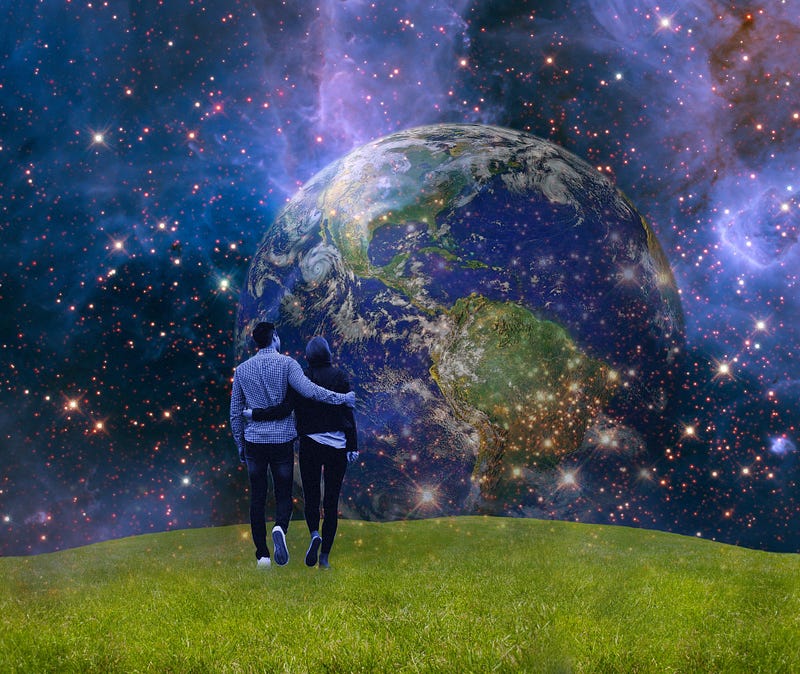
As the threat to our ways of life continues, so does the importance of asking profound questions about our existence, including the purpose and meaning of life.
This article extends a logic/science-based examination of the fundamental purpose of life presented in part 1 at this link. Now, in part 2, I extend the initial article by providing a rationale for having included a metaphysical (nonmaterial, nonphysical) perspective, as well as by adding an exploration of the meaning of life.
Introduction and Brief Review
In the part 1 article, I used science and logic to support the proposal that the fundamental purpose of all forms of life is to Experience. This conclusion is based in part on the logic that the only thing all life forms must do to is have experiences.
Experience, in this case, is defined as moments of awareness in which a life form is focused on, and attentive to, internal and/or external events (stimuli, sensations) based on the biological makeup of its species. Depending on the life form and situation, experiences may be remembered, conscious or unconscious, and result in reaction and/or learning.
Challenge of Materialism
I recently received several challenges to my purpose of life proposal. They were based on a materialistic perspective which asserted that the concept of purpose infers some kind of metaphysical design or reason for the existence of life. They contended that life can be viewed as an emergent outcome of physical (biological) processes in which energy is transformed with no need to define any other purpose.
From that materialistic viewpoint, it’s enough to say, for example, that living things are collections of atoms and groups of molecules that are naturally drawn together to form mitochondria and other nuclei structures. These structures form cells and, for some species, the cells gather to form organs. Chemical and electrical signaling through electron transport leads to organized interaction among large groupings of living cells (and organs) that build life forms.
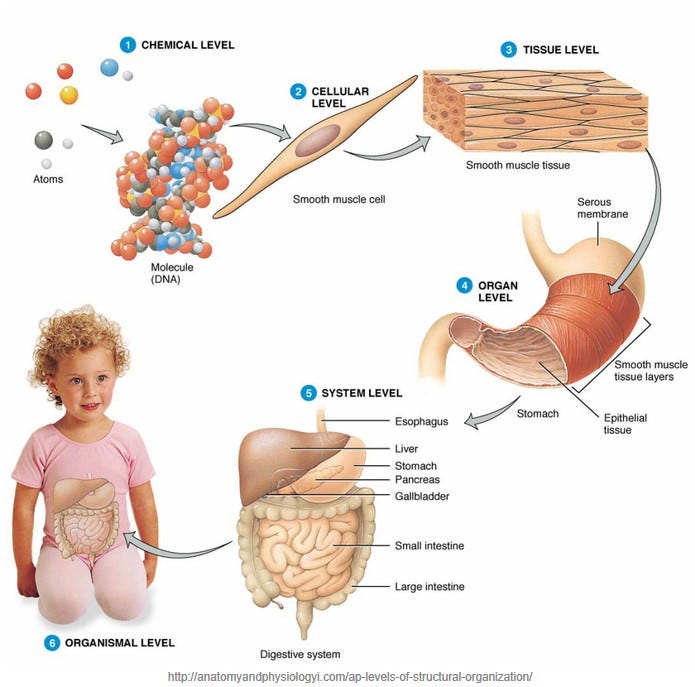
Since those biological processes describe a purpose of life from a materialistic perspective that’s based on scientific facts from physics and chemistry, why bother exploring life purpose any further?
Life Purpose & Meaning and the Metaphysical
Humans have a psychological need to explain the inexplicable nonmaterial/nonphysical aspects of life and existence, which include questions of life purpose and meaning. This may be due to an inborn desire to view the unbelievable complexity and mysteries of life as more than a means to transform energy into living matter, or it may just be human curiosity. In any case, it’s important to many people and the answers can be sought in different ways.
Logic and Science Approach
One way to find those answers about life purpose and meaning to use logic and science in an attempt to “bridge” the material aspects of nature with the metaphysical.
This approach is supported by the fact that we cannot eliminate the possibility of an unknown force (or being) for whom the reality we experience exists for its own unseen purposes. Even though there’s no scientific evidence of that possibility, sound logic remains a viable path to reasoned understandings about ourselves and the universe. The advantage of this approach is that it’s rational (coherent, impartial, intelligent, reasonable, and thoughtful); it doesn’t rely on religious beliefs nor mysticism; and doesn’t reject proven science.
There’s another approach, however, one that requires acceptance of (faith in) religious belief.
Religious Beliefs Approach
Religion has been around for over 5,000 years to fill that metaphysical knowledge gap. I remain neutral on religion, knowing of its positive and negative sides. I do recognize the potential value of adaptive, open-minded, faith-based beliefs that helps increase global well-being by bringing all peoples together through a sense of love, compassion, and rational acceptance; by promoting the Golden Rule of “do unto others as you would have them do unto you;” and by accepting the scientific method and sound logic.

A Pathway to Metaphysical Understanding
I addressed the search for metaphysical understanding in part 1 by defining the key hypothetical concepts of Consciousness and Mind in a way that does not dispute scientific facts nor rely on religious belief.
Consciousness and Mind
I proposed that Cosmic Consciousness (CC) has a Universal Mind (UM) and each Individual Consciousness (IC) has a its own mind. CC is defined as a nonmaterial “life-force” — which some may define as a deity (God) — from which all forms of life are materialized (i.e., obtain a physical structure) guided by the Laws of Nature. The IC of each life form also comes from CC, which gives the living thing the ability to have awareness and experiences that emerge from interactions within its material brain (and/or sense organs).
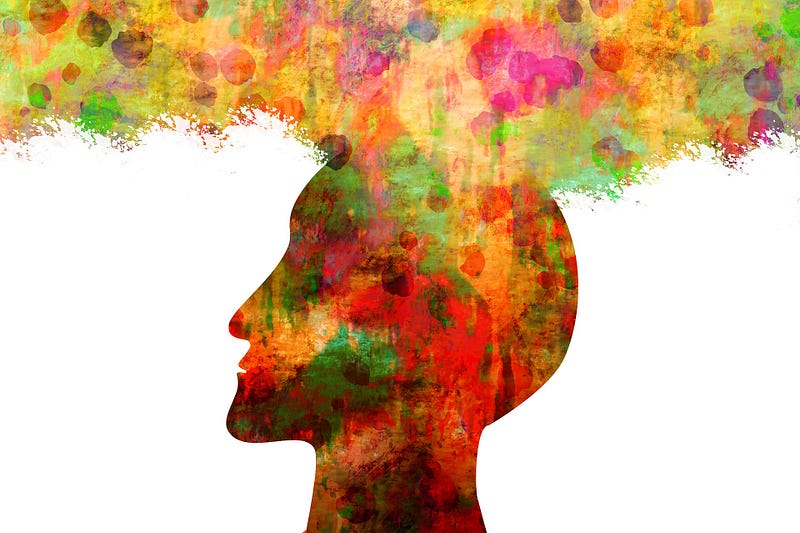
I further proposed that CC’s Universal Mind connects to the individual minds of all ICs (and ICs minds connect with each other). These nonmaterial minds function as “transceivers” that exchange information through feedback loops. Intuitive information is transmitted from the CC to each IC, which provides the IC a form of understanding without reasoning (instinctive knowledge). And information from ICs’ experiences is transmitted to the CC (and to other ICs).
Universal Mind (UM) Concept
As discussed in part 1, the UM concept is hypothesized to contain every bit of information ever created since the beginning of time. That information is accessible by CC which enables it to know everything (have omniscience).
Information Patterns
Information bits contained in the UM consist of patterns formed by subatomic particles that form all matter/energy. These information patterns are in all inanimate objects, as well as in living things and their experiences.
Information Patterns of Experience
All life forms have experiences that occur as electrical current passes through the neural connections in their brains, nervous systems, or other internal biological structures. This electrical current forms complex patterns of electrons in space (in the Universe).
The information patterns created by the brains of highly intelligent life forms are quite complex since, for example, a human brain has an estimated 100 trillion possible neuronal connections, which might make it the most complex object in the universe that we know. Logically, this could mean the information brain patterns produce when we have experiences fill the Universe with “amplified” information.
All the patterns from all types of information, I hypothesize, could provide everything CC needs to understand the underlying structure and substance of everything in the Universe throughout all time.
UM’s “Storage Device”
What could possibly store such massive amounts of ever-growing, ever-changing bits of information? A logical choice is the Universe. Thus, I propose that CC has a UM and it’s the Universe itself.
Meaning of Life
There’s one more concept to examine, one that’s related to life purpose: the meaning of life.
Humans have been on earth for about 200,000 thousand years. While barely a blip on the universe’s timeline, there’s something about our species that has enabled us to survive even this long. What is it, how has it extended our species existence, and can it define the meaning of life and explain what it means to live a meaningful life?
Meaning of Meaning
The concept of meaning (or meaningful) can refer to something’s inherent value/worth including its usefulness, benefit, etc. So, the meaning of life can be exemplified by people who aim to benefit themselves and others through thoughts, feelings, and actions that foster each other’s well-being.
Living a Meaningful Life
Human nature is polar, i.e., there are continuums of character traits we all have that range from positive (healthy, constructive and adaptive) to negative (unhealthy, destructive and maladaptive).
These character traits are affected by our lifetime of experiences. We are influenced, for example, by our family relationships, cultural mores, societal values, religious teachings, political influences, as well as by our inborn tendencies. All these things contribute to what we think, feel, and do. Those thoughts, emotions, and actions determine whether we more often express the positive side of human nature or the negative.
Since all humans are fallible/imperfect, and since each of our life experiences are different, it’s very unlikely (if not impossible) that anyone can express only the positive or the negative aspects of our nature; we’re all prone to some mixture of both aspects.
Nevertheless, it’s logical to assume that positive expressions of human nature are more likely to lead to longer survival of our species and the experience of greater health and well-being. The more negative, the worse for humanity.
I therefore propose that a meaningful life can be defined by the degree to which a person expresses the positive side of human nature to promote the health and well-being of self and others.
Conclusion
The purpose of all life is to experience, and a meaningful life is one that enables people’s experiences to reflect the more positive side of human nature.
Both the purpose and meaning of human life can be defined using a combination of logic, science, and metaphysics that integrate multiple abstract concepts about the human nature and the nature of reality.
I intend to write additional articles that explore philosophical, psychological, and scientific topics about the elements of existence and reality, human experience, human nature, and key aspects of the self.


