
From Toxicity to Tolerance: Understanding the Causes of Hate Comments on NewsBreak vs Supportive Ones on Medium
I was labeled as satanic to write an inspiring and nuanced story supporting the position of the LGBTQ community with scientific perspectives from the growing literature.
Non-members can read this story via my friend link.
Since 2020, it has been clear that comments on NewsBreak articles can be upsetting and even soul-crushing for writers. Until 2022, I shared about 300 stories and encountered my fair share of negative comments, which didn’t bother me. In 2022 and 2023, I stopped contributing to NewsBreak for the reasons I mentioned in a previous story.
However, in 2024, one of my mentors encouraged me to give NewsBreak another try. He believed that my research and experience in some of my stories could inspire the US audience and positively impact their health and well-being on a larger scale. This proposal sounded great to me as I have an affinity for the US audience, which has inspired me to share my research.
Taking his advice, I published my first three articles, and to my surprise, they instantly went viral, garnering millions of views in just a month. NewsBreak is a leading media company in the US with over 45 million readers, mainly through its mobile app with an advanced distribution algorithm using cutting-edge artificial intelligence technologies.
Unlike Medium, which generates revenue solely from subscriber payments, typically around $5 per month, NewsBreak earns significant revenue from ads due to its over two billion monthly views in the USA. Hence, comparing the two platforms' distribution capabilities wouldn’t be fair. But that is not the point and focus of this story.
In this story, I want to discuss the impact and consequences of hate speech on social media, highlighting its widespread nature and harm to society.
We need to distinguish between criticism and hate speech. Criticism, vital for uncovering the truth, has always been welcomed in scientific, academic, and professional settings. It aids personal and professional growth.
However, hate speech lacks any constructive value and instead brings about harm. It operates through various mechanisms, causing significant damage to individuals and society, perpetuating discrimination and exclusion, and fueled by underlying social and psychological factors. Addressing these issues is crucial for fostering inclusive and respectful dialogue.
What is hate speech, and why is it detrimental to individuals and society?
Hate speech is characterized by its malicious intent to denigrate, intimidate, or incite violence against individuals or groups based on their race, ethnicity, religion, gender, sexual orientation, or other protected characteristics.
Hate speech involves the use of derogatory language, stereotypes, threats, or dehumanizing rhetoric aimed at marginalizing or harming others.
Some theories help explain the persistence and impact of hate speech. For example, social identity theory suggests that individuals derive their sense of self-worth and identity from group memberships, leading to in-group favoritism and out-group hostility.
The spiral of silence theory asserts that people refrain from expressing dissenting opinions for fear of social isolation or reprisal, allowing hate speech to proliferate unchecked. For example, this 2021 study found that higher connectivity between communities makes a global spiral of silence more likely.
Moreover, a network fragmented into smaller communities seems to provide more “safe spaces” for minority opinion to prevail. I will explain this finding in the next section.
Hate speech operates through various mechanisms, including verbal communication, written messages, online platforms, and non-verbal cues like gestures or symbols. It can spread through social networks, media channels, and interpersonal interactions, amplifying its reach and influence.
Hate speech can have severe consequences on individuals, communities, and society as a whole. It breeds division, hostility, and discrimination, leading to heightened tensions, conflicts, and violence. It can cause psychological harm, erode social cohesion, and undermine trust in institutions.
Hate speech can reinforce and perpetuate prejudice, stereotypes, and discriminatory attitudes towards marginalized groups based on factors like race, ethnicity, religion, gender, sexual orientation, or disability.
In short, hate speech creates a climate of fear, intimidation, and exclusion, limiting the participation and rights of targeted individuals or communities.
Findings of a 2023 study published in the Cyberpsychology, Behaviour, and Social Networking emphasize the need for public and scholarly discussions, more robust educational policies, and intervention programs with specific measures to counter hate speech online.
In contrast, criticism is a form of feedback or disagreement that aims to stimulate constructive dialogue or improvement. It typically involves respectful and reasoned arguments or feedback focused on specific actions, ideas, or behaviors rather than attacking individuals or groups personally.
Criticism encourages reflection, debate, and the exchange of ideas, which can lead to positive outcomes such as personal growth, improved understanding, and better decision-making.
Why did my story about “Queer Organisms” get so many hate comments on NewsBreak but all supportive comments on Medium?
Initially, I published the story titled Queer Organisms: Nature’s Lesson for Diversity, Inclusion, and Equality on Medium, where it received quick distribution and positive engagement.
Encouraged by the feedback, I republished it on NewsBreak with the same title a month later with minor editing to adhere to the platform policies. Unlike my earlier experiences with various topics, this particular story took longer to gain traction and visibility on the platform. I thought no one was interested in the story.
However, the story was properly distributed a few days ago. Following distribution, I observed a predominance of negative comments, unlike my other stories, which gained more positive comments, bringing me more readers.
While negative comments are acceptable to me, they include deeply hurtful remarks like accusations of being satanic and harmful ideas for humanity. Most of the comments said that homosexuality was against nature, which is an opinion, but using derogatory terms against homosexuals was hurtful.
These sentiments echo debates I encountered 50 years ago, where explanations from my teacher failed to satisfy my childhood curiosity. Thus, I wrote this story to illustrate the evolution of our understanding over several decades through scientific discoveries.
In crafting this story, I intended to offer fresh and valuable insights from the growing body of knowledge supported by credible sources written by esteemed scientists who have made significant contributions to the field.
While I did not specifically craft the story for the LGBTQ community, some readers who harbor animosity towards this community perceived it as propaganda, overlooking the essential scientific discoveries made over recent decades.
Although it is valid to critique scientific theories and hypotheses, categorizing them as harmful solely through the lens of personal beliefs does not contribute constructively to the discourse.
The moderation policies and practices on NewsBreak and Medium differ significantly, particularly regarding content regulation, comment moderation, and enforcement of community guidelines. This discrepancy could impact the prevalence of hate comments or the overall tone of discourse on each platform.
To address why hate speech appears less prevalent on Medium, it is crucial to consider the platform’s moderation approach. Medium has strict policies against hate speech and allows readers to report harmful content, prompting the platform to take necessary action, such as content removal.
Conversely, NewsBreak needs this reporting option. However, NewsBreak allows writers to restrict comments or allow them only from followers. I also learned that we can delete them. Despite this feature, I prefer open comments from everyone, as diverse perspectives and sentiments can enrich and expand a story's narrative and reach a broader audience. Hiding hate comments, as we do on Medium, can be a valuable feature of NewsBreak.
NewsBreak and Medium serve distinct audiences with diverse demographics, interests, and ideologies, which likely contribute to the varying reactions to my story. On NewsBreak, the audience, in general, appears to hold different perspectives and biases, mainly from the US, compared to the global audience on Medium, resulting in differing responses to new ideas.
Medium supports a global community where members seek to enhance their knowledge, experiences, and perspectives by paying for a subscription. Conversely, the NewsBreak non-paying audience may utilize the platform for various purposes, including political motives and ideological dissemination.
In the context of my story, some religious people found my content offensive despite its focus on scientific, social, philosophical, and psychological aspects rather than religious connotations.
So, cultural factors also might play a significant role in the difference. Each platform has its distinct culture and norms regarding content, engagement, and community interaction.
NewsBreak’s culture is more conducive to negative comments or trolling behavior, whereas Medium’s culture encourages more constructive and supportive discourse. Therefore, I write more on Medium, especially appealing to the global audience, and only repurpose some content on NewsBreak to reach a broader audience in the USA.
In addition, Medium has community engagement to clear hate speech using publication features. For example, as soon as I established my publications on Medium, I created a policy titled ILLUMINATION Does NOT Publish Content with Defamation, Discrimination, and Hate Speech.
NewsBreak does not have a publication feature involving community editors and only depends on its in-house editors or moderators to monitor content, which does not happen. Therefore, it is impossible for them to detect hate speech in story comments, which also has no reporting feature, unlike Medium. Thus, it is the writers’ responsibility to weed them.
Conclusions and Takeaways
Reflecting on the divergent responses to my story across NewsBreak and Medium, it is evident that hate speech on social media platforms remains a concerning issue. Although I used comments as an example, I also want to highlight the detrimental effects of stories, podcasts, or videos with hate speech.
While criticism encourages growth and dialogue, hate speech lacks constructive value and perpetuates harm and division in society. Understanding the mechanisms and implications of hate speech is crucial for combating its detrimental effects and promoting inclusive discourse.
The prevalence of hate comments on NewsBreak, juxtaposed with the supportive engagement on Medium, highlights the importance of platform culture and moderation policies.
Medium’s proactive approach to content regulation and enforcement of community guidelines facilitates a more constructive and respectful environment than NewsBreak.
While both platforms cater to diverse audiences, their differing demographics, interests, and ideologies contribute to the varied responses to my story.
Moving forward, writers and readers can draw practical insights from this exploration. First, promoting a culture of respectful dialogue and constructive criticism is essential for creating a positive online community.
Platforms should prioritize robust moderation practices to curb hate speech and promote inclusivity. Readers can also contribute by reporting harmful content and engaging in meaningful discourse that upholds mutual respect and understanding.
Moreover, writers should consider platform dynamics and audience demographics when crafting and distributing content.
While engaging with diverse perspectives enriches discourse, it is essential to prioritize platforms that align with one’s values and objectives. By leveraging these insights, we can work towards a digital landscape that cultivates empathy, understanding, and positive social change.
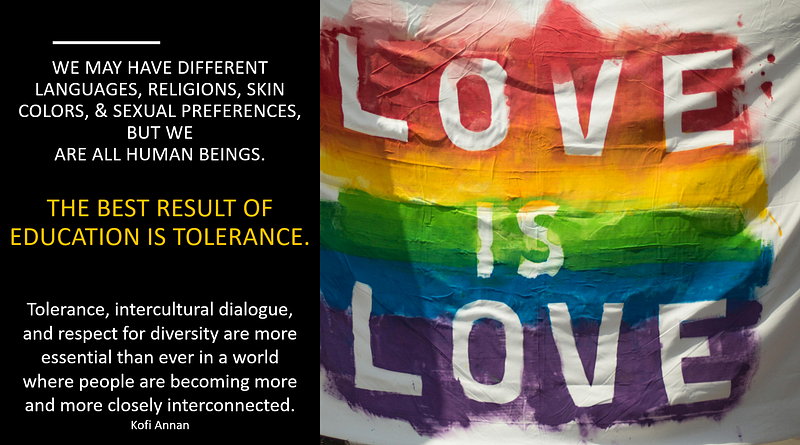
Beyond writing and reading, as a society, we must extend our tolerance to embrace new ideas, engage in open-minded discussions, respect differing opinions, and agree to disagree instead of resorting to expressions of hatred. In the end, we all belong to the collective consciousness.
This approach can promote understanding, empathy, and mutual respect among individuals with diverse perspectives and beliefs. By embracing tolerance and constructive dialogue, we can create opportunities for learning, growth, and positive social change.
This collective effort paves the way for a brighter future in which everyone is valued and respected for their unique contributions. We can create a world where inclusivity reigns supreme and collaboration leads to collective prosperity and well-being.
Thank you for reading my perspectives. I wish you a healthy and happy life.
To inform my new readers, I wrote numerous articles that might inform and inspire you. Some of my topics include brain, mental health, cognitive function, significant health conditions, longevity, nutrition/food, valuable nutrients, ketogenic lifestyle, self-healing, weight management, writing/reading, and humor, including 100+ Insightful Life Lessons from My Circles for the Last 50+ Years.
I publish my health and wellness stories on EUPHORIA. My posts do not include professional or health advice. I only document my reviews, observations, experiences, and perspectives to provide information and create awareness.
If you are a writer, you are welcome to join my publications by sending a request via this link. I support 28K writers who contribute to my publications on this platform. I also have another profile to write and curate tech stories.
Importance and Value of Medium Friendship for Writers and Readers


