
From Black Swans to Gray Rhinos: Risk Management Lessons From the Wild
“Success is about smart risk management, not about wild risk taking.” — Michael Masterson
Leadership is all about risk management.
Some risks are small, and easy to mitigate. These often don’t show up as risks at all.
Other risks are bigger, harder and scarier. These are oftentimes hard to predict, and difficult to manage.
In this article I will discuss the Animal Risk Matrix, which derives lessons from animal metaphors. These metaphors will help you build your risk management muscle, and become more effective as a leader.
The Elephant in the Room
Mr. Thompson — the CEO of a top technology firm — was a smart, confident and aggressive leader. In financial terms his company was doing well, and he was proud of how he had led the company through difficult times.
However, the employees weren’t happy, and the culture had become toxic — with infighting, unfair practices and employee burnout.
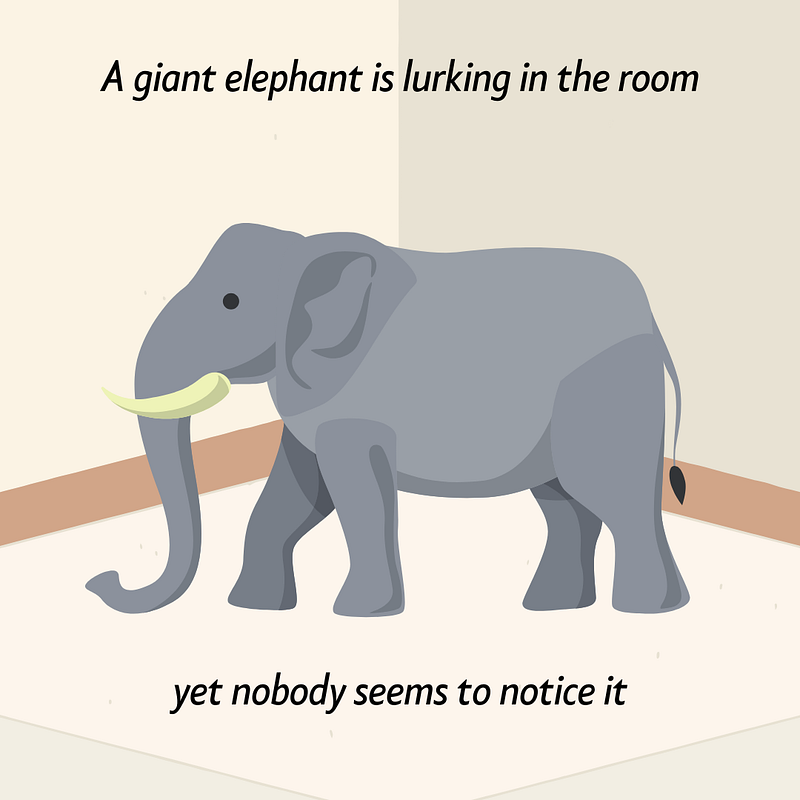
Inside the facade of the swanky office building there lurked a giant elephant. The elephant would follow Mr. Thompson around, and everyone in the senior leadership meetings could see the elephant in the room, yet nobody seemed to notice it.
The elephant in the room is a metaphor that represents:
The obvious and imminent problems or risks faced by a company, yet nobody dares to bring the issue up.
In the above example, the elephant in the room represents the employee morale issues that need urgent attention, yet the leadership chooses to ignore them.
As a leader, you need to constantly look out for those elephants lurking in the shadows of the room, and call them out while they are still young. As discussed in How Not to Get Crushed by the Elephant in the Room, the more these elephants are ignored, the faster they grow.
The Black Swan
The 2nd century Roman poet Juvenal wrote in his Satire VI about:
“A bird as rare upon the earth as a Black Swan.”
When this phrase was coined, the Black Swan was presumed by Romans not to exist.
Juvenal’s phrase remained undisputed for almost 15 centuries, and was a common expression in 16th century London as a statement of impossibility. It was assumed that all swans must be white because all historical records of swans reported that they had white feathers. In that context, a black swan was impossible or at least, non-existent.
However, in 1697, Dutch explorers led by Willem de Vlamingh became the first Europeans to see black swans, in Wester Australia. The term subsequently started representing the idea that: “A perceived impossibility might later be disproved.”
The Black Swan Theory was developed by Lebanese-American statistician Nassim Nicholas Taleb, and represents:
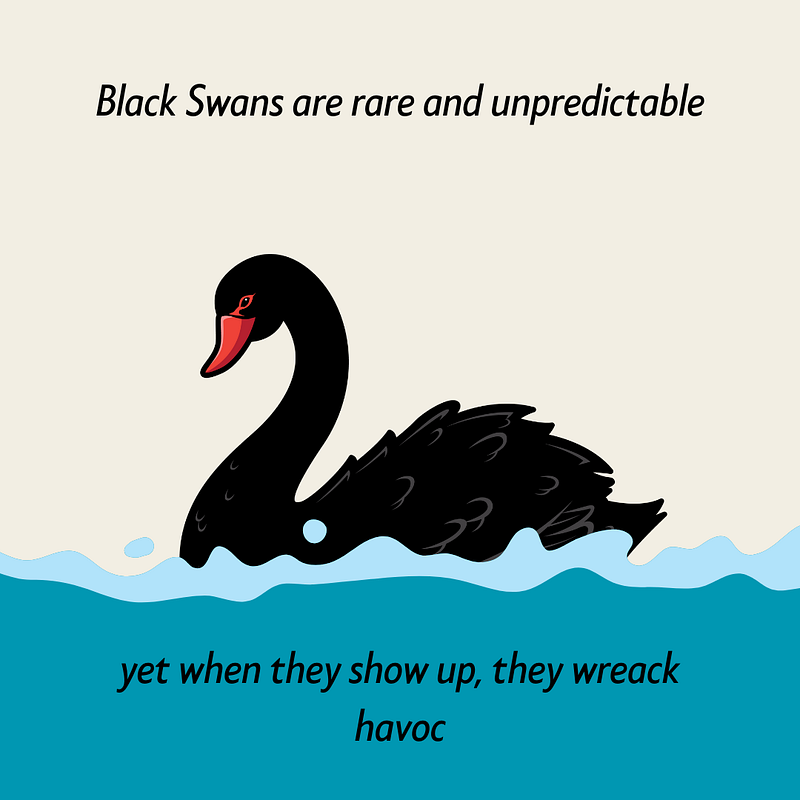
An event that is rare and hard to predict, yet can have a major impact when it does occur.
The onslaught of the COVID-19 pandemic has also been referred to as an example of a black swan event.
As a leader, you need to recognize the existence of black swans in your world. While it may be impossible to predict these events, you need to build robustness to be able to handle these events when they do occur. Whether it is a path-breaking discovery that changes the course of your industry, or an event that takes the financial markets by surprise, you need to be ready for the next occurrence of the black swan.
The Gray Rhino
I grew up in Tanzania, East Africa, on the foothills of Mount Kilimanjaro. Every time I went to one of several wildlife reserves in the region, I would see scores of rhinos grazing the savanna.
Every single one of the rhinos was gray.
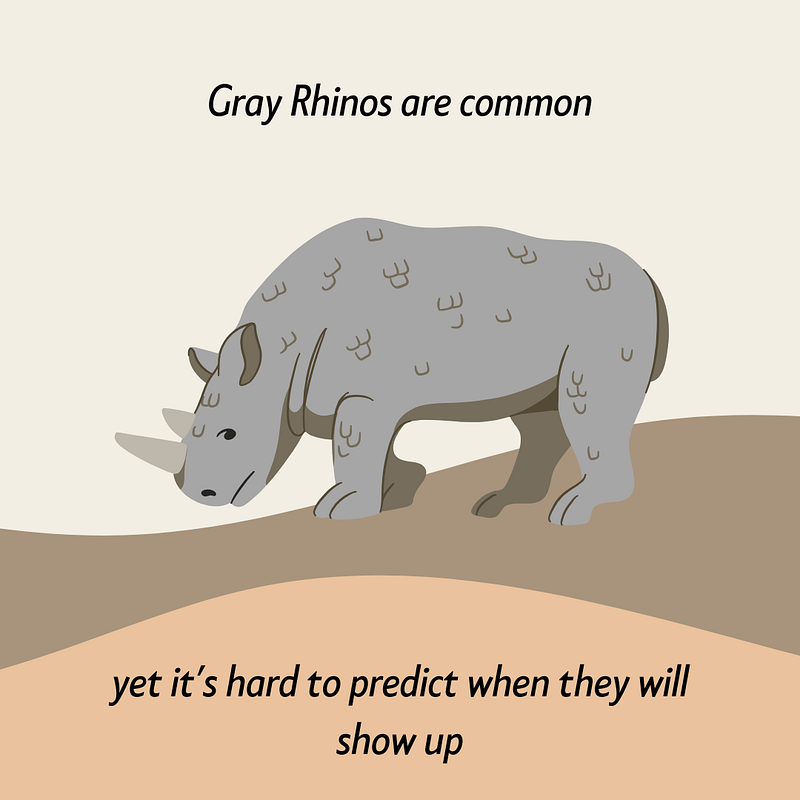
The Gray Rhino is a metaphor that was coined in conjunction with the Black Swan. In his book “The Gray Rhino: How to Recognize and Act on the Obvious Dangers We Ignore” speaker and author Michele Wucker refers to gray rhinos as highly likely, yet not so obvious and ignored threats.
Just like Black Swans, Gray Rhinos are hard to predict.
You may have a two-ton, horny thing coming right at you, and you may not see it.
The metaphor is used to highlight that so many of the things that go wrong in business, in policy, and in our personal lives are actually avoidable. We don’t pay attention to the problems, while knowing all along that they are there.
As a leader, you need to regularly do a “gray rhino check”. List down the threats and risks that your organization faces, and create your strategy to handle them. You know the gray rhinos are out there —you just don’t know when they will show up.
The Black Jellyfish
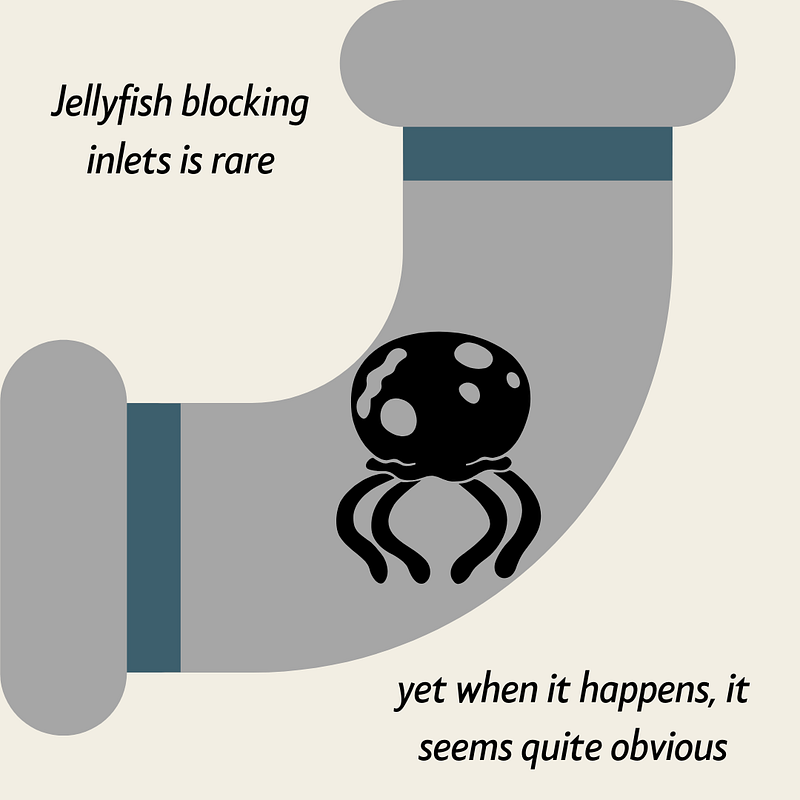
In 2011, the Shimane nuclear power plant in Japan had to shut down due to an influx of jellyfish. In 2013, a similar incident occurred at a nuclear reactor site in Sweden which had to shut down due to jellyfish blocking water inlets. Another such incident was reported in California’s Diablo Canyon nuclear power plant.
In all these incidents, it was found that rising temperatures due to climate change created favorable conditions for the jellyfish populations to increase rapidly.
In fact, these incidents are not just limited to jellyfish. Many forms of acquatic life can cause problems with the cooling water intake system at nuclear power plants, including green algae.
A Black Jellyfish is a metaphor that represents:
An obvious risk or threat that is easy to predict, yet it is rare.
As a leader, you need to be mindful of potential “Jellyfish in your power plants”. You need to be aware of changes in the industry, in the environment, and be able to predict the onslaught of threats represented by the Jellyfish.
In Summary: The Animal Risk Matrix
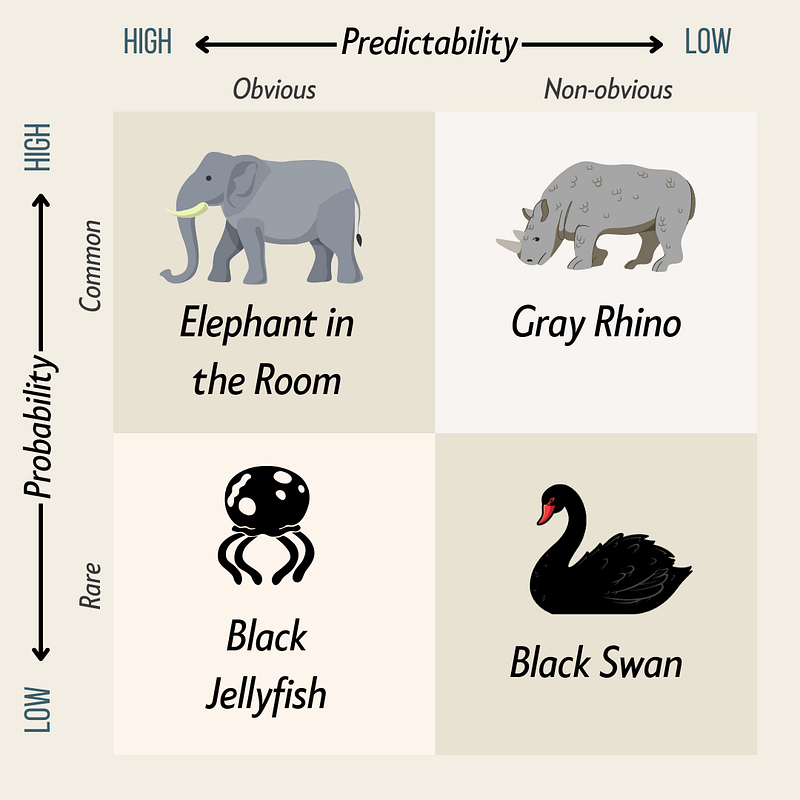
Risks come in different shapes and sizes, and as a leader you are faced with a variety of risks. Some risks are obvious, some are rare, while others are hard to predict.
In this article, we discussed the Animal Risk Matrix (aka Predictability vs Probability Matrix), which you can use to plot the risks you face to help guide your decisions.
As you plot your risks in the matrix, you will be able to associate your risks with one of the following animal metaphors:
- Elephant in the Room: These are risks that are looking at you in the eyes, yet nobody wants to talk about them. As a leader, you should be taking these head-on, and making sure that there are no lurking elephants under your watch.
- Black Swans: These are high-impact risks that are very rare and hard to predict. They can come in suddenly, and hit hard. As a leader, you need to build a robust strategy that can withstand the onslaught of these risks, when they do hit.
- Gray Rhinos: These are high-impact risks that are highly probable, yet hard to predict. As a leader, you should account for these risks given their occurrence, and have a strategy to handle them so they don’t turn into black swans.
- Black Jellyfish: These risks are predictable and easy to explain, yet they are rare. As a leader, you need to make sure your risk management strategy accounts for these, and build the guardrails to avoid them where possible.
When you are faced with a risk, ask yourself the question:
Is this a Black Swan, a Gray Rhino, a Black Jellyfish or an Elephant in the Room?
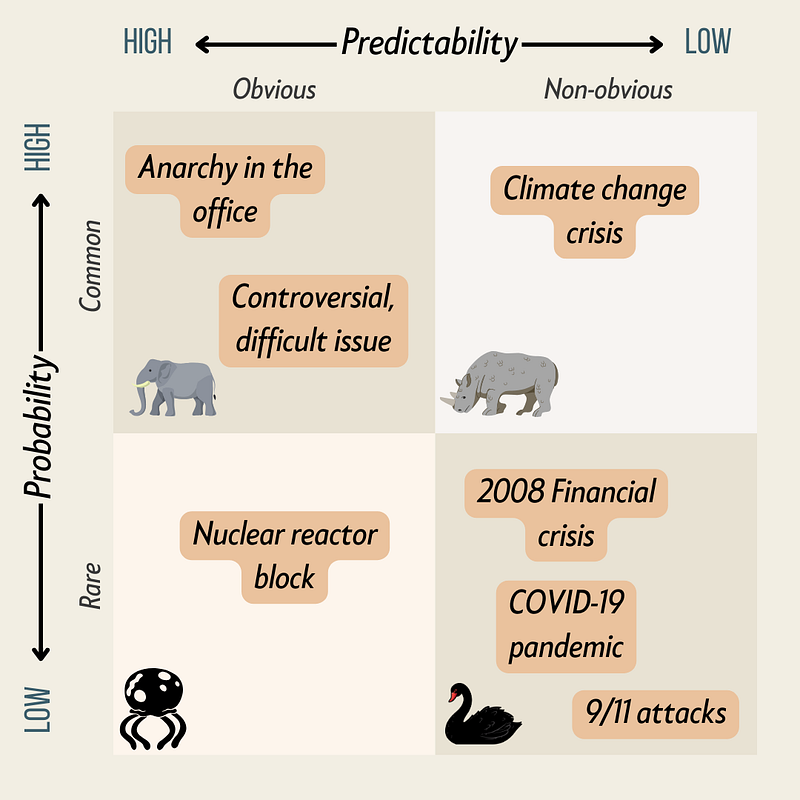
Once you make that association, and the connection, you will be able to better understand the risk, and in turn manage the risk more effectively.
Like my writing?
If you liked this post, I would appreciate some claps👏 as a form of encouragement. Thank you!
To read similar content you can follow me (Gaurav Jain) and subscribe to get these posts delivered directly to your Inbox. Check out my profile for other ways to connect with me.
Feedback is a gift! I would love to hear your thoughts and suggestions in the comments below 🙏
Looking for more? You may want to check out my eBook The Ultimate Leadership Toolkit, in which I summarize the Animal Risk Matrix along with 50+ leadership frameworks across 20+ categories. Medium members enjoy a 25% discount on this book using the coupon code MEDIUM25!
References:
- How Not to Get Crushed by the Elephant in the Room
- Black Swan Theory — Wikipedia
- Do “Gray Rhinos” Pose a Greater Threat Than Black Swans?
- Spineless attacks on nuclear power plants could increase
Related articles:


