
Five Best Practices for Pre-Service Teachers
A look at five points that can change the dynamics of classrooms today.

Let’s agree that being a teacher should never come as a second choice option for anyone.
If you find yourself taking on a career in teaching simply because the opportunity presented itself to you based on your academic credentials, then trust me you may only last the year — if you’re lucky.
If your true passion does not lie with teaching others, than please pass on any teaching opportunity that presents itself to you — trust me!
I’ve been a teacher for 22 years now, and I’ve never regretted giving my time to education because of the passion I have for this field.
I still remember my first class when I signed up to earn my second bachelor’s degree — a post graduate degree in education like it was yesterday.
This is mainly because the professor walked in, introduced himself, and said outright, if you are in this program to earn your summers off, you’re in the wrong program.
And he was right, after our first two week practicum, the original class size of 300 students was down to half.
I entered the primary — junior stage of education because at the time, back in 2002, it was what I thought I wanted. I wanted to work with students from kindergarten to grade six.
It was the age group I could connect with since I enjoyed spending time learning from them as I hoped they could learn from me.

I quickly learned through my practicums that being a kindergarten teacher required an energy level and patience beyond my abilities to give, and I am truely grateful for all the kindergarten teachers out there that love their jobs!
Through my journey with teaching I’ve taught students between the ages of 5 and 50 and I’ve come to realize there are important points that anyone considering a career in teaching need to consider before committing themselves to this career choice.
Let’s start by looking at the confidence it takes to be a teacher.
Building Confidence in Your Teaching Career
Building your confidence in teaching starts with appreciating that you are in a trusted position of authority.
You may not know, or have access to all the relavent information on your course topic that Google, or ChatGPT has, but it doesn’t matter, you are in the trusted position of sharing knowledge with students.
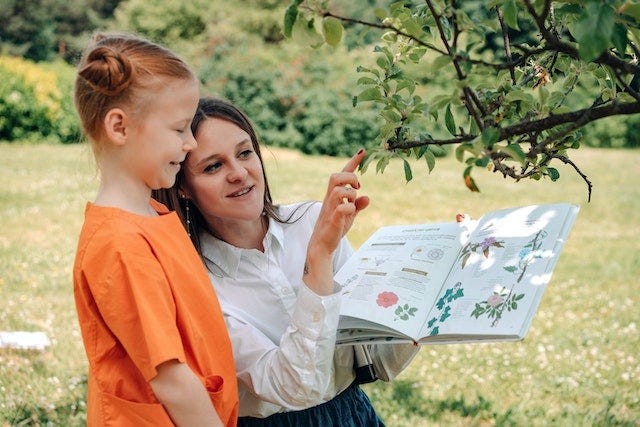
Therefore, the focus in your classroom should now be on how you teach, over that of what you teach.
Since teachers are now in competition with the Internet when it comes to presenting information in quick succession, students come to class looking to be engaged in more creative ways.
Teacher Identity in Education
As part of building teacher confidence, I look at teacher identities, and how teachers can recognize challenges to their teaching in any classroom.
By building their confidence, teachers can also begin to build on their efficacy.
Teachers faced one of their biggest challenges to their identities, efficacy, and confidence when in 2020, teaching online became the main platform while schools where in lockdown.
I put together a video exploring these challenges, and how teachers can best handle the online classroom and care for their mental health at the same time.
Watch the video below.
Building Efficacy in New Teachers
Efficacy is the belief in one’s own abilities to perform tasks in a way that is expected and that they are happy with.
Teacher efficacy therefore, focuses on the task of connecting with students to be able to teach and inspire.
New teachers mindful of their efficacy should be able to strengthen the components I discuss as they gain experience in their teaching career.

Teacher efficacy is often the “make” or “break” factor that teachers continually face with their teaching careers.
It’s safe to admit that first year teaching is not what most expect it to be, and it can be quite overwhelming and intimidating when entering the classroom for the first time.
Master Any Teaching Environment (Online vs. In-person)
First year teachers who had to begin their teaching careers teaching online were warriors ready to fight unprepared in more than one sense of the word!
However, those determined to win the battle against teaching in the online classroom came out on top!

There has been much debate over whether teaching online leads to “learning loss” and that it is not a teacher’s first choice when it comes to teaching.
Choice in life decisions is important, and now we have teachers who may prefer to consider teaching online. Others may not prefer to teach online and that should be respected.
What then makes for an “amazing” teacher in the classroom?
This is the teacher that students will favor because of how valued they feel and the knowledge they gain by being in the presence of this teacher.
Five Important Teaching Points To Building Teacher Efficacy
Here now are the five important points new teachers need to consider when looking to build their confidence and efficacy in the classroom.
When used with confidence, enthusiasm, and most importantly, patience, these points are guaranteed to allow a teacher to enjoy a happy, successful, and long-lasting teaching career.
I. Teacher attitude and Personality (It Matters)
In teaching, a good portion of our duties, roughly 40%**, is passing on the knowledge to students in order for them to succeed, however that’s not the hard part. The other 60%** is convincing them to listen to you.
**Note: The percentage statistics mentioned above are meant for entertainment purposes only and not a scientific approach to teaching.
Students in today’s classroom reflect what society thinks is acceptable. You need to be aware of this as it helps in dealing with questions as well as behavior issues in today’s classroom.
A proper attitude towards convincing students to listen to what you have to say, means that your personality is one that is easy to get along with, and is willing to be funny, and transparent with students.

Comedic timing when used properly can bring much amusement, and comfort to both students and teachers in the classroom.
Teachers are human, and that means they will sometimes make mistakes. When mistakes by the teacher happen, it is better to admit it and correct the mistake, than to ignore or deny it.
Trust me, students will appreciate you more for your honesty, and will connect more to you as a teacher.
II. Teacher Readiness (Always, ALWAYS be Prepared)
“Expect the unexpected” is a phrase made popular in education, along with the phrase “take everything with a grain of salt”.
Why salt? It seems to be the “non-medical” cure for most health problems and now educational problems as well.
Formulating a plan for anything you do it is smart, and important.
Teachers should admit that lesson plans do serve a purpose, which is to guide the energy needed to maintain a high and lasting interest in the topic being discussed.
However, there are times when unexpected events occur during class (students who don’t want to co-operate) and that means plans quickly need to change and teachers need to take a new course of action.

It may not happen, but just know that it could, and know your classroom well enough to formulate a back up plan!
This also applies to teachable moments in the class.
The lesson plan you formulate is a guide, but if there is an opportunity to explore teachable moments, and how it connects to the lesson, then teachers should be encouraged to take this opportunity.
Teachable moments are usually unplanned, but they come up in ways to enhance understanding or open dialogue.
III. Time Management (Be aware at all times!)
Now this is not an invitation to stare at the clock in the classroom, but from time to time, be aware of how much time you allow for each activity during class.
As part of good classroom management strategies, there should be a clear beginning, middle, and end to the class so that students are not even aware of the time, and you may even be surprised to hear:
“Is class already done?”
If your students don’t want the class to end, you could count that lesson as a success!
On the other hand, if your students are constantly looking at their own clocks, or at the classroom clock, or even worse, making it known that they find the class boring by asking how much time is left in the class, than, you can say that it is not a class either of you want to remember.
IV. How To Ask Thought-Provoking Questions
As a teacher, you should try not start a lesson by telling the students right away what page to turn to. By doing this, you will have already lost half their attention.
Instead find interesting ways to begin your class by asking “thought provoking” questions.
If you are a biology teacher, for example,you could start by ask a question similar to; “Would you rather be a leaf or a tree?” and then go in to the lesson, keeping in mind to not let the time slip in this high energized debate.
So, which did you choose?
V. Seek Support from Other Teachers
Once you get to the teacher’s staff room you can find that most teachers will offer you support in dealing students and all the other wonderful stuff that goes along with being a teacher.
I am a fellow teacher, ready to support you!
On my website I have a blog space dedicated to teachers and several posts in support of teachers and teaching.
I encourage you to have look and wish you the best of luck with starting your teaching career.
So don’t wait, check it out!
Final Thoughts…
Teaching is one career that requires constant growth in learning and adaptability. Teachers are life long learners, and those who recognize this will find that they will enjoy a long, happy, and successful career serving others.
Click on the image below to watch my video about five teacher essentials you will need for any classroom!
And until next time, keep learning and have fun!
If you enjoyed this article consider my other articles on teaching in the classroom.


