
THE MEGADROUGHT SERIES 2022 — PART 7
Fire and Rain: The Summer That’s Been, And What’s In Store
A Southwest Regional Roundup of the Megadrought
OVERVIEW — GENERAL
The summer of 2022 has brought little good news, lots of bad news, and some baffling records.
Sometimes as I’m studying the megadrought, I look at the patterns of the past and think, “we’re going to come out of this.” It may take 100 years or so, but the earth will come out of it.
However, the earth wasn’t dealing with manmade climate change. Without fast action, we’re going to have to acclimate to conditions we’ve never before encountered. The question is, can we?
For the Colorado River, after 23 years of drought and 43 million more people in the states that it serves since 1950, it’s not going to just snap out of it. So for the rest of most of our lifetimes, Lakes Powell and Mead are not going to fill up.
It’s already happening, and it may not be long before we have to question if we drink the water we have or continue to hand most of it off to agriculture to raise our food.
Food or water?
The Western snowpacks didn’t materialize into streamflow last spring. The soil was so dry to begin with, that’s where it stayed.
I read today that a number of farmers are pulling up crops and planting agave in their place. That’s great for the tequila industry, but you can’t eat agave. We could get plenty drunk, though!
Central to the problem in the West is the Colorado River and the lack of water feeding into Lakes Powell and Mead. In 2019, the DCP, or Drought Contingency Plan, was put into place by all of the stakeholders in the Colorado River Basin, with collaboration from the federal government and Mexico. It is based on the projected water level of the two reservoirs, with three tiers established based on those water levels. In 2023, we prepare to enter Tier 2.
Tier 1, combined with sparse spring runoff, wasn’t enough to keep the lakes from further receding. Two to four million acre-feet of water needs to be cut from the 2023 usage of the river in order to maintain sustainable levels on Lake Mead. The Bureau of Reclamation put the seven states in the basin and Mexico to the test in June, giving them just six weeks to agree to a water savings plan. The plan as submitted didn’t answer enough questions, and they were given an indefinite extension. Some say that without more leadership from the Bureau, a catastrophic situation will occur where there is no water flowing downstream from Lake Mead, leaving Nevada, California, and Arizona high and dry.
NEW MEXICO
On to some good news: the North American Monsoon did develop this year. Just as the Rio Grande dried up near Albuquerque, the rains began. Even though most of the water just ran off of the parched ground, it brought some green to the desert, if just for a few weeks, and was enough to give southern New Mexico farmers hope for a decent crop of green chile or pecans.
But in the North, some looked up at the storm clouds with terror in their eyes.
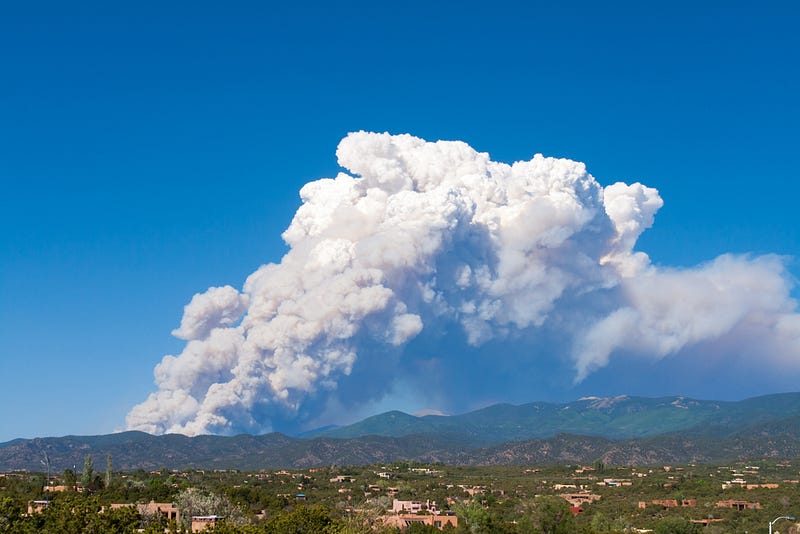
The Calf Canyon/Hermit’s Peak fire burned through 341,735 acres of forest from April 19 until it was finally 100% contained on August 3. New Mexico’s largest-ever wildfire, it burned an area slightly larger than the city of Los Angeles. 903 structures, including hundreds of homes, were destroyed. More than 900,000 acres have burned in the state to date. To put this in perspective, all wildfires combined in California in 2022 have only charred 365,140 acres.
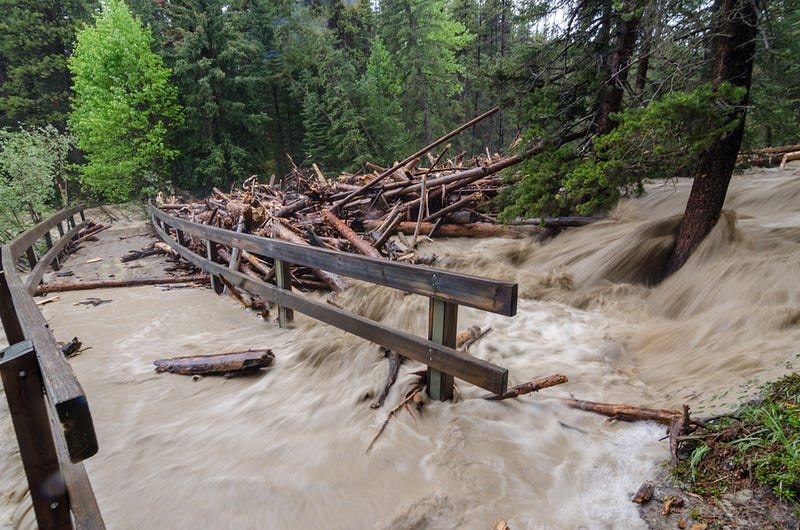
And then the monsoons began. With no vegetation to slow the water down the burned hillsides, it roared down arroyos and washes with tons of dead wood and debris, destroying even more homes and endangering others. The ash-laden flash flood water made its way into the city of Las Vegas (New Mexico) reservoir, rendering it not potable. They expect to run out of drinking water within 30 days. The same thing happened in Flagstaff, with almost daily flash floods made worse by the Pipeline Fire, which burned the mountains above the city in June. Fortunately, the water didn’t reach their water system.
Now we’ll take a look at the other states in the West so affected by the megadrought.
SUMMER OF 2022 OVERVIEW — STATE-BY-STATE
TEXAS
- At 97.4°, it was Texas’ second hottest summer ever. July was the hottest July on record. May was the hottest May on record.
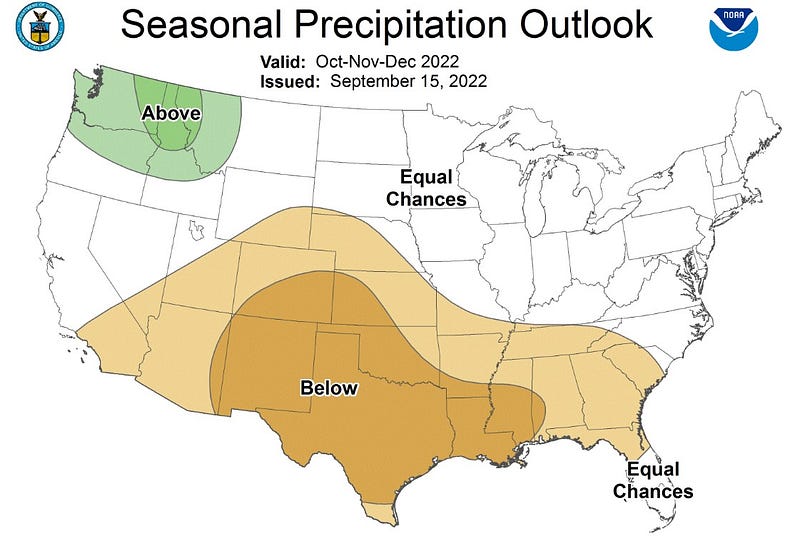
- Last year, Texas was 94% drought-free. Now, 97% of the state is in some form of drought. But the tap was turned off in December. Many areas saw no rain until June.
- Dallas saw a streak of 67 days without rain, the second longest since 2000 at 85 days. August 21–22 brought flash flooding and 10–15” of rain throughout the DFW Metroplex. A summer’s worth of rain in one day.
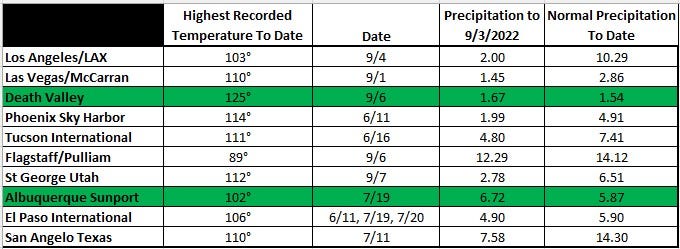
- El Paso usually doesn’t hit 100° until June 13, but this year it was May 16. El Paso’s temperatures have increased 5.9° since 1970, trailing only Reno and Las Vegas for the highest temperature increases nationwide.
- Recent rains in the Lower Rio Grande Valley have removed the drought threat, but west-central Texas is in dire straits.
- The Texas Panhandle grows about a third of American cotton, but this crop is the worst they’ve seen in years. “It’s pretty catastrophic,” said Kody Bessent, CEO of Plains Cotton Grower. Texas will harvest only half as much cotton as it did last year.
ARIZONA
- Arizona is more susceptible to a loss of water due to its junior rights to Colorado River water. The tap for this water was turned off altogether for Pinal County, leaving farmers scrambling for what little groundwater they could bring to the surface. For the most part, fields went fallow. The water had previously been delivered from CAP, or the Central Arizona Project.
- The state gets one-third of its water from the Colorado River via the CAP. One-third of that was cut off from the state in 2022 based on a Tier 1 shortage on the river. Now that it has been declared that the river is in a Tier 2 shortage, even larger cuts go into effect in 2023.
- Arizona and Nevada will be the primary beneficiaries of $4 billion from the Inflation Reduction Act. Funds will be used to pay farmers to leave their fields unplanted and also for conservation and habitat restoration projects. Farmers in the Yuma Valley have already requested a good portion of the funds. About one hundred different crops are grown there including wheat, cotton, lettuce, and cauliflower. Most of our winter vegetables are grown here and in California’s Imperial Valley.
- Several tribal nations have established water rights to river water, and some have left water in Lake Mead for storage. Now some of them are thinking of taking what water is due to them and instead storing it in underground aquifers. The largest, the Navajo Nation, has settlements in place in the Upper Basin, but many of those along the river in the Lower Basin have not exercised their rights.
- CAP says that farmers getting paid up to $1,500 per acre foot of water not used is unrealistically high. But farmers plan to use the money to develop water-saving irrigation systems and other conservation efforts.
- If it comes to it, cities have the highest priority entitlements to river water. Some, like Scottsdale, Goodyear, and Tucson rely much heavier on river water than Phoenix, which also has access to water from the Gila and Salt Rivers. Tucson has historically taken more water than it needed and stored it in underground aquifers.
In an Arizona Republic podcast, Sarah Porter, with the Kyl Center for Water Policy at ASU, had this to say about the water predicament:
“It would take a few years of biblically great snowpack and unprecedented precipitation to restore the reservoirs.”
Well, folks, I have only gotten to three states with only the highest level of information, and I’m already over my intended time. This is just one little region of a global problem, but it’s our problem. We'll pick it up in the next week with a closer look at California, Nevada, and the two lakes.
Food or water?
Which would you rather have? Hope is not a solution, but we’re running out of time.
Sources include:
- El Paso Times, 5/17/2022
- “In Arizona, worry about access to Colorado River water” by Tony Davis in the (Tucson) Arizona Daily Star, 9/13/2022
- “Drought in Western U.S. heats up as a Senate campaign issue” by Gabe Stern in the (Tucson) Arizona Daily Star, 9/20/2022
- “State of unease: Colorado basin tribes without water rights” by Felicia Fonseca, Associated Press, 9/15/2022
- “Dwindling Colorado River basin key to New Mexico Agriculture” by Scott Wyland, AP/ Albuquerque Journal, 9/18/2022
For a primer on the Colorado River crisis, please refer to these articles:
Like what you’re reading? Consider subscribing to Medium. For the price of a monthly magazine ($5/month), you’ll have access to all of my stories and thousands of other writers. And I’ll get a wee bit! Just click the link below.