avatarDr Ron Pol

Free AI web copilot to create summaries, insights and extended knowledge, download it at here

5609

Abstract

warned Trump administration officials that the coronavirus crisis could cost the United States trillions of dollars and put millions of Americans at risk of illness or death.</p></blockquote><blockquote id="dc54"><p>A second memo dated Feb. 23, warned of an “increasing probability of a full-blown COVID-19 pandemic that could infect as many as 100 million Americans, with a loss of life of as many as 1.2 million souls. Throughout January and February, Mr Trump downplayed the threat, and later went on to say that no one could have predicted such a devastating outcome.</p></blockquote><p id="0449"><a href="https://www.salon.com/2020/04/01/trump-ignored-white-house-economists-warning-of-devastating-impact-of-pandemic-months-ago-report/"><b>Trump ignored White House economists’ warning of devastating impact of pandemic months ago: repor</b></a><b>t</b>, Igor Derysh, <i>Salon</i>, 1 April 2020</p><p id="63ec">White House economists warned that conflating the pandemic with regular seasonal flu would result in calamity.</p><p id="5ad2"><a href="https://www.nytimes.com/2020/03/31/business/coronavirus-economy-trump.html"><b>White House Economists Warned in 2019 of Devastating Toll of a Pandemic</b></a>, Jim Tankersley, <i>New York Times</i>, 1 April 2020</p><blockquote id="fa06"><p>White House economists published a study last September that warned a pandemic disease could kill a half million Americans and devastate the economy. It went unheeded inside the administration.</p></blockquote><blockquote id="61b5"><p>‘’I don’t think corona is as big a threat as people make it out to be,’’ the acting chairman of the Council of Economic Advisers, Tomas Philipson, told reporters during a Feb. 18 briefing... Public health threats did not typically hurt the economy, Mr. Philipson said. He suggested the virus would not be nearly as bad as a normal flu season.</p></blockquote><blockquote id="50ba"><p>The 2019 study warned otherwise — specifically urging Americans not to conflate the risks of a typical flu and a pandemic. The existence of that warning undermines administration officials’ contentions in recent weeks that no one could have seen the virus damaging the economy as it has.</p></blockquote><blockquote id="4908"><p>One of the authors of the study, who has since left the White House, now says it would make sense for the administration to effectively shut down most economic activity for two to eight months to slow the virus.</p></blockquote><blockquote id="9894"><p>In a best-case scenario, Ms. Scherbina concludes, a national suppression of economic activity to flatten the infection curve must last at least seven weeks. In a worst case, where the shutdown proves less effective at slowing the rate of new infections, it would be economically optimal to keep the economy shuttered for nearly eight months.</p></blockquote><blockquote id="ec53"><p>Suppression efforts inflict considerable damage on the economy, reducing activity by about $36 billion per week, the study estimates.</p></blockquote><p id="f4f5"><a href="https://www.vox.com/policy-and-politics/2020/3/21/21189179/coronavirus-trump-intelligence-reports-warned-pandemic"><b>Intelligence reports warned about a pandemic in January. Trump reportedly ignored them</b></a>, Riley Beggin, <i>Vox</i>, 21 March 2020</p><blockquote id="d494"><p>Trump’s refusal to acknowledge the severity of the virus early on had real effects on how the virus spread throughout the US.</p></blockquote><blockquote id="0144"><p>Now, the country is <a href="https://www.nytimes.com/interactive/2020/03/17/us/coronavirus-testing-data.html">struggling to scale up testing</a> and lags far behind other countries — even those like South Korea, whose first cases were discovered around the same time as the United States.</p></blockquote><blockquote id="32eb"><p>The lack of testing availability not only means people across the country beginning to show symptoms are clamoring for limited testing to get lifesaving treatment, but also that failures in providing testing has meant the US must rely more heavily on social distancing than it might have otherwise.</p></blockquote><blockquote id="45b4"><p>“Without surveillance, we don’t even know where to look [for concentrations of infection],” Grubaugh said. “We don’t even know where to employ self-isolation or social distancing. So now we’re stuck in this situation where it’s pretty much everywhere, and so we have to apply these methods across the board.”</p></blockquote><blockquote id="5fb0"><p>Experts warn that distancing measures will likely be necessary for months, even as the country ramps up to more aggressive testing. And the need to rely on social distancing to reduce risk of infection has already caused <a href="https://www.vox.com/policy-and-politics/2020/3/12/21173599/coronavirus-stock-market-economy-claudia-sahm">stocks to plummet</a> and started to have a <a href="https://www.vox.com/2020/2/28/21153492/coronavirus-recession-china-stock-market-economy">massive effect</a> on the US economy.</p></blockquote><p id="2e6e"><a href="https://www.washingtonpost.com/national-security/us-intelligence-reports-from-january-and-february-warned-about-a-likely-pandemic/2020/03/20/299d8cda-6ad5-11ea-b5f1-a5a804158597_story.html"><b>US intelligence reports from January and February warned about a likely pandemic</b></a>, Shane Harris, Greg Miller, Josh Dawsey, and Ellen Nakashima, <i>Washington Post</i>, 20 March 2020.</p><blockquote id="18ed"><p>U.S. intelligence agencies were issuing ominous, classified warnings in January and February about the global danger posed by t

Options

he coronavirus while President Donald Trump and lawmakers played down the threat and failed to take action that might have slowed the spread of the pathogen.</p></blockquote><blockquote id="203b"><p>“Donald Trump may not have been expecting this, but a lot of other people in the government were — they just couldn’t get him to do anything about it,” an official said. “The system was blinking red.”</p></blockquote><blockquote id="c261"><p>On Feb. 25, Nancy Messonnier, a senior CDC official, sounded perhaps the most significant public alarm to that point, when she told reporters that the coronavirus was likely to spread within communities in the United States and that disruptions to daily life could be “severe.” Trump called [US Health and Human Services Secretary Alex] Azar on his way back from a trip to India and complained that Messonnier was scaring the stock markets, according to two senior administration officials.</p></blockquote><p id="f92d"><a href="https://www.usatoday.com/story/opinion/2020/01/27/coronavirus-donald-trump-made-us-less-prepared-joe-biden-column/4581710002/"><b>Joe Biden: Trump is worst possible leader to deal with coronavirus outbreak</b></a>, USA Today, 27 January 2020</p><p id="ac38">Biden’s less explicit warning foreshadowed Trump administration actions (such as dismantling the White House’s global health security team and CDC funding cuts) which made the United States poorly prepared for epidemics.</p><div id="dbea" class="link-block"> <a href="https://readmedium.com/open-letters-to-prime-ministers-ardern-and-morrison-from-a-nobody-444d80b71c05"> <div> <div> <h2>Let’s Do This One Thing to Combat Covid-19, Globally</h2> <div><h3>A detailed picture of how it spreads will help all nations</h3></div> <div><p>medium.com</p></div> </div> <div> <div style="background-image: url(https://miro.readmedium.com/v2/resize:fit:320/1*XWDo5xf3nOhzZK1DUxlELg.jpeg)"></div> </div> </div> </a> </div><div id="ecda" class="link-block"> <a href="https://readmedium.com/the-trump-effect-6347385cc27"> <div> <div> <h2>The Trump Effect</h2> <div><h3>The health and economic impact of the virus is attributable to leadership</h3></div> <div><p>medium.com</p></div> </div> <div> <div style="background-image: url(https://miro.readmedium.com/v2/resize:fit:320/1*0qkUqGRRBf_Pah-zYoAB6Q.png)"></div> </div> </div> </a> </div><div id="6cd0" class="link-block"> <a href="https://readmedium.com/lockdown-ed354abde04a"> <div> <div> <h2>Lockdown</h2> <div><h3>Why lockdowns are necessary, and wrong — and what should happen next</h3></div> <div><p>medium.com</p></div> </div> <div> <div style="background-image: url(https://miro.readmedium.com/v2/resize:fit:320/1*XexPsHKfBoVxEfrPcaK1Mw.jpeg)"></div> </div> </div> </a> </div><div id="0cc2" class="link-block"> <a href="https://readmedium.com/our-actions-determine-the-full-severity-of-covid-19-f4ac624b3f81"> <div> <div> <h2>These Actions Will Determine the Severity of COVID-19</h2> <div><h3>Leadership and behaviors matter</h3></div> <div><p>medium.com</p></div> </div> <div> <div style="background-image: url(https://miro.readmedium.com/v2/resize:fit:320/1*dkaaQANPIRundBMKN-6c4Q.jpeg)"></div> </div> </div> </a> </div><div id="776c" class="link-block"> <a href="https://medium.com/@ronald.pol/covid-19-the-book-2b449352eb4b"> <div> <div> <h2>Covid-19: The Book</h2> <div><h3>A story of our times — of leadership, and outcomes</h3></div> <div><p>medium.com</p></div> </div> <div> <div style="background-image: url(https://miro.readmedium.com/v2/resize:fit:320/1*XncjGbjFOC_Vv7QDOWPMrQ.jpeg)"></div> </div> </div> </a> </div><div id="2ad4" class="link-block"> <a href="https://readmedium.com/covid-19-collected-haiku-dca45ae0cc60"> <div> <div> <h2>Covid-19: Collected Haiku</h2> <div><h3>A story of our times, in chapters of 17 syllables</h3></div> <div><p>medium.com</p></div> </div> <div> <div style="background-image: url(https://miro.readmedium.com/v2/resize:fit:320/1*qDsr6JexSoi7tNrLc5Vwsw.jpeg)"></div> </div> </div> </a> </div><div id="0432" class="link-block"> <a href="https://readmedium.com/introducing-ron-pol-62d1a192643d"> <div> <div> <h2>Introducing: Ron Pol</h2> <div><h3>Better outcomes, by design</h3></div> <div><p>medium.com</p></div> </div> <div> <div style="background-image: url(https://miro.readmedium.com/v2/resize:fit:320/1*ElRIaD5xUkkUaPEY0OMBPA.jpeg)"></div> </div> </div> </a> </div></article></body>

Financial impact

Haiku
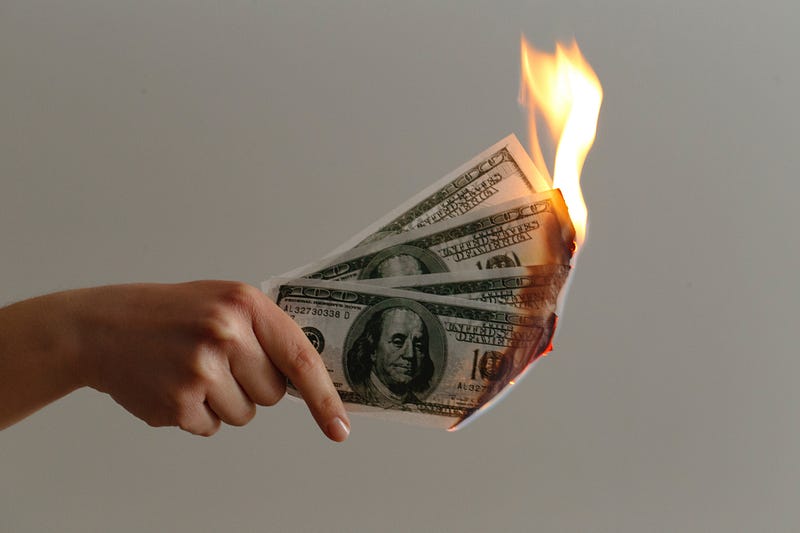
Photo by Jp Valery on Unsplash

Stocks crash, chaos mounts.

Where did that originate?

Donald, and Boris.

— — —

UPDATE

‘Biggest failure in a generation’: Where did Britain go wrong?, Bevan Shields, Sydney Morning Herald, 3 May 20120 — as the death toll climbs, critics say Britain’s response has suffered from a series of deadly mistakes and miscalculations.

The charges focus on four areas: that healthcare workers struggled to access personal protective equipment, that Britain was too slow to implement a lockdown, that it bungled testing, and that vulnerable care home residents were not properly protected.

Says Martin McKee, professor of European public health at the London School of Hygiene and Tropical Medicine and an adviser to the World Health Organisation: “The countries that moved fast have curtailed the epidemic. The countries that delayed have not. It’s as simple as that.”

Dr Richard Horton, editor in chief of The Lancet medical journal, is even more damning: “The handling of the COVID-19 crisis in the UK is the most serious science policy failure in a generation.”

Coronavirus is the greatest global science policy failure in a generation, Richard Horton, The Guardian, 9 April 2020

That the warning signs went unheeded is unsurprising. Few of us have experienced a pandemic, and we are all guilty of ignoring information that doesn’t reflect our own experience of the world.

During a crisis, the public and politicians alike understandably turn to experts. But on this occasion, the experts — scientists who have modelled and simulated our possible futures — made assumptions that turned out to be mistaken. The UK imagined the pandemic would be much like influenza. The influenza virus is not benign — the number of annual deaths from influenza in the UK varies widely, with a recent peak of 28,330 deaths in 2014–15 — but influenza is not Covid-19

At every press conference, the government spokesperson always includes the same line: “We have been following the medical and scientific advice.” It’s a good line. And it’s partly true. But the government knew the NHS was unprepared. It knew it had failed to build the necessary intensive care surge capacity to meet the likely patient demand. As one doctor wrote to me: “It seems that nobody wants to learn from the human tragedy that happened in Italy, China, Spain … This is really sad … Doctors and scientists who are not able to learn from one another.”

But Covid-19 has revealed the astonishing fragility of our societies. It has exposed our inability to cooperate, to coordinate, and to act together.

White House memos warned in run-up to pandemic of up to 2M deaths, economic devastation, Brooke Singman & Blake Burman, Fox News, 7 April 2020

Top White House trade adviser Peter Navarro warned in stark terms about how deadly and economically devastating the coronavirus outbreak could be, weeks before it became a full-blown pandemic.

The first Navarro memo [Jan. 29, addressed to the White House National Security Council] reportedly warned of up to $5.7 trillion in economic costs and up to a half-million American deaths in a worst-case scenario.

In late February Navarro penned another memo, this time addressed to the president himself and escalating the warnings. The Feb. 23 memo, first reported by Axios and confirmed by Fox News, warned that “there is an increasing probability of a full-blown COVID-19 pandemic that could infect as many as 100 million Americans, with a loss of life as many as 1–2 million souls.”

Trade Adviser Warned White House in January of Risks of a Pandemic, Maggie Haberman, New York Times, 6 April 2020

On Jan. 29, a top White House adviser starkly warned Trump administration officials that the coronavirus crisis could cost the United States trillions of dollars and put millions of Americans at risk of illness or death.

A second memo dated Feb. 23, warned of an “increasing probability of a full-blown COVID-19 pandemic that could infect as many as 100 million Americans, with a loss of life of as many as 1.2 million souls. Throughout January and February, Mr Trump downplayed the threat, and later went on to say that no one could have predicted such a devastating outcome.

Trump ignored White House economists’ warning of devastating impact of pandemic months ago: report, Igor Derysh, Salon, 1 April 2020

White House economists warned that conflating the pandemic with regular seasonal flu would result in calamity.

White House Economists Warned in 2019 of Devastating Toll of a Pandemic, Jim Tankersley, New York Times, 1 April 2020

White House economists published a study last September that warned a pandemic disease could kill a half million Americans and devastate the economy. It went unheeded inside the administration.

‘’I don’t think corona is as big a threat as people make it out to be,’’ the acting chairman of the Council of Economic Advisers, Tomas Philipson, told reporters during a Feb. 18 briefing... Public health threats did not typically hurt the economy, Mr. Philipson said. He suggested the virus would not be nearly as bad as a normal flu season.

The 2019 study warned otherwise — specifically urging Americans not to conflate the risks of a typical flu and a pandemic. The existence of that warning undermines administration officials’ contentions in recent weeks that no one could have seen the virus damaging the economy as it has.

One of the authors of the study, who has since left the White House, now says it would make sense for the administration to effectively shut down most economic activity for two to eight months to slow the virus.

In a best-case scenario, Ms. Scherbina concludes, a national suppression of economic activity to flatten the infection curve must last at least seven weeks. In a worst case, where the shutdown proves less effective at slowing the rate of new infections, it would be economically optimal to keep the economy shuttered for nearly eight months.

Suppression efforts inflict considerable damage on the economy, reducing activity by about $36 billion per week, the study estimates.

Intelligence reports warned about a pandemic in January. Trump reportedly ignored them, Riley Beggin, Vox, 21 March 2020

Trump’s refusal to acknowledge the severity of the virus early on had real effects on how the virus spread throughout the US.

Now, the country is struggling to scale up testing and lags far behind other countries — even those like South Korea, whose first cases were discovered around the same time as the United States.

The lack of testing availability not only means people across the country beginning to show symptoms are clamoring for limited testing to get lifesaving treatment, but also that failures in providing testing has meant the US must rely more heavily on social distancing than it might have otherwise.

“Without surveillance, we don’t even know where to look [for concentrations of infection],” Grubaugh said. “We don’t even know where to employ self-isolation or social distancing. So now we’re stuck in this situation where it’s pretty much everywhere, and so we have to apply these methods across the board.”

Experts warn that distancing measures will likely be necessary for months, even as the country ramps up to more aggressive testing. And the need to rely on social distancing to reduce risk of infection has already caused stocks to plummet and started to have a massive effect on the US economy.

US intelligence reports from January and February warned about a likely pandemic, Shane Harris, Greg Miller, Josh Dawsey, and Ellen Nakashima, Washington Post, 20 March 2020.

U.S. intelligence agencies were issuing ominous, classified warnings in January and February about the global danger posed by the coronavirus while President Donald Trump and lawmakers played down the threat and failed to take action that might have slowed the spread of the pathogen.

“Donald Trump may not have been expecting this, but a lot of other people in the government were — they just couldn’t get him to do anything about it,” an official said. “The system was blinking red.”

On Feb. 25, Nancy Messonnier, a senior CDC official, sounded perhaps the most significant public alarm to that point, when she told reporters that the coronavirus was likely to spread within communities in the United States and that disruptions to daily life could be “severe.” Trump called [US Health and Human Services Secretary Alex] Azar on his way back from a trip to India and complained that Messonnier was scaring the stock markets, according to two senior administration officials.

Joe Biden: Trump is worst possible leader to deal with coronavirus outbreak, USA Today, 27 January 2020

Biden’s less explicit warning foreshadowed Trump administration actions (such as dismantling the White House’s global health security team and CDC funding cuts) which made the United States poorly prepared for epidemics.

Haiku
Covid-19
Politics
Business
Finance
Recommended from ReadMedium
avatarHermione Wilds Writes - Writer and editor
How I Fasted for 36 Hours Easily

My fasting and fitness days diary

4 min read
avatarDr Deborah Maw, the Faerie Godmother
Quantum Jumping

2 min read