
GLOBETROTTERS WRITING PROMPT
February Monthly Challenge — Bridges
Interesting, funny or challenging crossings you have encountered
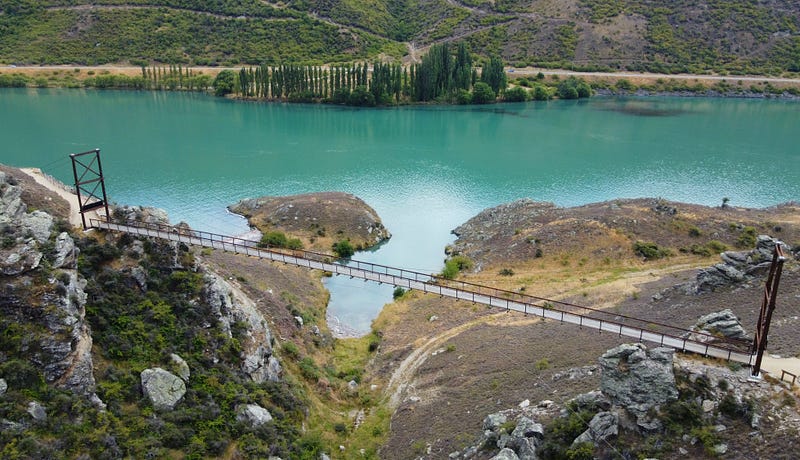
Bridges. A construction as diverse and complex as our human brains, their appearance has quite literally changed the lives of many people wherever they appeared.
If leading across a deep and wide valley, guiding across a busy highway or connecting tribes from different countries, bridges have a lot deeper meaning than just the simple and superficial sign of a solid connection between two points.
The earliest bridges can be traced back to the Neolithic times when fallen trees and stones offered the native people some kind of boardwalk to get through marshland.
With time and age, the development and designs of bridges have increased and diversified considering all kinds of challenges and requirements. Today, they don’t only guide humans across but some examples are built to bring animals to safety.
“A bridge is a structure built to span a physical obstacle (such as a body of water, valley, road, or railway) without blocking the way underneath. It is constructed for the purpose of providing passage over the obstacle, which is usually something that is otherwise difficult or impossible to cross.” — Wikipedia
This brings me back to my childhood. I still remember one specific day in school. We were having a class in physics when our teacher asked us to bring each a packet of spaghetti. Weird as it sounded, this might have been the only lesson in that physics class I still remember.
After first learning about different bridges, the art of a bow, beam or suspension bridge, we were then allowed to get creative and build one. Made of spaghetti. Ultimately, we loaded our bridges with weights and measured which bridge could take the most.
While I do not remember which bridge I built or how much mine could carry before collapsing, I took away from the class that arch bridges are the strongest of them all as they distribute weight differently.
And I won’t forget how strong spaghetti is.
But back to today’s topic. Bridges around the world. Yes, when we travel we come across a myriad of bridges (or the lack thereof) and while some are the most popular landmarks of a city, others are barely worth the name.
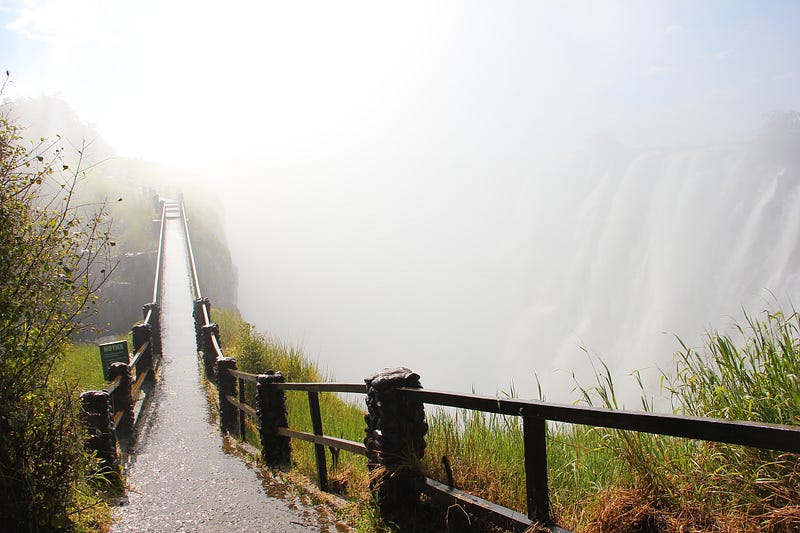
As always, I would like to give you a bit of inspiration on what to look for when you go through your hard drive filled with images and also want to motivate you to put effort into the words describing your memory.
We are not looking for a listicle showcasing all the bridges you have seen over the years, that would be rather boring. Much rather, tell us about who you saw when the bridge appeared in front of you and if that person was talking the same language.
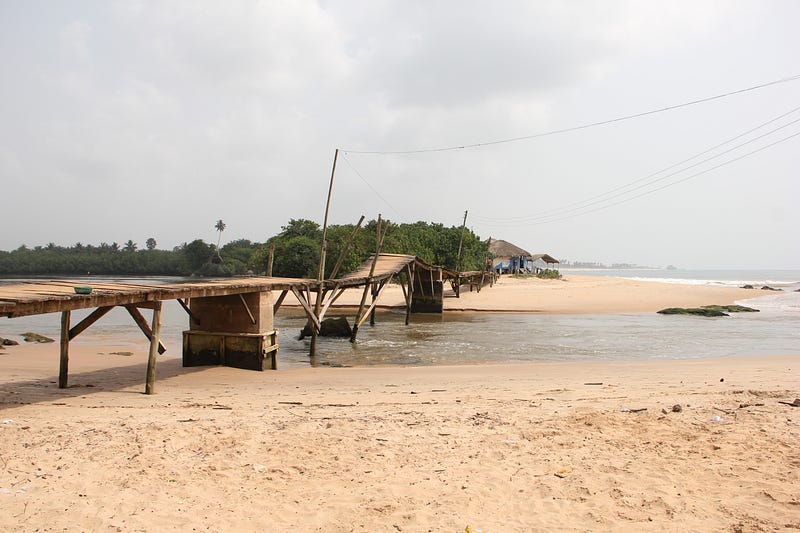
Was the bridge strong and reliable or did you get the impression you might be the last human ever walking across? Or did you even avoid touching that bridge altogether for said reasons? Maybe your travel essay is about why you did not cross that certain bridge.
Some bridges are created to give us a better view. Of something. A city, a lake or a forest. Like the one below. It was called a canopy walk and was a connection of ten or more bridges as high as 40 m (130ft) above the forest floor allowing visitors to be above the basic tree canopy but still below the giants.
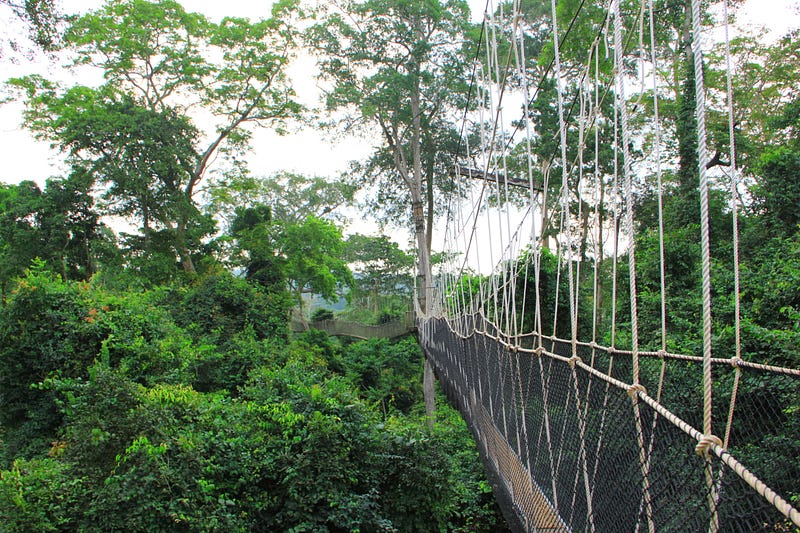
While that bridge in Ghana in the rain forest had some signs of rust and neglect in maintenance, I still walked across without fear. Maybe due to my younger self who lived with fewer worries.
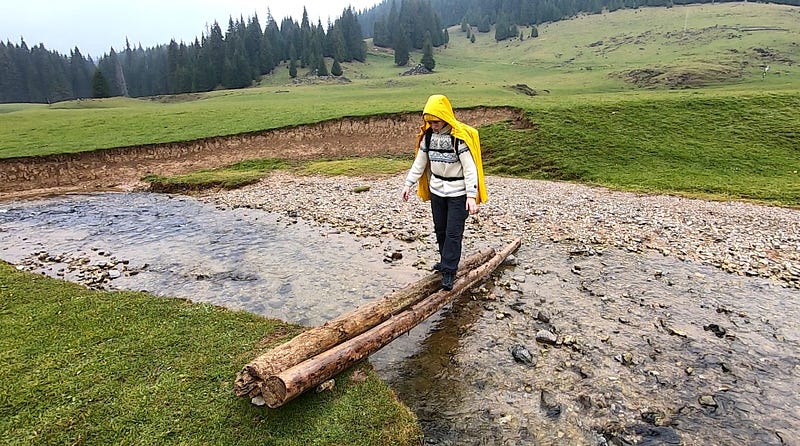
These days I find myself hiking a lot and in many parts of the world, bridges are not always available as one has to walk through often icy cold rivers. However, when those waters get filled after heavy rains, fallen logs can help you get across without getting your feet wet.
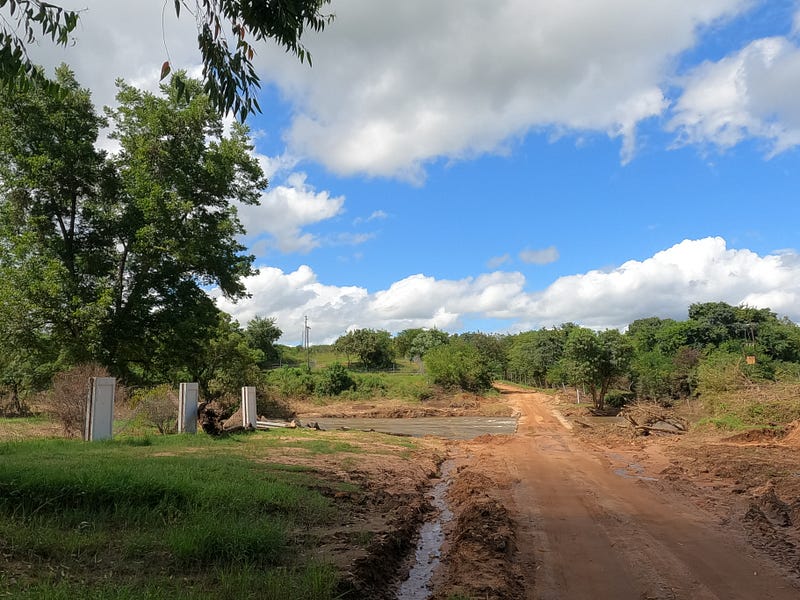
Another bridge I have fond memories of was the one in South Africa. We had been sitting out the arrival of Cyclone Freddy in Mozambique until the morning after when we saw heavy rains approaching on the radar and decided to pack up and leave within minutes.
After driving for two days in the rain, we finally made it out of the clouds and arrived late at night at a campsite on a farm in South Africa. The last kilometer required us to drive over a bridge with no barriers on either side and a rather high water level.
We decided to take it fast and raced across. The owner of the lodge later told us we were the first ones in weeks to get to them as the bridge had been flooded up until that morning.
We looked at each other and sighed at how lucky we were as we had no more Plan B for that night.
Either way, when we returned across the bridge the following morning, we slowed down and inspected the muddy trail a bit more in detail. A bridge that had been flooded for weeks had to withstand a lot of force through the water and was most probably weakened.
Either way, we did drive across again. Praying she would hold our vehicle once more. And she did, as you might have assumed.
As you can see, these images of bridges did spark memories of my former travel days and those are the stories we are looking for.
It doesn't mean every picture in the challenge response must have a bridge in it but the core topic of the essay should evolve around a bridge, the crossing of obstacles, or the failed happening thereof.
We want to hear about your feelings, thoughts, conversations and most authentic experiences you had around bridges in the world.
Bridges can be pretty.
Bridges can be funny.
Bridges can be encouraging.
Bridges can be scary.
Bridges can be creative.
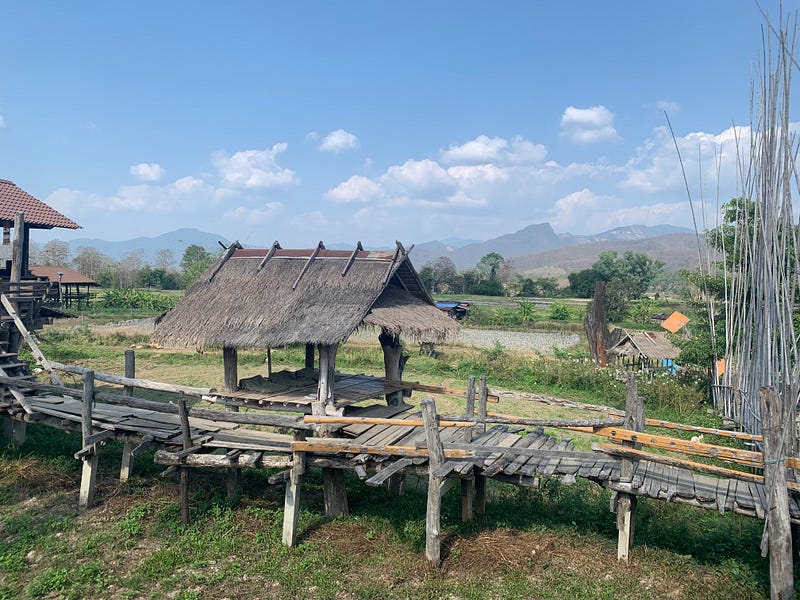
Share with us your experience with bridges
You got the idea. We are looking for different bridges you have encountered while traveling the world. Funny, ordinary or obscure. Whatever it is, share it with us. Together with your memories behind that construction.
Bridges.
We want you to show us how people overcome hurdles of rushing rivers, deep canyons or dangerous highways through the most creative or beautiful bridges.
Be creative.
Pull us in with your captivating narrative.
If you need some ideas, here we go:
The Ultimate Place to Find Bridges
My First Time Seeing This Beautiful Bridge
I Have Been Walking Down an Alley When I Saw This Bridge
The Most Fascinating Bridges Around the World
I Didn’t Know I’d Fall in Love With the Beauty of Bridges
A Very Different Kind of Bridge
I Never Understood Why People Would Build Bridges
Please continue reading beyond this point. We explain the submission rules step by step. If you think you know them already and don’t need to bother reading them, the chances are high that your editors will reject your submission.
Since the number of submissions has increased in the new year, we decided to lift the bar higher. We no longer accept poorly formatted or written essays as well as stories with no proper photo credits or in general writers who ignore the submission rules of Globetrotters. Expect a straight reject if you do one of those.
This counts for the same if you come up with the smart idea of using the help of AI instead of your brain cells to create the post. As our team of editors is stepping up the fight against computer-generated content to highlight more high-quality travel essays written by our authentic writers, we do not shy away from removing writers altogether.
Please read carefully and don’t ignore our rules.
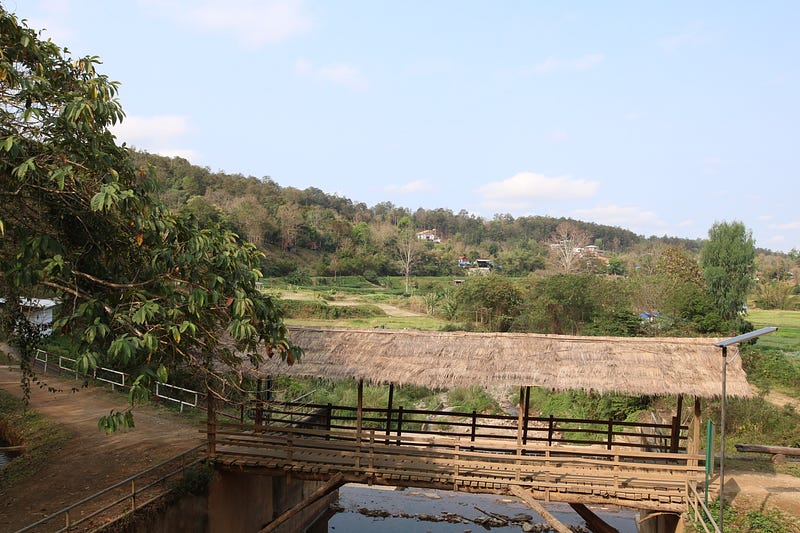
A requirement for the monthly challenge submissions is to tag 2 articles (from our publication) that either inspired you to go to this place, have quality content about the same country you’re talking about or maybe it’s just a travel piece you really enjoyed reading.
You can use the search function to review our publication and look for articles about your destination. It’s easy and a great way to show appreciation to other writers out here.
Also, don’t forget to tag writers properly. We no longer correct them for you. Read this article if you are unsure what I am talking about. Below you can see two examples on how to tag writers and mention their work.
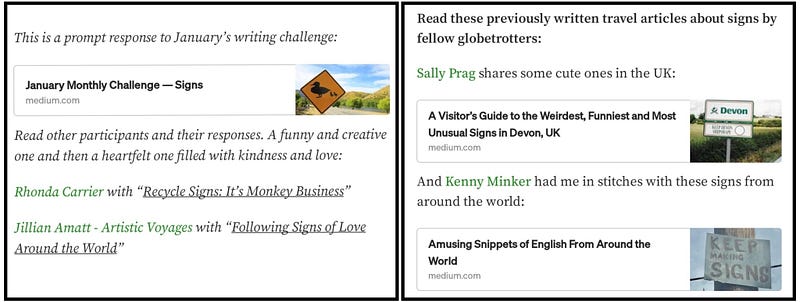
We’re looking forward to your submissions. As always, at the end of the month, the editors of Globetrotters will announce their winners. While we also submit our entries, we do not participate in the competition.
Please remember to follow our guidelines when submitting an article:
- The maximum article length must be 10 minutes.
- Always credit your images. We only accept your own photographs. Please review our image policy if unsure.
- Write your article in the form title-subtitle-title image.
- Please add the tag “monthly challenge”.
- Make sure that travel is still a focus of your story.
- List 2 articles (from Globetrotters) and tag the writers who created them (if unsure of how to tag writers, please read this article)
- The challenge will run from February 1st until February 26th. We reserve the last days of the month to post the results from the challenge.
- For more clarification on submissions, visit the Globetrotters submission guidelines.
We, the team of editors at Globetrotters (JoAnn, Adrienne, Jillian, Michele & Anne) want to thank each of you for contributing to our publication. You’ve sent so many fascinating articles on past challenges and we can’t wait for the next ones.
Thank you.
Jillian Amatt has kicked off the challenge with the first prompt submission. She shares a heartbreaking story about a village and its bridges. Or the lack thereof...
Read here the final post of our previous monthly challenge. We asked you to share stories about signs. In this article, the editors announce their personal winners:


