
TRAVEL | GLOBETROTTERS MONTHLY CHALLENGE | BRIDGES
I Took Bridges For Granted Until I Had This Experience
The reality of life in many parts of the world
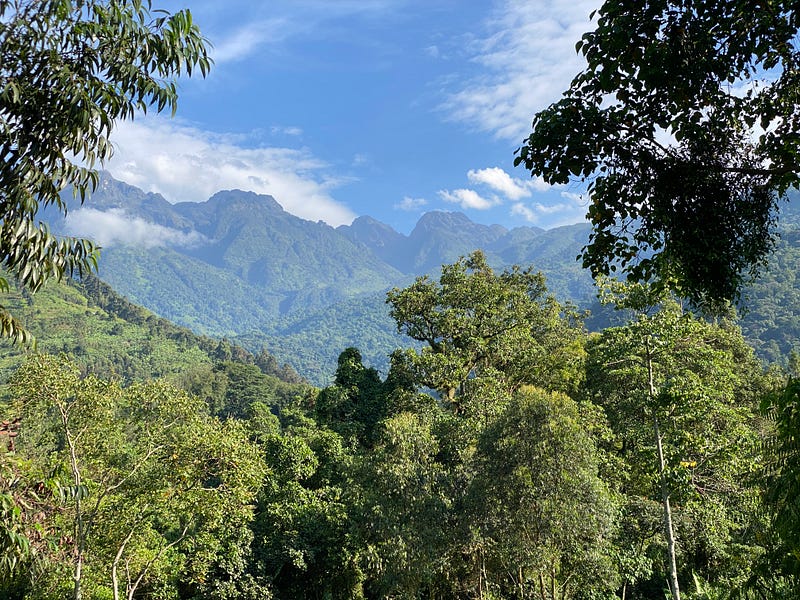
We were thrilled when we arrived at the village of Ruboni, high up the Mbuku River Valley, and at the gates of Rwenzori National Park in Uganda. We had no idea that the Rwenzori Mountains house the third highest mountain in Africa — Mount Stanley — and we were shocked to learn that even though Uganda sits directly on the Equator, there is a permanent glacier in these mountains.
At least there is for now.
In one document I read, of which I can’t remember its origin, they expect this glacier to completely melt by the end of this decade, or sooner. A sad state of affairs for many of our beloved glaciers around the world as the planet reaches record temperatures these days.
It might well be this exact phenomenon that is now contributing to the continuously flooding Mbuku River that flows down from these peaks. However, I can’t say whether or not it is just the melting glacier that is causing these floods, as there have also been record rainfalls and too much clear-cutting further up the valley that has created the perfect storm for this now common occurrence.
We traveled to Ruboni in 2021 to paint some artwork in a guest lodge for an organization that works towards the betterment of communities through the economy of tourism. The organization makes it a point to educate and train villagers near their establishments in all types of tourism jobs, to provide them with a good income for themselves and their families. They pride themselves on supporting the communities that they work in, and we were happy to volunteer for such a worthy organization.
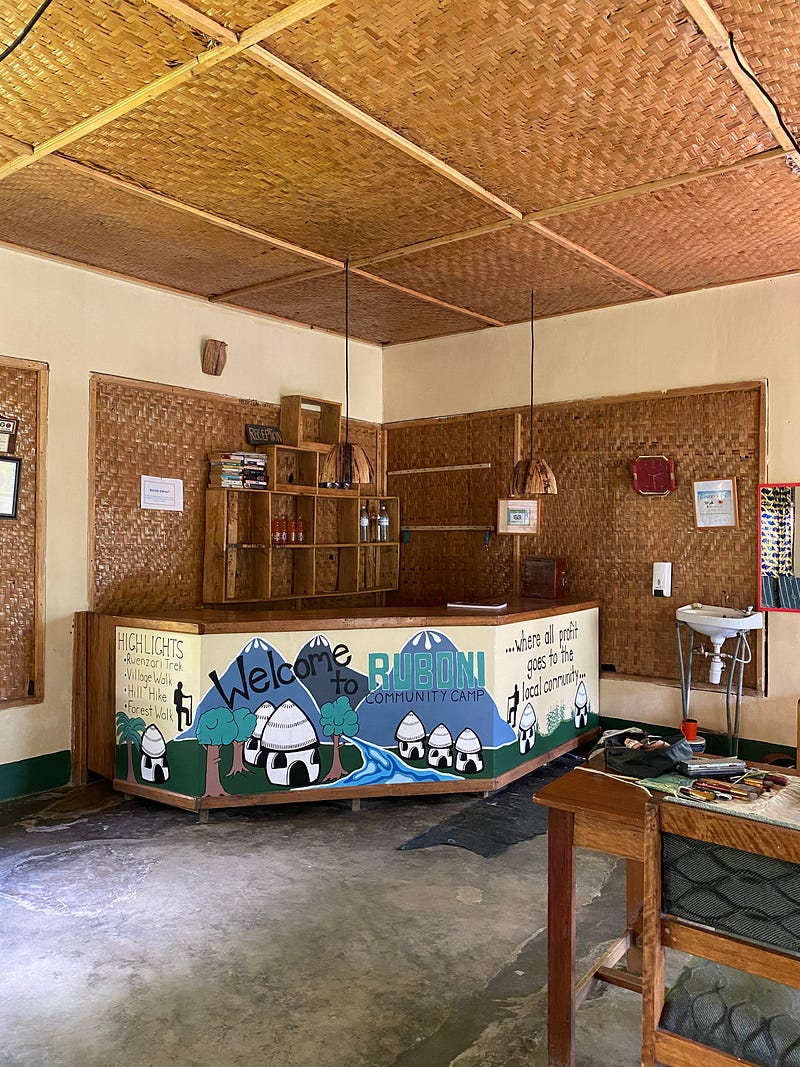
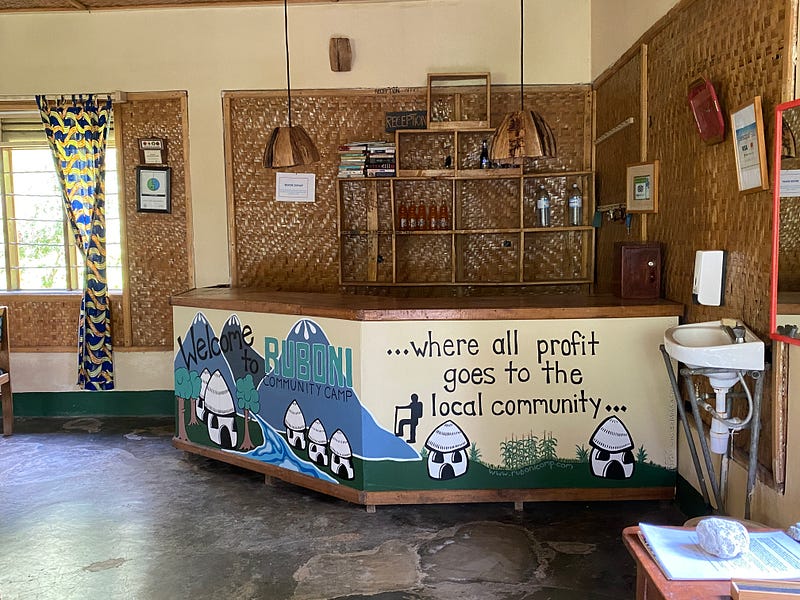
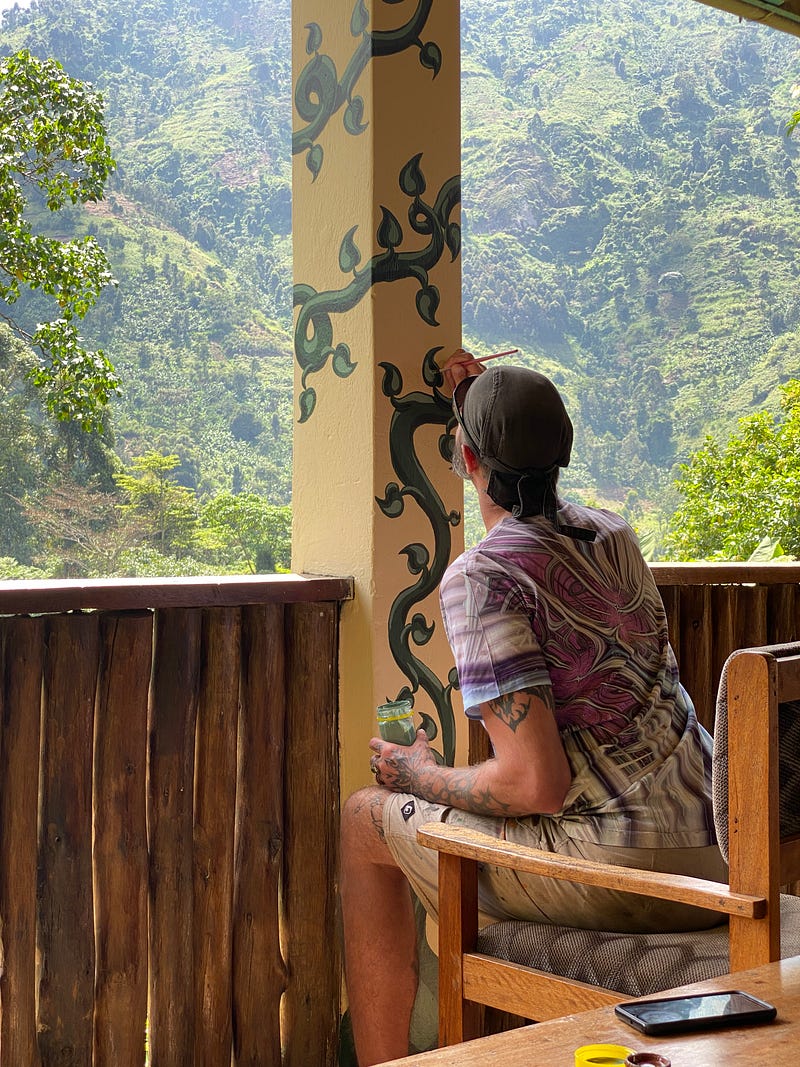
It was our host who told us about the flooding of this river and that it is a relatively new phenomenon. For many years they had a very solid car bridge that connected one side of the river with the other. But a few years back, that bridge was washed away in an unprecedented flood that also took out a church and a school — as well as killed many people — when the high waters sliced through the valley in the middle of the night.
This caused immediate untold suffering amongst the residents. You see, the center commerce core of the village, and the main road that comes down from the mountains, where dozens, if not hundreds, of people bring products down from the farms on their backs, is on one side of the river — while many reside in homes, plus go to school on the other side. You can imagine how important this bridge was to them.
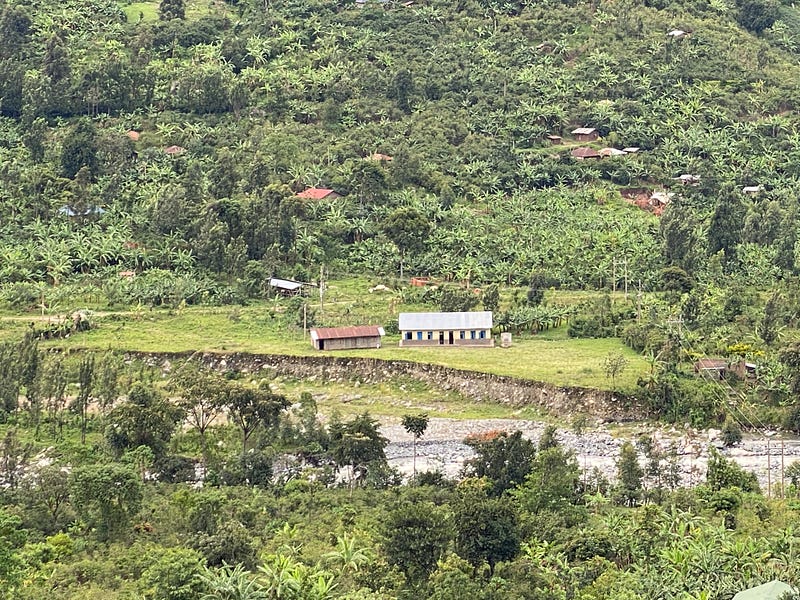
Having this bridge inoperable, meant that instead of cars and trucks crossing the bridge and then driving up to the bases of the farms further up the valley to collect the goods, people had to now bring the loads down on their backs and cross a small walking bridge to get them to the other side where the trucks could pick them up.
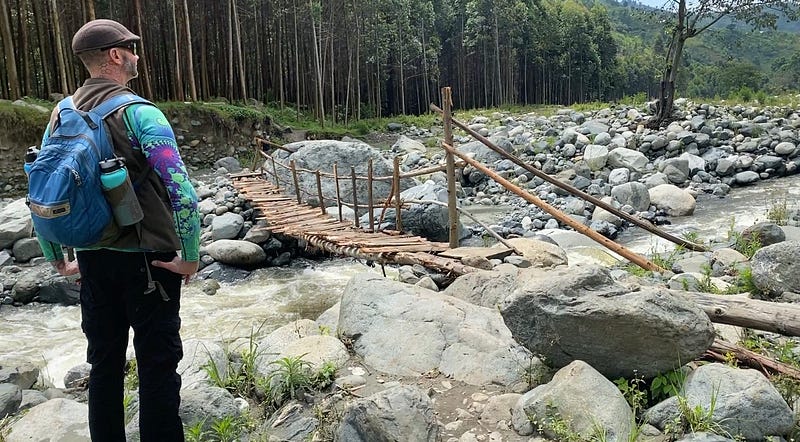
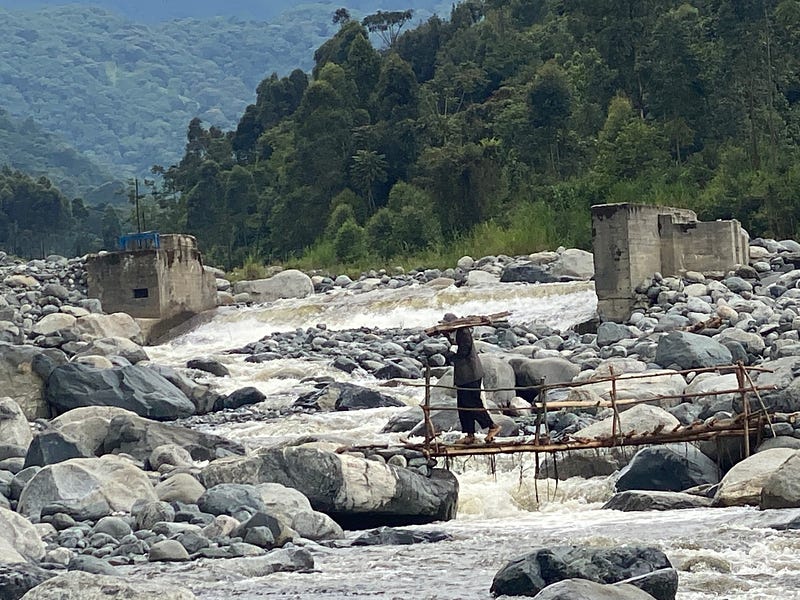
Residents were forced to take it upon themselves to rebuild a simple bridge so they at least had the luxury of crossing the river at all. Below you will see what this bridge is composed of. The government has done nothing to help these people with this problem in this region of Uganda and I’m sure you can tell by the location of this bridge, and the construction of it, that it was not long for this world either.
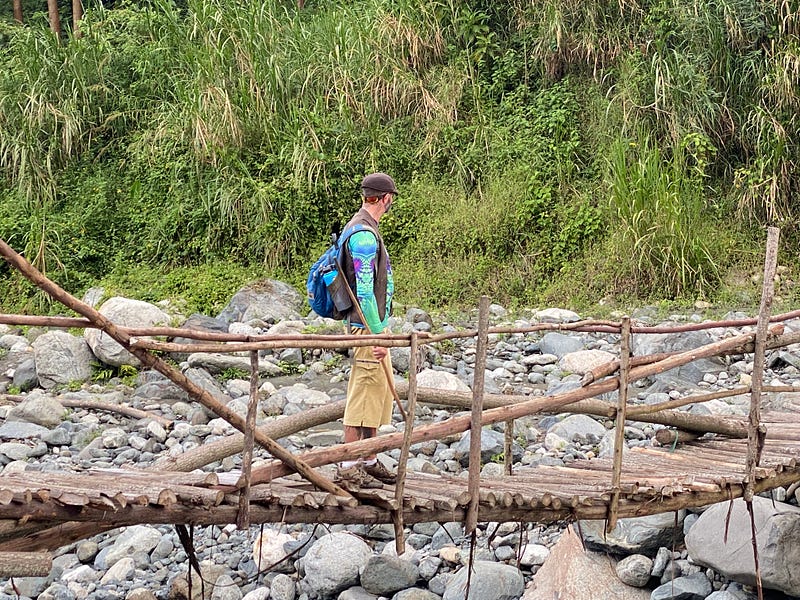
There was also one other bridge further up the valley that a local showed us one day. It too was nothing to write home about.
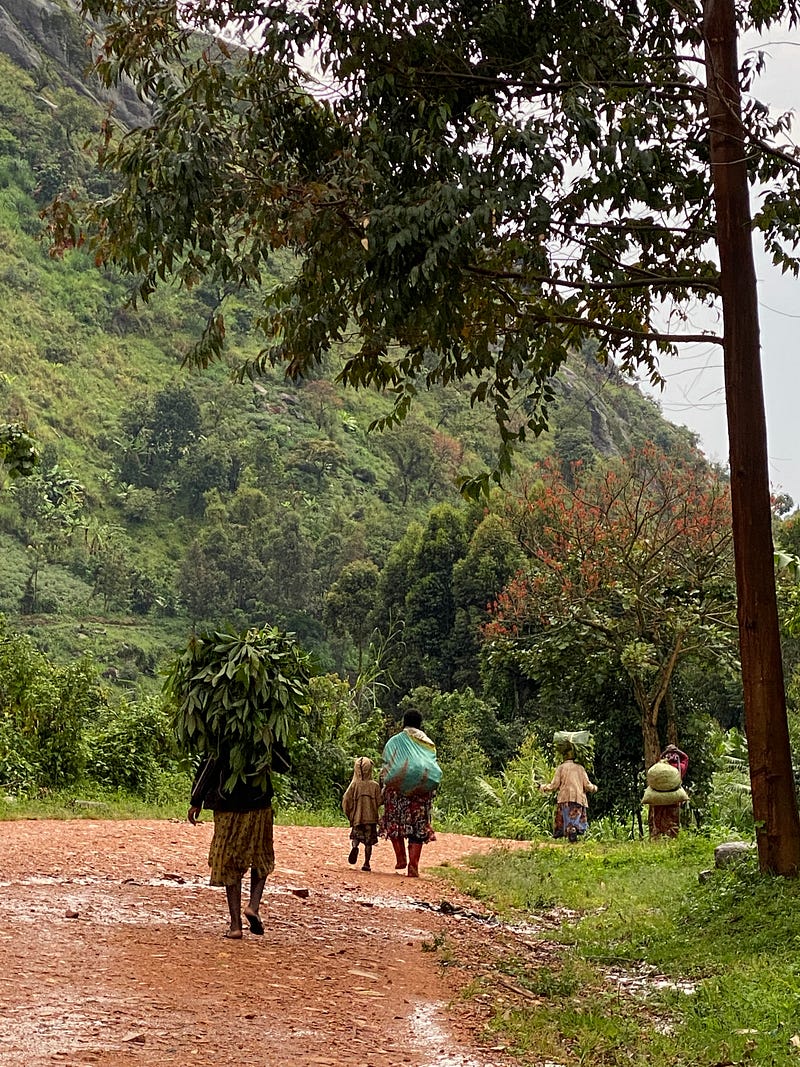
It was interesting to note that Uganda in no way employs the use of animals to move goods. While many countries use cows or donkeys to carry loads, Ugandans use manpower. Or should I say — womanpower. We mostly witnessed women doing the heavy work of carrying the crops down from the mountains.
When we left the valley after finishing our project, the walking bridges were firmly intact. However, when we returned in 2022 both of them were no longer.
We returned to this village again to work on another project that we hadn’t gotten to the first time. We promised them that we would return, and so after taking some time away in Tanzania, Zambia and Botswana (where we had a housesitting gig), we did. This time we painted the Ruboni Community Center which was organizing itself as a bit of a tourist hub with a gift shop and restaurant attached.
The same organization that we had volunteered for the last time up at the lodge, was also running this project. One of the first things our host told us upon our return was that the bridges had washed out. He then told us that it had actually happened a few different times while we were away and that each time they had to rebuild a new one.
Below was the latest rendition. Note the concrete pillars that still stand as a testament that there was in fact a much larger bridge at one point.
We were saddened by this news. The suffering that these people went through because of the constant flooding of this river was heartbreaking. And not having the money or resources to try and build something substantial, meant that they would have to continue doing this for months and years into the future. Unless, of course, some miracle of god came around, which they did pray for daily.
Of course, we hadn’t witnessed the flooding of this river, so we really had no idea how crazy it could get. That was, at least, until one day we were sitting in the house where we were staying and we heard a god-awful rumbling noise coming in from the windows. We had been outside for a walk just an hour earlier — there was a light rain happening in our part of the valley, but we had also seen heavy clouds up in the mountains.
“Is that just constant thunder, or is that a jet engine running?” Chris suddenly asked.
I opened the door to our home to get some clarity on the situation and it was then that I realized that the roar was coming from the river. We quickly donned our jackets and ran out into the drizzle to see what was going on.
As we approached the river the roar became louder. We were incredulous with the volume of sound that was coming at us, and even more so when we saw what all the ruckus was about. As we crossed the final stretch to get a look, we were flabbergasted by what we saw.
The river, which I had photographed just an hour or so earlier, was now a raging torrent. We couldn’t believe the volume of water that was coming down, and it pushed rocks and boulders along with it, changing the landscape as it went.
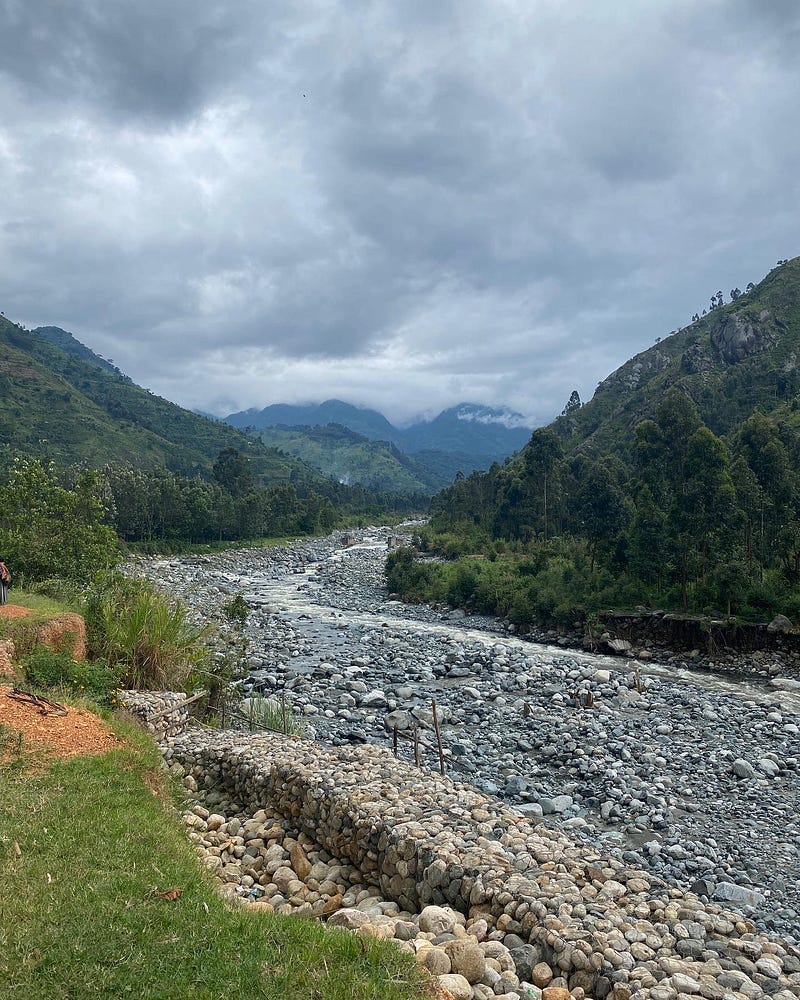
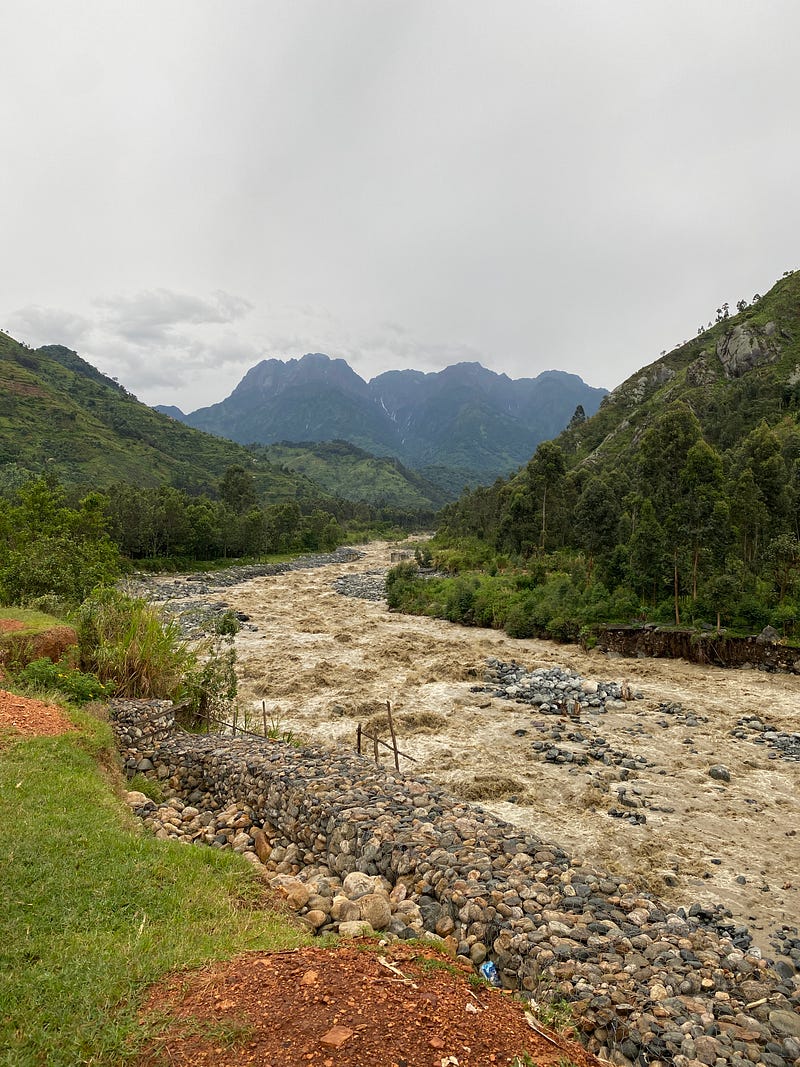
The small bridge that they had recently built, was sadly, again no longer. We stood atop the cliff and watched in silence as people stood along both sides of the river, looking on with dismay. Our hearts broke for their hardships.
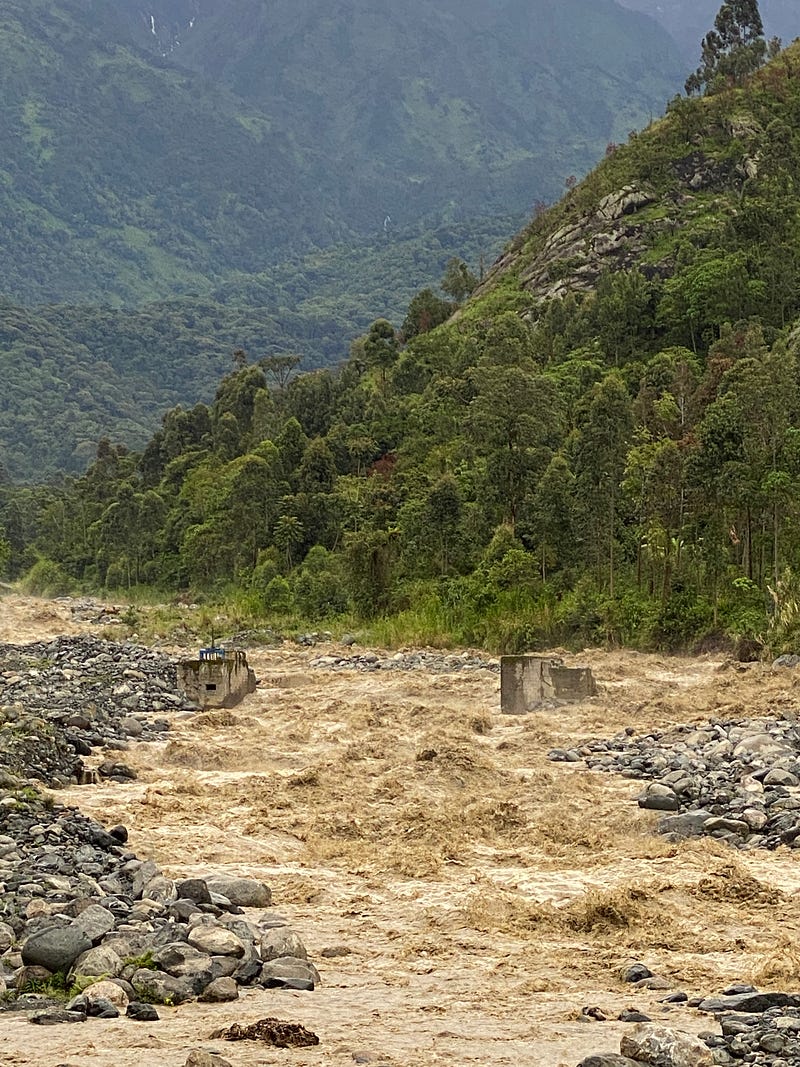
Of course, by the following day, the river had subsided and the villagers were again building themselves yet another bridge that would aid in their crossing. But before that happened, the stranded women on the other side, had to walk the heavy loads 5km further down the river to the next crossing location where they could hand off their goods to the transport trucks. So much extra energy was exerted because of this terrible disaster.
We got to talking about all of this with our host. Being the organization that they are, they want to find a way to raise money for a large suspension bridge that will hang high above the water. But it is a lofty goal, and funding for such a thing will not be easy to acquire.
One day, as we were painting our mural on the outside of their community center, I suddenly had an epiphany. As we were painting a representation of the Mbuku Valley, I decided that over the river we would paint a large and solid bridge. When our host came to check on the project later that day, I pointed it out to him.
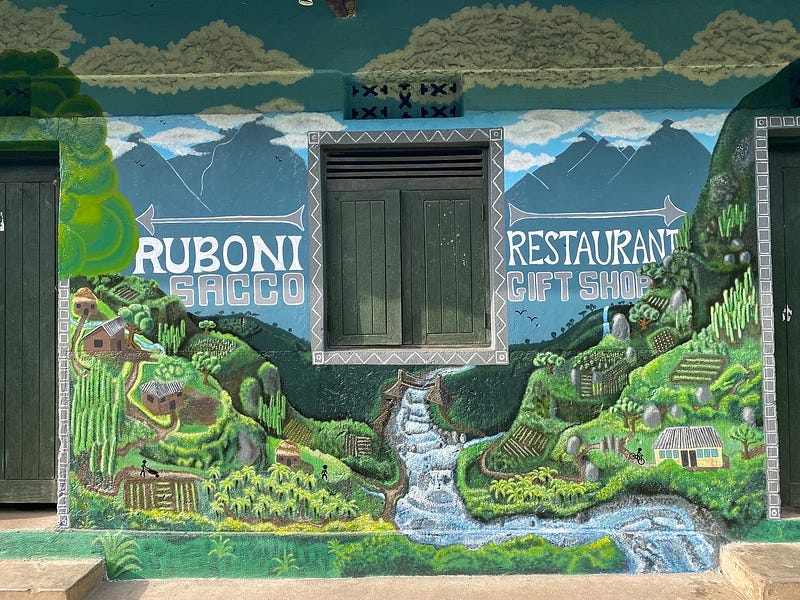
“Sigh, yes, that is the dream.” He told me.
“Well, if you can dream it then it can happen,” I replied.
I like to think that by painting our vision of the bridge, it might bring hope to the community and will give them something to work towards. I want to believe that the organization will somehow find a large donor who will sponsor the construction of this bridge, however, in a world where the needs are so great, it’s hard to believe that this will come to be. For the sake of the people that depend on this bridge for their livelihoods, and their very survival, I sure hope it does.
We aren’t ones to pray, but I will say that I often think of this community, and I do send them my good thoughts, hoping that someday they will manifest this dream.
I admit that I never used to give bridges much thought. I mean I knew that they aided us in getting across bodies of moving water, but I took them for granted. Here in Canada, our bridges are solidly built and it is a rare occurrence where one fails for one reason or another. But in these places of the world where the government does little to help its people, the lack of bridges brings untold suffering. Witnessing this first-hand was a profound and life-changing experience.
This is a reply to our Globetrotters February prompt, Bridges. To learn all about it, please read Anne Bonfert’s introduction post:
You may also be interested in other Globetrotters stories about Uganda:
Oksana Kukurudza's Sunflowers Rarely Break
For more about this river and our stays in Ruboni:
Witnessing Climate Change In Action
A 60 Hour Power Outage and 153 Notifications Later

If you like my writing and want to read more, follow me and sign up here to get my articles by email. We would also be happy if you considered leaving me a tip by using the link to Patreon or Ko-Fi below:)
We have been nomadic since 2017! Join our journey by hitting these links:
Website | Instagram | Facebook | LinkedIn| Patreon| YouTube | Medium | Twitter | Ko-Fi | Unsplash


