
STRUGGLES
Fear, Judgment & Jealousy
Three Bad Habits I’m Trying to Break
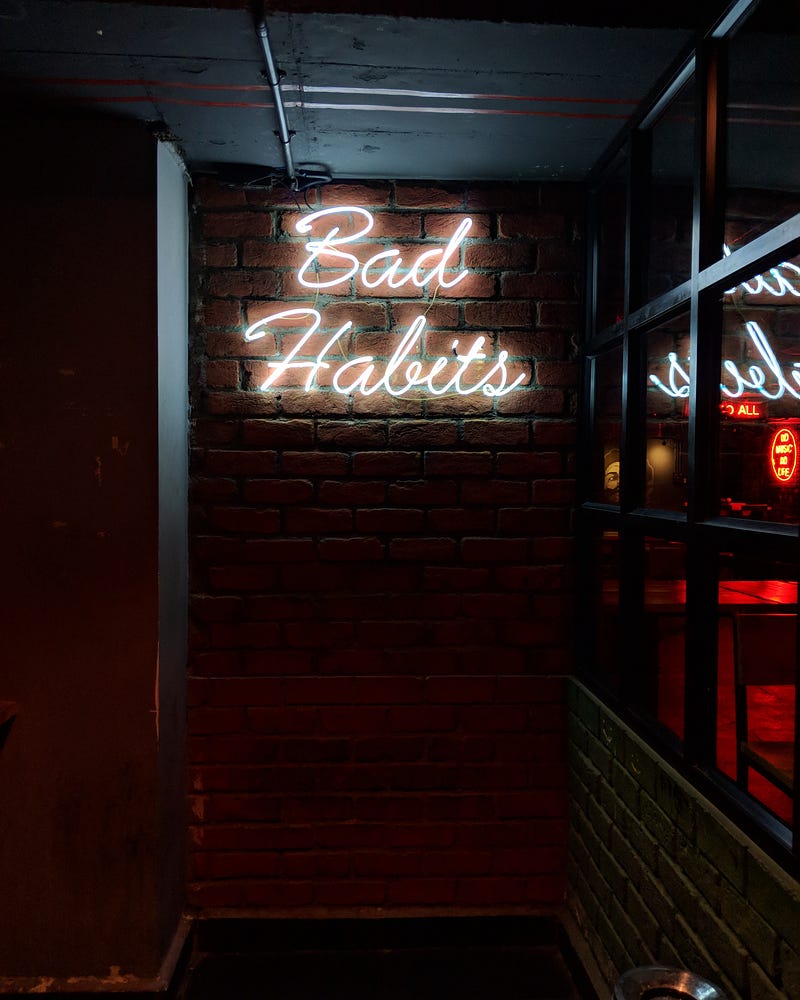
There are parts of myself that I’d like to abandon — pieces of me I hope will wither up, detach, and die like that extra bit of umbilical cord on a newborn child. I want to diminish these parts of myself as much as possible — distance myself from them by as great a margin as I can muster.
Fear
I understand that some fear is healthy and normal. That’s the kind of fear I want — the fear that leaves once it’s done its protective duty — the type of fear that doesn’t stick around after it’s delivered its message of warning. What I’m tired of is the kind of fear that overstays its welcome — that is needy for attention. It gets in the way of a perfectly good time. It’s the type of fear that is hypochondriacal, obsessive, and paranoid. I want my fear to be a sage advisor, not an irrational adversary. Fear was meant to protect and extend life, not get in the way of living.
I don’t want to waste undue or unwarranted amounts of time fearing the imagined or hypothetical. I don’t want to fashion shackles of inaction for myself out of trepidation and worry.
Fear has stilled my tongue when I should have spoken up. Fear has rendered me inert when I should have been reacting, acting, or moving forward. Fear has partnered with doubts to plant stifling insecurities. It has expanded to occupy too great a portion of what I can imagine or foresee. I want my counterproductive fears uprooted — ripped from my life like weeds and burned to nothing.
Fear only grows when you feed it. And what my fear likes to eat most is my avoidance of it. Fortunately, the reverse is also true. I can starve my fear down to a much less intimidating size by looking at it, spending time with it, and defying it. When I engage my fears, they start to dissipate. For every fear I face, I am that much less afraid.
Judgment
I too often (and too comfortably) recline in a position of judgment over others. When I judge (and then criticize) it’s because I’m writing someone else’s story rather than learning their reality. Perhaps it’s human nature. Perhaps it’s just my nature. I use appearances to fill in the blanks. But appearances are just that — they are how things seem. Quite often how things appear is very different from the truth that lies beneath.
It is unfair of me to use someone’s exterior to define and/or criticize that person’s interior. It’s not my job to judge or make assumptions. It is my job to become comfortable with myself and my choices. That leaves me freer to accept how others choose to live. It prompts me to ask instead of assuming, and to wonder instead of judging. I want to take my judgmental tendencies, coat them in cement until they can’t float, and sink them.
It is contrary to love for me to judge. I must regularly remind myself that not everyone sees or experiences the world the way I do — and that what is right for me isn’t necessarily right for everyone. This was powerfully illustrated for me just the other day. Two people were asked to stand back-to-back and describe what they could see. Each participant, although standing as close as humanly possible to the other person, had a completely different view. Too often I forget how well this illustrates much of life.
You and I can grow up in the same family, neighborhood, country, or era and experience all of it differently because we are two different people with two different perspectives, personalities, and predispositions. What you find thrilling, I might find frightening. What you experience as a freedom, I might experience as confining. Where you see risk, I might see opportunity. Looking at the same words, one of us might see an insult while the other sees something complimentary. If I don’t understand another person’s actions, it’s probably because I haven’t tried to understand that person’s perspective.
I get in trouble with criticism and judgment when I forget that everyone is doing the best they can with the resources (physical, emotional, intellectual, financial, et cetera) they have. I do believe that some things are right, and some things are wrong. But I believe more things are right for some and wrong for others. There is a big difference between right or wrong for me and right or wrong as absolutes. It’s important that I assign those designations with extreme caution — and remain flexible when I do.
As a Christian, I am called to love — not to judge. It’s not my job to police humanity — to expect others to act, feel, or live the way I do (or would in their shoes). If you asked one thousand artists to draw a flower, you’d get all sorts of varieties and colors, and none would be wrong. That’s what criticism often forgets — that diversity is natural and different doesn’t mean incorrect.
Jealousy
What a caustic poison. What a self-destructive emotion. To look at what another person has (or has accomplished) with jealousy or resentment is self-defeating and futile. When I indulge envy, I act as though an increase in someone else’s good requires a proportional decrease in my own.
Jealousy demands that I blind myself to the fullness of another person’s life — which includes joy and pain, successes and failures, peaks and dark valleys. If my dreams come true for someone else, I should feel more motivated, not sorrowful. At its worst, envy is a lie; at its best, it is an illusion.
Another’s gain does not necessitate my lack. I want to smother envy in its sick bed. I want to suffocate jealousy until it’s dead and lets me go — no longer able to hold me back or down. I do this by looking for the whole picture and appreciating all that’s good in my life. Jealousy cannot thrive in an honest and grateful environment.
Fear, judgment, and jealousy render me closed to new challenges, true inclusion, and contentment. I want to live open to these opportunities. I want to live and love honestly — capable of seeing people as they truly are without judgment or jealousy. I want to live with hope and faith in good things. I don’t want to allow the pessimistic side of my imagination to grow too big.
I want to live instead of just being alive. I want to act on my own behalf, move forward with confidence, and thrive. I want to be fully and honestly myself in all situations — not overly censored, apologetic, or deferential. I want to speak the truth without fear rather than just saying what is expected or easy to hear.
When I think about how I’d like to change and grow, fear, judgment, and jealousy are three bad habits I’d like to let go of…starting today…starting now.
Thank you for reading this. If you’d like to read more about overcoming fear and jealousy, click on the links below.


