
CONFESSIONS
Fear Is a Liar
I Don’t Have to Worry
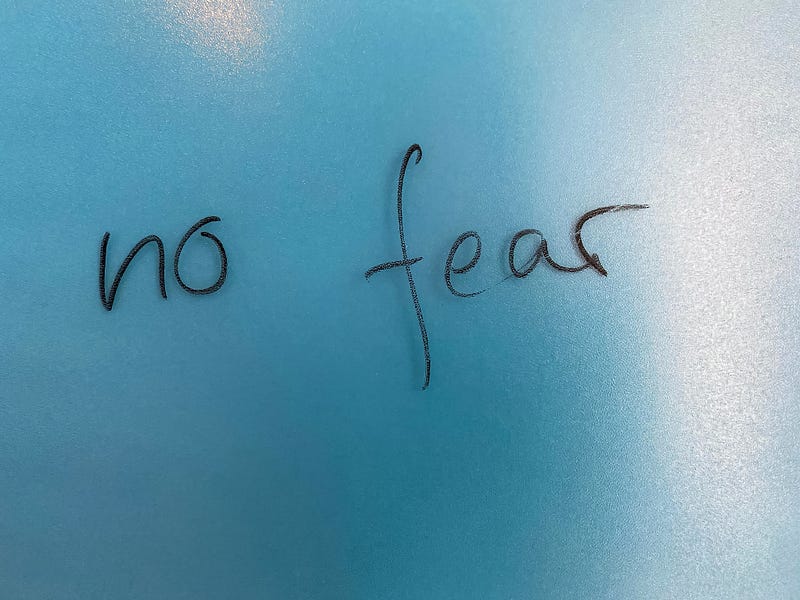
I have always felt different: I’m the shortest of my siblings. I was the only Black kid in my class for six years. I have often been (or felt like) the only Christian in the room. But mostly I feel different because of the unwelcome thoughts that enter my mind and the uninvited fears I begrudgingly entertain.
Every now and again, I will let an ordinary occurrence engender a dark daydream. Any quotidian occurrence can prompt my brain to run through a gauntlet of worst-case scenarios. For example, I was walking down the street one evening as two men smoking cigarettes were walking towards me. For some reason I wondered the following: What if one of them decided to put his cigarette out in my eye? I don’t know where that thought came from or why, but there it was as they passed me by. Thankfully, worries like that are usually short-lived, but I wish they didn’t exist at all. I wish fear wasn’t something I struggled with.
I’m afraid of so many things. I fear the call at an odd hour is bad news. I’m afraid of the dark — the kind of deep, black dark that doesn’t even permit shadows. I’m afraid of dying (especially painfully or violently), but I also sometimes find the concept of living forever almost equally terrifying. I’m afraid of flying, falling, drowning, and crashing. I’m afraid of not trying, of failing, and of succeeding. I’m afraid of getting hurt — emotionally and physically. I’m afraid of never living up to my mother’s legacy — or of living a life that leaves no good mark — one devoid of meaning. And given the fraught final years of my grandparents’ lives, I’m afraid of what my old age will look like. Mostly I’m afraid I’m getting it all wrong, that I’m wasting time, and that (given the missteps I’ve made) there’s no good way forward — no way to recover.
If I could set aside any aspect of what makes me who I am, I would disown my fear. That emotion drives me in directions I do not want to go. It keeps me inactive or slows my progress to a crawl. It renders me distracted — preoccupied with potential pitfalls and worst-case scenarios (however unlikely or unrealistic).
Fear of what awaits in the future prevents me from more fully engaging in whatever (or whoever) is before me in the present. Fear of embarrassment or failure stops me from taking more chances. Fear of being misunderstood, dismissed, or disliked makes me hold my tongue. I withdraw from certain experiences for fear of getting hurt.
When I don’t act or take a risk, it is usually because of fear disguised as wisdom. When I don’t dream, or when I hang back from an opportunity, it is because of fear clothed to look like being realistic or practicality.
Fear stills my hands, binds my feet, and shackles my tongue. Fear turns my head away from my hopes and dreams and focuses my eyes on the worst-case scenario. It nails my aspirations to the ground. Fear persuades me to expect the worst even in the midst of the best. Fear denies me peace and sound sleep — it won’t allow for a moment of rest.
I have spent my lifetime learning how to undermine my fears — to shine a light on them until they disappear. At first, they look mountainous, but in the face of faith and logic, few of them stand up.
All too often my fear is a liar. It pretends to be prudence. It acts insurmountable. But most of what I fear can’t or won’t ever be real. There is little foundation or substance to much of what scares me. Most of my fears are more rooted in my dysfunctional imagination than reality.
Every time I set aside a fear, I become a bit freer. Without fear, I enjoy things more deeply. Without fear, I can more fully inhabit the present. Without fear, I don’t have to worry about what others think, and so I speak and act with more honesty — authentically.
Fear will come from time to time; it is a natural emotion. What I’m trying to avoid is giving fear too much control. There are a few fears that can save my life, but surrendering too much to fear will shrink my living down to an unhealthy size.


