
ARTICLE
Fads From The Past: Live Insect Jewelry and Dresses
How the Victorians’ obsession with natural history intersected with this peculiar fashion trend.
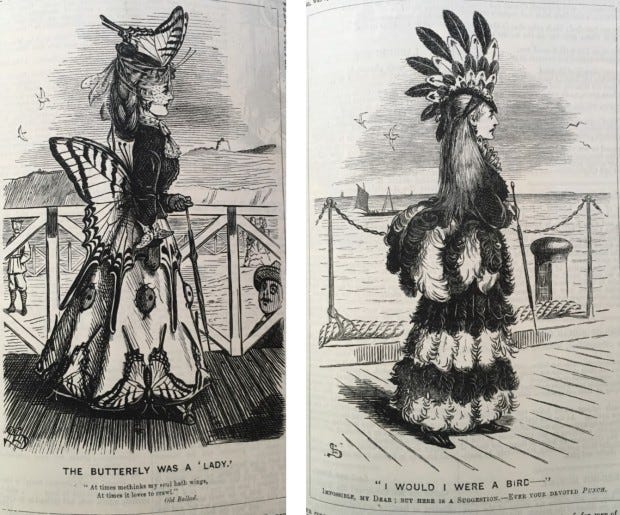
The satirical journal Punch contains some very over-the-top illustrations of Victorian women wearing dresses inspired by insects and animals. In this particular volume, published in 1869, they are dressed as cockroaches, beetles and butterflies. Some are seen taking strolls while sporting gigantic feathered bonnets, as pictured above.
Punch was poking fun at the cultural fascination with natural history, and how it was making significant headway into women’s fashion of the period. Nature was being embedded in all types of clothing. From bird bonnets to insect brooches, it was apparently taking the Western world by storm.
Take this unintentionally comical report by “Godey’s Lady Book”, placed in what is supposed to be their light-hearted,“Fashion Chit-Chat” section. They go on to describe it with strange fervor:
“The ornithological and entomological fevers, which broke out last spring, will continue with increased violence throughout the winter.” —(Godey’s Lady Book, 1863)
Increased violence? Fevers? It sounds like they are talking about some serious illness, when they’re referencing a fashion wave. What is going on here? I wondered why this particular line was so intensely critical.
Apparently, due to the high demand of natural history, exotic birds and insects from Africa, India and Brazil were being auctioned off to jewelers and dressmakers. Sellers would stuff real birds, so they could be pretty ornaments in bonnets, and use actual beetle wings as decorations. (Tolini, 2002)
The same magazine linked this practice to a “savage state” in 1874, yet justified it as simply fashion, and continued promoting these items.
Reconnecting With Nature
There are multiple factors that caused the proliferation of this trend. During this period, the Industrial Revolution was running full steam ahead, and there were many scientific advancements.
As a result of these lifestyle changes, folks were moving from the countryside to the big cities. With their exposure to nature being more limited than ever, people sought out different ways to reconnect with it:
“As urban Victorians grew more and more detached from nature, they tried to reconstruct the wilderness in their homes: cultivating ferns under crystal domes, raising frogs in glass vivaria, and trimming their hats with piles of moss and bird’s nests. Taxidermy was considered a delightful domestic hobby.” (Amelia Soth, 2020)
Insects in Fashion
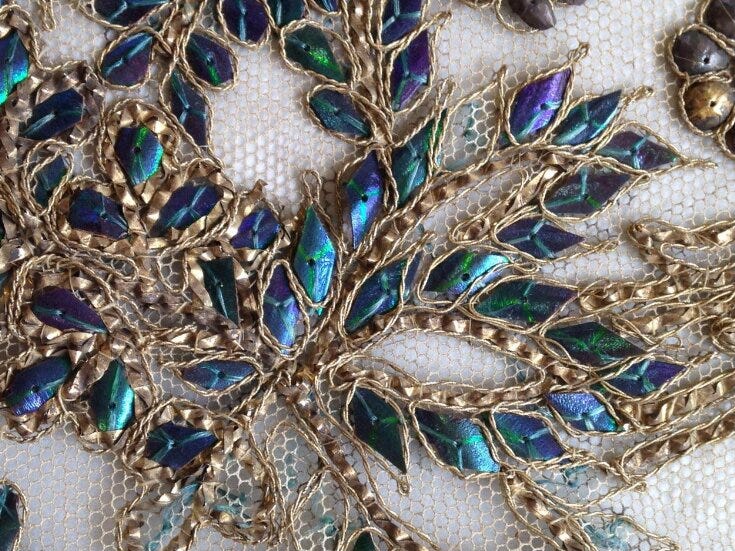
Many dress fabrics and accessories contained iridescent beetle wings, which were imported from India by England in the 1840s and 1850s. These fabrics were embroidered and had to be handled gingerly, as the wings were very fragile. Due to their natural glow, they mimicked the sparkle of gemstones.
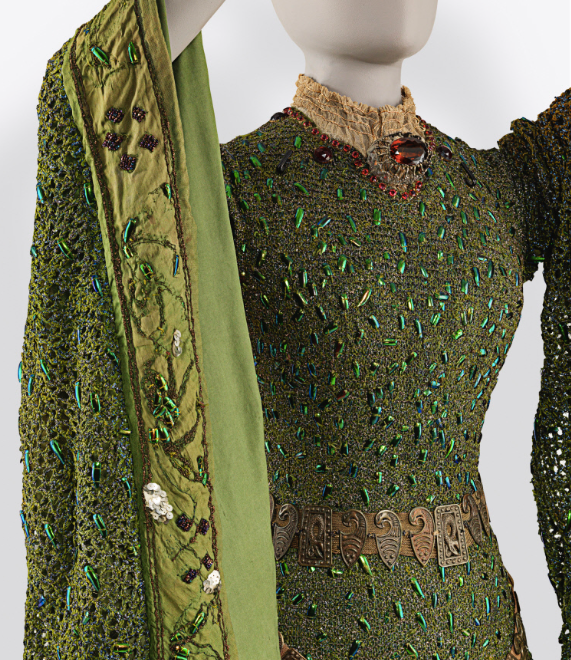
One of the most popular manifestations of this trend was a dress designed by Alice Laura Comyns-Carr, worn by actress Ellen Terry in her role as Lady Macbeth. This piece debuted at the opening of Macbeth at the Lyceum Theatre in London in December 1888. It is said her stunning appearance immediately “drew in gasps” from the audience.
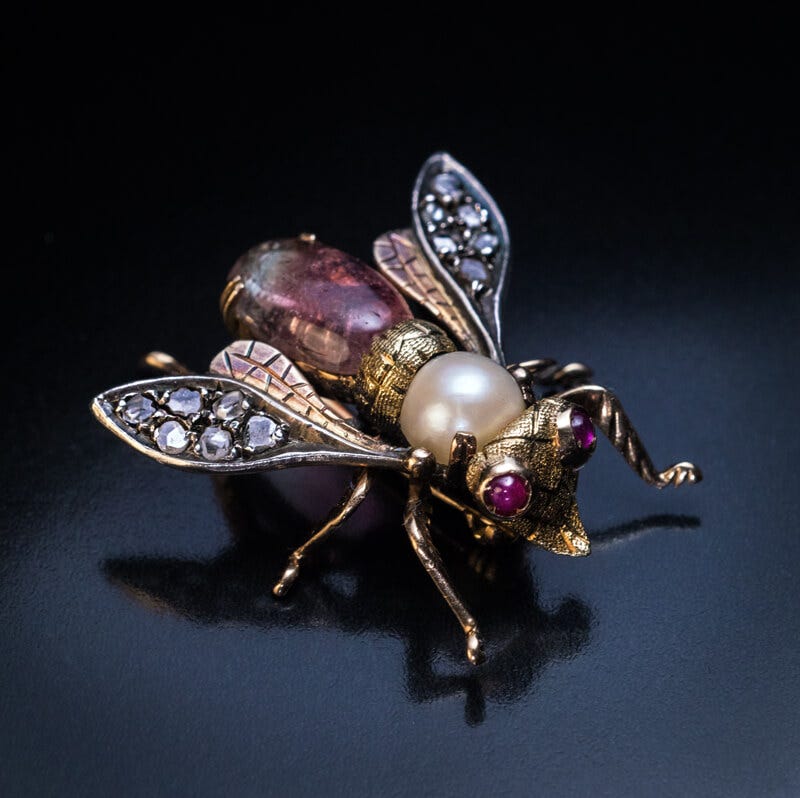
Brooches, on the other hand, were a much more common accessory. Many contained realistically rendered bugs, birds and flowers to achieve that naturalistic look.
During the peak of this trend, some Victorian women even used live fireflies to adorn their hairdos. A woman sporting this look was interviewed by The New York Sun, and claimed these insects “flashed, gleamed and glowed as diamonds never did.”
This interview also featured a jeweler who was attempting to create fake fireflies as a way to profit from this trend. He didn’t know what to feed fireflies to keep them alive, so he resorted to the next best thing.
The End of An Era
In 1878, British author Mary Eliza Haweis published a book titled The Art of Beauty, in which she condemned the use of real animals in fashion. This erupted a change in the discourse surrounding aesthetics; a myriad of periodicals criticizing this aspect of fashion followed suit.
Additionally, disturbing reports that popular species were nearing extinction due to human frivolity launched the creation of many Victorian activist organizations in the 1880s. Animal preservation movements began to form, and by the turn of the century, the trend gradually died down.
Thank you for reading! Writing this reminded me of the popularization of bird-watching in this same era! It was a direct response to the cruelty animals were being put through in the name of fashion. The next article will probably be about that if I find enough sources.
If you enjoyed it, you can tip me through Ko-fi or become a Medium member with my referral link!

More from this author…


