avatarOmy

Free AI web copilot to create summaries, insights and extended knowledge, download it at here

2190

Abstract

this period, one of the beauty standards was to acquire a bulging, spotless forehead:</p><blockquote id="9bec"><p>The Middle Ages had a weird beauty trend that involved shaving off the eyebrows completely and plucking the hairline way up, so the forehead was massive. Why? <b>They thought it looked like a baby’s head, which made the woman look pure and innocent. —<a href="https://www.itsrosy.com/The+Most+Absurd+Beauty+Rituals+Through+History">(</a></b><a href="https://www.itsrosy.com/The+Most+Absurd+Beauty+Rituals+Through+History">It’sRosy Staff, 2021)</a></p></blockquote><p id="1418">Although many Western historians credit this fashion trend to Europeans—many sources stating it came from <a href="https://costumesociety.org.uk/blog/post/the-hennin-headdress-an-overview">Burgundy</a>—it is recorded that long before European noblewomen wore these very tall, unique headdresses, they were being used by Mongolian Queens:</p><blockquote id="4e42"><p><b>The European Henin is modeled directly after the willow-withe and felt Boqta (Ku-Ku) of Mongolian Queens, which could reach over five to seven feet in height.</b></p></blockquote><blockquote id="3c22"><p>Mongolian women’s boqta also had a special role: because men and women’s clothing were more or less exactly the same in design, appearance and function— reflecting thousands of years of more or less equal rights between the genders— the women’s tall headdresses served to differentiate men and women from a distance. —(<a href="https://medievalpoc.tumblr.com/post/56622893443/the-sawkele-the-ku-ku-the-boqta-the-henin-how">Medieval PoC, 2013)</a>, <a href="https://www.smithsonianmag.com/smart-news/medieval-cone-shaped-princess-hats-were-inspired-by-mongol-warrior-women-180948217/">(Smithsonian Magazine, 2013)</a></p></blockquote><p id="da75">The first recorded mention of this tall headdress by the Mongols was back in the 13th century, in “The Secret History of the Mongols”, in which it’s described as being two feet tall, made with locally acquired materials, and covered with red silk by the wealthy.</p><figure id="479d"><img src="https://cdn-images-1.readmedium.com/v2/resize:fit:800/0*eTud3Etei5zIIDM9.jpg"><figcapt

Options

ion><a href="https://en.wikipedia.org/wiki/File:YuanEmpressAlbumUnnamedEmpressII.jpg">Unnamed imperial consort, 14th century —Wikimedia Commons</a></figcaption></figure><p id="87d5">As the years went by, this fashion statement went a bit out of control. These Mongolian headdresses became incredibly intricate; adorned by peacock feathers, pearls, precious stones, and gold wire.</p><p id="bf1a">Additionally, since it was now much heavier, in order to keep the headdress steady, it is said that the princesses had to be surrounded by many attendants, as <a href="http://www.karakalpak.com/sawkele03.html">described</a> by Castilian traveller Ruy González de Clavijo, in his travel logs when he visited Samarkand in 1403.</p><p id="bd4e">By the end of the 13th century, it is known that Marco Polo brought back at least one of these Mongolian headdresses to Europe—a <a href="http://katthestrangesca.blogspot.com/2018/01/mughal-hat.html">gift </a>from the Empress of Genghis Khan—thus it’s entirely possible the iconic henins were modeled after them.</p><p id="85d1"><i>Thank you for reading!</i></p><p id="75bf">If you enjoyed it, you can support me through <a href="http://ko-fi.com/omylaza">Ko-fi</a> or become a Medium member with <a href="https://omylaza.medium.com/membership">my referral link</a>!</p><figure id="9e83"><img src="https://cdn-images-1.readmedium.com/v2/resize:fit:800/1*xMuqY8_C93BukjCyYo62Tg.png"><figcaption></figcaption></figure><p id="81f8"><b>More from this author…</b></p><div id="4e85" class="link-block"> <a href="https://readmedium.com/fads-from-the-past-electric-corsets-and-belts-4898419f7e8"> <div> <div> <h2>Fads From The Past: Electric Corsets and Belts</h2> <div><h3>Quack doctors and false advertisements: how the discovery of electricity made its way to Victorian fashion.</h3></div> <div><p>medium.com</p></div> </div> <div> <div style="background-image: url(https://miro.readmedium.com/v2/resize:fit:320/0*6hibSA6CjNEZDg5Y.jpg)"></div> </div> </div> </a> </div></article></body>

ARTICLE

Fads From The Past: Cone-Shaped Princess Hats

The iconic princess hats of Medieval Europe were modeled after the ‘Boqta’ of Mongolian Queens.
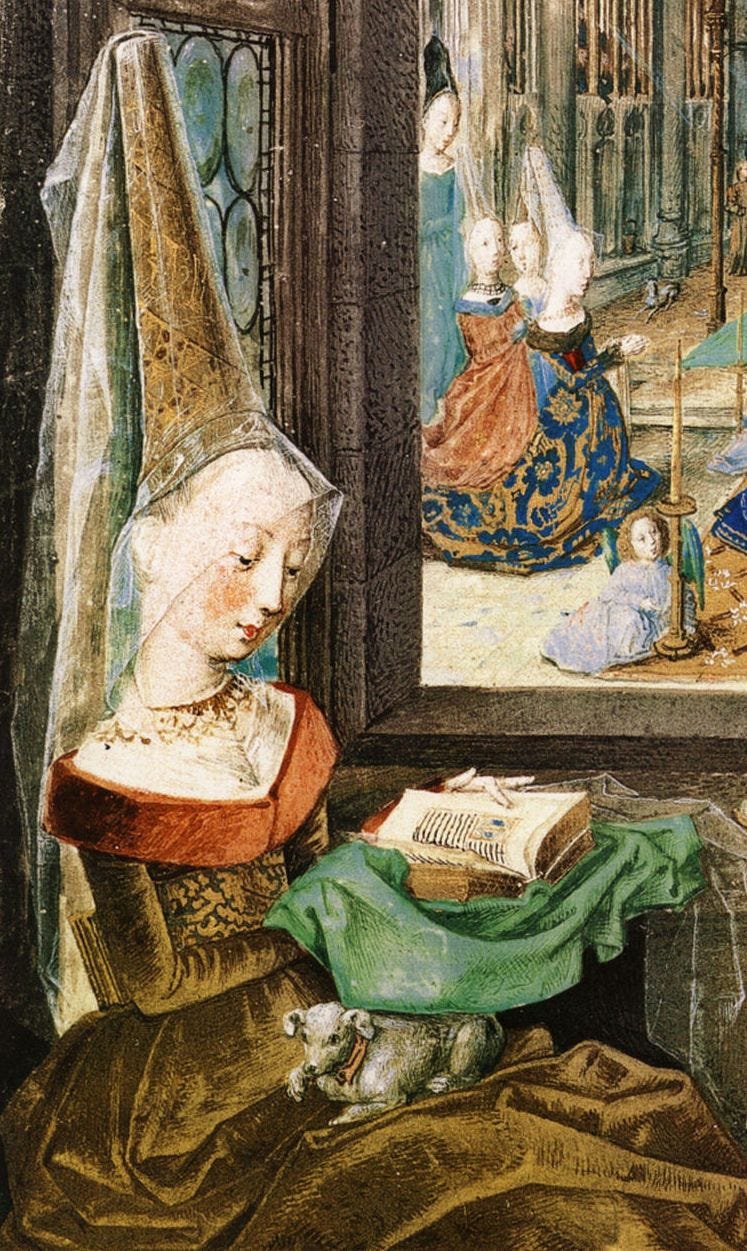
Hours of Mary of Burgundy (1477)—Wikimedia Commons

When searching for princess costumes, the cone-shaped headdress will undoubtedly make an appearance at some point. This iconic, cylindrical hat quickly became a symbol for princesses and femininity; oftentimes featured in fairytale art, and historical films to depict a woman of high social status.

Deemed the hennin (or henin), it was a very popular fashion item amongst high-class European women in the 15th century. They had a variety of shapes and styles; some were conical and pointy, whereas others had flat tops.

Similar to the very pointy shoes present in men’s fashion of that period, the length of the hennin determined the wearer’s social status. The taller and more intricate it was, the more important (and wealthy) they were.
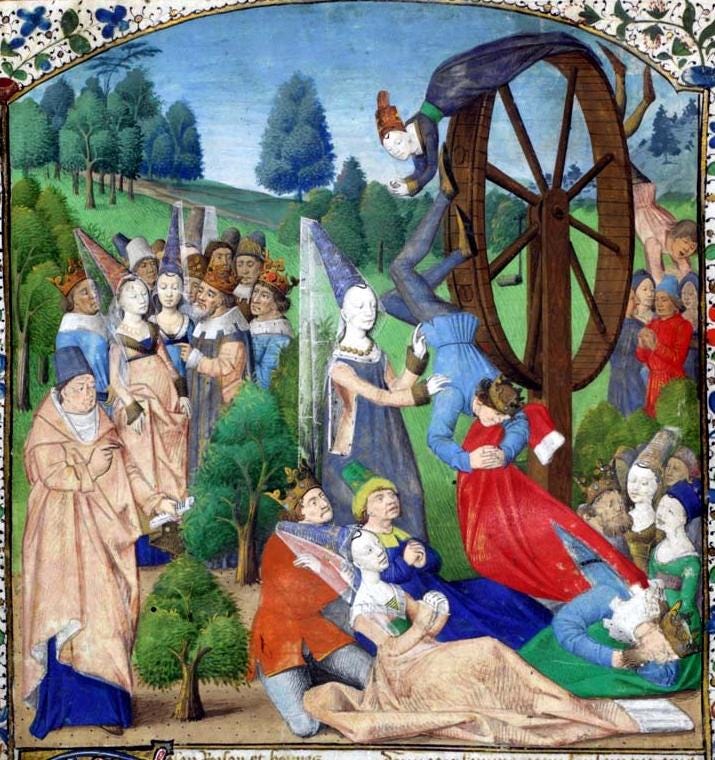
Wheel of Fortune, Bocaccio (1467)—WIkimedia Commons

The hennin had to be worn at an angle and on the back of the head—with their hair barely visible—as to emphasize the wearer’s facial features and elongate their forehead as much as possible. This is because during this period, one of the beauty standards was to acquire a bulging, spotless forehead:

The Middle Ages had a weird beauty trend that involved shaving off the eyebrows completely and plucking the hairline way up, so the forehead was massive. Why? They thought it looked like a baby’s head, which made the woman look pure and innocent. —(It’sRosy Staff, 2021)

Although many Western historians credit this fashion trend to Europeans—many sources stating it came from Burgundy—it is recorded that long before European noblewomen wore these very tall, unique headdresses, they were being used by Mongolian Queens:

The European Henin is modeled directly after the willow-withe and felt Boqta (Ku-Ku) of Mongolian Queens, which could reach over five to seven feet in height.

Mongolian women’s boqta also had a special role: because men and women’s clothing were more or less exactly the same in design, appearance and function— reflecting thousands of years of more or less equal rights between the genders— the women’s tall headdresses served to differentiate men and women from a distance. —(Medieval PoC, 2013), (Smithsonian Magazine, 2013)

The first recorded mention of this tall headdress by the Mongols was back in the 13th century, in “The Secret History of the Mongols”, in which it’s described as being two feet tall, made with locally acquired materials, and covered with red silk by the wealthy.
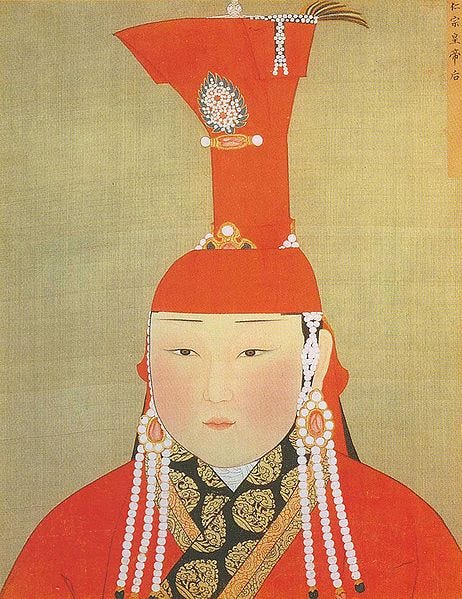
Unnamed imperial consort, 14th century —Wikimedia Commons

As the years went by, this fashion statement went a bit out of control. These Mongolian headdresses became incredibly intricate; adorned by peacock feathers, pearls, precious stones, and gold wire.

Additionally, since it was now much heavier, in order to keep the headdress steady, it is said that the princesses had to be surrounded by many attendants, as described by Castilian traveller Ruy González de Clavijo, in his travel logs when he visited Samarkand in 1403.

By the end of the 13th century, it is known that Marco Polo brought back at least one of these Mongolian headdresses to Europe—a gift from the Empress of Genghis Khan—thus it’s entirely possible the iconic henins were modeled after them.

Thank you for reading!

If you enjoyed it, you can support me through Ko-fi or become a Medium member with my referral link!

More from this author…

History
Research
Fashion
Culture
Life
Recommended from ReadMedium