
ARTICLE
Fads From The Past: Electric Corsets and Belts
Quack doctors and false advertisements: how the discovery of electricity made its way to Victorian fashion.
In our current age, we are so used to seeing a lightbulb turn on that we don’t see anything particularly special about this piece of technology. One can only imagine how magical it all must’ve seemed to those who saw it for the first time.
This can be observed while reading some Victorian era newspapers; Thomas Edison was called the “wizard” of electricity by the press, due to his many marvelous electric inventions. Edison was a celebrity, as he was the face of this almost supernatural achievement.
Although this wave of electric inventions began with many practical household items—such as lamps and telegraphs—eventually, “electric” turned into a gimmicky word. It became a cultural craze and obsession.
The buzz and excitement surrounding this newfound technology paved the way to some pretty odd, pseudoscientific products.
Electricity became this grandiose symbol of modernity. The pinnacle of human achievement: we were on a cultural high. Thus, many advertisements took advantage of this phenomenon and claimed it cured practically any ailment:
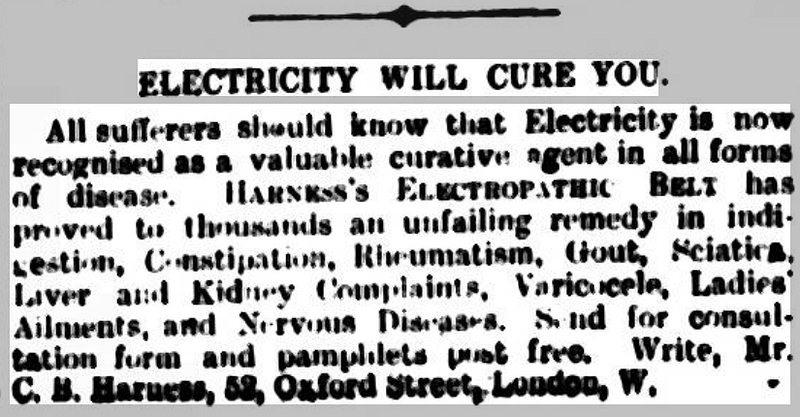
Text: ELECTRICITY WILL CURE YOU. All sufferers should know that Electricity is now recognized as a valuable curative agent in all forms of disease. ‘Harness’s Electropathic Belt’ has proved to thousands an unfailing remedy in Indigestion, Constipation, Rheumatism, Gout, Sciatica, Liver and Kidney complaints, Varicocele, Ladies’ Ailments and Nervous Diseases. Send for consultation form, and pamphlets post free. Write, Mr. C.S., Harness, 58, Oxford Street, London, W. —Middlesex & Surrey Express, 1893
Doctors and scientists were still trying to understand the connection between electricity and anatomy. But, as always, pseudoscience and quacks had to scramble for a rushed explanation, so they could capitalize off of this phenomenon as fast as possible.
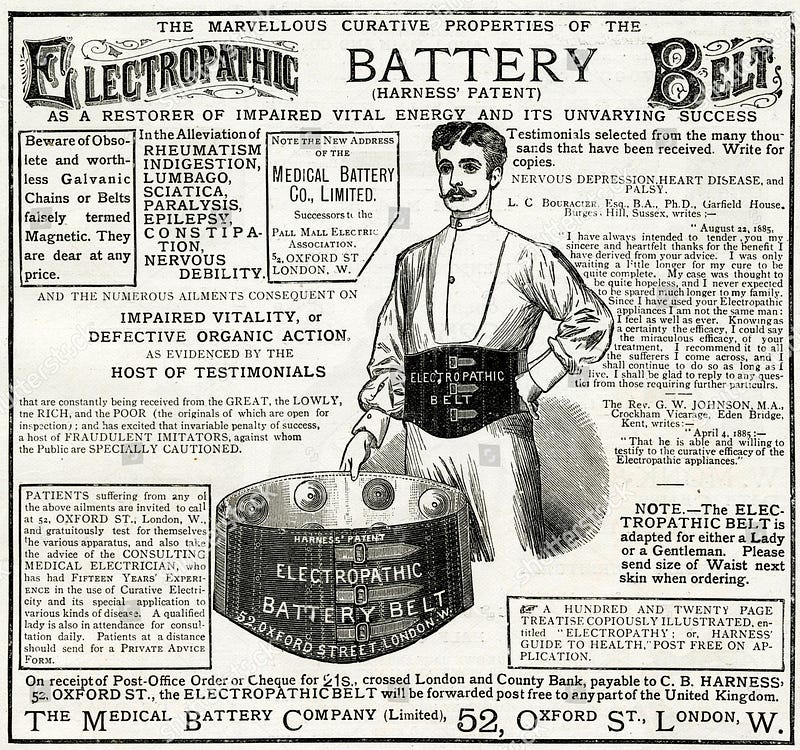
So, now we have a variety of questionable electric inventions. The one mentioned in the previous article is “Harness’s Electropathic Belt”.
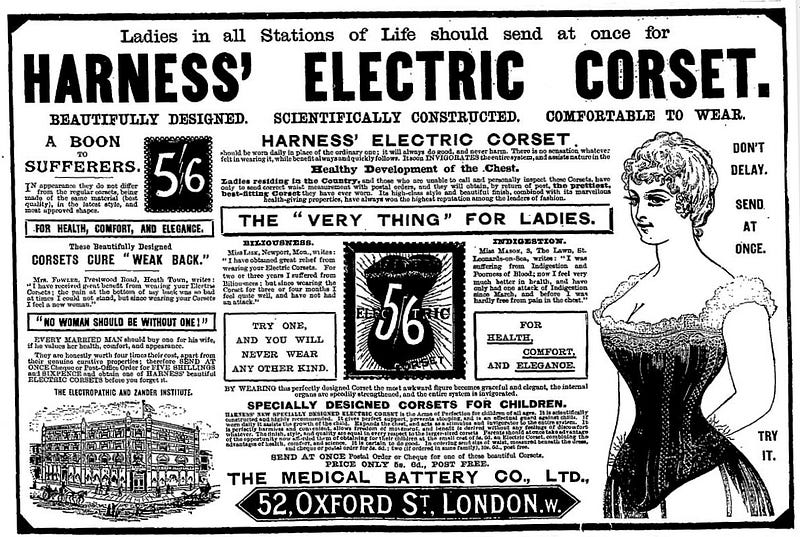
Harness also invented what he deemed the “Electric Corset”, which was actually magnetic rather than electric. All it contained was a magnetic steel husk. It supposedly cured indigestion and “strengthened internal organs”. These false claims were only the tip of the iceberg.
Harness was a furniture salesman and jeweler, who claimed he was a “medical electrician”, even though he had no certifications or qualifications.
He quickly became one of the most notorious quacks during this era of electric-mania— you’d be hard-pressed to find a newspaper that didn’t contain a ridiculous advertisement for his products. There was not much regulation, or research being done when publishing these claims. So, let’s just say, if cancer was prevalent in the Victorian Era, without a doubt, these quacks would’ve also claimed it cured cancer.
After quite a few years of success—between the 1890s and 1920s, they sold thousands of products in the United States alone—the inevitable lawsuits came flooding in.
In 1892, a young man suffering from a hernia sued Harness’s company, as his condition only got worse since using the acclaimed belt. He won the case, and it opened the floodgates for many others.
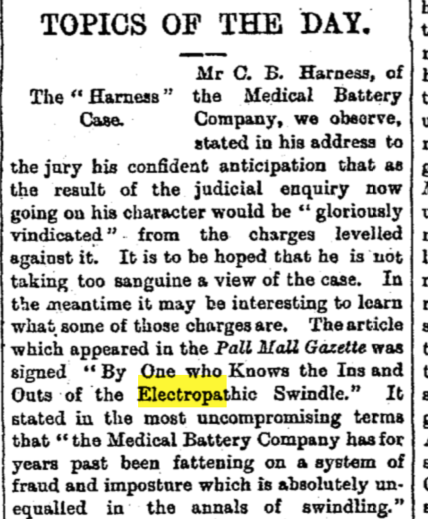
A year later, “The Pall Mall Gazette” published an exposé on this product titled “The Electropathic Belt Swindle”. Soon thereafter, sales declined drastically, and like with any fad, people moved on to the next thing.
Harness—with his reputation now down the drain—couldn’t sell any more products.
Thank you for reading! Really enjoyed finding these newspapers and adverts.
If you enjoyed it, you can support me through Ko-fi or become a Medium member with my referral link!

More from this author…


