
ARTICLE
Fads From The Past: Ridiculously Pointy Shoes In Medieval Europe
An odd fashion trend from the 15th century.
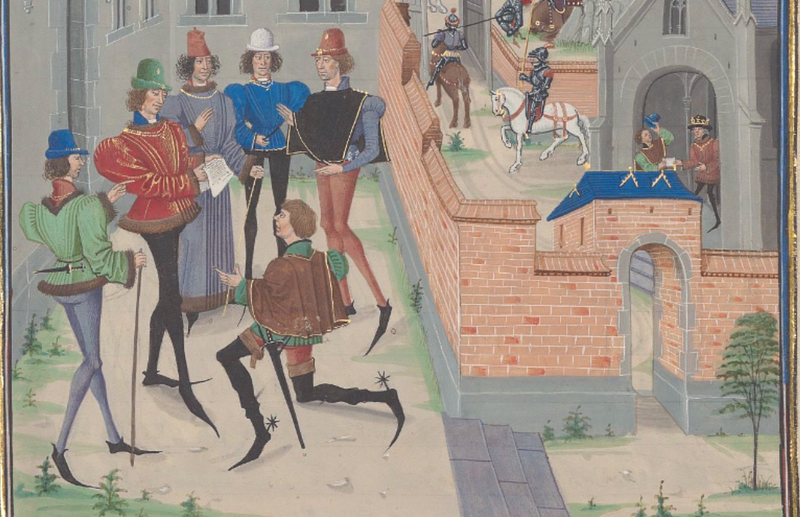
Have you ever wondered why so many pieces of Medieval art feature nobility wearing pointy shoes?
I was going through the 15th century art section of Wikimedia Commons, and was reminded of this particularity. Piece after piece contained this weird looking shoe. Why is that?
Apparently, during this time period, pointed shoes were very popular amongst the noble classes. The shoe was deemed the poulaine or crakow. To achieve that ideal pointy shape, they would stuff the toes with moss, grass, hair, and some would even use whalebone
These were considered a flex. Much like in our age where people adorn themselves with expensive designer brands and jewellery that tends to be anything but practical, these silly looking shoes were a demonstration of the wearer’s social status.
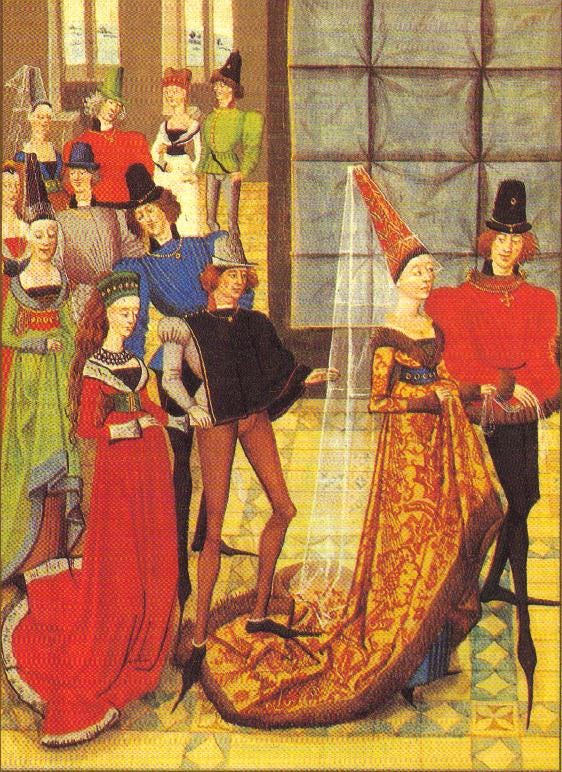
Clearly, those wearing these long pointed shoes are meant to use them while partaking in leisurely activities, such as socializing and drinking with nobility, not out in the fields laboring like the common folk.
During the peak of this trend (14th-15th century), these funky looking shoes had toes up to 24 inches long; an exuberantly painful display of wealth. Imagine attempting to fit your foot in such a small crevice.
Not only was this trend very uncomfortable for them, but it actually ended up permanently damaging their feet. In a recent study published by the International Journal of Paleopathology, archaeologists examined the feet of over 200 skeletons from four different burials in Cambridge, England. These were their findings:
They reveal interesting trends about the pervasiveness of hallux valgus, the lateral deviation of the big toe that causes bunions. They looked at skeletons buried between the 11th and 13th centuries and compared them to skeletons from the 14th and 15th centuries. Only 6% of the earlier individuals had evidence of hallux valgus, while over a quarter of the late medieval group had it.
Once they looked at the fashion trends of the time, it became clear these pointed shoes were the culprits!
This tidbit of Medieval history is a fascinating display of the length people can go through to not only follow fashion trends, but to show off their status and fit in with their circles.
Thank you for reading! Just wanted to share these fun tidbits I found. I’m by no means a history expert, so if anyone in this field has any corrections to suggest I’ll happily apply them!
If you enjoyed it, you can support me through Ko-fi or become a Medium member with my referral code!

Be Open Says;
So pleased to present you one of Be Open Golden Stories created by: Lola Rosario


