avatarPanos Grigorakakis

Free AI web copilot to create summaries, insights and extended knowledge, download it at here

6412

Abstract

n of 1.9 meters/6.2 ft and a body length of about 1.6 meters/5.2 ft). Its mouth was adapted to filter-feeding, suggesting that it hoovered up plankton. Its overall appearance and form are reminiscent of modern manta rays, even though Aquilolamna predates their evolution by tens of millions of years. This weird shark lived 93 million years ago during the Late Cretaceous Period and was originally found in 2012 in the Vallecillo limestone quarry in north-eastern Mexico.</p><p id="a20f">The discovery of Aquilolamna indicates that elasmobranchs, the group of cartilaginous fish that includes sharks, rays, skates, and sawfish experimented with other forms and shapes during their evolutionary history and that the plankton-eating “soarers” emerged in this family at least 30 million years earlier than previously recognized.</p><figure id="3e35"><img src="https://cdn-images-1.readmedium.com/v2/resize:fit:800/1*RvKnOfNJ9hNQ7S-c3BdlMw.jpeg"><figcaption>Aquilolamna sketching by Czar R. Blas / <a href="https://commons.wikimedia.org/wiki/File:Aquilolamna.png">Wikimedia Commons</a></figcaption></figure><h1 id="7e2e">A new bird-like dinosaur from Spain</h1><p id="44cd">Also in March, paleontologists announced the description of a new genus of bird-like dinosaur from Spain. Scientists named their newest discovery Tamarro<i> insperatus</i>; meaning “small creature” in the folklore of Pallars, a historical and natural region in Catalonia.</p><p id="54e6">Based on the animal’s bone histology paleontologists suggested the dinosaur was growing quickly, but it had not yet reached adult size when it died. Even when fully grown, Tamarro must have been relatively small- probably no longer than 2 meters (6,5 ft). It was a primarily carnivorous animal that fed on insects and lizards.</p><p id="945b">Phylogenetic analysis indicates that Tamarro was a troodontid, a group of small-bodied feathered dinosaurs with unusually large brains compared to their relatives. Scientists hypothesize that it could have migrated from Asia to reach Europe, which at the time was a large archipelago.</p><p id="b2d1">Tamarro lived 67 to 66 million years ago- right before the mass extinction event that took down non-avian dinosaurs. Its discovery is extremely important because it increases the (still little) knowledge about the diversity of small theropods that inhabited Europe during the latest part of the Cretaceous Period.</p><figure id="14cf"><img src="https://cdn-images-1.readmedium.com/v2/resize:fit:800/1*mK1W0X6srA_RdTWB5zgA9Q.jpeg"><figcaption>Reconstruction of Tamarro insperatus / <a href="https://commons.wikimedia.org/wiki/File:Tamarro_insperatus.jpg">Wikimedia Commons</a></figcaption></figure><h1 id="378f">The first ichthyosaur remains from Antarctica</h1><p id="52c6">Three new specimens found in the Ameghino Formation of Antarctica represent the first clear evidence of ichthyosaur existence in the southern continent.</p><p id="69a6">Ichthyosaurs were a family of aquatic reptiles similar in appearance and habits to modern-day porpoises and dolphins. These distant relatives of lizards and snakes were the most highly specialized aquatic reptiles during the Mesozoic Era.</p><p id="87c0">According to paleontologists, the latest finds were classified as Ophthalmosaurids, the dominant ichthyosaur forms from the Middle Jurassic until the extinction of the group during the Late Cretaceous.</p><p id="a476">The same paper also describes a new specimen from Madagascar, which is the most complete ever found in the southern hemisphere, and re-evaluates two other individuals from the same region.</p><p id="6cc9">These findings add support to the idea that ancient marine creatures, like ichthyosaurs, were dispersing along the Mozambique corridor after the breakup of the giant supercontinent of Gondwana during the Late Jurassic Period.</p><figure id="5eb6"><img src="https://cdn-images-1.readmedium.com/v2/resize:fit:800/1*Q2hpw8ikZ-Lkdxxj-nlBmQ.jpeg"><figcaption>Ichthyosaur Ophthalmosaurus restoration by Nobu Tamura / <a href="https://commons.wikimedia.org/wiki/File:Ophthalmosaurus_BW.jpg">Wikimedia Commons</a></figcaption></figure><h1 id="e228">Armored dinosaurs may have dug in the ground for resources and defense</h1><p id="9d5c">A new discovery from the Gobi desert of Mongolia suggests that ankylosaurs, a derived group of armored and bulky quadruped dinosaurs, were effective diggers.</p><p id="0411">Scientists from South Korea unearthed the skeletal remains of a 6-meter-long (20 ft) ankylosaurid that lived sometime between 84 and 72 million years ago. The bones of the newest specimen show it had heavily built forelimbs and its forefeet were suited for digging. Scientists also point at the unique fusion of several vertebrae and ribs that could have helped the dinosaur stabilize its body while it dug.</p><p id="e059">Ankylosaurs had short limbs and their body was covered in osteoderms. Most of them also bore a heavy, bony club in their tails. These animals, especially the species found in Asia, lived in arid and semiarid environments, so digging would have been a useful way for reaching valuable resources. Like modern elephants, ankylosaurs could dig to reach plant roots or dig wells to access subsurface water.</p><p id="2f7f">Digging could also have been deployed for defense: by covering the vulnerable lower-part of their body and leaving only the wedge-shaped bony protrusions in their skin exposed, these dinosaurs would have made themselves impenetrable during attacks.</p><figure id="8e7b"><img src="https://cdn-images-1.readmedium.com/v2/resize:fit:800/1*RUSecOiLLULePYL50UBDBw.png"><figcaption>Illustration of the Asian ankylosaur Pinacosaurus / art by Jack Wood / <a href="https://commons.wikimedia.org/wiki/File:Pinacosaurus_Jack_Wood_2017.png">Wikimedia Commons</a></figcaption></figure><h1 id="2dad">A new anomalocaridid from China</h1><p id="cd9b">During this month, paleontologists working on the famous Maotianshan Shales of China announced the discovery of the first valid anomalocaridid genus from the region.</p><p id="02f6">Anomalocaridids were a stem group of arthropods that lived between 521 and 400 million years ago, during the Cambrian period. The family includes Anomalocaris itself, possibly the earliest large predator of the fossil record.</p><p id="15bf">Scientists named the new genus Lenisicaris<i> lupata,</i> and it differs from the othe

Options

r members of its family in the anatomy of its frontal appendages. The same paper identified in the locality a new species of Anomalocaris as well, a genus originally known from the Burgess Shale in Canada.</p><p id="0152">The latest discovery proves the anomalocaridids were globally widespread and adapted to a variety of habitats due to their presence in many different depositional environments.</p><figure id="e095"><img src="https://cdn-images-1.readmedium.com/v2/resize:fit:800/1*HIlJVYfA9HihTi3xltW0BQ.png"><figcaption>Reconstruction of Anomalocaris canadensis by Junnn11 / <a href="https://commons.wikimedia.org/wiki/File:20191203_Anomalocaris_canadensis.png">Wikimedia Commons</a></figcaption></figure><h1 id="23af">A new sauropod from Chile</h1><p id="3cee">March also saw the description of yet another sauropod, this time in Chile. Scientists recovered the partial skeleton of the new long-necked dinosaur from the Late Cretaceous rocks of the Hornitos Formation, in the Atacama Region.</p><p id="3c5a">The remains belong to a small subadult individual with an estimated length of 6.3 meters (20.6 ft). Scientists named the new genus Arackar <i>licanantay </i>which roughly translates to the “bones of the Atacamenians” in Kunza, the extinct language once spoken in northern Chile and southern Peru by the Atacama people.</p><p id="b0b9">Phylogenetic analysis classified Arackar as a lithostrotian, a clade of derived titanosaur sauropods that lived between 120 and 66 million years ago. The new genus represents the third dinosaur found in Chile and is currently the most complete specimen of a sauropod found in the country.</p><figure id="e2ba"><img src="https://cdn-images-1.readmedium.com/v2/resize:fit:800/1*pSKAKL7s-yr-lsm36PcWLQ.png"><figcaption>Size comparison of a juvenile specimen of Rapetosaurus, a titanosaurian sauropod closely related to Arackar / Slate Weasel /<a href="https://commons.wikimedia.org/wiki/File:Rapetosaurus_Scale.svg"> Wikimedia Commons</a></figcaption></figure><h1 id="377f">Epilogue</h1><p id="18e9">To sum up, March was a remarkable month in the field of paleontology. Scientists learned more about the biology and behavior of a wide range of extinct animals and discovered exciting new species.</p><p id="c4bb">Hungry for more paleontology news? Check out the top discoveries from April below:</p><div id="cd22" class="link-block"> <a href="https://readmedium.com/exciting-paleontological-discoveries-you-probably-missed-in-april-92edb1806375"> <div> <div> <h2>Exciting Paleontological Discoveries You Probably Missed in April</h2> <div><h3>Scientists found a pterosaur with opposable thumbs…</h3></div> <div><p>medium.com</p></div> </div> <div> <div style="background-image: url(https://miro.readmedium.com/v2/resize:fit:320/1*cM97hI0baf0Mt81Fh7ZE6Q.jpeg)"></div> </div> </div> </a> </div><h1 id="d422">References</h1><p id="5fbb"><i>Gallina, P. A., Canale, J. I., & Carballido, J. L. (2021). THE EARLIEST KNOWN TITANOSAUR SAUROPOD DINOSAUR. Ameghiniana, 58(1), 35–51. <a href="https://doi.org/10.5710/AMGH.20.08.2020.3376">https://doi.org/10.5710/AMGH.20.08.2020.3376</a></i></p><p id="69ba"><i>Wioletta Nowaczewska et al. 2021. New hominin teeth from Stajnia Cave, Poland. Journal of Human Evolution 151: 102929; doi: 10.1016/j.jhevol.2020.102929</i></p><p id="6fb0"><i>Lida Xing, Martin G. Lockley, Hendrik Klein, W. Scott Persons, Guangzhao Peng, Yong Ye, Miaoyan Wang, Largest dinosaur tracksite in China (Cretaceous, Zhaojue area, Sichuan Province): On the verge of destruction, Geoscience Frontiers, 2021, 101181, ISSN 1674–9871, <a href="https://doi.org/10.1016/j.gsf.2021.101181">https://doi.org/10.1016/j.gsf.2021.101181</a>.</i></p><p id="f264"><i>Vullo, Romain; Frey, Eberhard; Ifrim, Christina; González, Margarito A. González; Stinnesbeck, Eva S.; Stinnesbeck, Wolfgang (2021–03–19). <a href="https://science.sciencemag.org/content/371/6535/1253">“Manta-like planktivorous sharks in Late Cretaceous oceans”</a>. Science. <b>371</b> (6535): 1253–1256. <a href="https://en.wikipedia.org/wiki/Doi_(identifier)">doi</a>:<a href="https://doi.org/10.1126%2Fscience.abc1490">10.1126/science.abc1490</a>. <a href="https://en.wikipedia.org/wiki/ISSN_(identifier)">ISSN</a> <a href="https://www.worldcat.org/issn/0036-8075">0036–8075</a></i></p><p id="53f9"><i>Sellés, A.G., Vila, B., Brusatte, S.L. et al. A fast-growing basal troodontid (Dinosauria: Theropoda) from the latest Cretaceous of Europe. Sci Rep <b>11, </b>4855 (2021). <a href="https://doi.org/10.1038/s41598-021-83745-5">https://doi.org/10.1038/s41598-021-83745-5</a></i></p><p id="a453"><i>Bridging the southern gap: First definitive evidence of Late Jurassic ichthyosaurs from Antarctica and their dispersion routes, Journal of South American Earth Sciences, 2021, 103259, ISSN 0895–9811, <a href="https://doi.org/10.1016/j.jsames.2021.103259">https://doi.org/10.1016/j.jsames.2021.103259</a>.</i></p><p id="251f"><i>Park, JY., Lee, YN., Currie, P.J. et al. A new ankylosaurid skeleton from the Upper Cretaceous Baruungoyot Formation of Mongolia: its implications for ankylosaurid postcranial evolution. Sci Rep <b>11, </b>4101 (2021). <a href="https://doi.org/10.1038/s41598-021-83568-4">https://doi.org/10.1038/s41598-021-83568-4</a></i></p><p id="2d92"><i>Yu Wu, Jiaxin Ma, Weiliang Lin, Ao Sun, Xingliang Zhang, Dongjing Fu, New anomalocaridids (Panarthropoda: Radiodonta) from the lower Cambrian Chengjiang Lagerstätte: Biostratigraphic and paleobiogeographic implications,Palaeogeography, Palaeoclimatology, Palaeoecology, Volume 569, 2021,110333,ISSN 0031–0182, <a href="https://doi.org/10.1016/j.palaeo.2021.110333">https://doi.org/10.1016/j.palaeo.2021.110333</a>.</i></p><p id="6e44"><i>Rubilar-Rogers, D.; Vargas, A. O.; González Riga, B.; Soto-Acuña, S.; Alarcón-Muñoz, J.; Iriarte-Díaz, J.; Arévalo, C.; Gutstein, C. S. (2021). “Arackar licanantay gen. et sp. nov. a new lithostrotian (Dinosauria, Sauropoda) from the Upper Cretaceous of the Atacama Region, northern Chile”. Cretaceous Research. in press: Article 104802. <a href="https://en.wikipedia.org/wiki/Doi_(identifier)">doi</a>:<a href="https://doi.org/10.1016%2Fj.cretres.2021.104802">10.1016/j.cretres.2021.104802</a></i></p></article></body>

Exciting Paleontological Discoveries You Probably Missed in March

#3 Bizarre sharks with manta ray-like wings cruised the prehistoric oceans.…
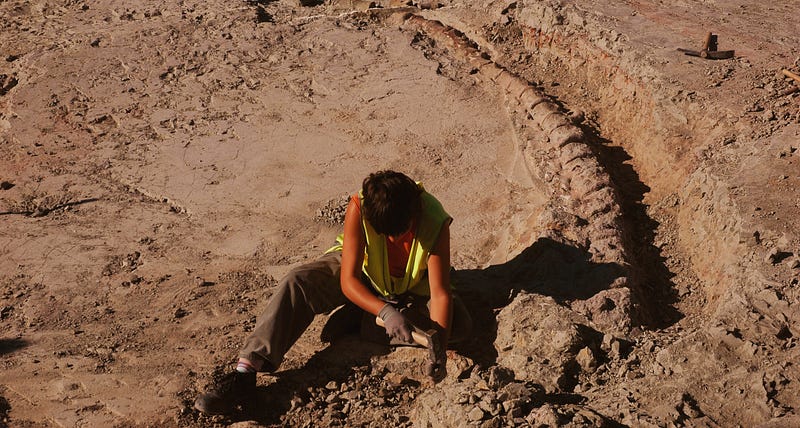
Titanosaur fossil excavation / UNED Universidad Nacional de Educación a Distancia / Wikimedia Commons

Several fascinating paleontological discoveries are taking place each month. Scientists working in the field publish numerous studies, describe new prehistoric species, and propose exciting theories about the biology and behavior of many extinct animals.

In this article, we will do a quick recap of the most important paleontological discoveries and updates from March 2021.

Before we do, be sure to check the most memorable ones from February below:

Ready? Let’s go!

The oldest titanosaur ever discovered?

Paleontologists working in the Neuquen Province of Argentina announced the description of a new dinosaur genus that may have been the oldest-known member of the sauropod group known as titanosaurs.

Titanosaurs were a diverse and successful group of long-necked dinosaurs that spread in every continent during the Late Cretaceous Period (100–66 million years ago). The family possibly includes the largest animals that have ever walked the planet: species like Argentinosaurus and Patagotitan were more than 30m (98ft) long and weighed over 50 tons.

Paleontologists gave the newly discovered genus the incredibly cool name Ninjatitan zapatai. According to their estimates, this animal could stretch up to 20m (65ft) in length. Similar to its larger cousins, it would have had a long neck, a long tail, and a relatively small head. Ninjatitan lived between 140 and 134 million years ago- earlier than any other titanosaur known so far.

The latest discovery indicates that titanosaurs evolved earlier than previously thought, while the location of the find supports the idea that this group of sauropods could have originated in the Southern Hemisphere.
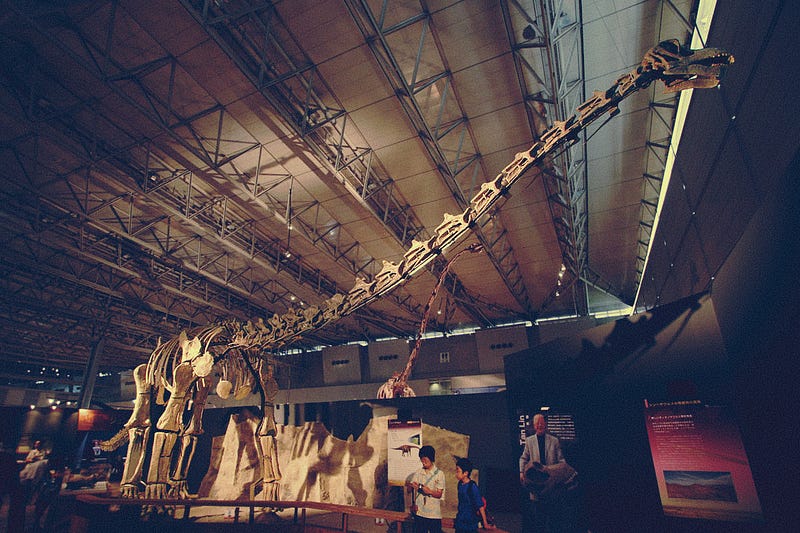
Titanosaur skeleton from Japan / Kabacchi / Wikimedia Commons

Neanderthals took care of their teeth

A research team from the University of Wrocław examined two hominin teeth dating back 46,000 years ago and discovered that their owner probably used an ancient form of oral hygiene.

The teeth -an upper premolar and a lower molar- were found in 2010 in Stajnia Cave in Poland and attributed to a Neanderthal individual of over 30 years old. The scientists analyzed the morphology of the teeth and found that one of them showed marks of a rudimentary toothpick.

“It appears that the owner of the tooth used oral hygiene,” the scientists said.

Scientists do not know what the toothpick was made from, but they believe it must have been a stiff, cylindrical object, which the individual used often enough to leave a clear trace. It could have been a piece of a twig or a small bone.

Toothpick grooves in Neanderthal teeth have been discovered in other parts of Europe, but these findings suggest the practice was widespread, perhaps even learned.
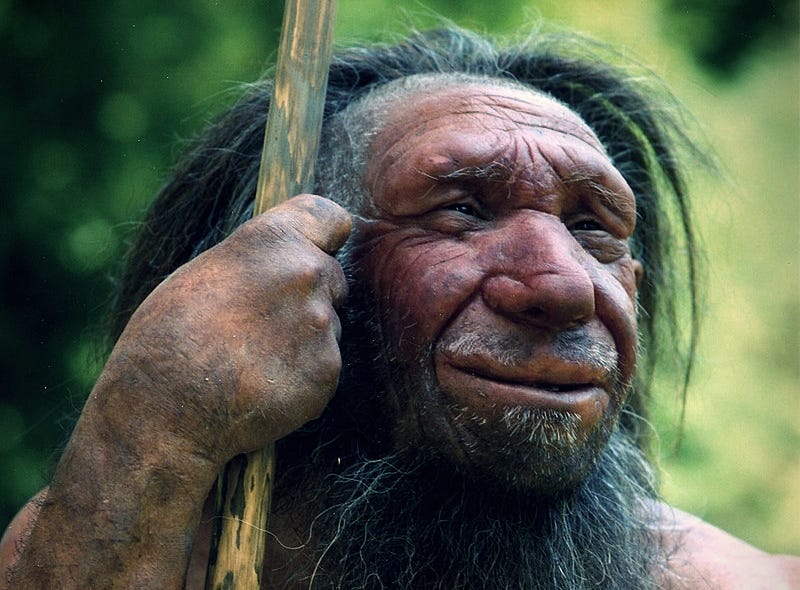
Homo neanderthalensis / Neanderthal-Museum, Mettmann / Wikimedia Commons

Scientists discover China’s largest dinosaur track site

An international team of scientists reported the discovery of the largest dinosaur track site ever found in China.

Located in a copper mine in Zhaojue County, in the country's southwest, the tracks cover an area of over 9,000 square meters. The research team recognized more than 933 tracks left by at least 68 dinosaur trackmakers.

According to scientists, this is the most important prehistoric track site in southwestern China, containing diverse sauropod, theropod, ornithopod, and pterosaur track assemblages. Some tracks even exhibit the obvious change of the track makers’ movement directions, providing behavior information.

The mining operations that were taking place in the area had prompted the discovery of new records but came to a price. The 100 million-year-old fossilized tracks are exposed and withered due to quarrying, erosion, or collapse during copper mining, and scientists urged for more government efforts to preserve the precious fossils.
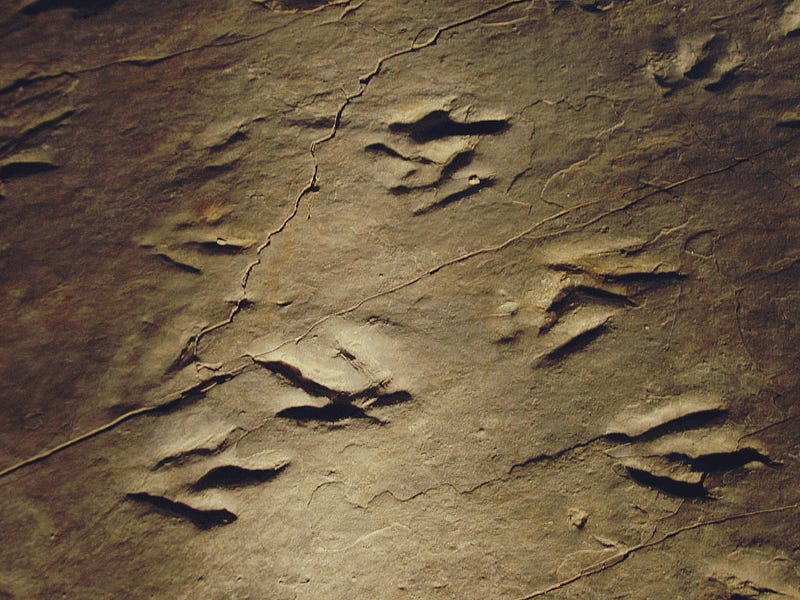
Dinosaur tracks / Daderot / Wikimedia Commons

Manta-like sharks swam in Late Cretaceous oceans

The description of a new genus of bizarre shark named Aquilolamna milarca is perhaps the most remarkable discovery of this month.

The prehistoric fish had long, slender fins and is unique in being wider than it was long (it had a wingspan of 1.9 meters/6.2 ft and a body length of about 1.6 meters/5.2 ft). Its mouth was adapted to filter-feeding, suggesting that it hoovered up plankton. Its overall appearance and form are reminiscent of modern manta rays, even though Aquilolamna predates their evolution by tens of millions of years. This weird shark lived 93 million years ago during the Late Cretaceous Period and was originally found in 2012 in the Vallecillo limestone quarry in north-eastern Mexico.

The discovery of Aquilolamna indicates that elasmobranchs, the group of cartilaginous fish that includes sharks, rays, skates, and sawfish experimented with other forms and shapes during their evolutionary history and that the plankton-eating “soarers” emerged in this family at least 30 million years earlier than previously recognized.
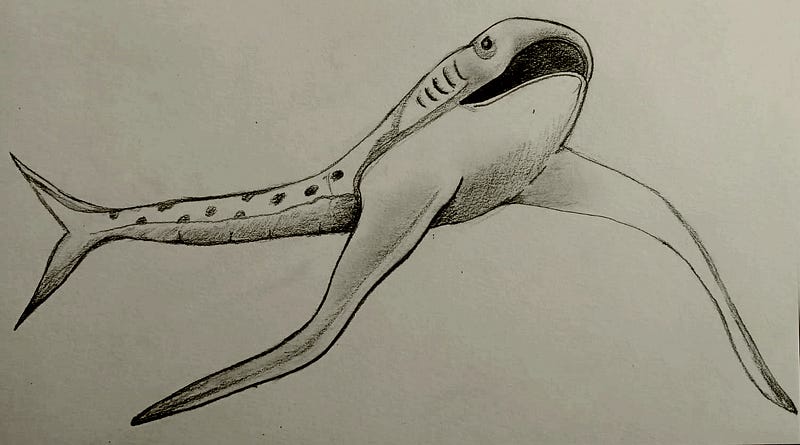
Aquilolamna sketching by Czar R. Blas / Wikimedia Commons

A new bird-like dinosaur from Spain

Also in March, paleontologists announced the description of a new genus of bird-like dinosaur from Spain. Scientists named their newest discovery Tamarro insperatus; meaning “small creature” in the folklore of Pallars, a historical and natural region in Catalonia.

Based on the animal’s bone histology paleontologists suggested the dinosaur was growing quickly, but it had not yet reached adult size when it died. Even when fully grown, Tamarro must have been relatively small- probably no longer than 2 meters (6,5 ft). It was a primarily carnivorous animal that fed on insects and lizards.

Phylogenetic analysis indicates that Tamarro was a troodontid, a group of small-bodied feathered dinosaurs with unusually large brains compared to their relatives. Scientists hypothesize that it could have migrated from Asia to reach Europe, which at the time was a large archipelago.

Tamarro lived 67 to 66 million years ago- right before the mass extinction event that took down non-avian dinosaurs. Its discovery is extremely important because it increases the (still little) knowledge about the diversity of small theropods that inhabited Europe during the latest part of the Cretaceous Period.
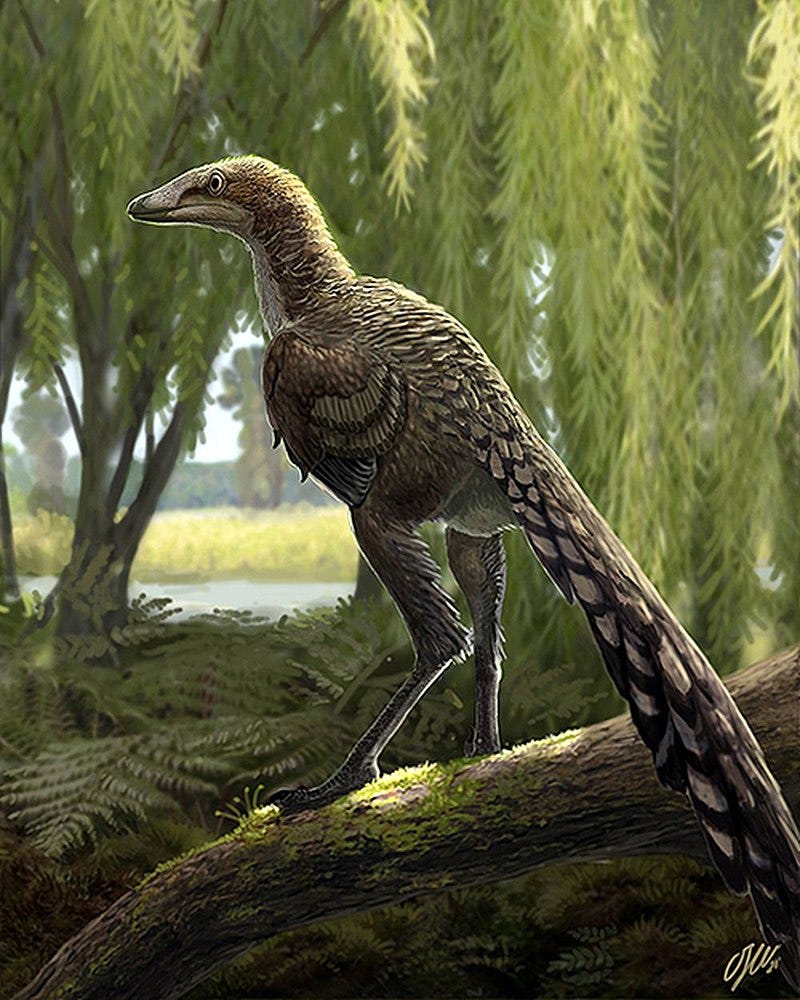
Reconstruction of Tamarro insperatus / Wikimedia Commons

The first ichthyosaur remains from Antarctica

Three new specimens found in the Ameghino Formation of Antarctica represent the first clear evidence of ichthyosaur existence in the southern continent.

Ichthyosaurs were a family of aquatic reptiles similar in appearance and habits to modern-day porpoises and dolphins. These distant relatives of lizards and snakes were the most highly specialized aquatic reptiles during the Mesozoic Era.

According to paleontologists, the latest finds were classified as Ophthalmosaurids, the dominant ichthyosaur forms from the Middle Jurassic until the extinction of the group during the Late Cretaceous.

The same paper also describes a new specimen from Madagascar, which is the most complete ever found in the southern hemisphere, and re-evaluates two other individuals from the same region.

These findings add support to the idea that ancient marine creatures, like ichthyosaurs, were dispersing along the Mozambique corridor after the breakup of the giant supercontinent of Gondwana during the Late Jurassic Period.
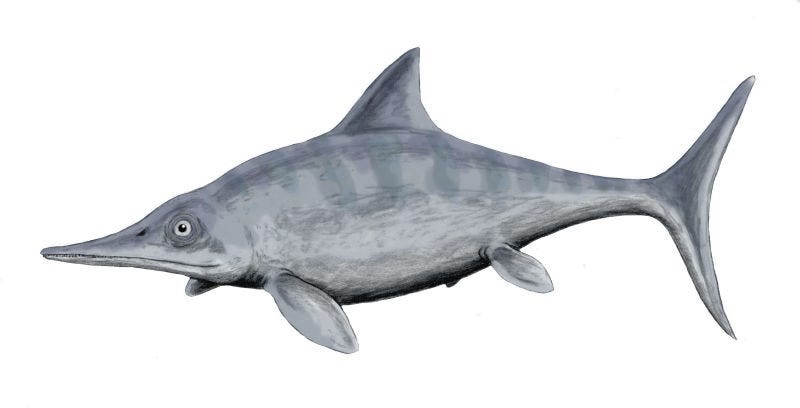
Ichthyosaur Ophthalmosaurus restoration by Nobu Tamura / Wikimedia Commons

Armored dinosaurs may have dug in the ground for resources and defense

A new discovery from the Gobi desert of Mongolia suggests that ankylosaurs, a derived group of armored and bulky quadruped dinosaurs, were effective diggers.

Scientists from South Korea unearthed the skeletal remains of a 6-meter-long (20 ft) ankylosaurid that lived sometime between 84 and 72 million years ago. The bones of the newest specimen show it had heavily built forelimbs and its forefeet were suited for digging. Scientists also point at the unique fusion of several vertebrae and ribs that could have helped the dinosaur stabilize its body while it dug.

Ankylosaurs had short limbs and their body was covered in osteoderms. Most of them also bore a heavy, bony club in their tails. These animals, especially the species found in Asia, lived in arid and semiarid environments, so digging would have been a useful way for reaching valuable resources. Like modern elephants, ankylosaurs could dig to reach plant roots or dig wells to access subsurface water.

Digging could also have been deployed for defense: by covering the vulnerable lower-part of their body and leaving only the wedge-shaped bony protrusions in their skin exposed, these dinosaurs would have made themselves impenetrable during attacks.
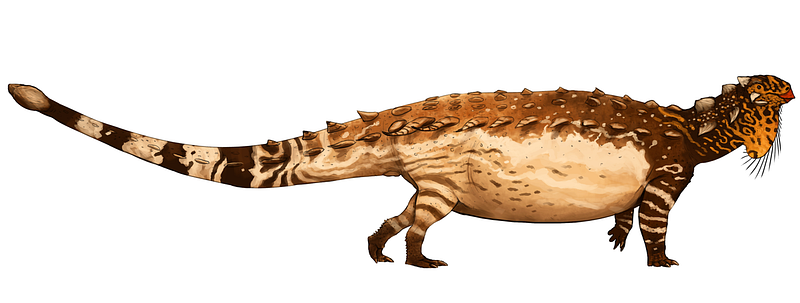
Illustration of the Asian ankylosaur Pinacosaurus / art by Jack Wood / Wikimedia Commons

A new anomalocaridid from China

During this month, paleontologists working on the famous Maotianshan Shales of China announced the discovery of the first valid anomalocaridid genus from the region.

Anomalocaridids were a stem group of arthropods that lived between 521 and 400 million years ago, during the Cambrian period. The family includes Anomalocaris itself, possibly the earliest large predator of the fossil record.

Scientists named the new genus Lenisicaris lupata, and it differs from the other members of its family in the anatomy of its frontal appendages. The same paper identified in the locality a new species of Anomalocaris as well, a genus originally known from the Burgess Shale in Canada.

The latest discovery proves the anomalocaridids were globally widespread and adapted to a variety of habitats due to their presence in many different depositional environments.
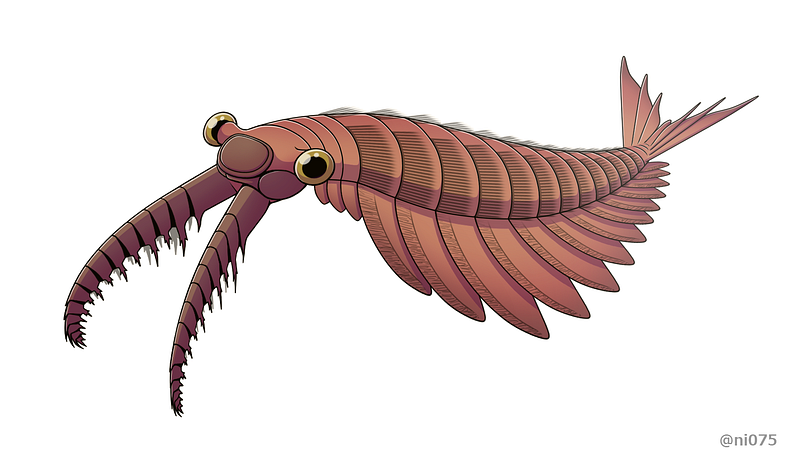
Reconstruction of Anomalocaris canadensis by Junnn11 / Wikimedia Commons

A new sauropod from Chile

March also saw the description of yet another sauropod, this time in Chile. Scientists recovered the partial skeleton of the new long-necked dinosaur from the Late Cretaceous rocks of the Hornitos Formation, in the Atacama Region.

The remains belong to a small subadult individual with an estimated length of 6.3 meters (20.6 ft). Scientists named the new genus Arackar licanantay which roughly translates to the “bones of the Atacamenians” in Kunza, the extinct language once spoken in northern Chile and southern Peru by the Atacama people.

Phylogenetic analysis classified Arackar as a lithostrotian, a clade of derived titanosaur sauropods that lived between 120 and 66 million years ago. The new genus represents the third dinosaur found in Chile and is currently the most complete specimen of a sauropod found in the country.
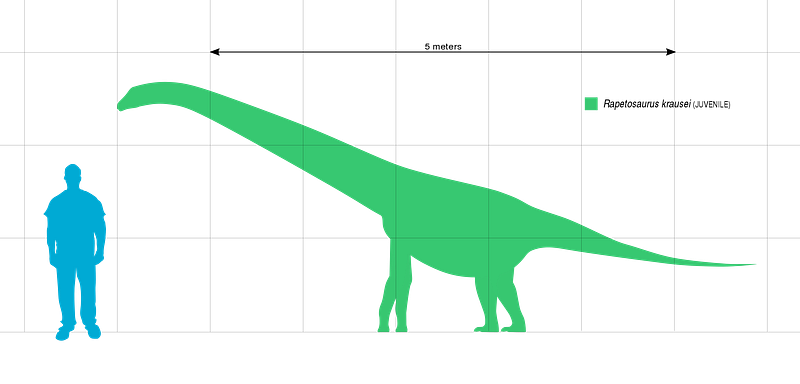
Size comparison of a juvenile specimen of Rapetosaurus, a titanosaurian sauropod closely related to Arackar / Slate Weasel / Wikimedia Commons

Epilogue

To sum up, March was a remarkable month in the field of paleontology. Scientists learned more about the biology and behavior of a wide range of extinct animals and discovered exciting new species.

Hungry for more paleontology news? Check out the top discoveries from April below:

References

Gallina, P. A., Canale, J. I., & Carballido, J. L. (2021). THE EARLIEST KNOWN TITANOSAUR SAUROPOD DINOSAUR. Ameghiniana, 58(1), 35–51. https://doi.org/10.5710/AMGH.20.08.2020.3376

Wioletta Nowaczewska et al. 2021. New hominin teeth from Stajnia Cave, Poland. Journal of Human Evolution 151: 102929; doi: 10.1016/j.jhevol.2020.102929

Lida Xing, Martin G. Lockley, Hendrik Klein, W. Scott Persons, Guangzhao Peng, Yong Ye, Miaoyan Wang, Largest dinosaur tracksite in China (Cretaceous, Zhaojue area, Sichuan Province): On the verge of destruction, Geoscience Frontiers, 2021, 101181, ISSN 1674–9871, https://doi.org/10.1016/j.gsf.2021.101181.

Vullo, Romain; Frey, Eberhard; Ifrim, Christina; González, Margarito A. González; Stinnesbeck, Eva S.; Stinnesbeck, Wolfgang (2021–03–19). “Manta-like planktivorous sharks in Late Cretaceous oceans”. Science. 371 (6535): 1253–1256. doi:10.1126/science.abc1490. ISSN 0036–8075

Sellés, A.G., Vila, B., Brusatte, S.L. et al. A fast-growing basal troodontid (Dinosauria: Theropoda) from the latest Cretaceous of Europe. Sci Rep 11, 4855 (2021). https://doi.org/10.1038/s41598-021-83745-5

Bridging the southern gap: First definitive evidence of Late Jurassic ichthyosaurs from Antarctica and their dispersion routes, Journal of South American Earth Sciences, 2021, 103259, ISSN 0895–9811, https://doi.org/10.1016/j.jsames.2021.103259.

Park, JY., Lee, YN., Currie, P.J. et al. A new ankylosaurid skeleton from the Upper Cretaceous Baruungoyot Formation of Mongolia: its implications for ankylosaurid postcranial evolution. Sci Rep 11, 4101 (2021). https://doi.org/10.1038/s41598-021-83568-4

Yu Wu, Jiaxin Ma, Weiliang Lin, Ao Sun, Xingliang Zhang, Dongjing Fu, New anomalocaridids (Panarthropoda: Radiodonta) from the lower Cambrian Chengjiang Lagerstätte: Biostratigraphic and paleobiogeographic implications,Palaeogeography, Palaeoclimatology, Palaeoecology, Volume 569, 2021,110333,ISSN 0031–0182, https://doi.org/10.1016/j.palaeo.2021.110333.

Rubilar-Rogers, D.; Vargas, A. O.; González Riga, B.; Soto-Acuña, S.; Alarcón-Muñoz, J.; Iriarte-Díaz, J.; Arévalo, C.; Gutstein, C. S. (2021). “Arackar licanantay gen. et sp. nov. a new lithostrotian (Dinosauria, Sauropoda) from the Upper Cretaceous of the Atacama Region, northern Chile”. Cretaceous Research. in press: Article 104802. doi:10.1016/j.cretres.2021.104802

Science
Paleontology
Discovery
Recommended from ReadMedium