
Everyone Is So Angry And Pained, How Did We Get Here?
With happiness, pain becomes an illusion.
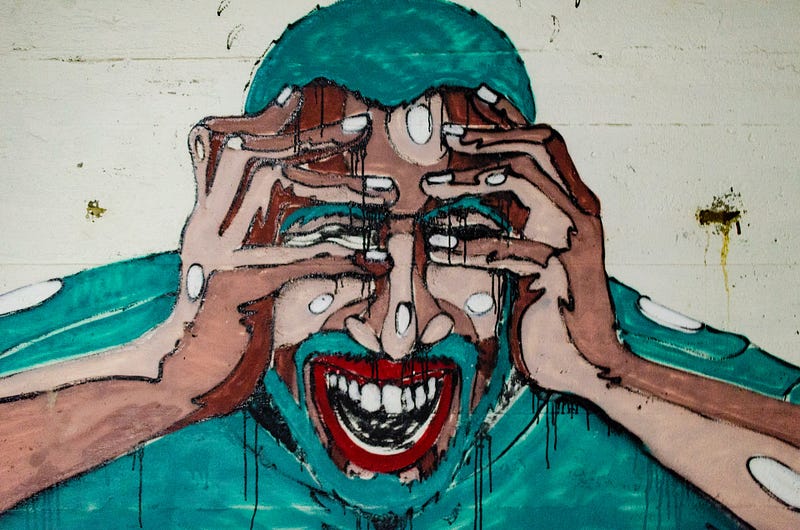
Everyone experiences unhappiness once in a while. Our emotional state is determined by the pattern of how we live, how we do things, and what we think of. Sometimes the pattern of our happiness or unhappiness can be long or short. But what if you find yourself in an unhappy state all the time? What causes your unhappiness?
Millennials are getting more lonely, depressed, and suicidal daily. One out of 3 of the average Americans can honestly say they are completely happy with their lives. Similarly, another data shows white Americans are usually unhappy than black Americans.
Statistically, there’s a 50% increase in the rate of unhappiness worldwide since 2012. The rate at which people live a happy life is dropping drastically by the day. In America, people are becoming miserable. Although the United States economy has improved after the 2009 recession, a report shows a decline of 6% in overall life satisfaction.
Finland beats Denmark in the top spot as the happiest country in the world, making it their 4th time in a role since 2017, while the United States ranked 19th down from 18th in 2012. The United Kingdom fell from 13th to 17th, while Chile moved to 84th place from 94th, according to the recent World Happiness report.
Happiness is measured by standard indicators such as wealth, education, health, or good government. And these indicators affect how equality, privilege, and fairness are perceived in the world.
We all feel down from time to time- and if this results from a particular situation, then it’s normal. However, most people feel unhappy all the time and that is the biggest problem that should be addressed. So the question of “why is everyone so unhappy?” becomes inevitable.
We aim for perfection when we’re imperfect beings
I see people struggle a lot with beating the odds — in their career, relationships, and even with themselves. I’m certainly not far behind this group.
“Everyone is comparing lives on social media and wants the perfect body, perfect image, perfect outfit, perfect life — we’re striving for this perfection, and it’s so unhealthy because there’s no such thing as perfection.” — Emily Atack
Every day, I struggle with my insecurities. I get crippled by fear of the unknown. I worry if my path to success is the right one. I constantly agitate over accepting a new relationship. Do they have what it takes? Do we connect mentally? Will I fit into their lifestyle? So much goes on in my mind when I’m not sleeping. And sleep isn’t particularly friendly.
The best advice I give myself when my insecurities pile up blocks in my head is “take a chill, you ain’t perfect, and no one is?” We all have insecurities. The key to stopping your insecurity from taking over your happiness is to embrace the good and try not to focus on the bad.
Unhappy people dwell so much on their weaknesses instead of building a positive self-image. We should recognize our flaws and own them, but never let them hold us back. This was a powerful lesson for me to let go of perfectionism.
Staying safe in our comfort zone
Our brain is wired to expect pain so we will rather avoid it by playing safe. Take a lizard and an eagle, for example, a lizard in an eagle's claw learns from pain to avoid it in the future. When next a lizard sees a dark shadow over its head, it runs and hides to survive being eaten by its predator, the eagle.
“The comfort zone is a psychological state in which one feels familiar, safe, at ease, and secure. You never change your life until you step out of your comfort zone; change begins at the end of your comfort zone.” ― Roy T. Bennett
This is how the human brain works. The pain of our during puberty and the pain we witness in others builds a survival instinct in our mind because our brain is designed to avoid touching fire more than once. It is easy to stay in our comfort zone to avoid pain and where the potential for risk is low.
When I push myself beyond my limits, I get anxious, afraid and worried. But after a while, the discomfort becomes familiar. I’ve learned that to be fulfilled in life, I have to grow and challenge myself. To do that, I need to step outside my comfort zone. No one has ever achieved something worthwhile by playing things safe.
There are no guarantees in this world. We were all born helpless and vulnerable. You can choose to let your survival mood keep you from moving forward and live miserably with fear and worry, or you can choose to reshape your thinking, be positive about life and live happily.
We constantly seek happiness in others
Everyone wants the easy path to make it through life with minimal trauma, some peace of mind and happiness. We tend to seek out happiness in others. We hear things like “if I just find the right person, I’ll be happy,” “I’m so in love! I can’t wait to get married and have a happy little family,” or the worst of them, “I can’t let him go because he makes me happy.” I get obnoxious when I hear that last phrase, like is he your breathe that you can’t live without.
“Very little is needed to make a happy life; it is all within yourself, in your way of thinking.” — Marcus Aurelius
And when that person doesn’t live up to those romantic expectations, sadness creeps in, then depression follows. The sadness and depression don’t make it more likely that the other person will be happy to be with us. When we are insecure in our ability to be happy alone we create room for paranoia, jealousy and dependency.
In life, tragedies happen when we least expect them. If the love of your life was to face a life-threatening illness, or they turn out to different from who you thought they were, will you still find happiness with them?
Happiness starts with oneself when you start valuing yourself the way you deserve. We can find happiness in different things — in our hobby, career, games, humanitarian work — for this reason, we cannot let this responsibility fall on someone else. Maybe you’re afraid of finding your own happiness or because it requires a lot of responsibility. No matter the cost, only you can find your own happiness.
We let fear recede in our head
You remember what I said about the lizard and eagle. The lizard lives in constant fear just like we do. Fear is our greatest enemy. It’s natural to be afraid of change and the unknown. Our brain tends to respond to something we are unfamiliar with. The problem is that the unknown is where you will experience the greatest growth and new opportunities.
We are in an era of rising tensions and negative emotions” ―Economist Jeffrey D. Sachs
We fear what we wish. When you are obsessed with being successful, the fear of failure can discourage you from making hard decisions. Then you become afraid of success too. I remember when I launched my first startup. I will procrastinate and ponder over new strategy. In the end, I’ll dismiss them for one reason or the other. This was my fears speaking. Procrastination was my defence mechanism against failure.
After three years of success, my business struggled with competition, a rapidly changing market and internal conflicts. The more time I devoted to solving these problems, the more the stress. At a point, the business became a source of pain. I was left with no other choice than to shut it down.
You won’t get far if you keep rehashing the things you already know and going to places you’ve already been to. No one is born with fears. We learn to be afraid from experience. And we can unlearn this by practicing self-discipline repeatedly until that fear goes away. Your ability to confront, deal with and act in spite of your fears is the key to success and happiness.
We rather hold on to grudges than forgive and let go
There’s a lot to be angry about. It’s very clear that negative feelings- worry, sadness, and anger- have been rising around the world, up to 27% from 2010 to 2018. Grudges or resentment is like poison. It slowly weakens the person from the inside, leaving nothing but misery in its wake.
Unforgiving people tend to be hateful, hostile and angry which more than often leads to depression. Likewise, being around a grudge holder can make us feel uncomfortable and to some degree experience emotional or physical pain. When you refuse to forgive, we become fixated with plotting revenge. The more we think about how they’ve wronged us the more determined we want to pay them back.
“Holding on to anger is like grasping a hot coal with the intent of throwing it at someone else; you are the one getting burned. “ -Buddha
Unhappy people are good at holding grudges, but there is freedom and peace in letting go of things that cause us pain. So unless we want to stay miserable, we need to learn how to forgive others even if they don’t deserve it. We can learn to accept the discomfort we experience around a grudge holder to improve our personal growth.
Finally
Happiness is a choice. Our mind can process 110 bits of information per second. When we are making, doing, creating, or playing, our mind has no room for anything else. That’s when our full abilities get put to use, all 110 bits per second.
But if we love the activity we choose, whatever it is: hobby, sport, creativity, our magical flow is unlocked and this makes us happy. We’ve all heard of “hungry” artists, writers, musicians who got so lost in their work that they forgot to eat, drink and sleep. When words, musical notes and colors “flow” from your consciousness, nothing else matters to you.
When we reach a state of uninterrupted creative flow, we feel ecstatic, motivated and satisfied for three days or more. This is what happiness does indeed! Being happy doesn’t require taking happiness from some people and giving it to others. Look deep into your lifestyle and find what makes you happy. If you already know what makes you happy, then do it every day. The world needs happy people.


