
Ethical Concerns About AI-Generated Images
It’s negatively impacting human artists! Are we surprised?
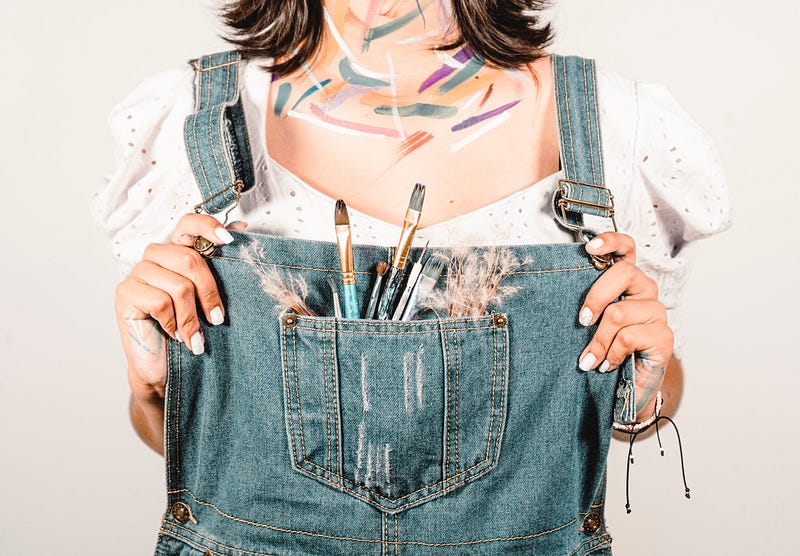
Thanks to Victoria Kjos, I feel called to talk about the pressing issue of AI-generated images.
A year ago or so, I hired a digital artist on Fiverr to do art for my gaming YouTube channel.
I provided photos for reference and told the artist what colors I wanted to see, how I wanted my face to be, and that I wanted it to be in the style of the game Valorant since I usually play that video game on the channel.
He did an amazing job with the drawing, providing exactly what I needed. The cost of this was $30, which doesn’t even do justice to this artist’s talent, work, and time, but the image and the Fiverr link for the service are below.
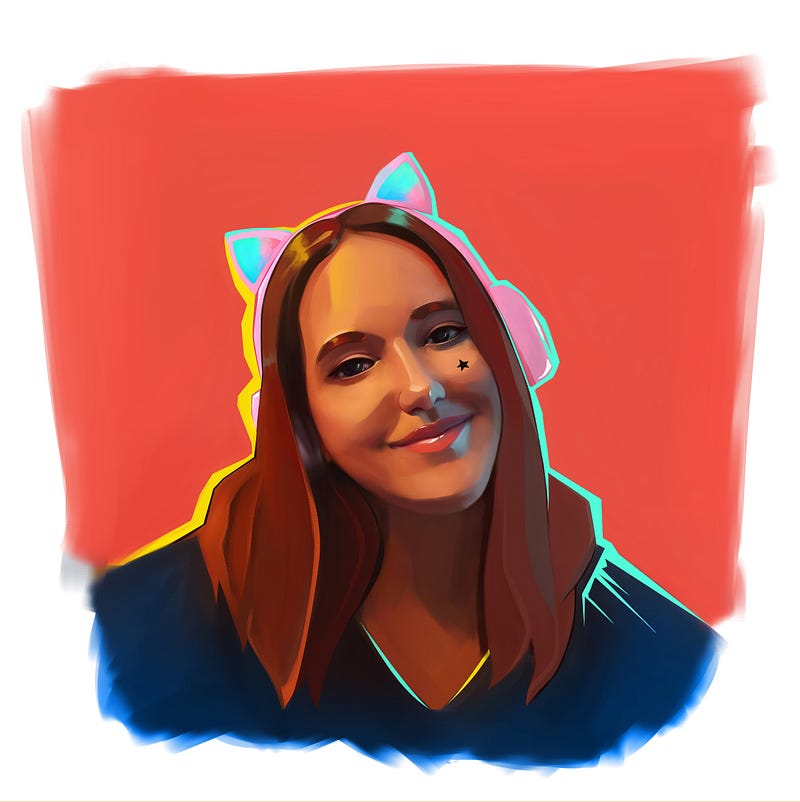
Not to mention, the artist delivered 6 different versions of this image.
You can get this type of service on Fiverr for as little as $10 from very talented human artists.
I’m sharing this with you today because these talented, hardworking artists are struggling due to how easy it is now to generate images with AI.
And I’m not only talking about the artists on Fiverr; artists everywhere are struggling because they don’t get hired for gigs anymore. Most of their customers are stolen by AI, and they can no longer earn enough to support their lives doing what they love.
On the other hand, I saw this author’s “plea” on TikTok yesterday about how she’s tired of people “coming for her” just because she’s using AI to generate images for her new book.
She talks about the tight deadline she has for her book and how she can’t possibly ask an artist to meet that deadline, and then she talks about the financial restrictions. She goes on and on about how she’s simply using the resources available to her.
By the way, this author has more than enough followers to get sponsorships, which could generate income for her to pay a human artist for her book cover. Not to mention, platforms like Fiverr are available to her.
I know many broke writers, who hire human artists to make their book’s cover art, or most of them make a deal with an emerging artist and promise them a cut from the book’s revenue once it’s out.
It’s not that hard if you look for someone to collaborate with. You can even find artists on Discord who are willing to just help you and get their names out there.
The problem with this “author” on TikTok is, you’re asking for us to PAY for your book… which hopefully you wrote… but you’re complaining about having to PAY a human artist for doing their job.
Not to mention, you won’t be able to copyright your book’s cover art due to… you know, the law… so anyone can steal it. It’s not yours. It’s public domain. And it’s made from other artists’ stolen drawings, logos, styles, etc., available online.
You’re not being original at all with your book cover, but you have the audacity to call yourself an artist and your book a “piece of art,” and demand people to pay for your book.
These are just some examples I see in my daily life since AI has been let out of the box for everyone to use for whatever, but let’s dive more into the main problems of using AI-generated images.
Ethical Dilemma
There are many AI tools to generate images for your liking. Some of them are DALL-E 2, Firefly, jasper.ai, Midjourney, etc.
If you’re in HI vs. AI movement here, you already know the problems with using AI while writing. It uses existing data from writers like us to generate and reword the text.
Hence, using that tool and earning money like actual human writers, who put in so much time, energy, effort, lifelong experience, pain, and struggle to generate that piece, is unethical because it’s similar to plagiarizing or copying and pasting, and changing some wording here and there.
Back in my day (I mean the 2000s/2010s since I’m a millennial), professors and teachers used to fail students immediately if they spotted plagiarism. This included changing the wording of another article here and there and claiming that it was their work. What happened to that?
An article published in microsoft.com states, “AI-generated content draws from existing, real-world sources. The algorithms that form the foundation of AI tools analyze existing content from across the internet, whether they stem from academic and scientific journals to blog posts — or even previously generated AI content.”
And the conclusion of that same article is, “Ultimately, using AI to generate content and passing it off as your own is plagiarism.”
When it comes to generating images via AI, there’s still plagiarism involved since these tools use existing data, images, styles, drawings, etc., from actual artists.
In an article in IEEE Computer Society, the writer states, “Most AI tools are trained to recognize and utilize large datasets of images scraped off the Internet, without any mechanisms in place to alert them whether those images themselves are originals or whether they have been used unlawfully.”
The article goes on to say that these AI tools may easily copy existing logos, images, pictures, symbols, etc., that may even be copyrighted by an artist. So, it’s stealing their work to generate the image you want.
I want to also add that the only two times I used an AI tool to generate images were for personal use and only for me to look at.
One was for my 2024 vision board, and only I see the image on my wall. The other one is for my PRELIMINARY book cover, which only I will see until the book is done.
I will definitely hire an artist as I always do for my book cover, but I do need a preliminary art while writing. It helps me visualize the book and capture the style of the story, and yes, I can’t deny that these tools have been helpful for me to try and capture the style of the story before even writing it.
But the ethical dilemma of AI is very real, and I do not recommend using it for things you’re going to market and make money off. So, AI tools are definitely not meant for business.
I want to conclude this section by using a quote from the same article on IEEE Computer Society, “Images generated by AI could — indirectly or directly — infringe on copyright source material which could affect compensation or remuneration for original artists.”
The Downfall of Human Artists
I debated whether to title this section “The Possible Downfall of Human Artists,” but it’s not a possibility anymore. It’s already here… happening right in front of our eyes.
The proof in my personal life is my digital illustrator friends who are no longer getting hired by their regular clients due to those clients using AI tools rather than paying human artists. The majority of them had to find other jobs that they hated in order to support themselves.
Another proof is in an article titled “‘It’s the opposite of art’: why illustrators are furious about AI” on The Guardian. This one again talks about the ethical concerns regarding AI images due to how it uses existing artwork online to generate those images.
But it also talks about how artists stand up for their work. The article further states, “Beyond creativity, there are deeper issues. An online campaign — #NotoAIArt — has seen artists sharing concerns about the legality of AI image generators, and about how they have the potential to devalue the skill of illustration.”
#NotoAIArt sounds familiar, doesn’t it? (Hint: AI vs. HI on Medium.)
I want to share the quotes I saw in the article to conclude this section, but I recommend reading this article for further understanding.
“Harry Woodgate, author and illustrator of Grandad’s Camper, which won the Waterstones 2022 picturebook prize, says: ‘These programs rely entirely on the pirated intellectual property of countless working artists, photographers, illustrators and other rights holders.” It’s a point echoed by illustrator Anoosha Syed: ‘AI doesn’t look at art and create its own. It samples everyone’s then mashes it into something else.’”
An illustrator and author, Rob Biddulph, said that AI-generated art “is the exact opposite of what I believe art to be. Fundamentally, I have always felt that art is all about translating something that you feel internally into something that exists externally. Whatever form it takes, be it a sculpture, a piece of music, a piece of writing, a performance, or an image, true art is about the creative process much more than it’s about the final piece. And simply pressing a button to generate an image is not a creative process.”
So, don’t use AI-generated image just to avoid paying a human artist to make an art that you have in mind. How would you feel if a client of yours would rather use some online tool to do your job instead of hiring you? As a screenwriter who counts on gigs for income, I can very much relate, and I hope you can, too.
And remember, it’s a blessing to have access to places like Fiverr or Upwork to find artists worldwide, or simply go on Facebook groups or Instagram to search for an artist that fits your style.
If you can’t afford artists in your hometown, you can easily connect with artists on the other side of the world. Some of them charge way less simply due to currency exchange rates.
I know some of them personally because I grew up in Türkiye. I recommended my friends to clients based in the US because they charge $20 for something that would cost $200 if you hire an artist in Los Angeles.
When that $20 is converted to Turkish liras, they are very much happy with what they’re making. Just make sure to tip them since Fiverr and Upwork takes a cut of their earnings.
Lastly, connecting with other artists to create art is an incredible process. By using AI, you’re skipping the most essential part of being an artist.
A friend of mine, a writer of an incredible poetry book, collaborated with a talented human artist for months to fill out her poetry book with unique art. Each poetry would have its own little drawing.
It’s a joyful process to collaborate with other human beings and make art together.
Conclusion
Using AI tools to generate images, where you make money or use them for your own art or work, is unethical. Not only can it not be copyrighted, but it is also harmful to artists worldwide and could very well be an image of stolen mashed-up art pieces that belong to others.
Just as you don’t want your articles, books, poetry, and stories to be used in the large AI database for all users to generate content from, other artists also don’t want AI to use their work to generate something and give it to some other user who didn’t put any effort into getting that image.
Remember what the illustrator Anoosha Syed said:
”AI doesn’t look at art and create its own. It samples everyone’s then mashes it into something else.”
Please be mindful and empathize with artists, and join the HI vs. AI movement on Medium to support human writers. I appreciate you stopping by to read this article. ♡ ︎
Resources:
- Is using AI the same as plagiarism? — Microsoft 365
- Ethical Pros and Cons of AI Image Generation (computer.org)
- ‘It’s the opposite of art’: why illustrators are furious about AI | Art | The Guardian
More from me:
✍ — Published by DR Rawson — The Possibilist at Dancing Elephant Press. Click here for guidelines to post click here.


