
The Unsung Heroes of Hollywood
My journey in screenwriting for movies and shows
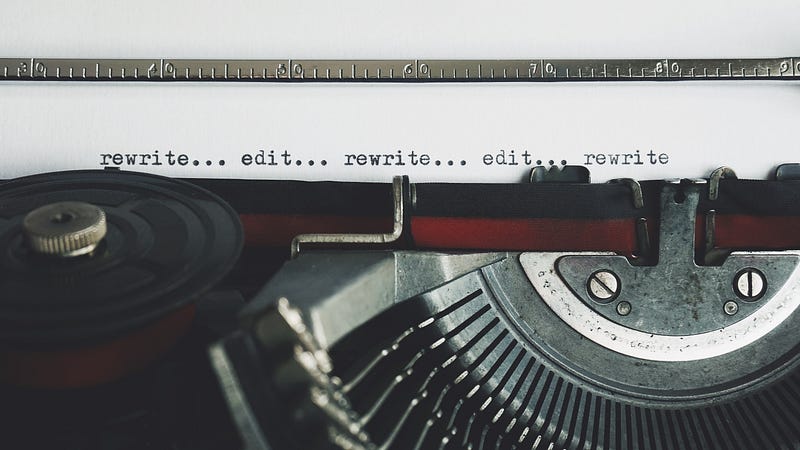
The recent writer strike in Hollywood may have briefly illuminated writers and creators, but once it ended, the writers are back in their hidden creative dungeons and back to being overlooked.
These unsung heroes, known as screenwriters, are the mastermind creators behind the scripts of your favorite movies and TV shows.
The fun dialogues you’re drawn to, the adrenaline-pumping action sequences that glue your eyes to the screen, and the masterful storytelling are first created by screenwriters out of thin air.
If you want to become a screenwriter, you can take various paths, from attending film school or interning at production companies, agencies, or management firms.
Personally, I opted for film school. After completing my Chemical and Biological Engineering studies, I pursued a Master of Fine Arts in Screenwriting at a school conveniently located next to Warner Bros. Studios in Los Angeles.

I was lucky to get into this school and move to Los Angeles. We shot short films at the Warner Bros. and Universal backlot, where we’ve been to iconic sets like the Western and The Good Place sets, among others.
Throughout my career, I’ve worn many hats: writer, producer, and director for award-winning short films, writer and director of a well-received web series, and I’ve had the privilege of being the writer and director for my optioned audio drama series, which just secured a Season 2 deal.
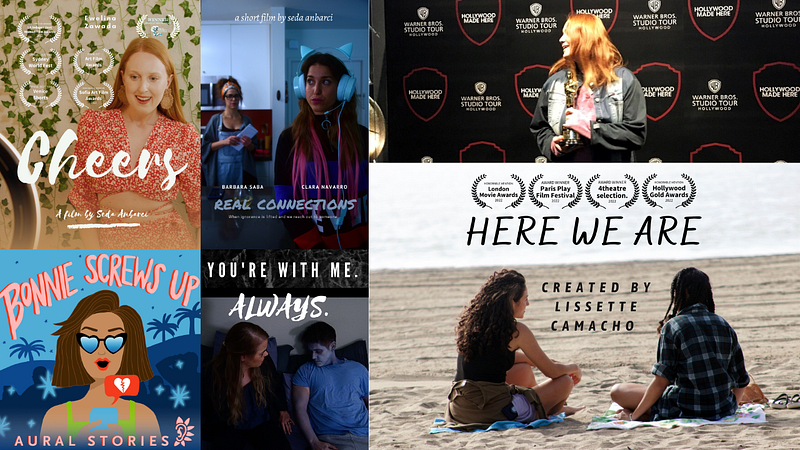
The path of a screenwriter is distinct from that of other writers, as a screenplay is not our final creation. It’s the crucial first step in the collaborative process of bringing stories to the screen.
As screenwriters, we often go through being discredited, unfair compensation, and renouncing our story rights due to the demands of producers, directors, managers, and agents.
The journey of a screenwriter
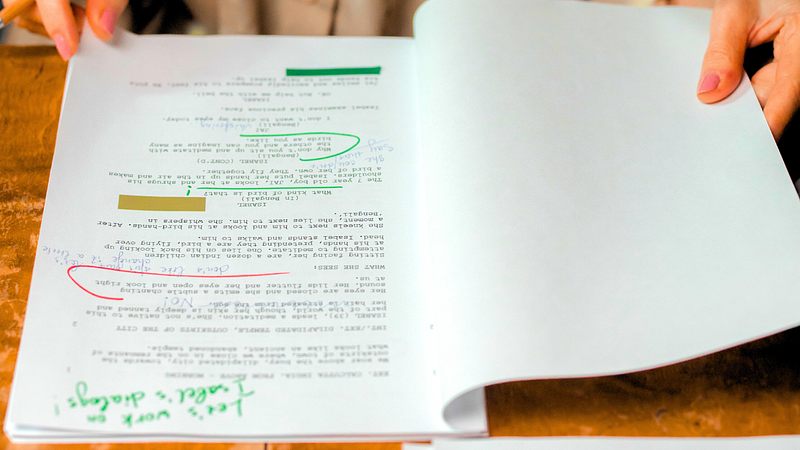
The screenwriter’s journey kicks off with the art of visual storytelling. As screenwriters, we learn plenty of rules each step of the way: keep it concise, have more white space on the page than words, focus on the visuals, avoid writing what can’t be shown on screen, and aim to impress managers, producers, and agencies in the first two pages.
During my MFA years, our professors were talented Hollywood writers who taught us how to craft compelling characters, intriguing settings, and engaging dialogue transcending the written page.
A screenplay should demonstrate the story’s potential to be made for the big cinematic screen.
This process also introduced me to the multifaceted elements of screenplays, including the importance of pacing, structure, and visual storytelling techniques.
Later on, the business of screenwriting emerged as an essential part of our education. We gained insights into the complexities of the industry, navigating lengthy contracts, negotiations, and intellectual property rights.
Another crucial aspect of a screenwriter’s journey is the role of representation. You learn the difference between agents and managers, what they can do for you and your projects, the percentage cuts, deals, contracts, and more.
Writing is rewriting

“Writing is rewriting” is a mantra I’ve heard several times from my professors and the professionals in the industry.
The intricate craft of screenwriting is demanding. The main creator and writer of the script rewrites and revises their scripts hundreds of times before it even earns consideration for production.
Each script produced is a miracle, we say.
When the script is purchased, or its rights are acquired by producers, production companies, or studios, more writers are hired to do more rewrites and revisions based on the wants and needs of the producers, director, actors, and many others involved in the process.
For example, as I’ve heard in the industry, Barbie, a movie cherished for amplifying authentic female voices, has undergone a decade of preproduction with writers, directors, cast, managers, and agencies constantly changing.
Screenwriting requires the never-ending determination to write and rewrite your scripts repeatedly for years, hoping one day your stories will be noticed, produced, and reach the audience they deserve.
The dreams come crashing down.

Screenwriting is a path that doesn’t have immediate gratification, if any at all. Rather, it demands years of hard work, sweat, and persistent commitment, much like the journey of actors, singers, and countless other artists.
Success often depends on the right script landing in the hands of the right producer, agent, manager, actor, or director at the right moment — a lucky moment that can shape or break your entire career.
We learned this early on in my MFA in Screenwriting. The Dean of the department said to us, “Mark my words! A year after graduation, just a few of you will still be committed to pursuing a career in screenwriting.”
A year later, just two of us remained from a pool of 38 graduates, insisting on building our legacy as screenwriters.
The dreams of a screenwriter come crashing down as you transition from the educational phase into the cutthroat and treacherous world of the entertainment business.
Letting go of your baby
We tend to call our most beloved stories “our babies” since we put years of hard work, our innermost imagination, sweat, tears, and the essence of our being into those screenplays.
Then what happens? A producer or company swoops in, taking the story rights away from you and doing whatever they want with your story.
A screenplay is an invitation to collaboration. It’s not the final product.
You’re not involved in any step from production to post-production as a writer. That’s if you’re not also the director or producer of your own project.
After the movie is released, you’re invited to the red carpet. But no one knows your name, and your baby is now associated with the director and the name of the stars.
Think about it. How many writers do you know who wrote your favorite movies or TV shows? But if I ask you the actors or director, you’ll name them right away, correct?
As a screenwriter, you usually are only rewarded for your efforts if you are also the producer or director of the project or if the project is successful. Then, you may be able to build a career and book other projects.
You let go of your baby and give your baby to someone else; it’s like a mother giving her baby for adoption.
You can only hope they’ll take care of your vision, but most of the time, your baby becomes someone you don’t even recognize anymore.
Hoping for the best

You can only hope that the producers and filmmakers do their best. Let me share a true story, but I will not mention any names.
An accomplished mentor of mine successfully sold a movie to a studio with a big name attached. And remember, keeping actors happy is often a top priority in the production.
You can never say no to the stars.
The star started requesting many changes that had nothing to do with the story itself. Not to mention, the actor doesn’t have any education as a storyteller. Similarly, the writer has no education in acting.
Let me be clear; this isn’t a critique of actors. As a director, I always ask actors to improv as it often leads to brilliant dialogue and moments that weren’t in the screenplay.
But in this case, the star’s reason for these changes was because they wanted to say this “cool dialogue” in their next movie, and the next movie happened to be this one.
Later, the lead writer voiced concerns to the producers about how the actor’s requests undermined the film’s essence, the character development, the story arcs, and the premise.
Not-so-shockingly, the producers fired the leading creator and writer of this movie and hired other writers who’d be willing to accommodate the actor’s wishes despite the potential damage to the story.
What happened after they made this movie?
They invited the writer to the red carpet as they were required to do so. But this movie has been labeled as one of the worst movies of this star.
Regardless, the actor’s career continued to flourish with many blockbuster movies.
But the writer’s career was over!
As you can see, the writer was not to blame for this total flop, but the industry unfairly branded the movie’s main writer as incapable of delivering successful projects. They didn’t care about who was responsible for the terrible changes because no one read the initial script.
Well, I read the script and watched the movie, and trust me, the screenplay was so fun to read. The movie left me shocked as I couldn’t believe how it was a totally different movie that didn’t make any sense.
This happens way more often than you can imagine.
Betrayal behind closed doors

After giving our baby (our screenplay) away, we’re hoping for the best while also worrying about the possibility of someone stealing it, which is unfortunately common in the entertainment industry.
Thankfully, the Writers Guild of America (WGA) offers script registration that’s also available for non-union writers. We use it to protect our work before submitting it anywhere.
But let’s not forget about some producers out there who want to trick writers into signing risky contracts.
These contracts are lengthy, and if you’re a new writer without representation or legal counsel, they count on you not fully comprehending the terms.
Without a name, I will mention that a writer friend of mine signed such a contract and lost all the rights to the project they owned and worked on for many years.
Their story was essentially given away for free.
You can hire lawyers to assist, but your options are limited once you’ve signed the contract. That’s why I personally option the producing rights of my project to the production company for a set period.
However, when dealing with a big studio, you don’t have much say in it. It becomes a choice between doing as they say or passing up on the opportunity of a lifetime. So, what will you choose?
Whether you are part of the WGA or not, screenwriters encounter similar unjust situations everywhere in this industry.
During the 2023 strike, some movie writers spoke up about how studios used some writers to test their ideas in a script, then claimed they didn’t like it and refused to pay the writers. In the end, the writers lost months of time, effort, and money while the producers tried out their ideas for free.
Final Thoughts

As screenwriters, the work on your stories is never done. On top of that, you have to be outgoing to build a network, pitch your stories like a pro speaker and hope you will come across the right person at the right time.
Yet, after the production period, we often see cast and director interviews, but we never get to hear the writer’s perspective.
That’s unless the writer is also the director, or if you’re a writer and you follow the writer interview podcasts such as Write On: A Screenwriting Podcast, only then will you hear the screenwriter’s journey.
I often ask myself:
Why are writers so silenced?
Why do they get kicked out of their own projects?
How can a writer’s career be over by a single project’s failure?
Why do we not care about the writers of our favorite movies and shows?
In my MFA in Screenwriting degree at the heart of Hollywood, the first thing we got taught each semester was not to get too attached to our projects.
After all, they will be given up for adoption, and you will never know how they will turn out to be.

The Brighter Side
On a positive note, many of us in the entertainment world are taking matters into our own hands by establishing our production companies.
In fact, the two of us left from our MFA in Screenwriting have embarked on our own journey with Lisseda Productions.
Moreover, the production company that secured the rights to my audio drama series is built by two indie producers passionately committed to ensuring that artists are compensated fairly for their work.
There is hope!
Thank you so much for reading!! I hope the reality of being a screenwriter in show business changes one day, and we start caring more about the talented storytellers behind our favorite movies and shows.
Let’s give it to the unsung heroes of the entertainment industry👏🏽👏🏿👏🏼
Everyone’s experience is unique, and no generalizations are intended.


