
Eight Ways to Practice Your German as an Advanced Speaker
#2 Discover German comedy
First of all, check out my previous article about numerous resources that I will not repeat in this article:
Ja ja, I know, you could probably also read this article in German, my mother tongue. Even though you might not understand every single word, you’d get the message (jawohl). Your German is good enough to hear that a person from Bavaria is a little bit harder to understand than you anticipated when learning standard German (And did she just greet me with “Grüß Gott”, Greet God?!). Nevertheless, I’ll stick to English, the language of most Medium readers.
#1 Listen to Podcasts
I must admit that I mostly listen to podcasts in other languages than my own. However, there are two German ones that I check out every time they bring out a new episode. You need to have advanced listening skills to follow the episodes with ease.
- “Feuer & Brot”: This one has been created by the Afro-German journalist Alice Hasters with US-American roots and her best friend Maximiliane Haecke, a German voice actress. In each episode, which is about an hour-long, they speak about pop culture, different aspects of racism and feminism as well as political issues. I enjoy getting new insights and feeling that good research preceded every episode.
- “Gute Deutsche”: The famous news anchor Linda Zerwakis created this podcast in which she speaks to Germans with foreign roots (thus, an immigration background), one person per episode. She is German with Greek parents and identifies with the identity conflicts and the rich personal history it brings to people like her. Plus, I find her very sympathetic.
Friends and relatives told me about other podcasts which rank among the most-listened German podcasts: Gemischtes Hack, Lage der Nation — der Politik-Podcast aus Berlin, Hotel Matze, Fest & Flauschig (with the comedian Jan Böhmermann), Podkinski and Verbrechen (about True Crime).
#2 Discover German Comedy
Wait, Germans can be funny? Okay okay, humor is not something people usually expect of Germans — but that’s because you haven’t seen my favorite comedians yet: Hazel Brugger, Caroline Kebekus, and Jan Böhmermann.
- Hazel Brugger grew up in Switzerland with a German mother and has very dry humor, which I love. She does poetry slam, comedy shows and has appeared in the German “Heute Show.” Besides, she created her own Youtube channel with her fellow comedian Thomas Spitzer—and their own show called “Deutschland Was Geht?” (Germany, What’s Up?) where they travel through Germany and visit various places, such as a candy factory or an etiquette course. I personally enjoy her stand-up comedy the most but watch pretty much everything she produces — you feel that she is just a naturally funny person. She also appears in this very funny “corona music video” (guess that’s a thing now) called “Disdance”.
- Caroline Kebekus: She has been nominated as the best German comedian of the year several times and she has her own show. She is also a very talented singer, makes very entertaining impressions, and talks a lot about feminism — in a funny way.
- The “ZDF Magazin Royale”, formerly “Neo Magazin Royale”: Jan Böhmermann, who is the face of this satiric news show on TV, became famous all around the world by writing a mock poem about the Turkish president and by being sued for it by Erdoğan himself in 2016. This incident is sometimes called “Erdogate.” That didn’t stop Jan Böhmermann and his team from producing comedy content, parodies, music videos, and doing investigative journalism. This video for instance is the result of an investigation about the German post (DHL) and the precarious working conditions of their employees.
#3 Comb Through The Website of “ARTE”
ARTE is a French-German TV station where the entire content is available in French and in German. It is known to be quite an intellectual broadcaster where you find high-quality documentaries, movies, and you can watch the daily news program called “ARTE Journal.” From Monday to Sunday, it is being broadcasted at 7.10 pm.
#4 Teach German
Yes, you read right! And no, I’m not crazy. Did you know that teaching is the best way to strengthen your own knowledge?
During school and my first semesters at university, I gave private lessons in German, French, and English to pupils who had difficulties in school. I acquired the skill to explain things I already know in simple words.
You don’t have to make teaching German your job — but you might have friends, relatives, or internet acquaintances who want to improve their German and have a much lower level than you.
If you are a student, you could start a German club at your university. I met a student from the U.S. at my university in Weimar (Germany) who gathered a few international students once a week and helped them out with German pronunciation, grammar problems, and vocabulary. I was very impressed by that. His German was not perfect but definitely more than good enough to lift others up.
#5 Read literature from Germany, Austria, and Switzerland
Again, I feel like a bad German because I rarely read in German anymore. Most of what I read for my own pleasure is in English or French. I will try to avoid namedropping you the most famous authors here — Google can do that for you. However, there are some good ones that I would like to recommend:
- “Homo Faber” (1977) by Max Frisch: He was a Swiss author. It’s a relatively short novel and a very well-written one (also one that became incredibly famous). I loved the pace and style of writing.
- “Untenrum frei” (2018) by Margarete Stokowski: The author is a German woman with Polish roots. She is a feminist columnist who wrote the very successful book I am recommending here — in which she breaks down feminist questions and talks about her own experiences. I devoured the book in two days and learned a bunch of new things.
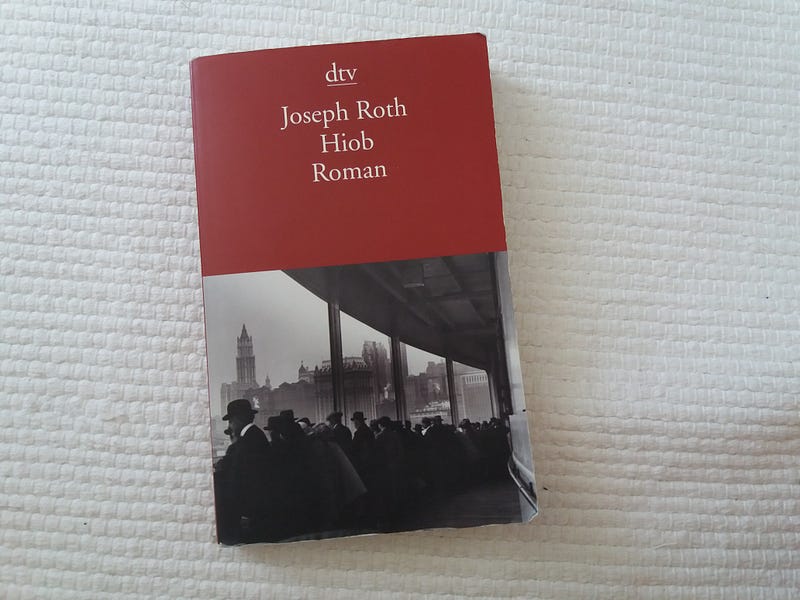
- “Hiob” (1923) by Joseph Roth: This was a compulsory lecture in my German class — and we all know how reading in school has taken the pleasure of reading from many people. This book however is incredibly beautiful and well-written. It is full of colorful metaphors and sentences that almost made my heart melt:
“Sein Herz jubelte, und sein Körper musste tanzen.” (His heart jubilated, and his body had to dance.)
- “Im Westen nichts Neues” (1929) by Erich Maria Remarque: I remember reading it when I was about 17. It is basically a collection of stories from the First World War from the perspective of one young man. Expect horrible images, sad stories, and a dive into an international war.
#6 Read Recipes In German And Get to Know Our Cuisine
Following recipes in your target language will make you learn kitchen vocabulary and phrases the fun way. Plus, traditional recipes are the most authentic when written by a local person in their local language.
What is German cuisine famous for? Every time somebody confronts me with this question, I need a moment of reflection— uuuuh… Germans mostly eat out at Italian, Syrian, Turkish, or other restaurants, but there are quite a few traditional German dishes that you can prepare at home.
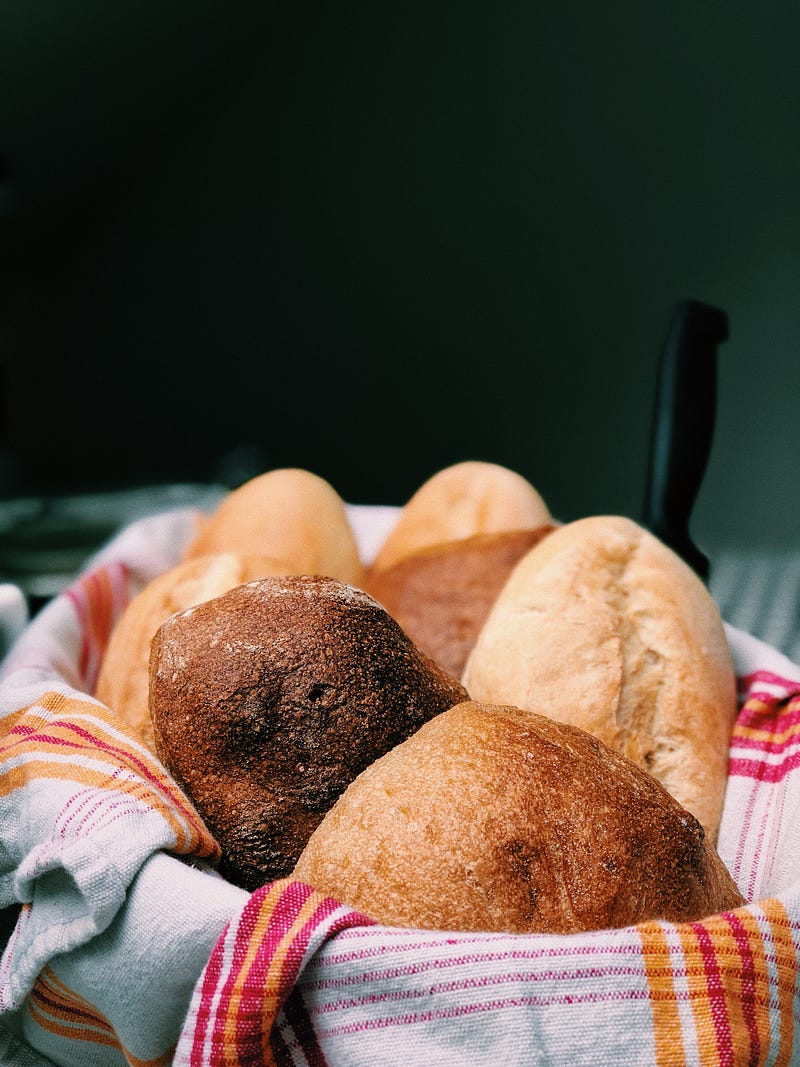
First of all, “Brot” (bread) and “Brötchen” (small bread; check out the photo) are a must. Germans love their good bread in all variations, often with seeds and nuts on the inside and outside. Again, I’m a bad German for not knowing how to bake great bread. However, I promise you’ll find good recipes online.
On Sundays, German supermarkets are closed all over the country. Some of the only open stores are — surprise — bakeries!
Germans traditionally have an extended breakfast with “Brötchen” or bread on Sunday mornings. Many also enjoy baked goods for dinner —then, it is not called “Abendessen” (evening meal) but “Abendbrot” (evening bread). We have a broad selection of vegetable spreads (“Brotaufstriche”; again, check out recipes online!) and often eat butter/margarine, jam, cheese and the like on our bread. On Sunday mornings, long queues form in front of bakeries from Hamburg in the North to Munich in the South.
Other elements the German cuisine is known for are potatoes in all forms, for example as “Kartoffelpuffer” (also called Reibekuchen), which are prepared in the pan and eaten with apple sauce.
Germany is often associated with sausages. While they are indeed sold all over the state, there’s a growing number of vegetarians and vegans (like myself), and you can look up recipes for veggie burgers and the like or buy them.
Then, of course, there is Sauerkraut (“sour cabbage”), which is really very German. I’m not the biggest fan, but my relatives definitely are — along with cooked kale and potato pieces, Sauerkraut is one of the top dishes we eat at my grandma’s place.
A good website for German recipes is “Chefkoch.de” where German hobby cooks publish and search for recipes. I don’t use cookbooks and often look for recipes there (or, more precisely, it’s usually the first search result on Google when searching a recipe in German).
#7 Watch Interviews of Celebrities
I’m sure that if you’ve been learning German for a while, you have discovered Germans that you like, be it football players like Manuel Neuer, comedians, musicians like Helene Fischer, or politicians like Angela Merkel. Try to find interviews with them on YouTube, Spotify, or in German newspapers.
#8 Find a German
This might sound like the invitation to a scavenger hunt but don’t worry, it won’t be that tricky (although, let’s agree that COVID-19 currently questions its practicability). This advice is one that I repeat in every one of my language-related articles: Find yourself a language tandem partner! Don’t know where to find a German?
Let me promise you that Germans are the most travel-enthusiastic type of humans. You’ll find them in the most remote villages of South-East Asia, “taking a gap year to discover new cultures” or “broadening their horizons.”
Other leads to finding a German outside of Germany: go to one of the fake “Oktoberfest” celebrations that have spread all over the world, check out German bars in the city you live in, and try to look for people wearing functional clothing items from brands like Jack Wolfskin or Deuter, with supposedly fancy but really just practical raincoats, Birkenstock sandals, and colorful backpacks.
A German might try to hide behind good English skills, but he or she most probably enjoys foreigners learning the language of consonants, famous poets, and long, long nouns — our (not-so-)melodic, our (more or less) beloved German.
© Annika Erika 2021