
Eight Things That Might Surprise You About Sweden
Restrooms are shared and cash is rare
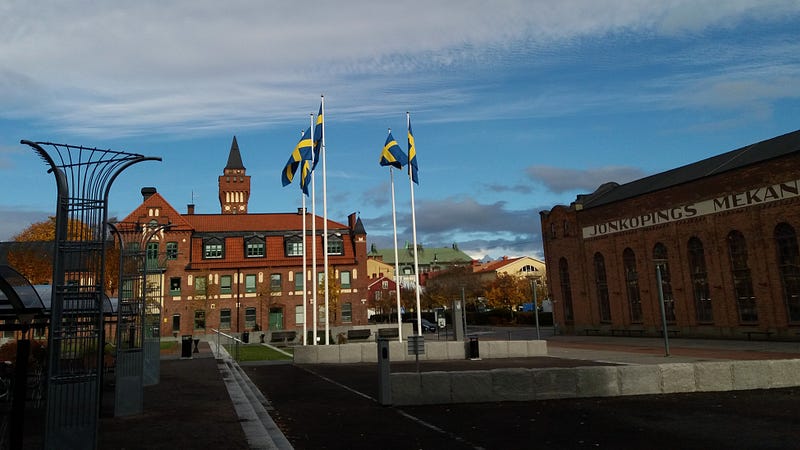
Hej allihopa, hey everyone! In mid-August, I moved to the country mostly known for the band ABBA, cheap furniture from IKEA, and a rather unconventional way of dealing with COVID-19. I’ve been living and studying in Jönköping in Southern Sweden for over two months now, and there are a few things that puzzled, amused, or surprised me.
#1 You can look everybody up online (yes, even me).
When you live in Sweden and don’t want to tell people your address or your age, that’s too bad — because they’ll find out anyway. How? Googling your name will show them your most personal information in one click — provided that you stay longer than one year or are a Swedish citizen because that means you’ll have a Swedish personal number.
I find that a bit spooky but must admit that looking up my professors’ age out of pure curiosity is quite interesting. Some profiles reveal not only the name, birth date, age, address, and number of square meters but also if the person is married, to whom, when their name day is (the Christian day dedicated to a Saint they’re named after) and with whom they share a house or flat…
Considering that this amount of information is disclosed about each individual, I find the Swedish longing for privacy pretty contradictory. How private is your life in Sweden when all that info is accessible online? To me and fellow international students, the reply would be: not private at all!
#2 Not everybody speaks English.
Even though Sweden repeatedly ranks first or second in the worldwide “English Proficiency Index” among countries where English is not an official language, not everybody can speak good English. This should be obvious but it’s good to keep in mind when you’re on holiday or even moving to Sweden. Don’t assume that English is spoken as widely as Swedish — that’s just not the case. The Swedes I’ve met who didn’t speak English were older adults, probably over 65. Good for me; it forced me to practice my Swedish.
So, you’ll probably be able to speak English with most younger people and service workers, but have the courtesy of asking “Do you speak English?” (or Pratar du engelska?) when addressing strangers, e.g. a person you ask for directions on the street.
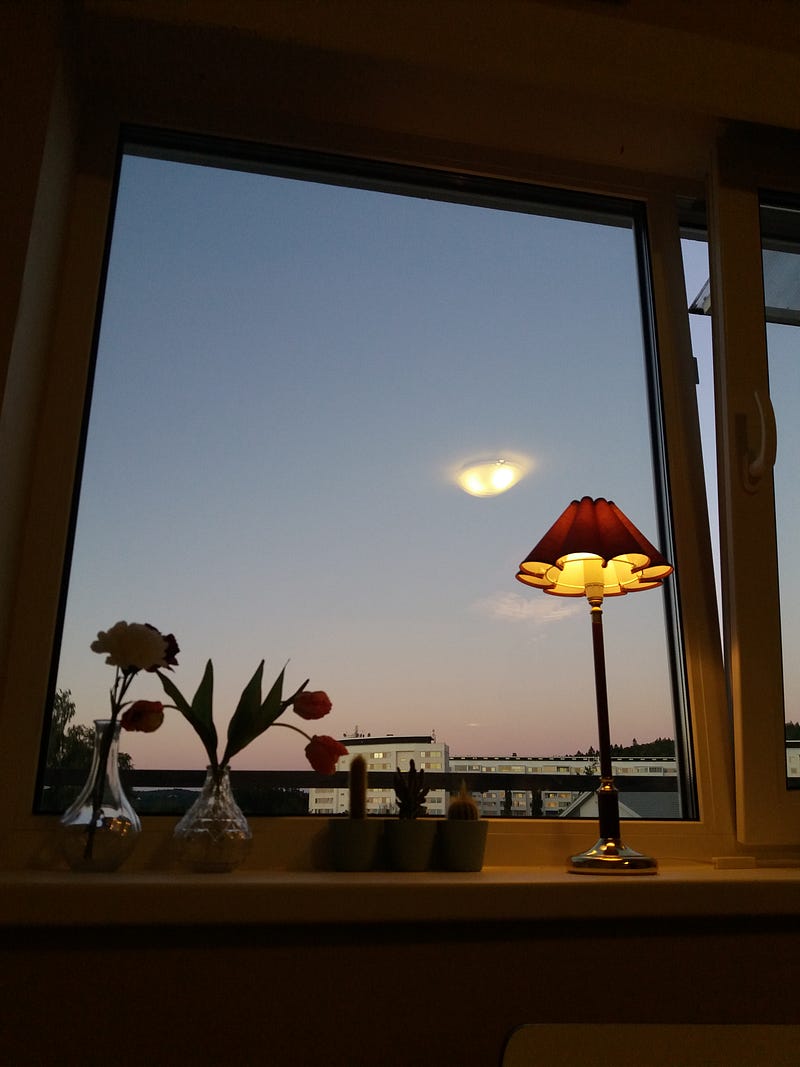
#3 Having a small lamp on your windowsill is a thing.
When driving or walking by any kind of house and looking at the windows, you’ll notice one thing: Swedish people own a lot of small lamps — and they put them on their windowsills to turn them on in the evening. That creates a really cozy (mysig) atmosphere throughout urban areas, especially when winter’s approaching and it gets dark in the early afternoon. However, I’m glad that I don’t live in Northern Sweden, because there’s no daylight whatsoever for several weeks in winter.
#4 There’s no bad weather (or so I was told).
There is a Swedish saying that goes “There is no bad weather, only bad clothing” (Det finns inget dåligt väder, bara dåliga kläder). Trust me, that one’s taken by the letter. Go out when it’s freezing and raining the whole day and you’ll still find many people going on a hike— wearing a raincoat and functional ‘outdoorsy’ shoes.
Being outdoors is a big part of the Swedish lifestyle; that is going on a hike, biking, skiing, rowing, walking, and more. If you constantly count on excellent weather to step outside, you’d probably stay home from October until March, since rain, wind, snow, frost, and cold temperatures are a given during these months. I have to say that I’m pickier than Swedes when it comes to “nice weather to be outside” (I’m still a newbie so will have to adapt over time).
Several times, I noticed that my perception of the weather differed widely from that of the Swedes around me. When I see that the daily temperature is supposed to be 10 °C according to my weather app, I pack a headband, gloves and wear a big coat to bike a few kilometers, no matter if the sun’s out or not — but once I leave the house, I’ll be surrounded by people enjoying the sunshine in shorts, a dress or similarly light clothing. Y’all need vitamin D, I get it.
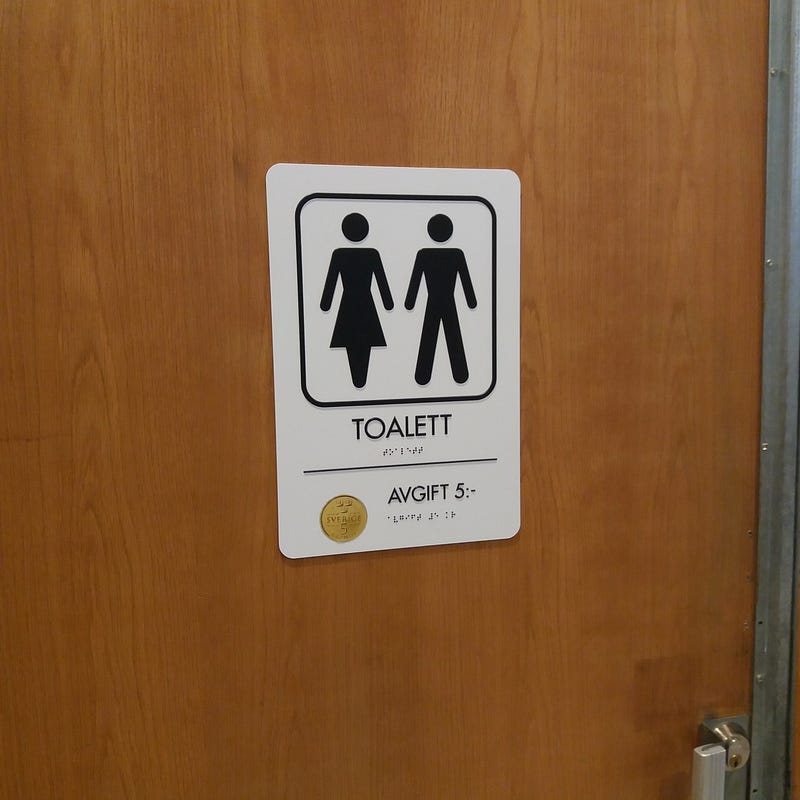
#5 There are gender-neutral restrooms.
Swedes do a lot when it comes to the inclusion of gender-fluid people. The third, gender-neutral pronoun hen (alongside the female hon and the male han) came into usage in 2010.
Given that, it seems only logical that public toilets are unisex. Be it at train stations, at university or in libraries: All toilets are accessible to everybody. I don’t think about it much, but one positive side-effect is that long queues in front of women’s bathrooms are avoided that way.
#6 There’s an insane effort made to make people learn Swedish.
I came to Sweden with pretty good basics of the Swedish language, and was eager to find resources and opportunities to improve my skills. When I went to the local library, I was shown a whole shelf with nothing but lättlästa böcker, books in easy Swedish. Don’t be mistaken: Rather than being children’s books, it is literature for adults who are starting out learning Swedish.
The books are small, the words are printed big, and the vocabulary is relatively basic, even though there are different levels (“super-easy” to intermediate). The stories can be about a family going on holiday, the life of famous author Astrid Lindgren or an immigrant struggling with racist attacks — yes, I was surprised and learned many words about violence.
In addition to reading literature, you can attend free Swedish classes called “SFI” (Svenska för invandrare which means “Swedish for immigrants”). I signed up right when I got to Sweden and got a letter to have my level assessed a few weeks later. My Swedish lessons included two classroom sessions of 2,5 hours each (without COVID-19, it would be more often), a video call, and homework. Most of my fellow students there were learning Swedish to eventually work in Sweden; and the nationalities were very mixed, but primarily from outside Europe. I got to do a national Swedish exam after only one month and hopped to the next level, which is “grundläggande” (adult courses offered in Swedish, English, and math).
#7 Most alcohol can only be bought legally at “Systembolaget”.
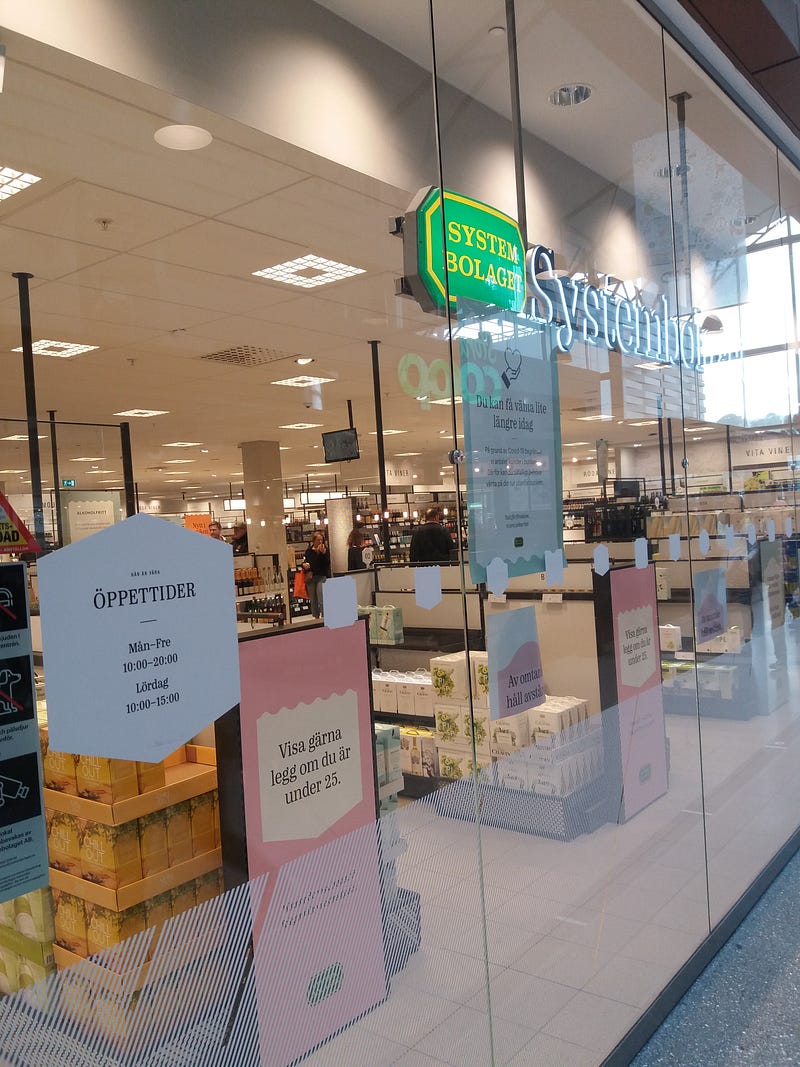
In Sweden, alcohol can be bought from the age of 20. Crazy for me coming from Germany, where beer is available from 16 and “hard” alcohol once you turn 18. In Swedish bars, however, the legal drinking age is 18.
On top of that, the only place where you can legally buy alcohol with more than 3.5 percent is Systembolaget, a chain of liquor stores owned by the government. As you can see in the photo, it’s closed on Sundays and open until only 3 pm on Saturdays. Drinking has to be carefully planned in advance.
#8 You’ll rarely see cash money.
Coming from Germany where cash is key, this was a great relief to me. In the country of Angela Merkel, cash is still essential to pay in (way too) many places: some cafes, restaurants, bakeries, small shops, most laundromats, buses… In Sweden on the other hand, cash is almost abolished. Even for public restrooms that require a payment of 5 kronor (around 50 cents), you’ll be expected to pay by card. I find that very convenient — even though cash makes you realize how much you actually spend and it may be better to protect personal data.
The only reason I withdrew money in Sweden so far was to purchase a used bike and a used nightstand — both from individuals who sold them on “blocket.se”, the Swedish eBay. If I’d had a Swedish bank account, I could’ve paid the vendors via “Swish”, the Swedish smartphone app for transferring money to private people, that is widely used in Sweden.
© Annika Erika 2020
More from me:


