
Life in Sweden During the COVID-19 Pandemic
No face masks, no lockdown
I started writing this in September 2020 but never dared to publish it. Too incomplete, too controversial, too touchy: I always found a reason to let this text doze in my draft folder. However, I know many people want to know more about Sweden’s unusual COVID-19 strategy. The European country with only 10 million inhabitants has been infamous around the world for its comparatively liberal way of dealing with the pandemic.
I’ve been living in the small city of Jönköping, Sweden since August 2020. Before moving here for my studies, I was anxious about the situation in Sweden. According to media of my home country Germany, the situation didn’t look bright. With the website “Worldometers”, you can form your own opinion about the Swedish COVID statistics. Here’s my take on Sweden’s strategy — a combination of local and national decisions — in a Q&A format. As this is a complex topic, I’m looking forward to constructive additions in the comments.
Who’s responsible for the Swedish COVID-19 strategy?
Anders Tegnell is Sweden’s State epidemiologist and makes the national recommendations and rules along with the Public Health Agency of Sweden, “Folkhälsomyndigheten”.
What shocked me about Tegnell was to learn that in 2009, he had been responsible for communicating the introduction of a vaccine against the Swine Flu to the Swedish population. That went terribly wrong: Many Swedes followed the recommendation and got vaccinated with “Pandemrix” but then got narcolepsy, a disease “characterized by excessive daytime sleepiness (EDS) and abnormal manifestations of rapid eye movement (REM) sleep” (cdc.gov). I‘m wondering how this man became Sweden’s State epidemiologist in 2012 and has held this position ever since. But then again, Germany’s former finance minister was involved in a scandal revolving around unauthorized donations before occupying this position, and that’s only one of many unbelievable political stories.
What are the key characteristics of the Swedish strategy? Or: What is so controversial about it?
- There has been no lockdown. Ever since Sweden confirmed its first COVID case in January 2020, Swedes could always leave their houses, go to clothing stores, supermarkets, etc.
- That also means that bars, restaurants and shops have never been closed. To be honest, I was quite happy about the freedom to discover some cute cafes (my weak spot) in my new study city, and to support the local gastronomy — although I know those are probably among the riskiest places to go to in a pandemic.
- There is no coronavirus app. Other countries (e.g., Germany and the Netherlands) have introduced one early on to trace back infections and inform people in case they’ve been in contact with patients who tested positive.
- There are no free COVID tests (yet). In the past few months, quite a few European countries made antigen (“quick”) tests freely accessible to their citizens (once a week in Germany since March, as often as desired in Austria since February), some even PCR tests (like France). In Sweden? Nope. As I am writing this in June 2021, antigen tests cost an equivalent of $108 and PCR ones almost double the price (where I live). I had to pay for one to travel back to Germany in March, and can only wonder: How does Sweden as a highly modernized country not manage to provide free tests? In May 2021, I’ve at least seen Swedish supermarkets selling self-tests for the first time.
- There has been no curfew in Sweden. Germany, France, Spain and many other countries introduced curfews from evening to early morning in different stages of the pandemic.
Is there still no face mask obligation in Sweden?
Yes, and this may well be the single most controversial thing about the Swedish strategy: Wearing a face mask has remained optional on Swedish territory throughout the pandemic. In my first few months here in Jönköping, I saw almost nobody wear one. Since the number of cases rose again in late October of last year, I’d say about 10% of people do in closed rooms like buses. On my train journeys from Sweden to Denmark (and further to Germany), I’d always see people taking off their masks once the train had crossed the Danish border.
The epidemiologist Tegnell has repeatedly declared that he believes masks would lead to carelessness as the population would feel sufficiently protected and stop keeping a distance. Other reasons against face masks the Folkhälsomyndigheten brought forward are that 1) people with mild symptoms may go out and infect others, that 2) a mask that is slipping down causes people to touch their faces even more and that 3) there is not enough scientific evidence in favor of masks.
Now you may not support these arguments at all, but in January 2021, Sweden’s leaders decided on a compromise—an absurd and complicated one, if you ask me. The government apparently thought that well, despite all the downsides of masks, it could be a good idea to recommend them in certain circumstances, to certain people, at certain times. Read the following recommendation yourself, and try not to laugh:
From 7 January 2021, people travelling on public transport without assigned seating are recommended to wear a mask during weekdays when many people travel: between 07:00–09:00 and between 16:00–18:00. This advice is directed towards those born in 2004 or earlier. (source)
Let me just say that people care little about this “advice”. The director of the Swedish Public Health Agency, Johan Carlson, was called out publicly for having disregarded it himself. Friends told me that people in bigger cities like Stockholm and Gothenburg were following it, but I have observed few people wearing masks during rush hours in Jönköping. I personally think masks are very useful if only to remind people we’re amidst a serious, potentially deadly pandemic. In Sweden, I sometimes notice that I’m still eyed with amusement or suspicion when I wear a face mask — and I’m not alone. These reactions obviously don’t motivate others to opt for a mask.
Why did Sweden never have a complete lockdown?
Anders Tegnell and his colleagues argued…
- …that herd immunity would set in only a few months after the beginning of the pandemic in Sweden.
- …that Sweden’s strategy would be successful in the long run because people wouldn’t have a “lockdown fatigue” caused by too many restrictions.
In August 2020, two researchers from the UK published a paper called “Four months into the COVID-19 pandemic, Sweden’s prized herd immunity is nowhere in sight”. Analyzing the reasons for the Swedish strategy, they stated:
“Given the nature of Swedish society as consensus-driven, the strategy ought to be read as a cooperation between the state and its citizenry, rather than the state dictating what is to be done.” (Orlowski & Goldsmith, 2020)
Another reason for the liberal strategy is that the Swedish law didn’t allow the government to be as strict as other countries: Until a new pandemic law (Pandemilagen) valid until September 2021 was adopted in January 2021, the Swedish government could only introduce very few restrictions or regulations, and therefore opted for recommendations. For instance, it couldn’t limit the number of visitors of places like gyms or close certain facilities.
Did the strategy work out?
Well, before the vaccine was first used in January 2021, herd immunity was nowhere in sight (as the name of the paper by Orlowski and Goldsmith shows). In May 2020, a Swedish study found out that even in the Swedish epicenter of the pandemic (the capital Stockholm), only roughly 15 % of all citizens were immune.
Many people I’ve met in Sweden indeed find the soft approach viable in the long run. I for my part feel like I can do almost many things as I did before the pandemic, which is undoubtedly great. I firmly believe that the mental health of most citizens in Sweden has been far less affected by COVID-19 than the mental health elsewhere in the world. Just to talk to the youth from the US, France, Spain, Germany, to name only a few countries. Several European friends of mine had their first panic attacks and started therapy. Research from the US and these US statistics also show that anxiety and depressive disorders have become more common during the pandemic. And a fellow student from Italy told me:
The lockdown in Italy was the most traumatic experience I’ve had in my life.
So, are all Swedes satisfied with the strategy?
Especially at the beginning of the pandemic, critical voices were almost absent from the consensus-driven Swedish media and mainly raised by non-Swedish journalists (e.g. by SWR in Germany). International media pointed especially towards the impact of the strategy on groups that have been identified as most vulnerable and show the highest death rates: people that are foreign-born, old (especially those living in retirement homes), in low-income families, and in certain professions.
Most people I know in Sweden are satisfied with the strategy — but then I’ve mostly been around students (especially international ones) who 1) were happy to be immune after having had COVID-19, or 2) thought they had to enjoy their lives while they were young. Who wouldn’t like to go back to normal, forget that there’s an invisible, potentially deadly disease going around, go to university or to the office and ditch that annoying mask? Sweden is the closest you can get to that vision in times of the pandemic. Surveys and polls show, however, that the trust in the Swedish COVID strategy has dropped steadily. A journalist from the Guardian wrote in June 2020:
“a study earlier this month […] found that only 45% of [Swedish] voters reported a very or quite high degree of confidence in the government’s capacity to handle the crisis, against 63% in April.”
Another survey from November 2020 showed that over 80 % of all Swedes worried about the burden of the coronavirus on the healthcare system.
Is the pandemic present in daily life in Sweden?
Well, let’s say that it’s easier to forget about COVID-19 than in other countries — but some things have changed even in Sweden. Here are some examples:
- Universities were closed during the spring semester 2020 from March onward, and partly reopened in the fall semester starting in August 2020, depending on the university, the study program, the study year, the course… I am in the first year of my master’s program and had classes on campus, but all our professors transmitted their classes live via Zoom in real-time. That way, I could stay home whenever I felt slightly sick. From November 2021 onward, I’ve had all my classes online again.
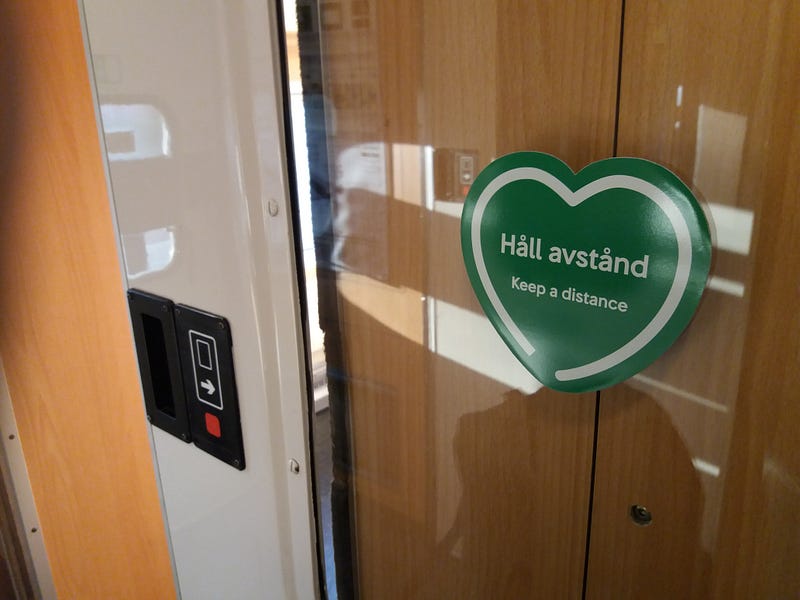
- There are signs (e.g. in shopping streets) and announcements (in stores) reminding you to keep a distance. I know the announcement of my local LIDL by heart…
- There’s hand sanitizer in many restaurants, cafes, universities, shops, etc.
- At least where I live, I couldn’t pay my bus ticket in the bus to keep the bus driver from having contact with too many strangers (same thing as in Germany). The ticket had to be prepaid. I’m talking in the past because this rule seems to have been abolished in Jönköping in May/June 2021.
- In supermarkets, a Plexiglas pane protects cashiers.
- Clubs were closed for a long time, and haven’t been opened for parties again, but e.g. for quiz nights from approximately April 2021 onward.
- Retirement homes were closed for certain periods, then reopened, closed again, etc.
- Cinemas were closed and only reopened on June 1st, 2021.
- There was a varying recommended limit of people allowed to meet in groups. Until recently, this was 8 people, meaning that I could still meet many more people legally than my friends in France, Germany, Switzerland, etc.
What about the claim that the Swedish strategy is just adapted to the Swedish lifestyle?
A few arguments came up from people supporting the Swedish strategy. I can’t claim to give exhaustive answers but can tell you my estimation based on what I know about Sweden after having spent less than a year here.
- “Swedes naturally keep more distance.” That is partly true — Swedes value their privacy and would keep their distance from foreigners. A Swede would probably never give a friendly clap on the shoulder of a stranger (unlike e.g. many people from Latin America that I’ve met), “invade” somebody’s private sphere by coming too close when talking to them, etc. Nevertheless, I observed bars were filled especially on Fridays and Saturdays, strangers sat down next to others on the bus and friends stood as close to each other as ever. In supermarket queues, people don’t keep a lot of distance, but some more than others. So, the people living in Jönköping rarely keep the recommended distance of 1.5 to 2 meters.
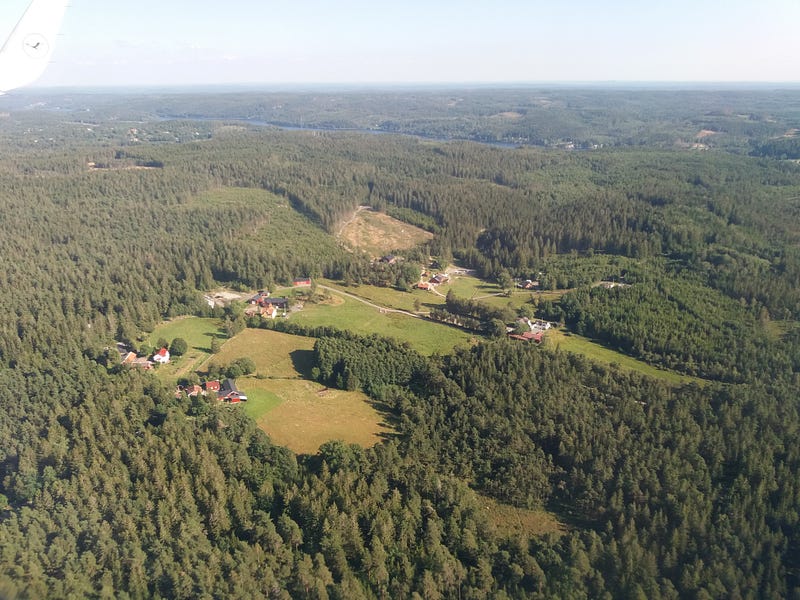
- “Sweden is not as populated.” There’s definitely some truth to that. Sweden is among the four least populated countries of Europe and among the nations with the lowest population density in the world. However, consider that “around half of these [people reside] in the counties Stockholm, Västra Götaland or Skåne, the three counties where the three largest cities in Sweden are also located.” In consequence, Sweden might be a vast country, but a large part of its inhabitants live in very few places — and that leads to the spread of COVID-19. So: not a valid argument.
- “Swedes are not as social as other people.” I don’t think that Swedes meet their friends much less than people from other countries, especially teenagers and young adults. With family, I’d say the bonds are indeed not as intimate as they are in Italy or India — in the sense that people rarely live with their parents after completing high school, and don’t see their grandparents daily or weekly. A factor that could have slowed down infections is the fact that most Swedish residents live in single households. Many of my study friends who lived in shared student apartments got COVID-19 or had to quarantine several times because they were contact persons. I, living alone in a small student apartment, didn’t experience either of them — so living alone is probably safer than sharing your living space. However, this Swedish ‘isolation advantage’ was not heavily reflected in much lower numbers of infections in Sweden.
- “Sweden has a great health care system.” Since the Swedish healthcare system is largely tax-funded, you luckily won’t have to reach deep into your wallet when a health emergency comes up (unlike in the US). Healthcare is free for those under the age of 20, and very affordable for everybody else. The health care system also ranks highly for other reasons. But, I know that COVID-19 took a toll on the health care system just like it did in other countries. All of my friends who took a COVID test because they had symptoms in Jönköping got their results only after several days (!), sometimes a whole week. Special care units were used to capacity and above in Swedish COVID hotspots, especially in the past few months, as newspaper articles like this one and this one reported.
- “Swedes just have a higher sense of responsibility.” I think it’s unfair towards the rest of the world to state that as a general rule. When friends in Jönköping tell me they were in a crowded bar, when I see how many people go to cafes and restaurants, when I observe groups of friends hugging on the street and fellow students offering me a sip of their drink, I think “well, that’s not the smartest thing to do right now”. What I observed, though, was that stores, malls and restaurants were extremely empty for several weeks after a new corona wave had arrived in late October — even though there were only recommendations, no strict rules. Swedes certainly have quite a lot of trust in their government, and in other people, which makes them more likely to follow the behavior of those around them, and listen to national policies.
Final Thoughts
Sweden’s COVID-19 approach was certainly softer than in most other countries in the world, but the government gradually transformed recommendations into restrictions (which led to the very first anti-lockdown demonstrations in Sweden). A plausible reason for the stricter rules is that studies showed decreasing levels of trust from the population in how the government was handling the pandemic. For several months, Sweden was the country with the highest number of new cases per capita on the European continent, so I’d carefully state the strategy was not too successful in keeping infections at bay and preventing deaths. Despite that, young people from other European countries moved to the Scandinavian country in the past months — to avoid the harder restrictions in their home countries. The German press even designated them as “corona refugees”.
Although I was personally anxious about moving to Sweden in the middle of this pandemic, I don’t regret it. I’m grateful to receive a German study scholarship to experience this beautiful country, its modern society and non-hierarchical academia. I quickly adapted to the way of dealing with the pandemic here and must admit that was happy about the newly gained liberty that my friends and relatives in other European countries don’t have — even though that liberty comes with a high cost of more infections.
I believe that when you’re inside a system, you may be critical at first, but you adapt. After all, in a country where the regulations are liberal, there’s only so much you can do to protect yourself (like wearing an FFP2 mask and avoiding gatherings). I’ve been navigating between following the locals (e.g. by not wearing the masks in the first few months and going to cafes) and listening to my reasoning (by wearing medical masks again in 2021 and avoiding parties altogether). With more and more people getting vaccinated against COVID-19, the situation can only get better.
© Annika Erika 2021