
Eating the Same Meals Every Day Can Make You Rich
You need an odd, but focused mindset to build wealth
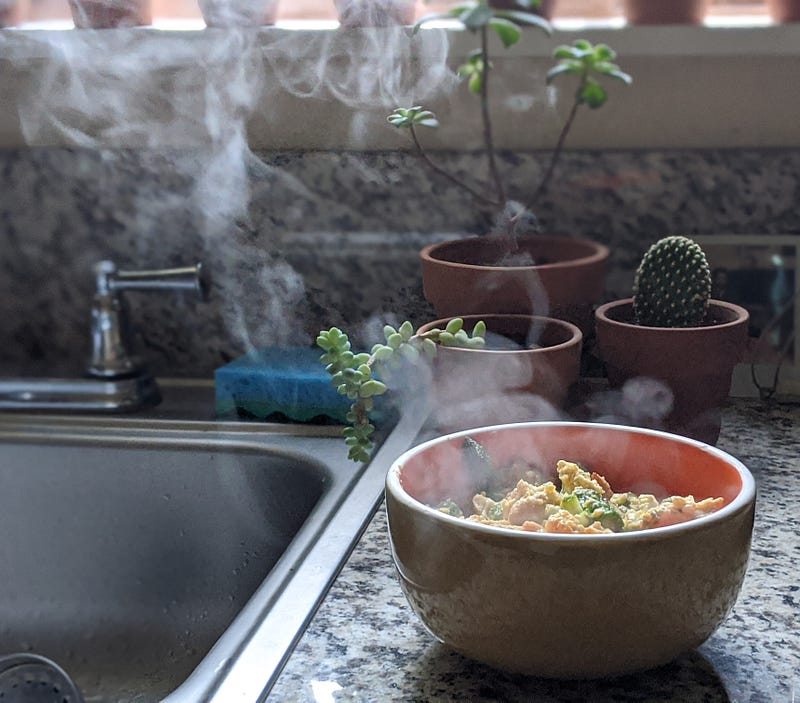
That’s breakfast! And it’s a slight variation of the same meal every day.
Eggs, cheese, asparagus, chicken. Sometimes I sub turkey for chicken or black beans for asparagus. I often add avocado because, alongside protein, it helps keep you full longer. Dinner’s basically the same — minus eggs. I eat almonds, cheese, maybe a yogurt bowl, and drink a coffee or two during the day.
You might think it’s boring. Most people do. But making the choice to eat the same meals every day, twice a day, is one of the best money decisions I ever made in my life. The reasons go beyond money saved, but that’s a good place to start. It all comes back to viewing wealth building as a holistic process.
Respect the process
My life began to change and my personal finance improved when I started respecting the process. That is acknowledging, taking seriously, and being patient with the steps you gotta take to get from A to B.
If things tend to come easy for you, it can be difficult to accept when results don’t happen overnight. You might expect to start and finish, with rousing success, in one fell swoop. While this can work for a while — and maybe forever — you risk missing elements on the road from A to B that can help enhance your knowledge base, intellectual capacity, and success. You fail to take on a comprehensive mindset where one area of life complements and builds on another.
I started eating the same meals every day during the pandemic. I wanted to lose a few pounds of fat and add several more pounds of muscle. I wanted to look and feel better. I settled on an extremely low-carbohydrate diet. I have been eating this way for roughly five months.
Your Mornings Start Quickly and Efficiently
When I wake up, there’s no question around what I’m going to do. I cook the same breakfast I cooked the previous morning. I have it down to a methodical process. Set up, cooking, eating, cleaning takes roughly 20 minutes.
During this time, I’m organizing my day. Everything from article ideas, articles to write, calls to make, emails to send, places to go. With the elements in place, I schedule the rough order they’ll happen in as I get dressed and on the way to the coffee shop. Then the day officially begins. Truth is I get more done now — before “the day officially begins” — than I used to by noon.
My old routine wasn’t actually a routine. It was a series of decisions without parameters, made in the moment. Deciding on, committing to, and maybe eating breakfast took upwards of an hour. Worse yet, on most days I ended up not eating breakfast. I never realized what a large dose of healthy protein can do for your brain and body first thing in the morning.
My life prior to the pandemic trended dysfunctional and wholly random, just like my personal finance and investing.
Make the Connection Between Life’s Moments
Eating the same meals every day effectively puts grocery store visits on auto-pilot — once a week, 20 minutes in and out, tops. I step inside Trader Joe’s, sanitize my hands, grab a basket, and beeline from section to section. No more aimless wandering.
Now it seems obvious, but I never realized how a strict eating regimen saves time in the morning and at the store, leading to a less cluttered mind. Steve Jobs wore the same outfit every day because it helped free his mind for more important thoughts and decisions. Science confirms this notion (via Inc.):
In studying the effects of extraneous variables on the outcome of legal cases, researchers segmented judicial deliberations into three distinct “decision sessions.” Over the course of these “decision sessions,” they found the percentage of favorable rulings dropped gradually from about 65 percent to nearly zero within each session. After a break, it spiked back up to around 65 percent.
Part of the reason? Decision fatigue…
A simple way to save brain power is to cut down on the number of decisions you need to make. Some of the most successful people have already figured this out. They simply wear the same thing each and every day. (my emphasis)
Eating the same meals every day saves money. I spend roughly $1,600 less each month on food and drink now than I did prior to the pandemic. This is in part because I don’t go to restaurants and bars much anymore. After seeing the financial upside — and positive impact on my productivity and well-being — there’s no way I will ever go back to my old ways.
Strive to make similar parallels in your life. Decisions don’t sit in isolation. They form chain reactions. In my old life of eating, drinking, and spending too much, the connections resulted in a less than desirable physical appearance, relatively poor health, and less wealth. At least, I didn’t look as good, feel as healthy, or navigate the wealth-building process as well as I do now.
Balancing Obsession with Spontaneity
I know this about myself — to achieve optimal success I must follow a rigid set of self-imposed rules and guidelines. When I veer, I get out of the obsessive mindset I require to adhere to my absurdly low cost of living and save/invest more money than I ever have before. I’m not perfect, but I’m better than ever because:
- I make the connections.
- I own the necessary mindset.
I recently took a four-day trip. Given the circumstances (some beyond my control), I had to order takeout. In one day, I dropped nearly $100 on food. That’s more than I have spent in one day in this category since before the pandemic. I’m not upset or discouraged. I’m glad it happened, for several reasons:
- It reinforced the power of my routine.
- It reaffirmed I actually love my new routine. (I can’t wait to get back home, as I write this on the road).
- It revealed I need to plan better next time I alter my routine.
Because no matter how frugal and one with your mindset you are, you must make room for spontaneous experiences, and other planned diversions and adventures. Just as I’m carefully adding a few new foods to my diet, I’m thoughtfully considering ways to deviate from my rigidity.
How do I bring other needed practical (travel), physical (sex), and psychological (friendships — and sex) components into my life without blowing up everything I have worked for and that’s working for me?
The pandemic did two critical things:
- It made me realize the need for this thoughtful mindset (from financial and general life standpoints).
- It reduced life down to practically nothing, making it easier to build it back it up again.
I thought a lot about how to present this article and the approach I describe.
I’m convinced people who win — happy, healthy, wealthy — connect the practical to the abstract. They place as much focus on the psychological aspects of personal finance and investing as the practical components.
You can know everything about economic concepts and investing styles, however, if you don’t know how you act and react psychologically in relation to them, you risk setting yourself up to fail.
So, eating the same meals every day might seem like obsessive-compulsive minutia. Connecting it to becoming rich might seem like a stretch. Obviously, I disagree. Regular people — like me and, I presume, most of you — don’t get rich without serious deliberation of who they are and what motivates them. Without taking on a comprehensive mindset and view of how to best in operating in the world so you can achieve your financial goals.
This article is for informational purposes only. It should not be considered Financial or Legal Advice. Not all information will be accurate. Consult a financial professional before making any major financial decisions.