
Dyspraxia and Apraxia
Motor and coordination issues in Autism and ADHD
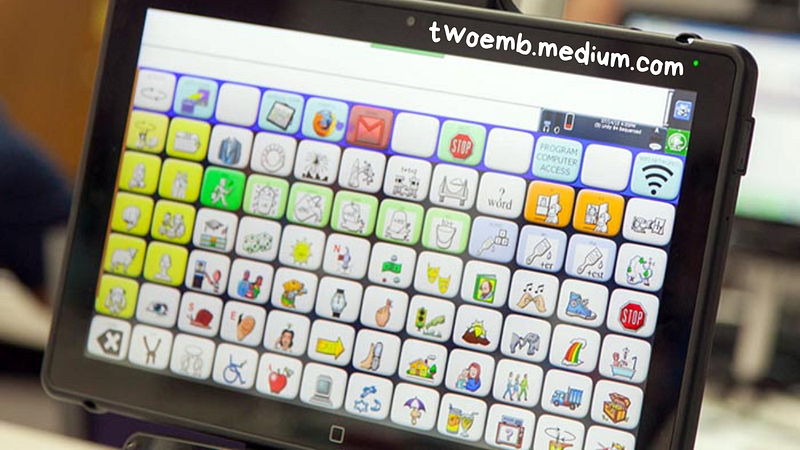
Communication is a fundamental human right
Humans place an unreasonable level of importance on communicating verbally, but that’s an ableist belief of superiority based on speech being the method of communication preferred by the majority of the population.
Building on my previous article, I do acknowledge the potential flaws in the rapid prompting method of communication (RPM) and Facilitated Communication (FC).
Despite some drawbacks to certain types of assisted communication methods, I’d still much prefer to support avenues which increase autonomy and options for effective communication for everyone.
Acknowledging the weaknesses of some methods will hopefully lead to improvements and thus, even better options coming about in the future.
This article isn’t about that, specifically, but it is related. Many Autistics who have unreliable speech or are non-speaking use Augmentative and Alternative Communication (AAC), RPM, FC, and Spelling to Communicate (S2C).
Many Autistics and people with ADHD have co-occurring conditions called dyspraxia and apraxia, which can significantly impact one’s speech, but do not impact a person’s intelligence. People seem to understand this in principle, but not in practice.
What is the difference between dyspraxia and apraxia?
Dyspraxia is difficulty in performing a motor task.
The prefix dys- refers to difficulty or “impairment”.
Apraxia is the inability to perform a particular motor task.
The prefix ‘A’- means not, or without.
The term -praxia refers to the performance of movements.
Prevalence
As many as 87% of Autistics have co-occurring motor issues, and one study found a prevalence rate of 75% of Developmental Coordination Disorder (DCD) in children with ADHD.
Motor and co-ordination difficulties
Like most things, motor issues occur along a spectrum.
Some are relatively minor, whereas some impact every aspect of a person’s life, and most fall somewhere in between.
There are also different types of dyspraxia and apraxia, which impact different types of movement.
Dyspraxia & apraxia of speech
Someone with Dyspraxia or Apraxia of Speech (AOS) struggles to say what they want to say accurately and consistently.
AOS is a neurological disorder that affects the brain pathways which help plan the sequence of movements involved in producing speech.
The person knows what they want to say, but their brain has difficulty planning and carrying out the required speech sound movements.
Signs of dyspraxia or apraxia of speech (AOS)
- Difficulty with pronunciation, especially with vowels.
- Inconsistent errors in speech.
- Difficulty finding the right word or sound for what one wants to say.
- Inconsistent or incorrect use of tone, inflection, and rhythm of speech.
- Vowel distortions, such as attempting to use the correct vowel, but saying it incorrectly.
- Separation of syllables, such as putting a pause or gap between syllables.
People with apraxia of speech understand language much better than they are able to use it.
Motor dyspraxia
Developmental coordination disorder (DCD), also called motor dyspraxia, affects one’s ability to balance and coordinate movements.
Motor dyspraxia and apraxia are neurological disorders characterized by loss of the ability to execute or carry out skilled movements and gestures, despite having the desire and the physical ability to perform them.
Dyspraxia symptoms:
- Difficulty with fine motor skills such as writing, drawing, typing, using scissors, zipping or buttoning clothing, tying laces, and using utensils.
- Difficulty with coordination and balance, a reluctance or awkwardness when playing sports or engaging in physical activities.
- Seeming to bump into things a lot.
- Dyspraxia and apraxia do not impact a person’s intelligence.
Always presume competence
Do not assume a person has an intellectual disability because they have a physical disability.
Having difficulty with speech, or not speaking, do not mean someone has an intellectual disability, it means they struggle to communicate using speech.
© Jillian Enright, Neurodiversity MB
Related Articles
When you join medium, as a member you’ll have access to unlimited reads for only $5 per month. If you use my referral link, I’ll earn a small commission, and you’ll earn my undying gratitude.
If you’d prefer give a one-time tip, you can support my writing on Ko-Fi — also, it’s free to follow me on Facebook!
References
Lino, F., & Chieffo, D. P. R. (2022). Developmental Coordination Disorder and Most Prevalent Comorbidities: A Narrative Review. Children, 9(7), 1095. MDPI AG. Retrieved from http://dx.doi.org/10.3390/children9071095
Montes-Montes, R., Delgado-Lobete, L., Rodríguez-Seoane, S. (2021). Developmental Coordination Disorder, Motor Performance, and Daily Participation in Children with Attention Deficit and Hyperactivity Disorder. Children, 8(3), 187. https://doi.org/10.3390/children8030187
Syriopoulou-Delli, C.K., Eleni, G. (2021). Effectiveness of Different Types of Augmentative and Alternative Communication (AAC) in Improving Communication Skills and in Enhancing the Vocabulary of Children with ASD: a Review. Review Journal of Autism and Developmental Disorders 9, 493–506. https://doi.org/10.1007/s40489-021-00269-4
Zampella, C.J., Wang, L.A.L., Haley, M., Hutchinson, A.G., de Marchena, A. (2021). Motor Skill Differences in Autism Spectrum Disorder: a Clinically Focused Review. Current Psychiatry Reports 23, 64. https://doi.org/10.1007/s11920-021-01280-6


