
Doubting Thomas as a Witness to Resurrected Jesus
Christians love him and hate him, leaving him in an awkward position
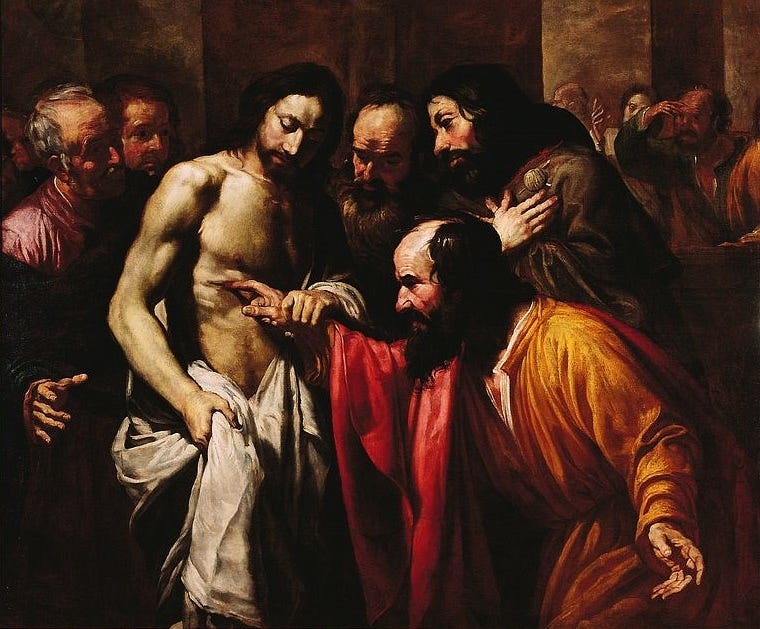
Thomas is one of the twelve disciples of Jesus. He is often called Doubting Thomas because of his famous words:
Unless I see the nail marks in his (Jesus’) hands and put my finger where the nails were, and put my hand into his side, I will not believe. (John 20:25b)
Is Thomas’ doubt appropriate or not? If you ask Christians this question, you will often get different answers depending on the context of the discussion. By exploring this ambivalence about the example that Thomas set, we shall see that common discourses in Christian apologetics are fragmented at best and disingenuous at worst.
Thomas is not a good example
“Thomas was too skeptical” is usually the response given when Christians are directly asked to assess Thomas’ doubt. When Jesus says to him, “Because you have seen me, you have believed; blessed are those who have not seen and yet have believed.” (John 20:29)
In other words, it’s not that Jesus could not accommodate people’s doubts. After all, he did not scold, but invited Thomas to touch his body. Nevertheless, it would have been better for people to not see Jesus and still choose to believe in his resurrection. They would be more “blessed” (whatever that means).
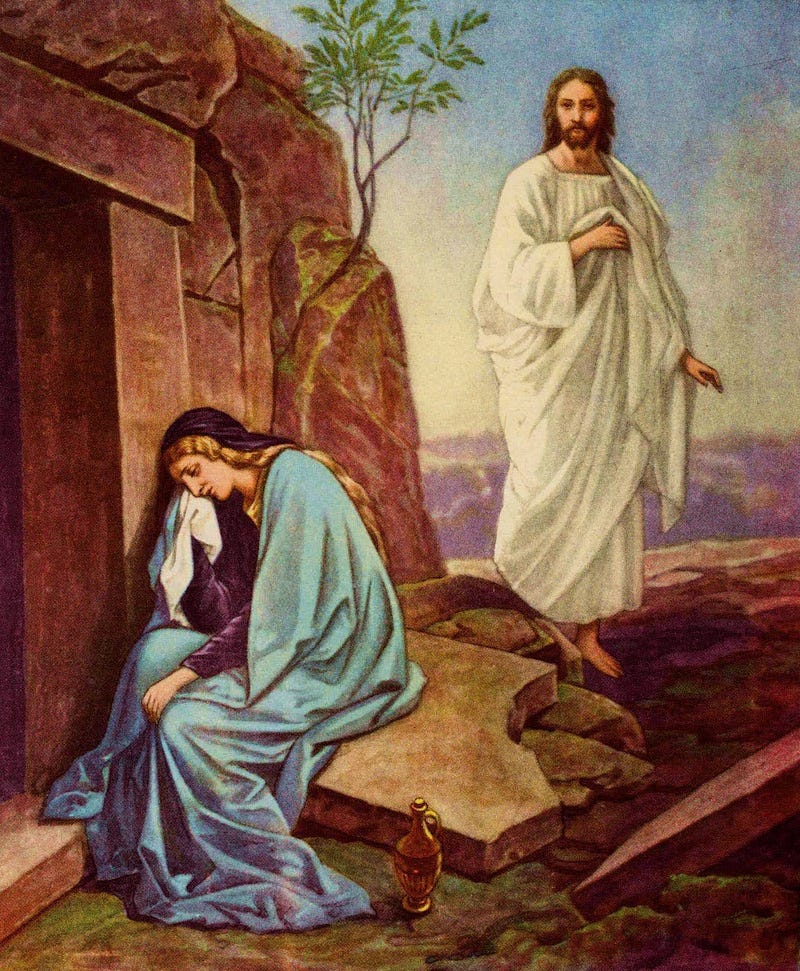
It’s not just Thomas, pretty much all of Jesus’ male disciples refused to believe the women’s testimonies of Jesus’ resurrection. Luke reports,
When they came back from the tomb, they told all these things to the Eleven and to all the others… But they did not believe the women, because their words seemed to them like nonsense. (Luke 24:9, 11)
If you think about it, how could they? Physical resurrection is such an extraordinary event that hearing people talking about witnessing it would not serve as sufficient evidence. Thomas just verbalized what other disciples had on their minds.
Similarly, nonbelievers today question the merit of belief without seeing. They think it is the exact definition of “superstition”. If that’s how Christianity works, Christians would not be justified to reject other religions for insufficient evidence. Either you think belief without seeing is good, or you think it is not good. You should not have double standards.
Many Christians answer this objection by saying that God respects people’s free will and does not want to force people to believe, so He leaves room for people to reject Him by not overwhelming them with evidence of His existence.
But that does not answer the question. If that argument works in Christianity, why can’t the same argument be applied to other religions? “Zeus is real, but He respects people’s free will, so would not force people to believe in him by appearing to them.” Do Christians accept that kind of argument as legitimate, or dismiss it as a lame excuse for insufficient evidence?
Thomas is a good example
Not wanting to be labeled as superstitious, many Christians object by saying that they do have eyewitnesses like Thomas who give them rational ground for belief. They maintain that belief in the resurrection of Jesus is justified precisely because of the testimonies of eyewitnesses in the Gospels.
I am glad he doubted because that strengthened my faith all the more. My faith is not based upon the potential delusions of some grieving disciples. My faith is based upon the conversion of a skeptic who wanted the empirical proof that Jesus was indeed raised from the dead. So this is just one more booster to my faith and it should be to yours. Thank God for Doubting Thomas. — David Servant (YouTube channel)
In other words, if Jesus’ disciples were not that skeptical, but chose to believe the women’s testimonies upon hearing them, the credibility of Jesus’ resurrection would suffer because those disciples acted like they were naive and gullible. Since, according to the Gospels, they were skeptical and Jesus’ appearance removed their skepticism, the whole story is now more believable.
In this sense, Thomas’ doubt is perceived as a positive quality.
Now, my question is: Should we emulate Thomas or not? Can we say that since we have not seen the resurrected Jesus in person, we are justified not to believe in Jesus’ resurrection?
Thomas is a bad example after all
Most Christians would hesitate to agree with nonbelievers that their nonbelief is justified for lack of sufficient evidence. They would argue that since we already have eyewitness accounts in the Gospels, there is no reason to ask Jesus to show up again.
What that argument entails is that Thomas should have believed when he heard the testimonies from the women and other male disciples (John 20:25a). After all, he did not just have four second-handed written accounts of the resurrection event like modern people do today. He had about a dozen living direct eyewitnesses who told him the same story. And yet he still had doubts by then.
If Christians claim that Thomas’ doubt was legitimate and understandable, they would essentially be admitting that they are naive and simpleminded for being convinced of a supernatural event happening without sufficient evidence. Naturally, they would not admit it. So, Thomas is a bad example and should not be followed.
Double standards revealed
It should be clear by now that Christians inevitably use double standards when it comes to apologetic considerations for Jesus’ resurrection. On the one hand, they have to uphold the value of belief without seeing; otherwise, they would have no ground to ask nonbelievers to accept Jesus’ resurrection. In that sense, Thomas is a bad example. On the other hand, most Christians are genuinely glad that there were people like Thomas who empirically confirmed the miracle of resurrection and, as a result, added credibility to belief in Christianity. In that sense, Thomas is a good example.
This is why I often find discussing Christianity with Christians frustrating. Many of them hold fragmented rationale for belief and very few of them have thought it through.
It’s like Christians using the fine-tuning argument to show that the universe has been carefully designed for (human) life to emerge, and at the same time using the intelligent-design argument to show that supernatural intervention is necessary for life to appear on Earth since natural laws do not permit life to appear spontaneously. Very few Christians see the contradiction between the two arguments and are happy to utilize either of them whenever an opportunity presents itself.
Conclusion
It’s easy and common for our biases to slip into our arguments and reasoning without our awareness. This is why objective evidence is so crucial in determining what is true and what is not.


