avatarVibrant Jellyfilsh

Free AI web copilot to create summaries, insights and extended knowledge, download it at here

2981

Abstract

lz et al. (2008) found that chess instruction improved calculation abilities in students with learning disabilities. Barrett and Fish (2011) reported a significant relationship between chess instruction and end-of-year grades, as well as mathematics test scores, among students in special education.</p><p id="3565">Additionally, Hong and Bart (2007) conducted a study on students at risk for academic failure and found that chess instruction was associated with gains in non-verbal intelligence.</p><p id="abe9">The cognitive demands of chess, such as comprehension, pattern recognition, critical thinking, and working memory, are believed to contribute to the potential benefits of chess training on scholastic achievement. This cognitive explanation aligns with the views of other researchers who emphasize the reinforcement of skills like concentration, problem-solving, planning strategies, creativity, and critical thinking through chess training.</p><p id="c67b">While there are conflicting findings in the research literature, several studies suggest that chess training can have positive effects on scholastic achievement, especially among beginners and students with disabilities. The cognitive skills developed through chess play may contribute to improved performance in mathematics and other academic areas. However, further research is needed to better understand the specific conditions and populations for which chess instruction is most beneficial.</p><figure id="9089"><img src="https://cdn-images-1.readmedium.com/v2/resize:fit:800/0*XvUTs7L_SF-D9Pgi.png"><figcaption></figcaption></figure><p id="38e7">If you enjoyed this article and would like to support me please consider becoming a medium member via my affiliated link:</p><div id="24b8" class="link-block"> <a href="https://medium.com/@valuable_mindaro_jellyfish_659/membership"> <div> <div> <h2>Join Medium with my referral link - Vibrant Jellyfilsh</h2> <div><h3>Read every story from Vibrant Jellyfilsh (and thousands of other writers on Medium). Your membership fee directly…</h3></div> <div><p>medium.com</p></div> </div> <div> <div style="background-image: url(https://miro.readmedium.com/v2/resize:fit:320/0*9HeYacixUHROyeNJ)"></div> </div> </div> </a> </div><figure id="a411"><img src="https://cdn-images-1.readmedium.com/v2/resize:fit:800/0*XvUTs7L_SF-D9Pgi.png"><figcaption></figcaption></figure><div id="b9d0" class="link-block"> <a href="https://readmedium.com/april-fools-day-the-history-pranks-and-traditions-ca7e0af80e93"> <div> <div> <h2>April Fools’ Day: The History, Pranks, and Traditions</h2> <div><h3>Happy April Fools Day</h3></div> <div><p>medium.com</p></div> </div> <div> <div styl

Options

e="background-image: url(https://miro.readmedium.com/v2/resize:fit:320/1*vheRrUG89ooeJVIfESatlw.jpeg)"></div> </div> </div> </a> </div><div id="d4da" class="link-block"> <a href="https://readmedium.com/how-missing-grandparents-might-be-changing-the-world-for-the-worse-8d324f36a13b"> <div> <div> <h2>How Missing Grandparents Might Be Changing The World For The Worse</h2> <div><h3>Family structures have changed significantly over time, particularly in the last few centuries.</h3></div> <div><p>medium.com</p></div> </div> <div> <div style="background-image: url(https://miro.readmedium.com/v2/resize:fit:320/1*vpXV1mPBx3wY1BQXlXepnA.jpeg)"></div> </div> </div> </a> </div><div id="5805" class="link-block"> <a href="https://readmedium.com/octopuses-part-3-reproduction-eyes-and-food-b5e5c8ec7f82"> <div> <div> <h2>Octopuses (part 2): Reproduction, Eyes and Food</h2> <div><h3>Octopuses are fascinating creatures known for their remarkable intelligence, impressive camouflage abilities, and…</h3></div> <div><p>medium.com</p></div> </div> <div> <div style="background-image: url(https://miro.readmedium.com/v2/resize:fit:320/1*5MbgrsSexYsnoZ4gVR7npA.jpeg)"></div> </div> </div> </a> </div><div id="1c67" class="link-block"> <a href="https://readmedium.com/10-tips-on-creating-a-great-character-c68fce6ab365"> <div> <div> <h2>10 tips on creating a great character</h2> <div><h3>Characters bring life and personality to the events and themes of the story, making it more engaging and relatable.</h3></div> <div><p>medium.com</p></div> </div> <div> <div style="background-image: url(https://miro.readmedium.com/v2/resize:fit:320/1*ynasLkNBSNe_tcjTcTSpZQ.jpeg)"></div> </div> </div> </a> </div><div id="ec80" class="link-block"> <a href="https://readmedium.com/narcisistic-control-or-reasonable-boundary-4-differences-a079e149a519"> <div> <div> <h2>Narcisistic Control or Reasonable Boundary: 4 Differences</h2> <div><h3>Narcissists sometimes hide their manipulations behind the guise of reasonable boundaries, but reasonable people need…</h3></div> <div><p>medium.com</p></div> </div> <div> <div style="background-image: url(https://miro.readmedium.com/v2/resize:fit:320/1*x932uaCnNFCkbRueGscUkg.jpeg)"></div> </div> </div> </a> </div></article></body>

Does Playing Chess Make You Smarter?

What does the science say?
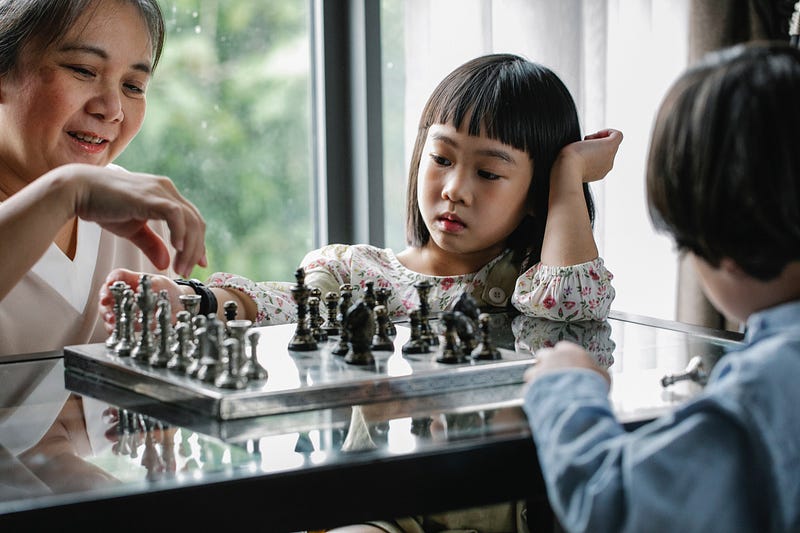
Photo by Alex Green: https://www.pexels.com/photo/mother-and-children-playing-chess-at-home-5691847/

The effects of chess training on scholastic achievement among school-aged students have been subject to research and analysis. The current state of the research literature suggests that chess training does not tend to provide significant educational benefits. This article offers a critical review of studies examining the impact of chess training on the scholastic achievement levels of students in school settings.

While there have been studies and research supporting the educational benefits of chess instruction, there is also conflicting evidence and varying conclusions. Gobet and Campitelli (2006) reviewed the research in this area and found that the educational effects of optional scholastic chess training remain uncertain, and compulsory chess instruction may lead to motivational issues among students. They also suggested that the benefits of chess instruction may be more significant for beginners compared to intermediate and advanced players who rely more on practice and knowledge acquisition.

However, there are studies that provide evidence in favor of the positive effects of chess training on scholastic achievement. Smith and Cage (2000) conducted a study on African-American secondary school students and found that those who received 120 hours of chess instruction had higher scores in mathematics achievement and non-verbal cognitive ability compared to a control group.

Aciego et al. (2012) conducted a quasi-experimental study involving students who received extracurricular chess instruction and a comparison group engaged in sports activities. The chess group showed higher posttest scores in problem-solving and several subtests of the Wechsler Intelligence Scale for Children (WISC-R) compared to the sports group.

Similarly, Kazemi et al. (2012) investigated the cognitive effects of chess play and found that students who received chess instruction had significantly higher posttest scores in metacognitive ability and mathematics compared to the non-chess group.

Trinchero (2013) conducted a study on primary school children and found that the group receiving chess training showed a modest but statistically significant increase in scores on mathematics test items requiring problem-solving skills. The effect was greater among students who had more hours of chess instruction.

Studies focusing on students with disabilities also indicate positive effects of chess training. Scholz et al. (2008) found that chess instruction improved calculation abilities in students with learning disabilities. Barrett and Fish (2011) reported a significant relationship between chess instruction and end-of-year grades, as well as mathematics test scores, among students in special education.

Additionally, Hong and Bart (2007) conducted a study on students at risk for academic failure and found that chess instruction was associated with gains in non-verbal intelligence.

The cognitive demands of chess, such as comprehension, pattern recognition, critical thinking, and working memory, are believed to contribute to the potential benefits of chess training on scholastic achievement. This cognitive explanation aligns with the views of other researchers who emphasize the reinforcement of skills like concentration, problem-solving, planning strategies, creativity, and critical thinking through chess training.

While there are conflicting findings in the research literature, several studies suggest that chess training can have positive effects on scholastic achievement, especially among beginners and students with disabilities. The cognitive skills developed through chess play may contribute to improved performance in mathematics and other academic areas. However, further research is needed to better understand the specific conditions and populations for which chess instruction is most beneficial.

If you enjoyed this article and would like to support me please consider becoming a medium member via my affiliated link:

Chess
Education
Smart
Learning
Science
Recommended from ReadMedium