
Does Money Bring Happiness?
A guide to a fulfilling life

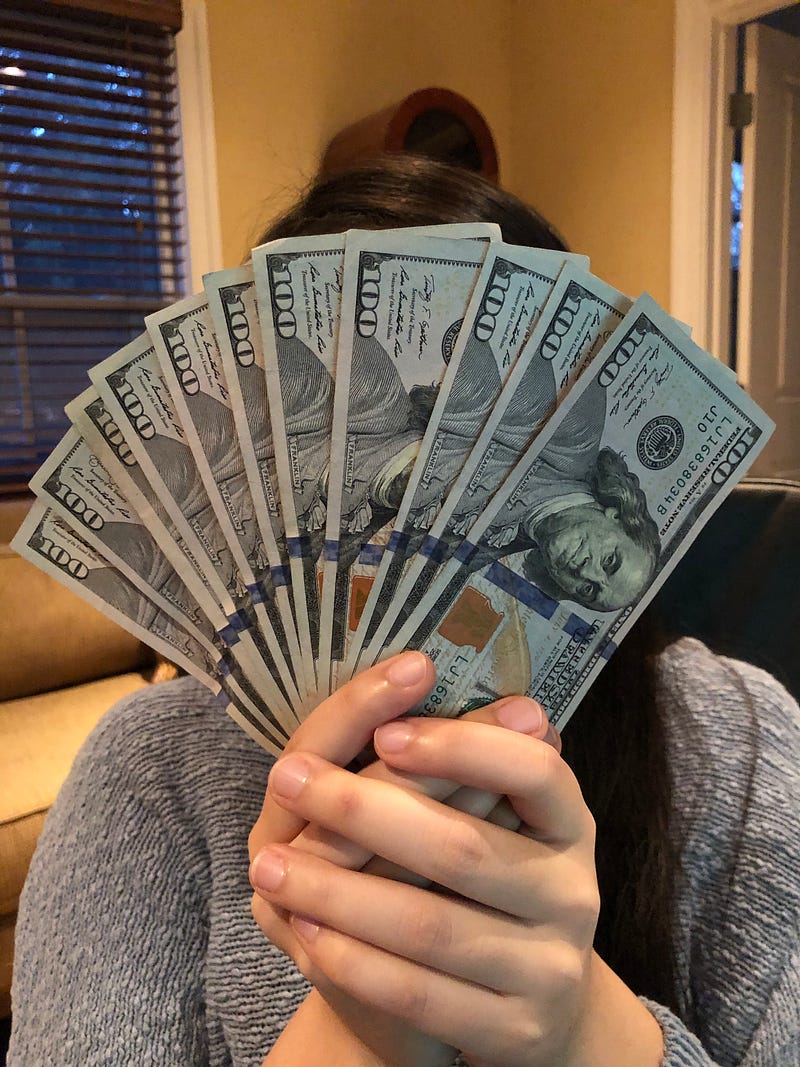
Happiness rarely comes from money on its own. But to be happy as adults, we require a fair amount of money. Why? The reason is that in the world in which we live, money is the best kind of capital with which to buy or gain access to everything we require for our general well-being.
The best options for someone unhappy and broke — a typical combination — would be to increase their happiness while looking for work or find opportunities to generate money first. If they try to be happy before they have a fair amount of money, they will almost certainly fail in their endeavors.
Without a satisfying existence that money can provide, we cannot genuinely be happy. Furthermore, unless we can decide on the values that will govern our life, it may be challenging to be truly content. However, we cannot accomplish this if we are overly financially reliant on others.
I list six factors that affect happiness in my latest Medium essay, but I omitted money because it is inextricably tied to all six elements to differing degrees. But in this essay, we’ll examine how the six primary pillars of happiness are connected to money:
1) Positive interpersonal relationships

Imagine that you were poor but had some friends. The two natural tendencies would be to avoid going out with those pals because you lack the money to cover your expenses or to start burdening your friends with your charge when you go out with them.
Both tendencies are negative. The first one will give the impression that you are strange or antisocial and do not appreciate participating in social events. And the second will make you seem like an exploiter who loves to profit from others’ money.
A third possibility is telling the truth, but not everyone has the bravery to tell their friends repeatedly that they are broke. In any case, the friendship will struggle to grow because the parties have few opportunities to spend time together and cannot contribute to the same extent.
Because of this, broke people frequently associate with the less fortunate ones. Yet, none of them will benefit from this. Because they won’t be as motivated to make money as they would be if they were associated with more affluent people.
Imagine that that same person has a family. This situation is considerably more complex than friendship because, once we decide to start a family, we can’t just escape from the responsibilities without dealing with some significant moral and ethical implications. That’s why many families continue to exist even when they cannot support one another. However, the consequences are still severe: family conflicts, few possibilities for the children, social marginalization, resentment, dissatisfaction, etc.
In other words, even if money can’t buy friendships, it can help create strong ones by allowing the parties to enjoy their time together, support one another equitably, and be independent of one another. When parents have enough wealth, families are better organized because, on the one hand, they can better care for their kids, provide them with greater possibilities, and encourage them to embark on more adventures. On the other hand, those parents will have the greater mental capacity to mentor, encourage, and show their love for their children.
If someone underestimates how money (or resources) impact relationships, they may become frustrated with how people treat them when they don’t have enough of it. If they are well-off, though, they may forget how money facilitates their socialization with others and become judgemental of those who cannot engage in some social activities.
2) Physically healthy
“It takes a lot to be healthy”

We should implement three elements to maintain physical health: eat properly, exercise regularly, and sleep sufficiently. However, many people choose to forgo at least one of those components to obtain the others because of their living circumstances. For instance, some people have trouble getting adequate sleep because they must work three jobs to support themselves and their families. Yes, their health would be affected. But their work helps them meet their basic needs. Thus, they cannot opt-out. All of this leads to the conclusion that they did not have enough money in the first place and should sacrifice to survive daily.
Choosing whether to eat nutritious meals can be difficult for those who rely on others for daily nutrition. They either fail to eat or consume whatever they can get their hands on.
Regular exercise appears simple since we do not require special equipment or a gym membership to exercise. The overall quality of movements of those who exercise on their own would likely suffer from a lack of the necessary equipment and professional assistance. Others, however, may wish to exercise but cannot, due to a lack of time and the necessity of using a vehicle or public transportation to get to work.
3) Mental strength
“No money, no stability, the mind wanders”

Several factors can impair someone’s mental well-being. Lack of resources, especially money, is one of them. Contrary to popular assumption, material possessions are not less important than other factors in determining happiness. Lack of resources can affect a person’s self-confidence, appetite, sleep, and self-esteem. Since those aspects are intertwined with mental health, a lack of money may cause mental deterioration.
Insufficient resources also make it more challenging for us to protect our minds. It can be challenging to establish clear boundaries with people who provide for our basic needs, such as food or other basics. That’s why financial issues may make us prone to unhealthy relationships.
4) Meaningful purpose or cause
“When money is involved, it is simpler to establish a clear objective.”

Most successful people from low-income families were motivated by the hope that, after achieving something significant, they would make enough money to improve their situation.
Furthermore, even the most innovative projects may lose appeal if they cannot secure funding. The possibility of making money while working is often one of the motivators for people to sign up for initiatives.
Once we start to see results from our efforts, we grow more enthusiastic about them. Regardless of who was in charge of its conception or promotion, people are more likely to find a project attractive if finance is involved. So, before a project or idea makes its backers or creators happy, it could need to be funded or produce money on its own.
5) Having mature coping mechanisms
“When we have resources, we can solve problems more efficiently.”

Everyone has had a rough time in life. Adversities are one of the universal paths that everyone will eventually undergo.
People who grew up in unfavorable conditions are less likely to be able to be happy through or after difficult situations than those who had a balanced childhood. Those who grew up in unwealthy families tend to become violent, pessimist, negative, and even mentally weak or ill.
That does not mean that everyone from a poor background would not be resilient. Some develop resilience through adversity, but most do not because of a lack of time or assistance to help process the traumas that occurred when they were young.
6) Alignment with one’s moral or spiritual values
“Those who don’t value money adopt values of those who have money”
Many people would feel relieved if they could just be themselves. But they are afraid to because they cannot afford to be excluded from their group or society in general. However, wealthy people may easily make or change the rules because of their status. Therefore, they can live in alignment with their moral values.
The inverse can also take place. A wealthy or powerful person may need to adhere to social values to maintain or increase their status. Money, however, continues to play a significant part in this because the social values were likely already created by affluent people in the past, and to avoid losing money, even the richest would abide by illogic norms.
So, what is the solution?

Even though having money does not guarantee happiness, there is undoubtedly no room for it if there is no money at all. If we do not have money, as is the case in so many undeveloped nations and communities, we cannot even get a healthy diet.
We may underestimate the power of money, but we cannot deny that the poorest communities have higher crime rates and resentment than the richest ones. We rarely draw attention to how much each person’s mental health inside those groups contributes to the toxicity of their environments. All communities consist of people; if they are dislocated, it is because many people on an individual level are also.
In this essay, we discussed how a lack of money affects happiness. Contrary to popular belief, money has a significant impact on happiness.
However, why are there many unhappy rich people? Do you have an idea? Would you mind posting it in the comments section? Keep checking back since we will shortly publish an essay on the subject.