
Doctors Aren’t Healthy So How Can They Give Health Advice?
Something I did not ponder as a physician until I changed my own health
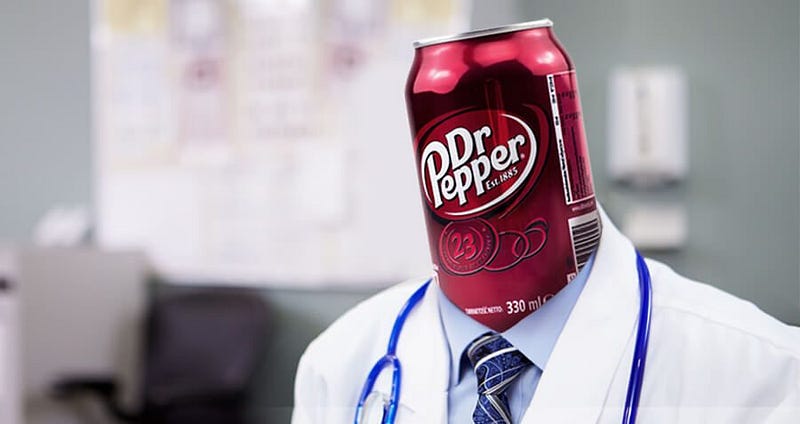
A year into the COVID pandemic, and about 2.5 years after I started my job working in the ER/Urgent Care setting, I decided to go see my primary care doctor.
The labs showed I had high cholesterol and was flirting with prediabetes. I also have had hypertension for a long time. I got a message from my doctor after I saw the results:
“Please try to follow a low-fat and low-cholesterol diet and try to lose weight to control both of these”
Actionable advice right? No discussion on diet, changes that can be made, meal planning, etc. But that is not surprising given the state of medicine in this country. Medical students get about 24 hours of nutritional training in school.
I was now a patient and did not find the advice of my doctor helpful.
How many patients have I told the same useless advice? How many patients have actually made a change based on the advice I have given?
I think it is important to explore why physicians often cannot help with prevention of disease that comes with a healthy lifestyle.
Short On Time
Although I trained in primary care, I could already see the issues with the system and decided to stay away from it. 10–15 minutes with a patient, each one with at least 3–6 concerns? Not sustainable. Not to mention I studied public health and want to prevent disease.
How can this be feasible with so little time with each patient? In order to change a lifestyle I need to understand all barriers to health that a patient faces. This is key to what I learned when obtaining my MPH in terms of population level prevention.
But without time to discuss those barriers, how can a change be even suggested? Forget barriers, what about just understanding a disease process?
I cannot tell you how many patients I see that are diabetic yet have never been told what diabetes actually is. The story usually goes like this:
- Labs get done
- Labs show you are newly diabetic
- Here is a medication for your diabetes
- Eat better and stop eating sugar
- Here is a pamphlet on diabetes
- Diabetes worsens as patient never really understands the disease
- Add a new drug
- Hope for the best
Heck, most people do not know that juice and soda do the exact same things to your body in terms of sugar/insulin regulation. A patient recently told me he does not drink sugary beverages but does eat a dozen bagels a week in addition to carbs at every meal. He had no idea that the carbohydrates in bagels would become more sugar than the soda he was avoiding.
With my new role, I have more time with patients. I can now teach patients, my favorite thing to do in my job. But often doctors use Band-Aids to delay death rather than make changes that promote life.
Medications First
Statins, medications that lower cholesterol, are the most commonly prescribed medications in the US. About 40 million adults use them daily. The evidence towards their use is good if you have risk factors for cardiovascular disease: Age above 40, LDL high, HDL low, high blood pressure, diabetes.
While cholesterol can be tied to genetics in many cases, and some people who eat nothing but meat can have normal cholesterol, the majority of cholesterol elevation comes from diet and lifestyle. And while statin medications can augment cholesterol to prevent future coronary artery disease (CAD), they must be accompanied by lifestyle change.
One study showed that statin use was associated with a 23% higher risk of progression to diabetes after 2.5 years compared to no use. Another showed that statin use increases insulin resistance, which increases risk of developing diabetes.
Just to reiterate, statins have shown to reduce risk of coronary events based on risk factors, but the point I wanted to make above is that all medications have consequences.
Are we seeing higher rates of obesity in those using statins because of the drug side effects or because patients saying “great I am on a statin, so I do not have to make a change in my lifestyle/diet?”
The next hot trend in medications are the weight loss drugs like Ozempic and Wegovy. These medications were initially used for diabetes treatment and the side effect was weight loss. Now they are being used as weight loss drugs. If you start these medications, you likely need to stay on them forever to sustain the benefits. Now research is showing they also work for addiction in general and can help stop addictive behavior like drinking, smoking, and even shopping.
A drug that causes people to lose weight that needs to be taken forever while making big pharma billions? Move over statins, there is a new drug in town.
Healthy Eating? Does Taco Bell count?
We use drugs in America to try to counteract the lives we live. But we can just live healthier lives right? Yes but it is hard for many reasons.
Speaking from personal experience, when your mind is constantly running, you feel like you are hyperventilating every 30 minutes, and you want to run away from work, it becomes exceedingly difficult to do right by your body.
At my last job there were no designated breaks which is normal for doctors. Nurses get an hour every shift, and you best not disturb their lunch! I often found myself eating over the microwave in the water room of our ER where I had just overheated my Lean Cuisine. No time to make food after falling asleep at 4 am and going back to work the next day. Or even worse, the late night stops at Taco Bell when I felt like crying at the end of a shift. Taco Bell makes everything better, after all.
When time allowed, I would meal prep for work which helped me eat better. Now that I have weekends off, my wife and I meal prep every Sunday for the week. There is no other way to stay consistently healthy. But having time allows me to do this. Without time, without access to healthy foods, without knowledge of cooking, without a normal mental state, without family support for a healthy lifestyle, there is no way a person can become healthier.
So telling a patient “eat better” without additional advice is more useless than a statin fighting a cheeseburger.
Changes Made
I left my last job because I felt my mental health deteriorating. As that happened, my physical health went with it. The lab work I had done before leaving, the ones I discussed at the beginning of this article, were a numerical representation of my poor health.
I needed to make a change in my lifestyle and my diet.
Time allowed me to do that. Working 8–4 weekdays, I now have time to cook. I also have a normal sleep schedule. My circadian rhythm seems to have reset. I stopped taking melatonin to sleep.
Because of the success I have had, and the time I now get to spend with patients (30–45 minutes instead of 10–15 minutes), I can help make real changes for their lives. I have time to discuss meal planning, foods to choose, how to read a label, what ingredients to avoid, and how to exercise. This is clearly not the norm for most physicians in the US.
Patient Success
I recently had a patient see me for an ear infection. I noticed she was diabetic so asked her about her glucose control. She told me she was not sure, has not seen her doctor in a long time, and does not take her diabetes medication (metformin) regularly. I explained to her that I wanted to check her glucose with a finger stick because diabetes can affect healing and infection. Her glucose was very high. I explained the mechanism of the drug she was supposed to take, how diabetes works, reversing diabetes, and the importance of weight loss combined with using the medication. I also discussed easy diet changes that can be made to start the process of living a healthier life. After our discussion she told me “nobody has ever explained it to me this way before. Thank you.” She told me she would start her medication again and schedule an appointment with her physician.
I know I prevented her from ending up in the hospital if she heeds my advice. Otherwise diabetic ketoacidosis was in her future.
I would have NEVER had that time to do this at my old job. I would have ended up seeing that patient some months down the road in worse condition in my ER. I was so happy to have helped. That is what I went into medicine for, after all.
What Can We All Do?
As much as I want to, I cannot change the nature of medicine in this country. Patients are facing long wait times to see their primary care doctors as more and more leave the profession or choose not to enter it. The incentives are not there. Preventing diabetes doesn’t make insurers any more money. It does save hospitals and ERs money, but most profit comes from medical procedures.
Medicine and health do not jive well with capitalism. Overworked health professionals cannot help overworked patients. When the systems that exist give no incentive to prevent disease, why wouldn’t a doctor be expected to see 35 patients in 8 hours (my personal record)?
I tell all my patients the importance of understanding their own health. This is mostly grounded in what we put into our bodies, how we sleep and how we stress day to day. Even small changes can have big effects when they are extended into an entire lifetime.
The changes I have made for myself to be healthier will stay with me forever given how much better I feel. I want that for my patients. The healthcare system in America has to want it as well.
I am a DO physician trained in family medicine in Baltimore. I also have an MPH and am very interested in population health and especially in disease prevention. If you enjoyed reading and are not a member of Medium, consider a Medium membership to support me and gain full access to all Medium articles.


