
Do Money Apps Really Pay Out
Have you ever played?
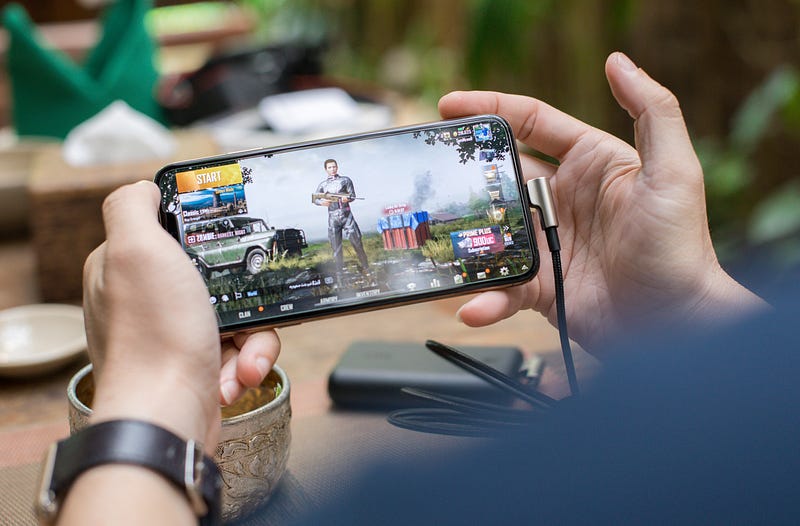
One of my neighbors, let’s call her Marion, dropped by for coffee this morning. There was no trace of Marion’s usually sunny disposition. Instead, she walked in with a huff and a puff.
“Something wrong?” I asked her.
“I got fooled,” she stated as she sat down by the kitchen table. “Again.”
“What happened?” I asked her.
“I saw this app on my phone,” Marion started. “Promising free money.”
“I thought you were never going to fall for those free money apps again,” I said.
“Yeah well, this one was different,” Marion said. “There was this Asian man stepping out of a limousine and he was approached by a horde of reporters with microphones. They asked him if his game really paid out and he said yes. His game pays players real money. Another reporter asked if players had to watch endless commercials and he said no, there were no commercials. So I downloaded the game.”
As Marion explained, the start of the game looked really promising. Her account received $100 just to get started. Then she started playing the game, matching handbag, birds, and cats. At the end of every segment, she received the money in her PayPal account and money in her Amazon account.
“But the man lied,” Marion said. To get the money in my PayPal account I had to watch a 30-second video and to get the money in my Amazon account I had to watch another 30-second video. Then I needed keys to open boxes, which again required watching videos. I spend more time watching videos than actually playing the game.”
“And what about the money?” I asked her.
Marion huffed and puffed. “I needed $1,000 to cash out,” she said. “And I was never going to get there. At first, the rewards were okay. I got $100, $50, and another $50. But then the payments got less, only $10 or $5. By the time I had reached $500 I only received $1 or even 25 cents. And that’s not all. Players have to accumulate that $1,000 within a limited period of time. So even if I reached $999 and time ran out, I would lose everything. If that isn’t bad enough, in order to cash out, players have to watch 200 videos. One can’t skip the videos, if you do, you can’t get the money.”
I felt sorry for Marion. She is an elderly woman on a fixed income and constantly looking for ways to make ends meet. About two months ago she had downloaded two money apps and never won anything either. She had played the game, watched the required 200 videos, and received the notice that her money would be deposited in her PayPal account. The money never arrived.
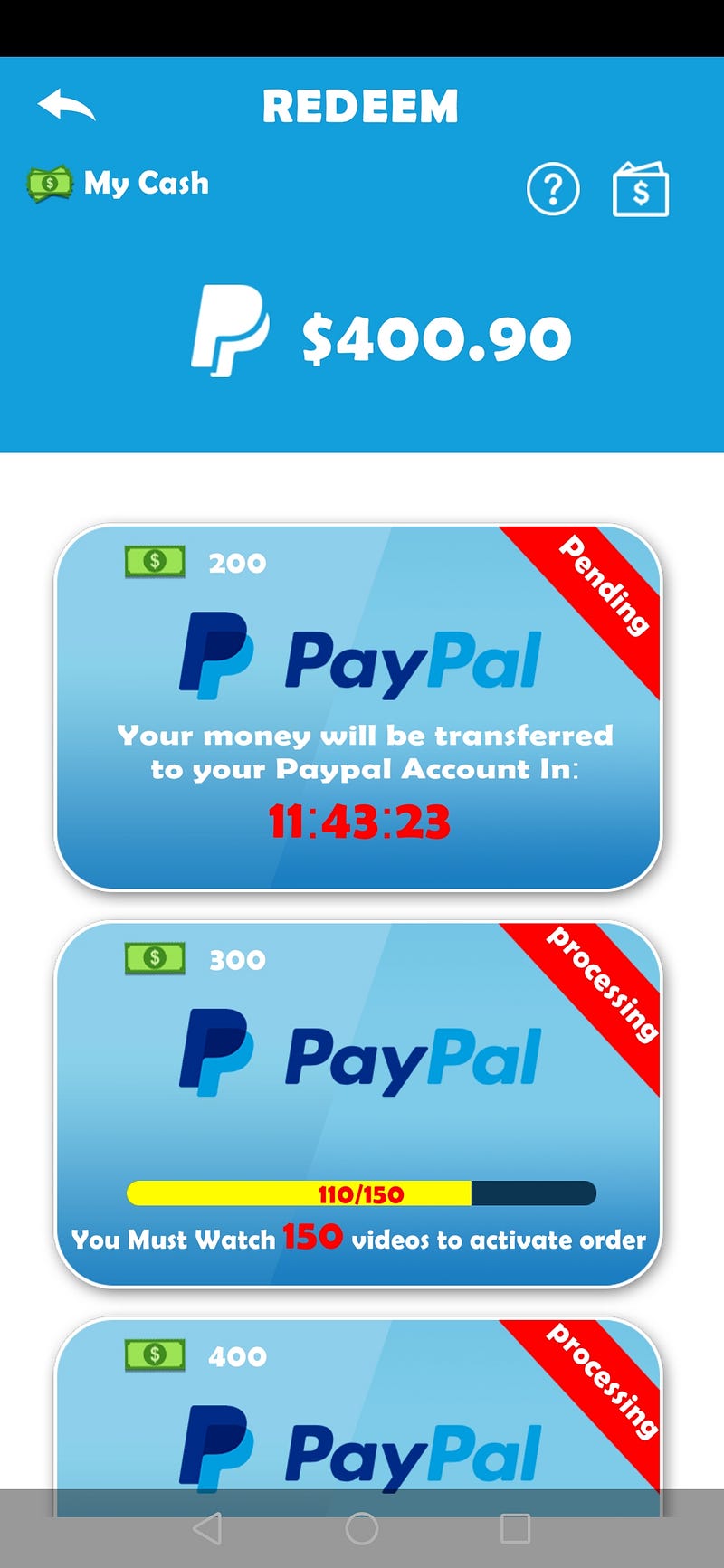
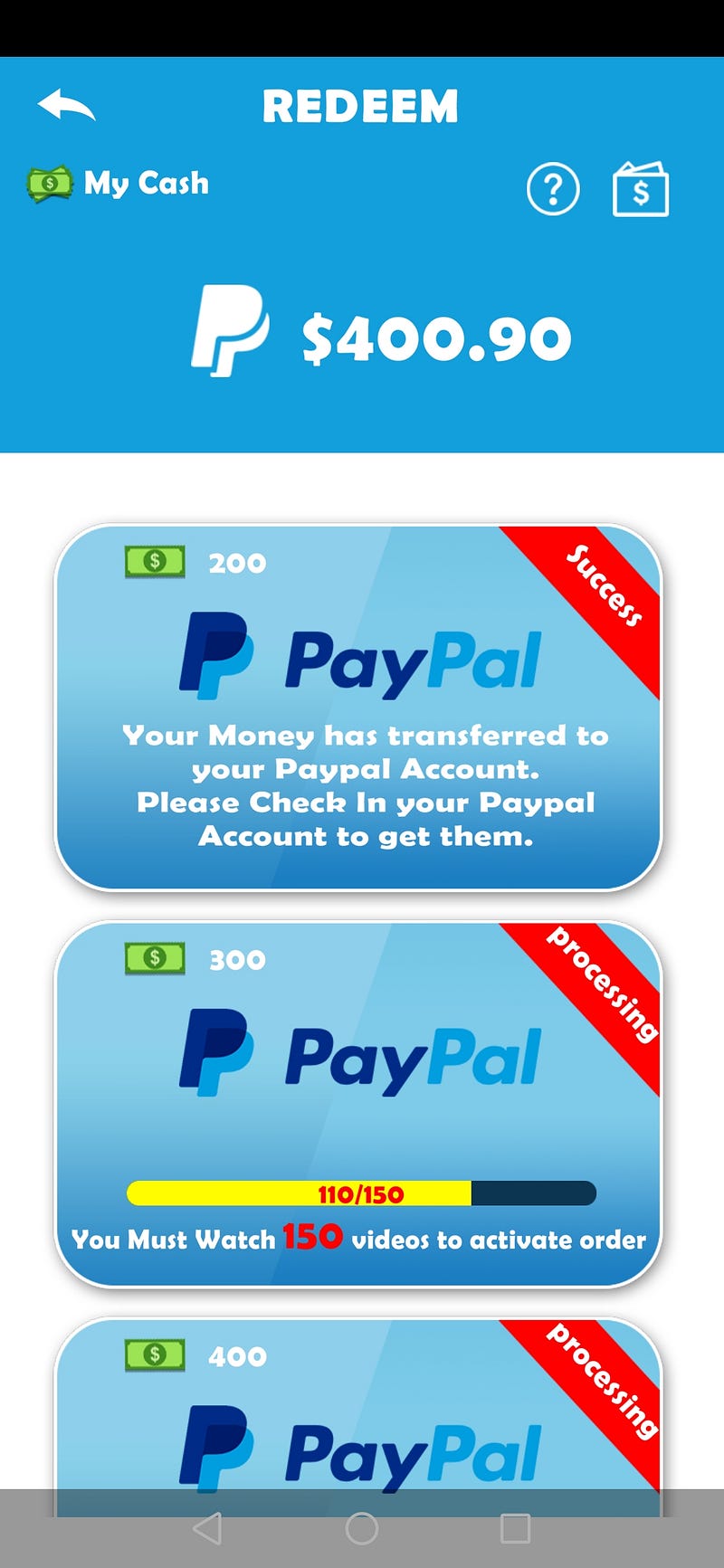
I wondered if there were other victims of these so-called money apps.
I posted a message on Facebook and within half an hour I had fifteen replies. From there on the messages kept coming and coming. While some players merely said that they fell for this scam, others were furious. Some even threatened legal action and suggested a class actions suit.
One player had contacted PlayProtect but was told in no uncertain terms that if he was naive enough to believe this nonsense, he got what he deserved. “None of the games pay out,” he was told. “None of them.”
Then why create these apps, one member wondered. Money for the developer, of course, another said. Players have to provide their email addresses to the app. The developer collects these emails and sells them to organizations. He gets paid for those emails. He can sell these emails again, and again, and again, collecting thousands of dollars.
“That makes sense,” Marion said. “I’ve never received so much spam in my inbox. Every day more and more of those messages.”
Other members said much the same. They suddenly received email messages from casinos, dating services, and male enhancement drugs. “Sixty messages a day for these male enhancement drugs,” one member said. “And I’m a woman.”
When another neighbor, let’s call him Harold, dropped by to see if he could borrow two eggs, he spotted Marion and asked how she was. Marion told him the short version of how she got scammed by a phone app.
“They’re not all scams,” Harold said. “I have this one app where I have to play various games to accumulate credits and when I have 6,000 credits I earn $25 toward my Amazon account. And they really do pay.”
According to Harold, it takes a long time to get those 6,000 credits though. In the beginning, it’s rather easy, but as the games progress, the credits get less and less. “It’s fun though,” Harold said. “I get to pick the games I want to play and the commercials can be interrupted after five seconds.”
While I don’t doubt Harold, I’ll stick to my philosophy … one gets money in three different ways, you earn it, you inherit it, or you win it. All the rest is funny business.


