
Different Types of Rice and Their Uses
How to use the most popular rice you can find at the local store.
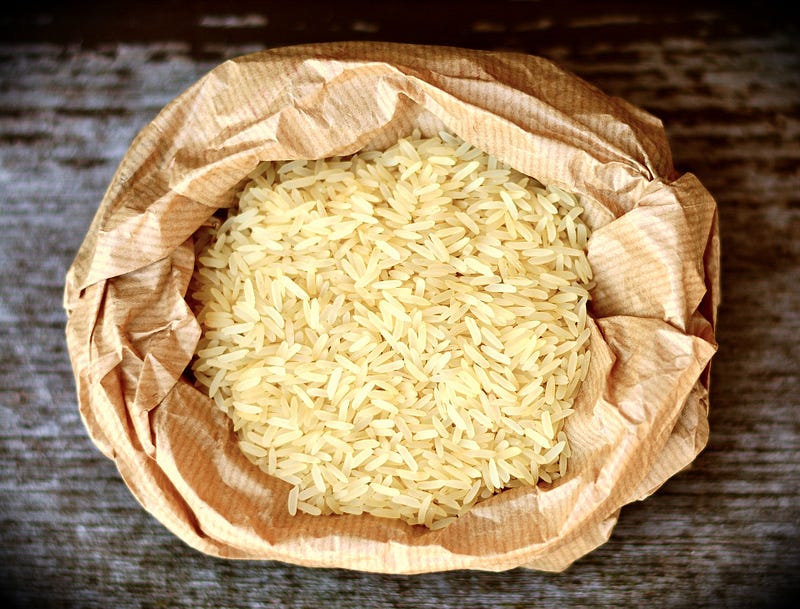
A few days ago, I read a very helpful article by Lucy The Eggcademic (she/her) on how to make fried rice. I love fried rice, but I’ve noticed that the rice I get from the Chinese restaurant is different from the one I use at home, so I asked Lucy which one she uses. After a couple of messages, I was more confused than before since new types of rice popped-up, creating thousands of possible fried rice variations in my head.
How many types of rice that I still don’t know are out there? Well, I challenge you to try them all since there are over 40,000 varieties of rice! Crazy right?
Types of Rice
Rice can be classified according to different characteristics such as length, shape, texture, color, and flavor.
Length and shape
Rice can be divided into long-grain, medium-grain, and short-grain. Long-grain rice has a long and cylindrical shape; it’s three to four times as long as wide and, when cooked, remain separate due to starch’s high presence. Medium-grain rice it’s a little shorter and wider than the long one. Once cooked, it’s soft and moist, and the grains easily stick together. Last, the short-grain rice is twice as long as it’s wide and very gluey.
Color
We are all probably used to see white rice, which is also called milled rice, and looks cleaner since it has had its husk, bran, and germ removed. With the outer layer of bran, the rice would look brown. Red, black, purple, and brown rice are still with husk, bran, germ, which means they have higher nutritional values, vitamins, and minerals.
Flavour and texture
Some rice varieties have a very peculiar aroma, such as the Basmati rice, commonly used in Indian cuisine, or the Thailandese long-grain Jasmine rice. The after the cooking texture of the rice also changes according to the type; glutinous rice, also called sticky rice, is sweet and soft, while red or brown rice keeps its defined shape and consistency better.
Hungry? Try the Vegetable Fried Brown Rice by Anju Sebastian
Popular Types of Rice
Arborio & Carnaroli
Arborio and Carnaroli are two Italian varieties of rice perfect for risotto. Carnaroli is medium-grain rice and has a higher starch content, firmer texture, and a little longer shape than Arborio. Arborio is short-grain rice also rich in amylopectin starch and has a typical white dot in the grain’s center.
The risotto will appear creamy, chewy, firm at the same time with a lovely texture.
Basmati
Basmati is probably the most popular type of long-grain rice. It’s original from India but commonly used in Middle Eastern and Central Asian cuisine too. Its has a light, nutty flavor, and once cooked, its grains remain dry, fluffy, and well separate. It’s ideal for pilaf, biryani, and kheer.
Brown
Brown rice is also known as whole-grain rice since it still has the outer hull, germ, and bran. Once cooked, its texture is chewy, dense, and has a nutty flavor. Since it still has the bran layers, which gives it the brown color, it also has higher nutritional values than white rice. It’s rich in fiber, magnesium, iron, and B vitamins. Brown rice can be used as a healthier substitute for standard white rice.
Jasmine
Jasmine rice is original in Thailand; it a bit shorter than Basmati but quite similar and easily interchangeable. Its name is related to the jasmine aroma it develops while cooking. It has a chewy texture that makes it perfect as a side for many spicy-rich or stir-fry dishes and typical Thai meat, fish, or curry meals.
Red Rice
Red rice owes its color to the presence of anthocyanin. It is available in both long-grain and medium-grain varieties. Red rice is also known as Himalayan or Bhutanese rice, it has a nutty flavor, and the texture is slightly sticky. As the brown rice, it is rich in antioxidants, fiber, magnesium, and vitamins. It is commonly used in Thai, Japanese, and Philippine recipes such as kheer, salads, idli, appam, and dosa.
Japanese Short-Grain Rice
Japanese short-grain rice is a variety of Japonica rice. The grains are short and round. It is defined by a peculiar stickiness and texture. It can be used to make sushi (add some sushi vinegar, sugar, salt, and dashi kombu), rice balls, or simply served plain as a side for Japanese dishes.
Glutinous Rice
Also known as sweet rice (mochigome) is another rice variety typical of Japan, Northeastern India, Bangladesh, and Indonesia. It can be short, medium, or long grain. Its grains might be round and matt. Despite the name, the glutinous rice does not contain gluten. It has a low content of amylose that makes it sticky, chewy, and sweet once cooked. The sweet rice is perfect for desserts, pudding, and the famous Japanese sweet mochi.
Chinese Black Rice
The Chinese black rice is also known as forbidden rice, a variety only for the aristocrats since it has a very low yield, around 10%. It is whole-medium-grain rice original from northern China. Once cooked, the grains are firm and slightly sticky; they also turn purple due to anthocyanin’s high presence. It is also rich in antioxidants, vitamin E, and iron. The soft texture combined with the nutty flavor makes it perfect for porridge, pudding, bread, and the classic Chinese black rice cake.
Rice is a versatile food that can be eaten alone or combined with vegetables, meat, or fish. It can be used to make bread, pasta, or sweet desserts. You can make rice the day before and have it cold mixed with a fresh salad during summer or stir-fried the day after.
For busy and always in a hurry moms, the Jezebel Feast rice recipe can be a real time-saving idea!


