
Difference between RabbitMQ, Apache Kafka, and ActiveMQ
Hello folks, if you are preparing for Java Developer interviews the along with Spring Boot, and Microservices, you should also prepare about things like messaging brokers, kafka, rabbitmq, and activemq like what is difference between Kafka, RabbitMQ, and ActiveMQ?, which is also one of the popular questions on Java interviews.
In my last article, I shared about difference between JWT, OAuth, and SAML and REST vs GraphQL vs gRPC, and in this article, I am going to share my thoughts on Kafka, RabbitMQ, and ActiveMQ, three popular message brokers used for asynchronous communication.
Messaging systems play a crucial role in modern distributed architectures, where applications and services communicate with each other over a network.
The messaging systems allow decoupling of the sender and receiver, thereby enabling asynchronous communication. RabbitMQ, Apache Kafka, and ActiveMQ are three popular messaging systems used in the industry.
In this article, we will discuss the differences between RabbitMQ, Apache Kafka, and ActiveMQ.
By the way, if you are preparing for Java developer interviews you can also checkout my earlier posts about 21 Software Design Pattern questions, 10 Microservice Scenario based questions, 20 SQL queries from Interviews, 50 Microservices questions, 60 Tree Data Structure Questions, 15 System Design Questions, and 35 Core Java Questions and 21 Lambda and Stream questions , they contain a lot of common questions which can help you prepare better for your interview.
If you are preparing for System design interviews and want to learn System Design in depth then you can also checkout sites like ByteByteGo, Design Guru, Exponent, Educative and Udemy which have many great System design courses and if you need free system design courses you can also see the below article.
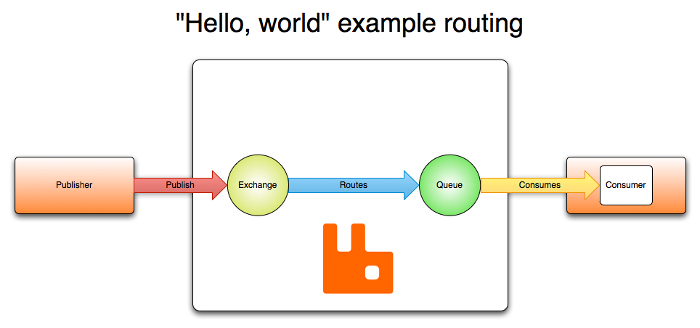
What is RabbitMQ and where does it used?
RabbitMQ is an open-source message broker that implements the Advanced Message Queuing Protocol (AMQP) standard. It is written in Erlang and has a pluggable architecture that allows for easy extensibility.
RabbitMQ supports multiple messaging patterns such as publish/subscribe, request/reply, and point-to-point, and it has a robust set of features such as message acknowledgment, routing, and queuing.
What is Apache Kafka and where does it used?
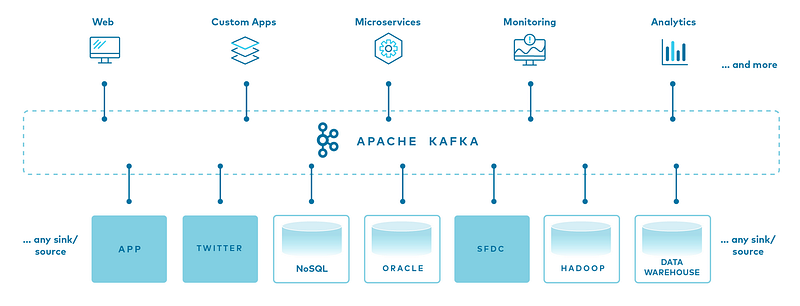
Apache Kafka is an open-source distributed event streaming platform that was originally developed by LinkedIn. Kafka is written in Scala and Java and is designed to handle large-scale streaming data flows.
Kafka uses a publish/subscribe messaging model and is optimized for high throughput, low latency, and fault-tolerance.
Kafka has a durable messaging model, which means that messages are stored on disk and can be replayed multiple times.
What is ActiveMQ? where does it used?
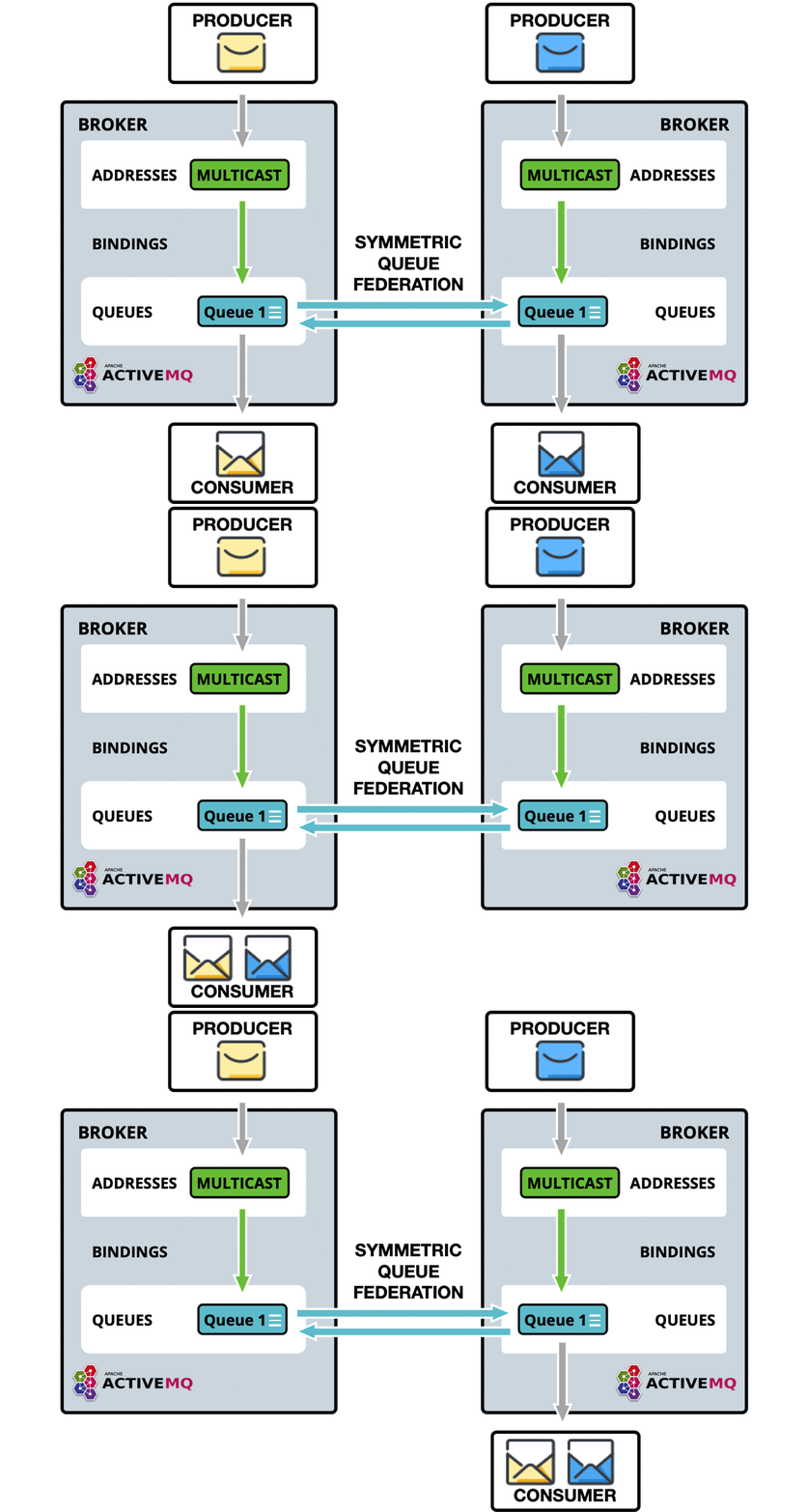
Apache ActiveMQ is an open-source message broker that implements the Java Message Service (JMS) API. ActiveMQ is written in Java and has a pluggable architecture that allows for easy extensibility.
ActiveMQ supports multiple messaging patterns such as point-to-point, publish/subscribe, and request/reply, and it has a robust set of features such as message acknowledgment, routing, and queuing.
Differences between RabbitMQ, Apache Kafka, and ActiveMQ?
Now that you have fair idea of what is RabbitMQ, ActiveMQ, and Apache Kafka, its time to find out the difference between them from messaging model to performance.Here are key differences between Apache Kafka, RabbitMQ and ActiveMQ:
1. Messaging Model
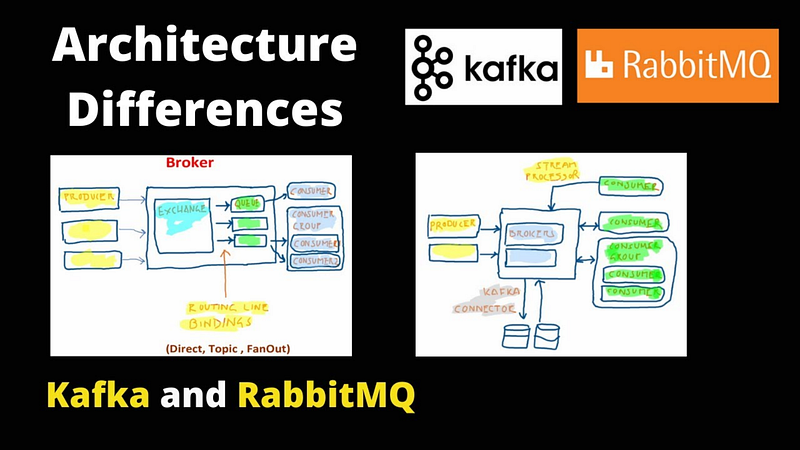
RabbitMQ and ActiveMQ both support the JMS API, which means that they follow a traditional messaging model where messages are sent to a queue or a topic and consumed by one or more consumers.
On the other hand, Kafka uses a publish/subscribe messaging model, where messages are published to a topic and consumed by one or more subscribers.
The traditional messaging model used by RabbitMQ and ActiveMQ is well-suited for applications that require strict ordering and reliable delivery of messages.
On the other hand, the publish/subscribe messaging model used by Kafka is better suited for streaming data scenarios, where real-time processing of data is required.
Here is a nice diagram which highlight the architecture difference between Kafka and RabbitMQ
2. Scalability
Scalability is an essential requirement for messaging systems, especially when dealing with large volumes of data. RabbitMQ and ActiveMQ are both designed to be scalable, but they have different approaches to achieving scalability.
RabbitMQ uses a clustering approach to achieve scalability, where multiple RabbitMQ brokers are connected to form a cluster. Messages are distributed across the cluster, and consumers can connect to any broker in the cluster to consume messages. RabbitMQ also supports federation, which allows multiple RabbitMQ clusters to be connected together.
ActiveMQ uses a network of brokers approach to achieve scalability, where multiple ActiveMQ brokers are connected to form a network.
Messages are distributed across the network, and consumers can connect to any broker in the network to consume messages. ActiveMQ also supports master/slave replication, which provides high availability for the message broker.
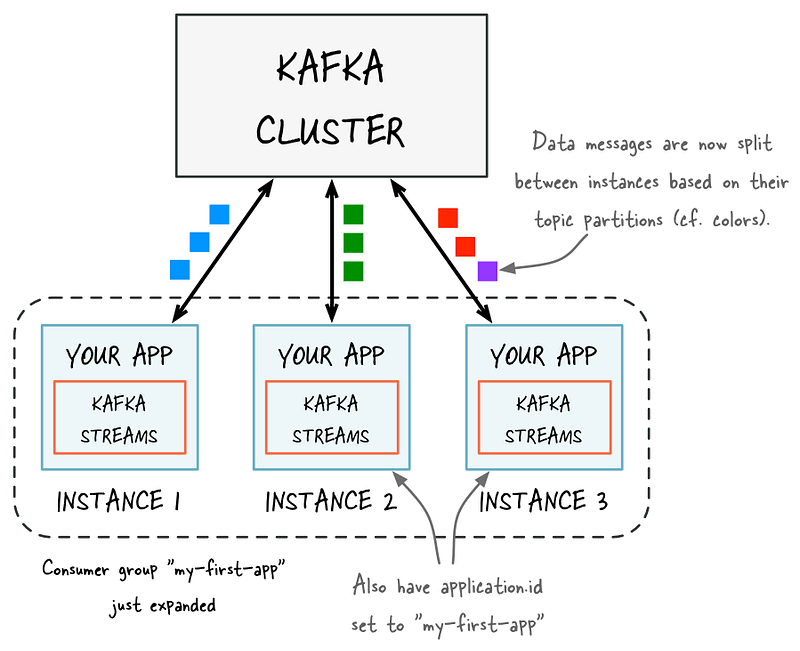
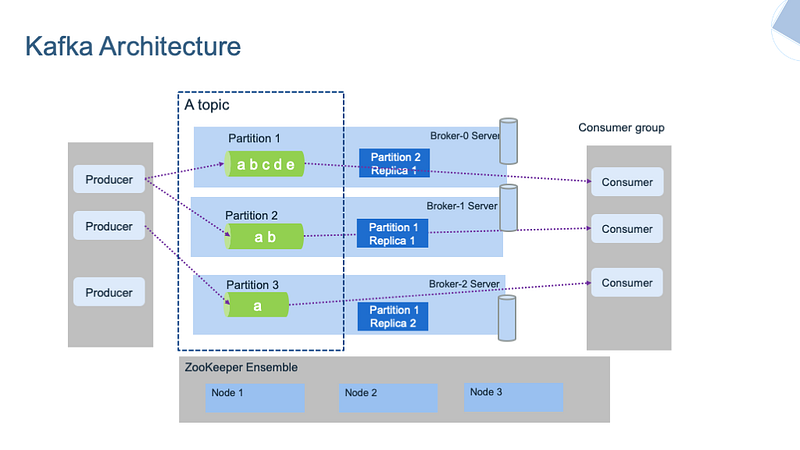
Kafka, on the other hand, is designed to be highly scalable out of the box. Kafka uses a partitioning approach to achieve scalability, where messages are partitioned across multiple Kafka brokers.
Each partition is replicated across multiple brokers for fault tolerance. This approach allows Kafka to handle large volumes of data while maintaining low latency and high throughput.
3. Performance
Performance is another critical factor to consider when choosing a messaging system. RabbitMQ, Kafka, and ActiveMQ all have different performance characteristics.
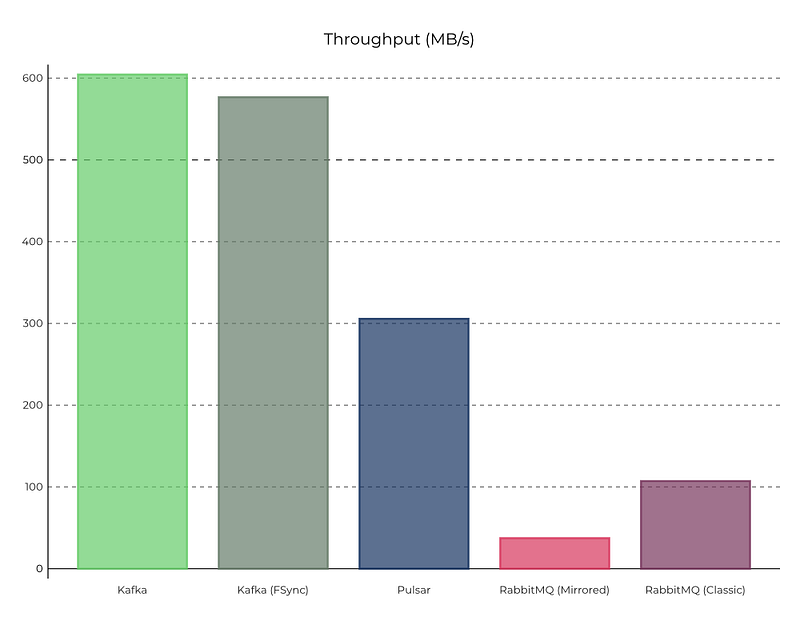
RabbitMQ is designed to be a reliable messaging system, which means that it prioritizes message delivery over performance. RabbitMQ can handle moderate message rates and is suitable for applications that require strict ordering and reliable delivery of messages.
Kafka, on the other hand, is designed for high-performance and can handle large volumes of data with low latency. Kafka achieves this performance by using a distributed architecture and optimizing for sequential I/O.
ActiveMQ is also designed for high-performance and can handle high message rates. ActiveMQ achieves this performance by using an asynchronous architecture and optimizing for message batching.
Here is a chart from confluent which compares performance of Apache Kafka, Pulsar and Rabbit MQ
4. Data Persistence
Data persistence is an important feature of messaging systems, as it allows messages to be stored and retrieved even if the messaging system goes down. RabbitMQ, Kafka, and ActiveMQ all have different approaches to data persistence.
RabbitMQ stores messages on disk by default, which allows messages to be persisted even if the broker goes down. RabbitMQ also supports different storage backends, including in-memory storage, which provides better performance at the cost of data durability.
Kafka stores messages on disk by default and uses a log-based architecture to achieve high durability and reliability. Kafka retains messages for a configurable period, which allows messages to be replayed if necessary.
ActiveMQ also stores messages on disk by default and supports different storage backends, including JDBC and file-based storage. ActiveMQ can store messages in a database, which provides better data durability at the cost of performance.
Here is a nice diagram from IBM which shows a Kafka architecture:
5. Integration with Other Systems
Integration with other systems is an important factor to consider when choosing a messaging system. RabbitMQ, Kafka, and ActiveMQ all have different integration capabilities.
RabbitMQ integrates well with different programming languages, including Java, Python, Ruby, and .NET. RabbitMQ also has plugins that allow it to integrate with different systems, including databases, web servers, and message brokers.
Kafka integrates well with different data processing systems, including Apache Spark, Apache Storm, and Apache Flink. Kafka also has a connector framework that allows it to integrate with different databases and data sources.
ActiveMQ integrates well with different JMS clients, including Java, .NET, and C++. ActiveMQ also has plugins that allow it to integrate with different systems, including Apache Camel and Apache CXF.
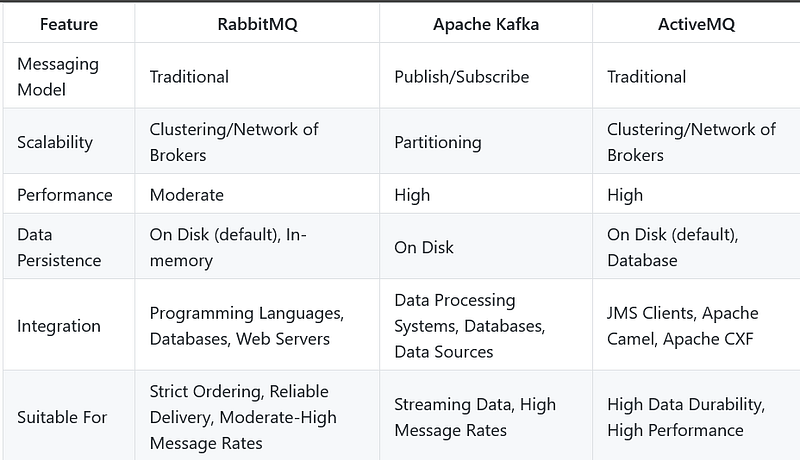
Here is also a nice table to highlight the difference between Kafka, Rabbit MQ, and ActiveMQ
System Design Interview Resources
If you are preparing for System design interviews and want to learn System Design in depth then you can also checkout sites like ByteByteGo, Design Guru, Exponent, Educative and Udemy which have many great System design courses and if you need free system design courses you can also see the below article.
Conclusion
That’s all about the difference between Apache Kafka, RabbitMQ, and ActiveMQ. While RabbitMQ, Apache Kafka, and ActiveMQ are three popular messaging systems that have different features and capabilities.
RabbitMQ and ActiveMQ follow a traditional messaging model, while Kafka uses a publish/subscribe messaging model.
RabbitMQ and ActiveMQ use clustering and network of brokers approaches to achieve scalability, while Kafka uses partitioning. RabbitMQ prioritizes message delivery over performance, while Kafka and ActiveMQ prioritize performance. RabbitMQ, Kafka, and ActiveMQ all have different data persistence and integration capabilities.
When choosing a messaging system, it is essential to consider the specific requirements of the application or system. RabbitMQ and ActiveMQ are suitable for applications that require strict ordering and reliable delivery of messages, while Kafka is suitable for streaming data scenarios.
RabbitMQ and ActiveMQ are suitable for applications that require moderate to high message rates, while Kafka is suitable for applications that require high message rates.
Similarly, RabbitMQ and ActiveMQ are suitable for applications that require high data durability, while Kafka is suitable for applications that require high performance.
Other Java Interview Questions you may like:


