
Difference Between Encryption vs Encoding vs Hashing vs Obfuscation Explained
Meaning, Difference, Types, Examples & a lot more!

There are various types of security jargons that are used to describe different aspects of cybersecurity. A few common and most widely used ones include encryption, encoding, hashing, and obfuscation. Many people often confuse their individual meanings. That's why, today, we’re gonna solve this. Starting with,
TLDR; Don’t have time to read? Here’s a video to help you understand the difference between encryption vs encoding vs hashing vs obfuscation in detail.
What is Encryption Explained
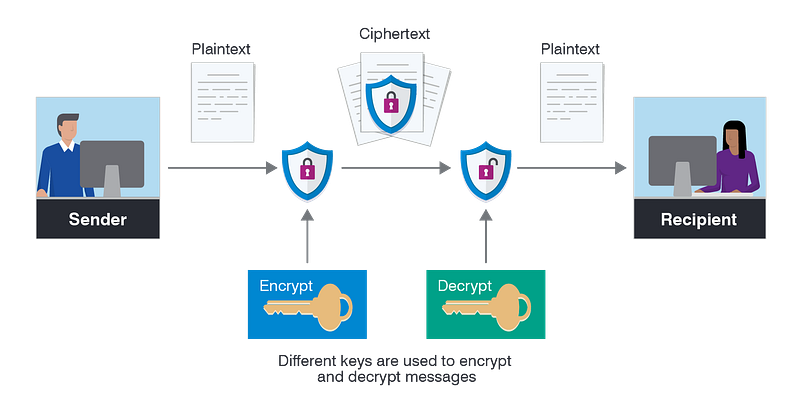
Encryption is the process of converting plain text into a coded form that can only be decrypted (or decoded) by someone with the appropriate key. Encryption is used to protect data from unauthorized access or tampering. It is a critical component of cybersecurity, as it helps to ensure the confidentiality, integrity, and availability of sensitive data.
There are various types of encryption algorithms that are used to encrypt and decrypt data. These algorithms use complex mathematical functions to transform the plain text into a coded form, and a key is used to reverse the process and decrypt the data. The key is a secret value that is known only to the sender and the intended recipient of the data. Without the key, it is nearly impossible to decrypt the data.
Encryption is commonly used to protect data that is transmitted over the internet, such as emails, online transactions, and other types of sensitive information. It is also used to protect data that is stored on devices or servers, such as laptops, smartphones, and cloud storage systems.
Types of Encryption
There are two main types of encryption: symmetric encryption and asymmetric encryption.
Symmetric encryption uses the same key to encrypt and decrypt the data. This makes it fast and efficient, but it also means that the key must be shared between the sender and the recipient, which can be a security risk.
Asymmetric encryption uses two different keys: a public key and a private key. The public key is used to encrypt the data, and the private key is used to decrypt it. This makes it more secure, as the private key does not need to be shared with anyone.
Overall, encryption is an essential tool for protecting the confidentiality and integrity of data. It is used to secure a wide range of sensitive information, from financial transactions and personal data to corporate secrets and government communications.
What is Encoding Explained
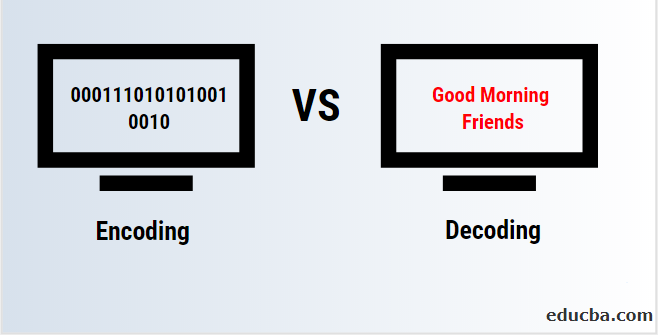
Encoding is the process of converting data from one format into another, typically for the purpose of efficient transmission or storage. Encoding is used in a variety of contexts, including computer science, telecommunications, and media. Let’s learn about each of them.
In computer science, encoding is often used to convert data into a form that can be transmitted over a network or stored on a device. For example, text data may be encoded as a series of binary digits (bits) in order to be transmitted over a network or stored on a computer.
In telecommunications, encoding is used to compress and transmit data over a communication channel, such as a telephone line or satellite link. Encoding techniques are used to reduce the amount of data that needs to be transmitted, which can improve the efficiency and speed of communication.
In media, encoding is used to convert audio and video data into a form that can be played back on different devices. For example, a video file may be encoded in a specific format (such as MP4 or AVI) in order to be played back on a computer or mobile device.
In conclusion, we can say that encoding is an important process that enables the efficient transmission and storage of data in a variety of contexts. It is used to convert data into a form that is more suitable for a specific purpose, such as transmission over a network or playback on a device.
What is Hashing Explained
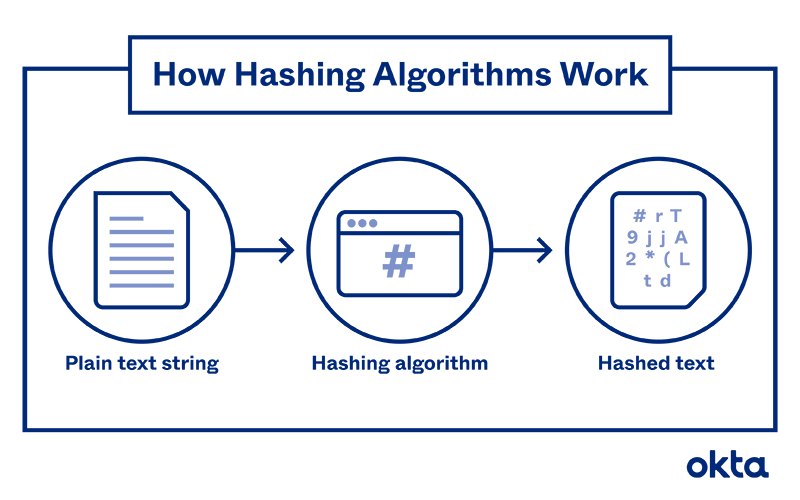
Hashing is the process of converting data into a fixed-size value called a hash or a hash value. Hashes are typically used to verify the integrity of data or to create a unique identifier for a piece of data.
There are various algorithms that are used to create hashes. These algorithms use complex mathematical functions to convert the data into a fixed-size value, typically a string of letters and numbers. The resulting hash is unique to the input data, meaning that even a small change in the input data will result in a completely different hash value.
Hashing is used in a variety of contexts, including data integrity, password storage, and data retrieval.
Applications of Hashing
One common use of hashing is to verify the integrity of data.
For example, a file might be hashed and the resulting hash value stored along with the file. If the file is later modified, the hash value will also change, indicating that the file has been modified. This can be used to ensure that data has not been tampered with or corrupted.
Hashing is also commonly used to store passwords in a secure manner. When a user creates a password, the password is hashed and the resulting hash value is stored in a database. When the user logs in, the password they enter is hashed and compared to the stored hash value. If the values match, the login is successful. This is more secure than storing the password in plain text, as the password is not stored in a way that can be easily accessed or read by an unauthorized user.
Hashing is also used in data retrieval applications, such as databases and search engines. By hashing the data, it can be quickly and easily retrieved using the unique hash value.
In conclusion, we can say that hashing is a powerful tool that is used to verify the integrity of data, secure passwords, and facilitate data retrieval. It is an important component of many computer systems and applications.
What is Obfuscation Explained
Obfuscation is the process of making something difficult to understand or decipher. It is commonly used in the field of cybersecurity to make it difficult for attackers to reverse engineer or understand code or data.
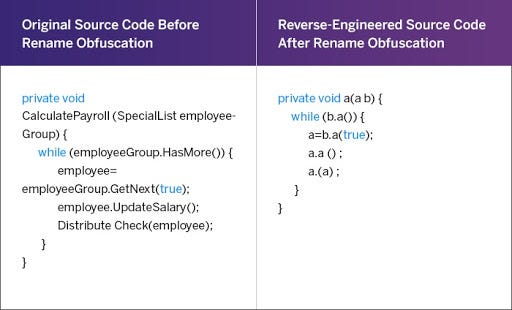
There are various techniques that can be used to obfuscate code or data. These techniques can include:
- Encrypting the code or data: Encrypting the code or data using a strong encryption algorithm can make it difficult for attackers to access or understand the data.
- Renaming variables and functions: Renaming variables and functions to obscure their purpose can make it more difficult for attackers to understand the code.
- Removing comments and documentation: Removing comments and documentation from the code can make it more difficult for attackers to understand the purpose and function of the code.
- Adding noise: Adding noise, such as extra lines of code or random characters, can make it more difficult for attackers to find and understand the critical parts of the code.
- Using code minification: Code minification is the process of reducing the size of the code by removing unnecessary characters and formatting. This can make the code more difficult to read and understand.
Overall, we can say that obfuscation is a common technique used to protect code and data from reverse engineering and other types of cyber attacks. While it can be an effective tool, it is not a replacement for other security measures, such as encryption and access controls.
You may also like,


