
Block vs Object vs File Storage in Cloud Computing
Types of Cloud Storage Explained for Dummies

Block storage, object storage, and file storage are all types of data storage that are used to store and access digital data. Each type of storage has its own unique features and benefits, and is best suited for different use cases. Let’s learn more about them in this article, starting with,
TLDR; Don’t have time to read? Here’s a video to help you understand the difference between object vs block vs file storage in detail.
What is Block Storage in Cloud?
Block storage in the cloud is a type of data storage that stores data as blocks on a disk. It is typically used to store data that needs to be accessed quickly, such as the operating system on a computer or the data on a database. Block storage in the cloud is accessed at the block level, meaning that each block can be read or written to individually. This makes it well-suited for applications that require fast, random access to data.
Block storage in the cloud is often used in conjunction with virtual machines (VMs), which are virtual environments that allow users to run multiple operating systems and applications on a single physical server. VMs rely on block storage to store their operating system and data, as it provides the fast, random access to data that they require.
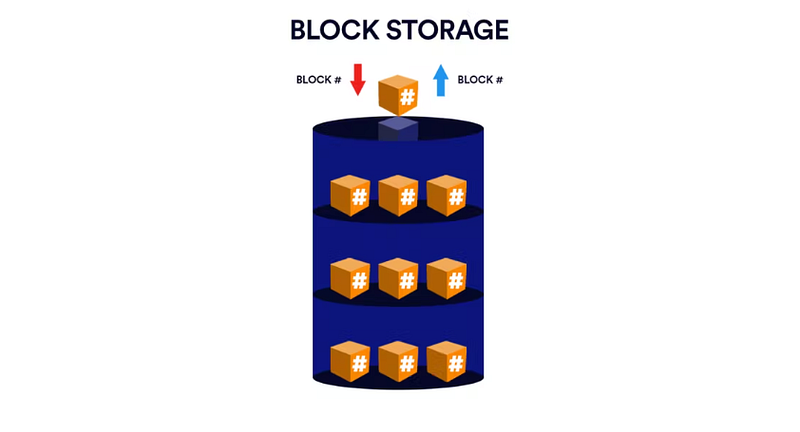
One of the main benefits of block storage in the cloud is its scalability. Users can easily increase or decrease their storage needs as their business grows or changes, without having to invest in additional hardware or infrastructure. This flexibility makes block storage in the cloud particularly appealing to businesses with unpredictable or variable storage needs.
Block storage in the cloud is also highly reliable, as the infrastructure is owned and managed by a third-party cloud storage provider who is responsible for maintaining the servers and ensuring that the data is always available. This frees up organizations to focus on their core business, rather than worrying about the maintenance and upkeep of their storage infrastructure.
Overall, block storage in the cloud is a flexible and reliable option for storing and accessing data that requires fast, random access. It is a good choice for organizations of all sizes, particularly those with unpredictable or variable storage needs.
What is Object Storage in Cloud?
Object storage in the cloud is a type of data storage that stores data as objects, rather than as blocks on a disk. Each object is stored with a unique identifier and metadata, which can include information about the object’s content and its relationships with other objects.
Object storage in the cloud is designed for storing and accessing large amounts of unstructured data, such as videos, images, and large files. It is well-suited for storing data that does not need to be accessed frequently, as it is not designed for fast, random access to data.
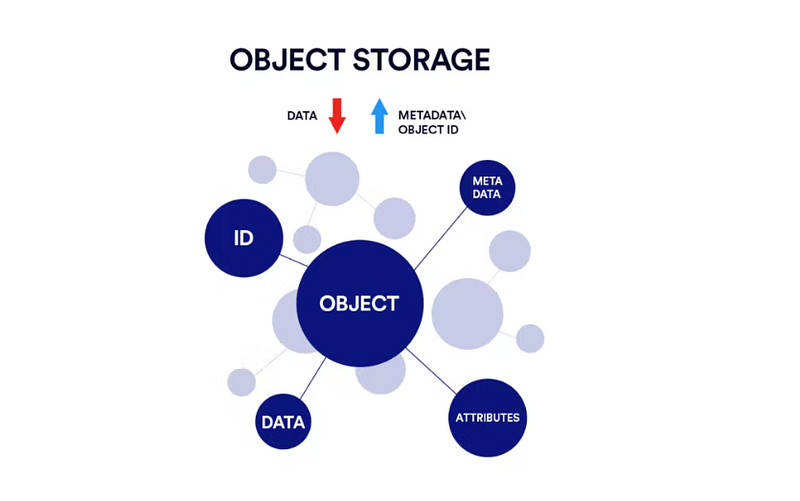
One of the main benefits of object storage in the cloud is its ability to store and manage large amounts of data at a lower cost than traditional storage systems. As object storage is designed for storing unstructured data, it can store data without the need to organize it into a specific structure, such as a file system or a database. This makes it a more efficient and cost-effective option for storing large amounts of data.
Object storage in the cloud is also highly scalable, as it can store an almost unlimited amount of data. This makes it a good option for organizations that generate large amounts of data, such as media companies or research institutions.
Object storage in the cloud is also highly durable, as it stores multiple copies of each object across multiple servers and locations. This ensures that the data is always available, even if a server fails or a location experiences an outage.
Overall, object storage in the cloud is a cost-effective and scalable option for storing and accessing large amounts of unstructured data. It is well-suited for organizations that generate or store large amounts of data, and do not require fast, random access to their data.
What is File Storage in Cloud?
File storage in the cloud is a type of data storage that stores data as a hierarchy of files and directories. It is similar to the file system on a computer and is typically used to store and access data that needs to be organized and accessed in a structured way. File storage in the cloud is well-suited for applications that require fast access to specific files, such as a file-sharing system or a collaboration platform.
One of the main benefits of file storage in the cloud is its accessibility. Users can access their data from any device with an internet connection, making sharing and collaborating on files easy. File storage in the cloud also allows users to easily back up their data, as the files are stored on remote servers rather than on a local device.
File storage in the cloud is also highly scalable, as users can easily increase or decrease their storage needs as their business grows or changes. This flexibility makes it a good option for organizations with unpredictable or variable storage needs.
File storage in the cloud is also generally secure, as leading cloud storage providers have robust security measures in place to protect the data of their users, including data encryption and access controls.
Overall, file storage in the cloud is a flexible and secure option for storing and accessing data that needs to be organized and accessed in a structured way. It is well-suited for applications that require fast access to specific files, and is a good choice for organizations of all sizes.
Conclusion
In conclusion, I’d like to say that block storage, object storage, and file storage are all types of data storage that are used to store and access digital data. Each type of storage has its own unique features and benefits, and is best suited for different use cases across industries.
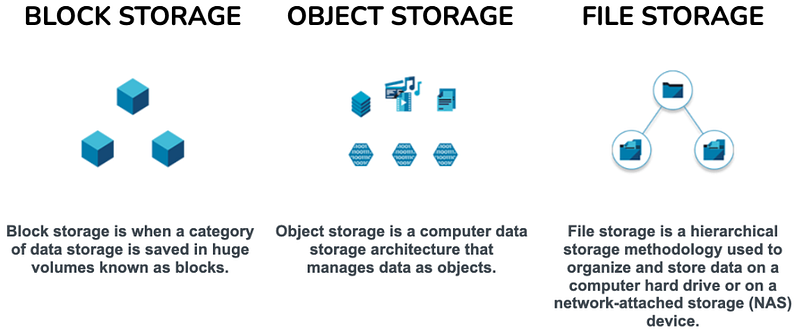
Block storage is well-suited for applications that require fast, random access to data, while object storage is well-suited for storing large amounts of unstructured data. Lastly, file storage is well-suited for applications that require fast access to specific files.
You may also like,


