
DiBiaggio was President, I was a Kid: He Taught Students How to Think
John DiBiaggio (1932–2020), a giant in higher education, transformed U-Conn, Michigan State and Tufts University
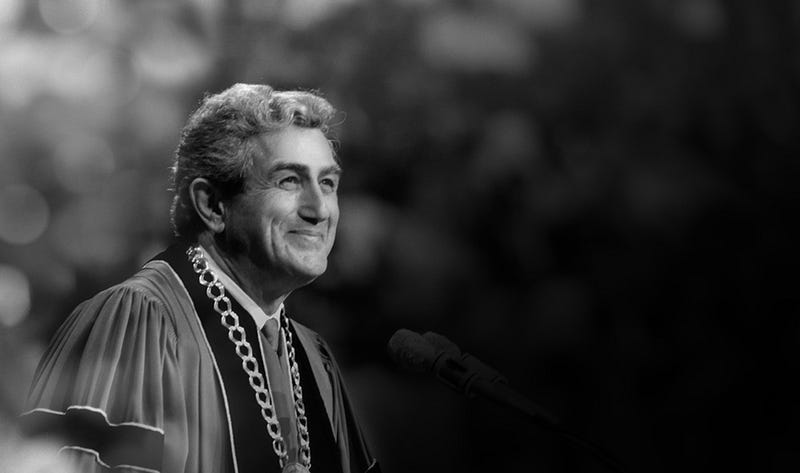
I was 19 going on 20. I dialed long distance to ask if I could follow around the president of a major university.
His office agreed. I couldn’t believe it.
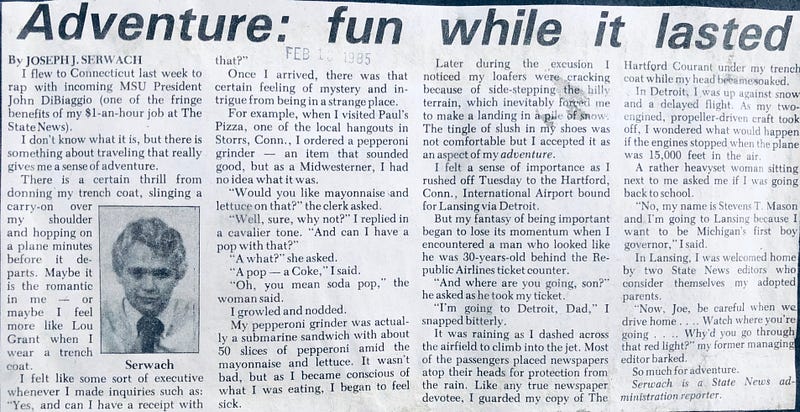
“Where are you going, Son?’’ the young man at the airport ticket counter asked me — as if I was the kid in “Home Alone.”
My suit, tie and trench coat made me feel like a man (I coveted a spot at the grown-up table) but most weren’t buying it. I flew (without friends or family for the first time) from Michigan to Connecticut.
The president, however, always treated me like a man (even when I felt like a boy) and that made all the difference.
John DiBiaggio was a giant — and he let me follow him around
John DiBiaggio (1932–2020) died February 1 (at age 87) but I will quote lessons he taught me until I die. He was 52 and became a life-long mentor and role model.
John DiBiaggio was one of the greatest presidents of three universities:
- The University of Connecticut (1979–1985).
- My undergraduate alma mater of Michigan State University (1985–1992).
- Tufts University (1992–2001).
One of the main reasons I did my graduate work at the University of Michigan’s higher education administration program from 2007–2011? Because John DiBiaggio graduated from the same graduate program, consistently ranked the nation’s best. And because he encouraged me.
One of the main reasons (I think) I managed to get in? DiBiaggio and former University of Michigan President James Duderstadt wrote recommendations. The most successful people I know find mentors, study and learn from them.
“You know, all we can do is teach you how to think,’’ DiBiaggio said.
“We can’t teach you how to be a journalist or a doctor. You learn that yourself.’’
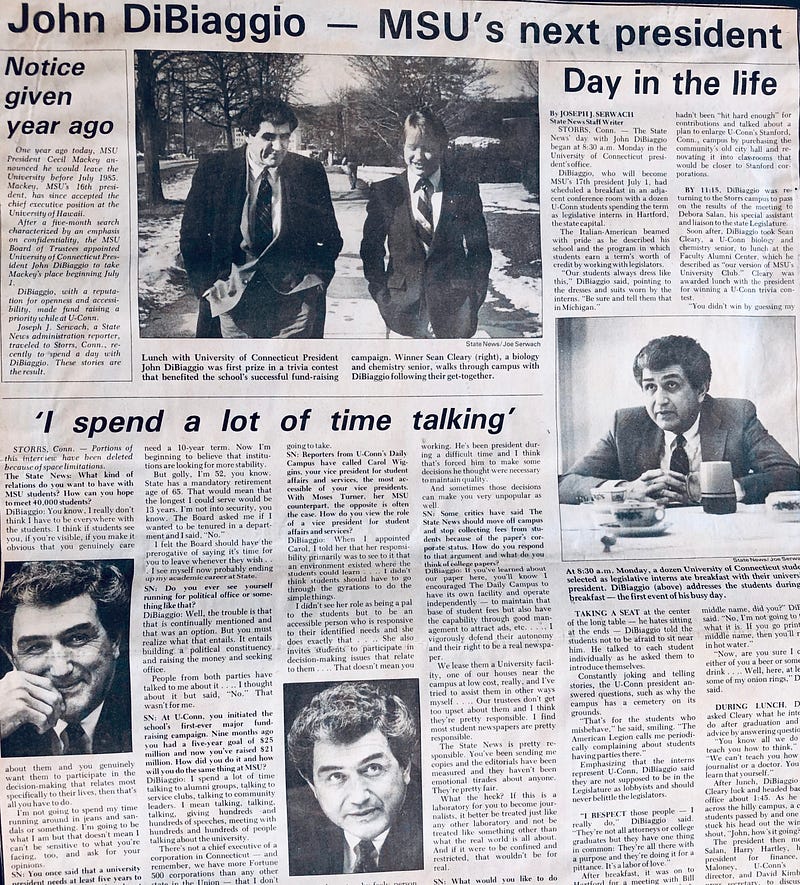
Here I was — a kid, following around a president to all of his day’s meetings (from morning to night) including one with the CEO of Aetna Insurance.
They were mapping out strategy and tactics. I just listened. I got many chances to interview him one-on-one and really got to know him.
Thousands of years ago, young people learned the same way. They would apprentice, following around a master of the trade and simply watch, listen and learn. It’s how disciples became apostles.
One of the most important lessons from my graduate work was that an ideal education is a teacher sitting on a log having a conversation with the student — and both learning from each other.
From dentist to a president of major universities?
DiBiaggio wasn’t an academic egg head: He could talk to anyone at any level in their own language. He grew up on Detroit’s East Side, the son of Italian immigrants, the first one in his family to go to college.
He started at the blue-collar Eastern Michigan University, got a dentistry degree from the University of Detroit and started practicing dentisty in New Baltimore, Michigan.
Something called him to be more: “I always felt like I was a bit out of my element. I wanted to be an academic… I thought maybe I’d be a dean.’’
DiBiaggio met Algo Henderson, a University of Michigan professor of higher education, and told him his idea of possibly being a dean.
Henderson laughed and said: “Is that all?’’
Henderson taught him university leaders needed skills they wouldn’t get in a traditional PhD program, including the secrets of organizational structure, administration, finances, relationships with legislators and governors, and fundraising. Michigan’s higher ed leadership program is still the best.
He wound up being a dean and running a university medical system before taking a pay cut to become a university president. Henderson assured DiBiaggio: “I know university presidents — you can do this.”
People knew John DiBiaggio mattered, that he was important. But his gift was making others feel important, especially his students.
We joked that he looked like Tony Bennett. And he did. His charisma, passion and kind heart grabbed people making them feel important because he cared.
He was finishing up his months as president of U-Conn when we first met in February 1985 and that July he became president of Michigan State right around the time I became editor in chief of The State News, then one of the largest student dailies in the nation.
While his predecessor was at odds with students and the public, DiBiaggio met them frequently. A great university president looks outward, focusing on the big picture, while the provost and others focus inward on the internal details. He visited our paper, went to lunch with us once at El Azteco (our hang out) and once in 1986 came to my little married housing apartment for dinner.
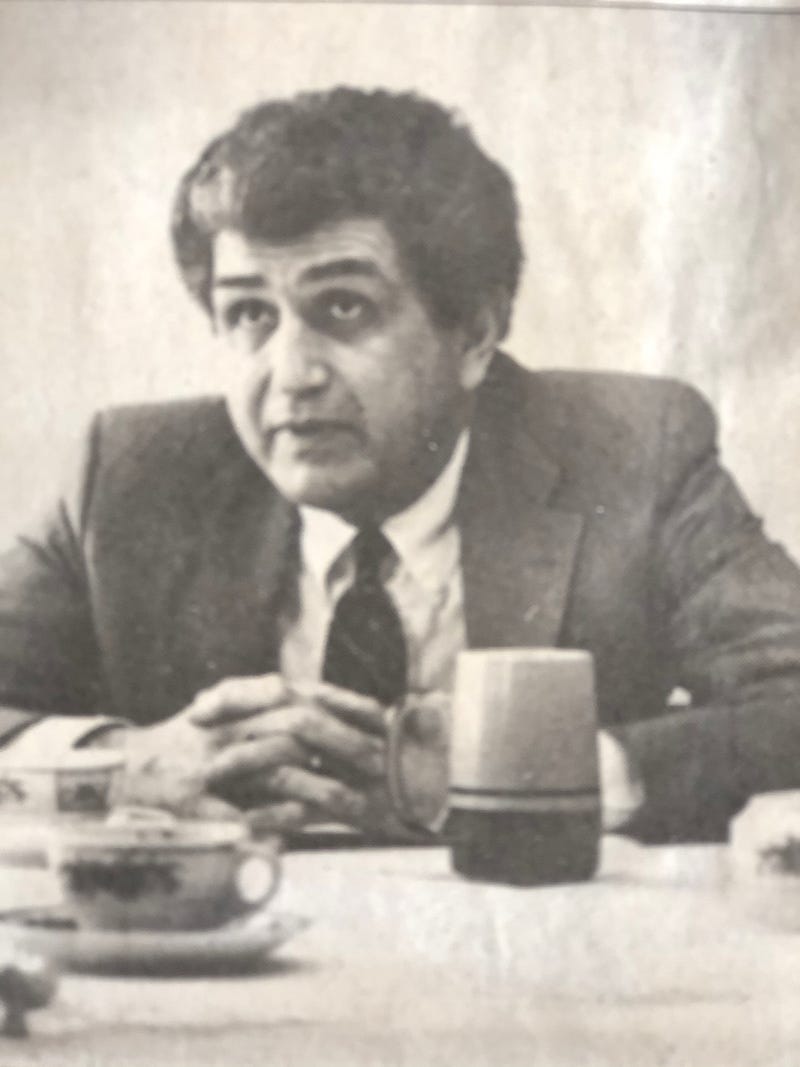
“If you don’t set up artificial barriers, people will get a sense that they can come to you and they don’t take advantage of it,’’ he explained.
When the furnace broke in the middle of a party at the president’s mansion, he was down in the basement making sure Jake Kelly from the physical plant had coffee. The president wanted Jake to know he was grateful for his help.
“He never strikes you as being too good for anyone,’’ Kelly told the Lansing State Journal. “He would carry on a conversation with a truck driver or a professor.’’
Advancing your mission and the mission of your institution
John DiBiaggio completely understood and “got’’ the mission of his universities even when others didn’t.
Many tried to make Michigan State a sports school, making athletics a sacred cow. DiBiaggio made national headlines fighting that “sports are sacred’’ mentality, teaching us the world’s first land grant university was designed to be a people’s university where academics mattered more than sports.
“I can’t create an image but I sure better be able to reflect an image,’’ he often said. “A University image is more than just slick public relations or getting hyped by the media… it’s a quiet self-assurance, a belief in yourself.
DiBiaggio was hired to start MSU’s first capital campaign and he quickly raised more than $200 million while doubling the membership of the alumni association.
Roger Wilkinson, MSU’s finance vice president, later said, “John has gotten us into corporate and private doors that Michigan State has never been in.’’
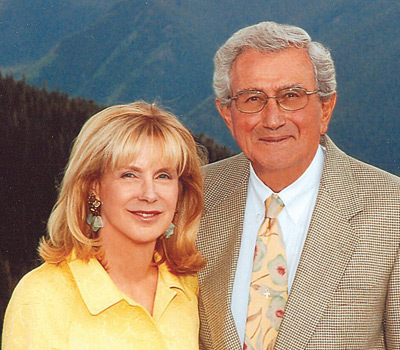
The Most important Lesson I never forgot..
I still quote something John DiBiaggio taught me. Over the decades, I’ve come to learn exactly what these words meant.
We were sitting in his office and I was trying to be “clever’’ thinking I would get him to reveal some secret failing by asking what his greatest strengths and weaknesses were.
DiBiaggio grinned and said, “Your greatest strengths become your greatest weaknesses. Because you play to your strengths pushing as far as you can and eventually you go too far and that strength becomes your weakness.’’


