
Designing Your Garden
Organic gardening basics
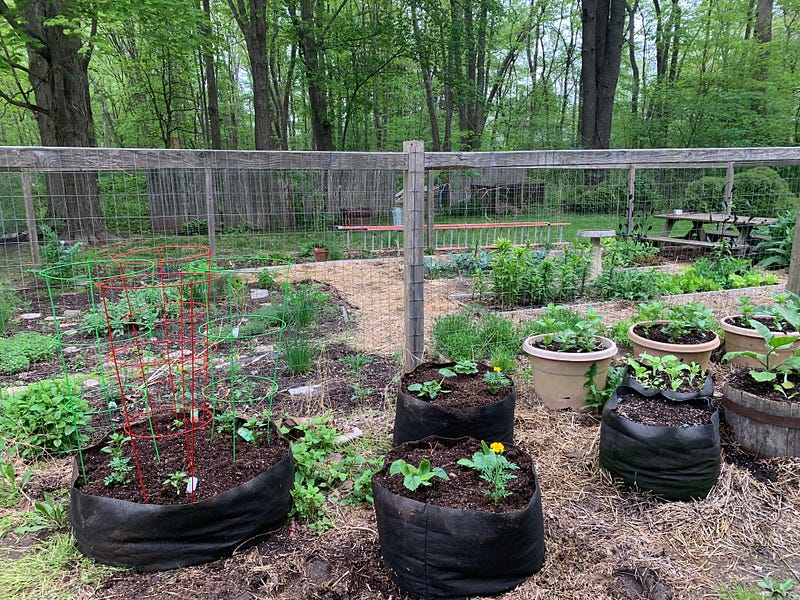
One of the first things to do when you decide to have a garden is to create a plan. To make that plan, you will need to determine where your garden will be located and how you want to use your garden. Knowing your location will help you understand the amount of sun and space available, which, in turn, will help you know which plants you want to grow and when to plant them.
How do you want to use your garden?
There are many ways you might want to use your garden. Here are a few ways I’ve used my garden in the past.
- Growing ornamentals: Whether it’s a few flowers on a balcony or a sweeping bed that borders your driveway, you can add beauty to your life with plants.
- Growing vegetables, herbs, fruits, and other edible plants: An organic vegetable garden is a way to get the freshest food available anywhere. Using organic methods ensures you are eating food without chemicals added. Even if your primary goal is ornamental, you can tuck in a few herbs and edible flowers.
- A Place to Experiment: You can use parts of our garden (or the entire space) as a place to try new plants, new foods, new techniques. For me, that has included everything from creating a night garden to adding a flock of flamingoes to a flowerbed.
- Reading and relaxing: including some lounge chairs or a hammock in your garden provides you with a quiet space to enjoy pleasant weather.
- Socializing: A great place to barbecue, you can have large pots of salad vegetables, tomatoes, and herbs right near the grill. A picnic table gives you a place to share a summer meal, and you can use it as a workspace to pot plants if it’s in the middle of your garden.
- Playspace for children: If you have children or have children who come to visit you, a dedicated space for them means they will have fun with you while you’re gardening. My daughter started gardening with me when she was a toddler. She is an avid gardener now, in her 30s, and so are my grandchildren.
- Bird watching: Plants provide cover and food for our feathered friends. Different birds will be attracted to different types and sources of food. If you want to enjoy birdwatching year-round, consider adding a few feeding stations.
Plan your plot and plot your plan
Once you have decided how you want to use your garden and selected the location, it’s time to start selecting plants to grow. Of course, the amount of sun will be a determining factor in choosing what you will grow. Most vegetables require 6 to 8 hours of sun, as do many flowers. However, you can find edible and ornamental plants that will grow in a variety of settings. The plants in the lists below are all ones I’ve had success with in sun or partial shade.
Vegetables and herbs requiring at least 6 hours of the full sun include:
- tomatoes
- peppers
- eggplant
- cucumbers
- beans
- green onions
- turnips
- radishes
- basil
- rosemary
Plants that tolerate partial shade include:
- lettuce
- chard
- spinach
- chives
- thyme
Additionally, some root vegetables like carrots, radishes, and beets can do with less direct sunlight but will need at least 4 hours of sun a day.
If you have heavy shade, you won’t be able to grow vegetables or herbs. However, you can still have a beautiful garden because many flowers and ornamental plants grow best in full shade.
Plants that I have found to grow well in full shade include:
- ferns
- hosta
- columbine
- coleus
- astilbe
- bleeding heart
- coral bells
- piers japonica
- azalea
- rhododendron
Give your plants enough elbow room
Use a notebook or graph paper to sketch where you will place your plants. I recommend using a square foot gardening approach in vegetable gardens, as opposed to traditional row gardening. Still, either way, make sure that your plan includes adequate space for each plant you select. You can typically find out how much spacing is required by looking at the seed package. Here is a good resource for spacing in a row type setup. This is a good starting point if you are interested in learning about square foot gardening. (Note, none of the links in this article are affiliate links, they are websites that I think have good information.)
Use a calendar
Different plants require different amounts of time to reach maturity and have different tolerance levels for frost or heat. For example, tomatoes shouldn’t be put in the ground until after the last frost and love hot weather, whereas lettuce will bolt to seed when it gets hot out. Some plants, such as radishes, grow quickly and can be included in a succession planting plan so that you harvest a crop and then plant something different in the same location. Additionally, some plants such as spinach can be sown in the fall or, in some cases, like garlic, must be. This website from the Old Farmer’s Almanac will generate a planting calendar based on your location.
I’ve been gardening organically for the past 50 years.
I started my first organic garden when I was a teenager. I love talking about gardening, and I’ve written a number of articles about it. These are my latest:
I’ve found that I also love teaching about gardening. This spring, I offered my first online course at the Volksuniversiteit Amsterdam, and the students requested that I offer a second one in the fall. If you are interested, here is a link to the course.
Gardening makes my life brighter. I hope this article and the links in it help you in your gardening journey and bring you as much joy as I get every time I step outside.


