
Making Your Garden Green
Organic gardening basics
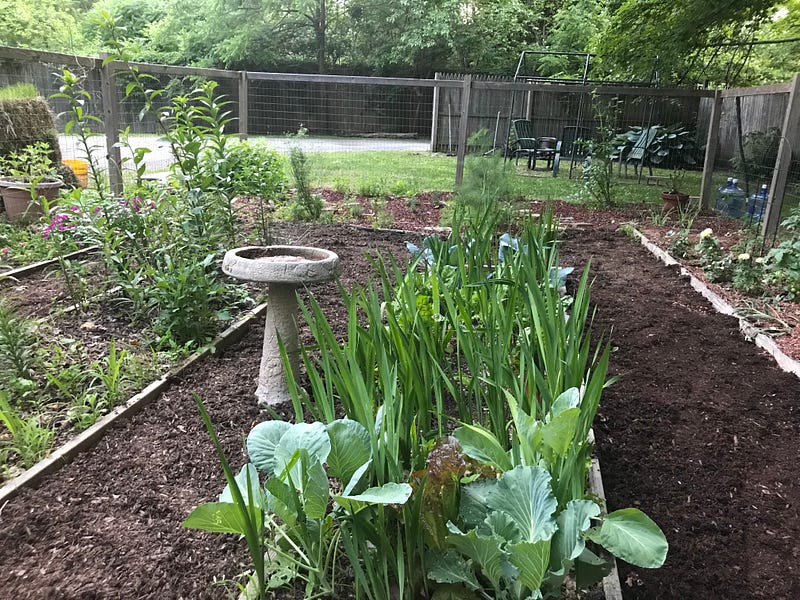
For more than 50 years, I’ve been growing organic gardens. In many ways, it is very simple. This article will answer a few basic questions about organic gardening and provide links to a few additional resources.
What is organic gardening?
Gardening organically involves a series of practices that avoid chemical fertilizers, herbicides, or pesticides and use natural practices instead.
Two basic practices make a garden organic:
1.Using natural fertilizers and other inputs to make the soil healthy.
2. Avoiding chemicals such as insecticides or herbicides.
In actuality, however, there is so much more to it.
When we garden organically, we consider the overall ecosystem as we design and create our garden. The soil is nurtured and developed as the garden's foundation, with a life of its own. We feed it knowing that it will then feed the plants. Insects are part of the garden's life as well, and we seek to attract and sustain beneficial insects while deterring the harmful ones using natural methods such as companion planting, crop rotation, homemade fertilizers, and insect repellent.
Organic gardening is not a new concept — it is the way all gardens were before synthetic pesticides and fertilizers were invented.
Many countries have standards that growers must meet to be labeled organic.
In the United States, the USDA oversees all regulations regarding organic labeling. Food products labeled organic in the US must be produced with allowed substances and without excluded or prohibited methods, such as genetic engineering, ionizing radiation, or sewage sludge. In the European Union, legislation similarly guarantees that food labeled as organic has been produced, processed, handled, and distributed following specific standards.
Why garden organically?
There are four reasons why I think gardening organically is the only way to go.
- Save the Planet. One of the most important reasons to garden organically is to help protect the environment.
- Save Your Health. By avoiding chemicals in your garden, the food you grow will be free of toxins. Organic produce has been shown to have higher vitamin and mineral content. Also, gardening is good exercise.
- Save Money. Organic produce can be expensive. By growing it yourself, you can help save money at the market.
- Savor the Flavor. Fresh fruits and vegetables you grow yourself are always the tastiest. Food straight from the garden will always have the best flavor. No chemicals added!
When can I start?
You can begin your organic garden any time of the year. Gardening takes place in a cycle, with every time of the year having its own set of tasks. For example, in July, you could be preparing new ground to plant fall plantings or start new beds using a sheet composting method.
This is also a good time to look at other people’s gardens to get an idea of what you might want to plant next year. But, of course, if you already have a garden, now is the right time to begin using organic practices. Start a compost bin. Buy mulch and use it. Throw out any chemical fertilizers, herbicides, or pesticides and replace them with organic products. Better yet, make your own.
I’ve been gardening for over 50 years, but I only started writing about it in the past year. Below is a link to a piece about all the reasons I love gardening, along with some additional tips.
I am planning to write a lot more about gardening. I hope you enjoy following my journey as I do.


