
ADHD, Autism, and Depression
Strategies and support to help neurodivergent folks prevent, reduce, and cope with depression
Sensitive topic warning
Depression can be a really tough subject to talk, think, or read about for many people. In fact, that’s probably why this is the first time I’ve addressed the subject of depression in three years of writing full-time.
While I won’t describe anything in detail, this post will touch on the topic of severe or major depression and suicidal ideation.
This is part two of a two-part article series. My first piece covered the essential information about depression and why neurodivergent folks have an increased risk of mood disorders.
This article will discuss some ways we can prevent, reduce, or cope with depression.
What can we do?
Knowing so many of us are at much higher risk for depression, what can we do about it?
Self-awareness
It’s very difficult to engage in self-care or self-advocacy if we don’t know what we need. Increasing our self-knowledge and self-awareness will go a long way to helping us discover what works best.
For example, taking care of our sensory needs is an important aspect of managing our stress levels. I did not even realize I had sensory sensitivities until my late 30s after figuring out I’m Autistic.
Honestly, I thought I was just an irritable, moody person. And maybe I was, but a significant part of my grumpiness was due to unknowingly being in a state of sensory overload.
If I’ve spent the day interacting with people or being in loud, crowded environments, my tolerance level is going to be minimal. When my son comes home from school and is bouncing around, playing, banging, or generally being a kid, it’s not fair for me to snap at him to “keep it down” because I haven’t managed my own needs.
I’m not saying we can’t, as a family, try to accommodate one another, compromise, and try to be considerate of one another’s sensory needs. I am saying that, as the adult, it’s my responsibility to first develop my own coping strategies rather than expecting my son to put my needs before his own.
Now I make sure I carve out time to recharge and refresh before my son gets home from school. I’ve also invested in a pair of noise-cancelling headphones for those times when I need to reduce the auditory stimuli coming at me.
This is just one example of how self-awareness can help us regulate, engage in self-care, and reduce our risk of becoming depressed.
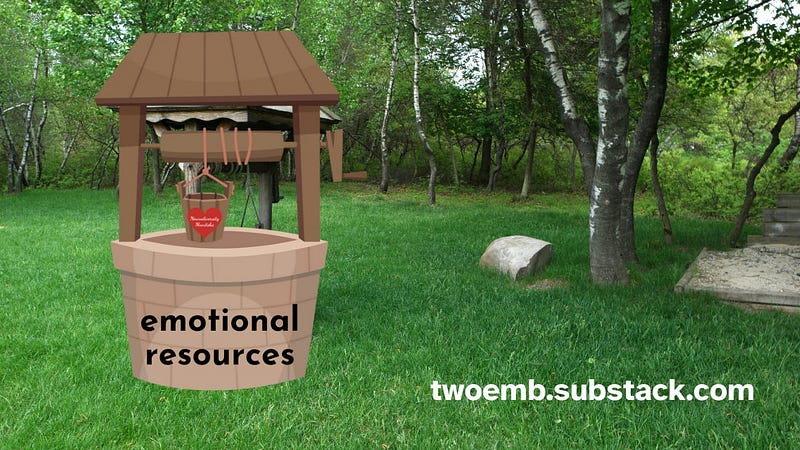
Every person has limits to what they can tolerate, so making room wherever we can will increase the store of emotional and psychological resources from which to draw.
Connection and community
One of the most important protective factors against depression is having a social support system. For Autistics and other neurodivergents (NDs) this may look different from the average, and that’s okay — better than okay, it’s probably a good thing!
We’re not typical, so the “usual” ways of doing things don’t always work for us.
Connecting with our neurokin (fellow NDs), spending time in ND-friendly spaces, and talking to people with shared interests and experiences can be incredibly uplifting and empowering.
Neurodivergent people often have different social preferences and expectations as compared to neurotypicals (NTs). Some of us are hardcore introverts, some are incredibly extroverted, and everywhere in between. What social connection looks like is different for each person.
Some people enjoy and prefer parallel activities like watching a movie, reading books, or doing crafts while in the same room, but not necessarily working together or even interacting much. This can be just as fulfilling as a deep conversation, for some even more so.
Some folks prefer to engage online or electronically instead of in person. Some enjoy in-person socializing in ND-friendly spaces, engaging in shared interests, having intellectually-stimulating conversations, or playing sports.
There’s no right or wrong way to connect with others, as long as it’s mutually respectful; whatever works best for the people involved is what’s important.
Take care of your physical health
Physical, emotional, and mental health are all connected. When we are struggling with our physical health this most certainly will also impact our mood, outlook, and self-concept.
It can be very difficult for ND folks to go to the doctor. For one thing, many ND folks have experienced medical trauma, or have been invalidated and dismissed by medical professionals.
It also takes a lot of executive functioning and mental energy to regularly access healthcare.
First, we have to figure out when we want to schedule the appointment and what dates and times will work best for us.
Then we have to contact the doctor’s office. Many clinics still don’t have online booking, so we have to call, which is not accessible for non-speakers, Deaf and Hard of Hearing patients, as well as people who have severe anxiety around phone calls.
While navigating a phone call, we then have to compare the doctor’s (usually limited) availability with our own, finally agreeing on a date and time. We must remember to write down the appointment, or put it into our electronic calendars, and set reminders.
Don’t forget to set extra reminders!
Then actually getting to the appointment is a lot of work for many of us. Many ND folks don’t like driving and find using public transit extremely stressful.
Lots of us also find it very anxiety-provoking to sit in a clinic waiting room, especially if they’re not sensory-friendly. Many clinics are loud, busy, have bright overhead lighting, and strong scents from cleaning products.
After all that, we get into the appointment and hope our doctor will take us seriously when we express a concern.
It may help to have a trusted person go with you for emotional support, but be sure to make it clear to your doctor that they are speaking with you, and not the person accompanying you.
It can also help to schedule appointments as strategically as possible. Some people find it works best to schedule them early in the day so they don’t get stuck in waiting mode. Others find it’s best to schedule appointments in the afternoon, so they don’t feel rushed to get out of the house in the morning.
For me, I also have to keep in mind the amount of emotional energy this is going to withdraw. I need to be careful not to schedule a lot of demanding tasks or activities on the same day, so I can give myself time to recover.
Special interests & support
Doing things we enjoy lifts our mood. It’s important to make time for activities we enjoy, doing them for their own sake, just for fun.
If you start feeling low, some strategies you can try:
- Engage in a special interest, or look for a new hobby or fun activity to try.
- Listen to music, read books, or watch movies & shows that lift your mood.
- Try to ensure you are getting enough sleep.
- Have you eaten and hydrated? If not, please do so!
- Pause. Take a deep, slow breath. Connect your brain with your body to figure out what is underlying the low mood.
- Get out of your head and into your body. Fidget, stim, walk, run, jump, tap, take a hot bath, splash cold water on your face — do something that engages your senses to help pull you out of your head for a bit.
- Talk to someone you trust.
If you’re feeling depressed, please don’t be afraid to reach out. I know it’s incredibly hard to do so, especially when we’re feeling low, and we don’t want to inconvenience others or bring them down with our problems.
That’s the depression (and probably RSD) talking. It tells us we aren’t important and people don’t care about us. It’s lying to us. Depression does that. People do care about you and you do matter.
Please reach out to someone you trust. Even if you’re not ready to talk, just having someone in your corner can make a difference.
It won’t last forever
I can’t promise you rainbows, unicorns, or butterflies. Some people struggle with depression for most of their lives, and we can’t ignore that reality.
However, moods are always fluctuating. Intense emotions don’t last. When we’re depressed it feels like we’ll never get better, like we’ve always felt that way and always will. That’s depression lying again.
I can’t promise everything will be sunshine and roses, but it will get better, and you matter. You do matter, and don’t let anyone tell you otherwise — even you.
© Jillian Enright, Neurodiversity MB

Related Articles
Ways to support my work
You can leave a “tip” on Ko-Fi at https://Ko-Fi.com/NeurodiversityMB
Become a paid subscriber to my Substack publication
Check out my online store at https://NeurodiversityMB.ca/shop
Read and share my articles from twoemb.medium.com

Part one
References
Accardo, A.L., Pontes, N.M.H., Pontes, M.C.F. (2023). Greater Physical Activity is Associated with Lower Rates of Anxiety and Depression Among Autistic and ADHD Youth: National Survey of Children’s Health 2016–2020. Journal of Autism and Developmental Disorders. https://doi.org/10.1007/s10803-023-06117-0
American Psychiatric Association. (2022). Major Depressive Disorder. In Diagnostic and statistical manual of mental disorders (5th ed., text rev.). https://psycom.net/depression/major-depressive-disorder/dsm-5-depression-criteria
Dobson, K.G., Vigod, S.N., Mustard, C., Smith, P.M. (2020). Trends in the prevalence of depression and anxiety disorders among working-age Canadian adults between 2000 and 2016. Statistics Canada. https://www.doi.org/10.25318/82-003-x202001200002-eng
Hollocks, M., Lerh, J., Magiati, I., Meiser-Stedman, R., & Brugha, T. (2019). Anxiety and depression in adults with autism spectrum disorder: A systematic review and meta-analysis. Psychological Medicine, 49(4), 559–572. https://doi.org/10.1017/S0033291718002283
Ratanatharathorn, A., Koenen, K.C., Chibnik, L.B., Weisskopf, M.G., Rich-Edwards, J.W., Roberts, A.L. (2021). Polygenic risk for autism, attention-deficit hyperactivity disorder, schizophrenia, major depressive disorder, and neuroticism is associated with the experience of childhood abuse. Molecular Psychiatry 26, 1696–1705. https://doi.org/10.1038/s41380-020-00996-w
Riglin, L., Leppert, B., Dardani, C., Thapar, A. K., Rice, F., O’Donovan, M. C., Davey Smith, G., Stergiakouli, E., Tilling, K., & Thapar, A. (2021). ADHD and depression: investigating a causal explanation. Psychological medicine, 51(11), 1890–1897. https://doi.org/10.1017/S0033291720000665
Wiwe Lipsker, C., Hirvikoski, T., Balter, L.J.T., Bölte, S., Lekander, M., Holmström, L., Wicksell, R.K. (2021). Autistic Traits and Attention-Deficit Hyperactivity Disorder Symptoms Associated With Greater Pain Interference and Depression, and Reduced Health-Related Quality of Life in Children With Chronic Pain. Frontiers in Neuroscience, 15(7), 16887. https://doi.org/10.3389/fnins.2021.716887