
Death Hits Differently When You’re the Victim and The Murderer
But sometimes, even death has a silver lining.
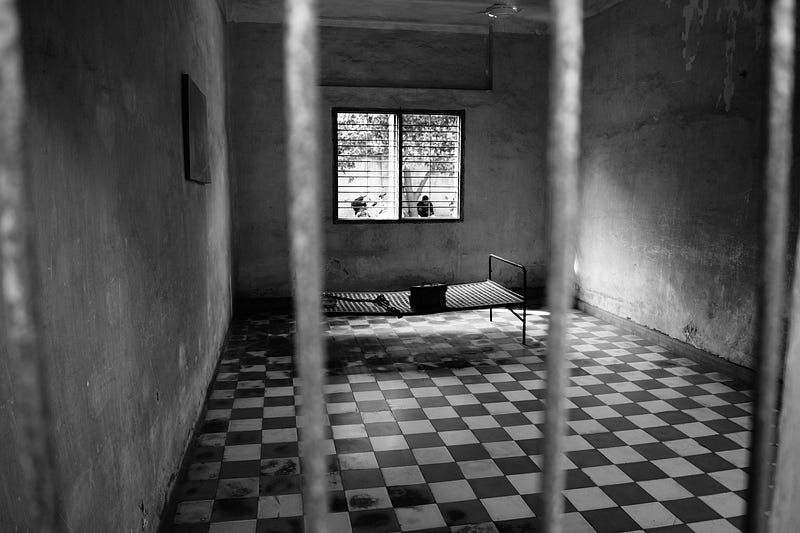
“But he’s okay, right?” I can still feel the lump in my throat rise and the involuntary tears welling up behind my eyes, as my pulse speeds up like it was yesterday. But it wasn’t. I was 20, in college, and I didn’t need to hear the answer to “he’s okay, right?”. I don’t think we ever do; sometimes, we just know.
Within seconds, I morphed from adamant denial into irrational hysteria, crumbling to my knees on the disgusting, sticky campus apartment floor and bringing my mom down to the ground with me. Through tears and wailing screams, I told her she’d move in with me; we’d live on campus together; I’d take care of her. I don’t know why.
The moment it clicked — that he’d really died, gone, just like that — my mind zoomed into problem-solving mode. My mom lived in a 4,700+ square foot house she’d owned for over a decade; she didn’t need to move into my dingy, barely livable student apartment, but at that moment, the protector in me ignited. Sometimes death — or any similarly unexpected traumatic event — does that to you.
This wasn’t my first brush with death — nor would it be my last. This was just the most unexpected, knocking the wind out of me with a blow whose repercussions would last for days. I flashed back to the last funeral I’d attended for a close family friend years earlier. I wore green, in silent protest — or perhaps because I refused to accept or admit that she was really gone. With my dad, it was different. My mom’s house was empty, his desk abandoned, and his absence palpable and haunting.
Fast forward a few years, and I’d paved over my father’s absence with a relentless job that captured my mornings, nights, weekends, and sanity, straining my eyes under the harsh fluorescent lights that illuminated my pitchbook-stacked cubicle. Then, I got the text I didn’t expect.
I almost escaped
The great thing about death — or any outsized tragedy that rocks you to your core and robs you of your formerly carefree, whimsical demeanor — is how it makes you hard, callous, and shielded by a new armor that forms to insulate you from any future blows. Or so I thought. I thought at 20, I’d suffered the last of the heart-wrenching shock and devastation to disrupt my world. I’d locked my emotions away in a sealed titanium box, devoid of a key. Until around 6 pm on a Thursday, I received a text message that would shatter the unbreakable box of emotions into a thousand pieces and send a searing pain shooting through my body like I’d never felt before.
This time, though, I sat in a cubicle, surrounded by my overworked, stressed-out peers — colleagues who probably believed a mistake in an LBO model was the gravest tragedy to ever grace their charmed, materialistic lives — and silently shed a tear for Crystal, my baby Cavalier King Charles Spaniel. She died in a vet’s office, three hours away, and I couldn’t even say goodbye. Then again, as an absentee mother of the past three years, what place did I even have to be upset? I chose work over her, and this was my consequence.
Again, with Crystal, like my dad, I paved away the grief with more work. I harbored a bit of guilt and remorse surrounding how I could, would, or should have been a better daughter or a more present dog mom. We can always be better — but on the bright side, I didn’t murder either of them.
Murder and the hardest death to accept
As I wired another $20,000 to the development team, I sighed a breath of relief, like an assassin who’d outsourced his next job to a team of hoodlums to shoulder the burden of finishing the crime. Except, that’s not how it works at all — but it would take me another five wires and 18 more months to figure that out.
My dream was never to work in finance. In fact, in high school, college and a career were always an afterthought. I focused on one thing only: the task at hand and doing it well. That task evolved over the years, from midterms to AP tests, SATs, college applications, and eventually job interviews. I let the fast-moving current carry me upstream and flailed around in some survival state, swimming rapidly without ever pausing to ask “why?”.
I’d had hobbies, interests, and talents growing up — but nothing worthwhile. Or should I say, nothing traditionally lucrative. So I cast them aside and dove straight into Wall Street, this time swimming upstream against a riptide that threatened to pull me under time and again. Finally, I latched onto my escape plan: There was only one thing more impressive than finance: startups.
So, I quit. I walked out after spending the first half of my twenties behind cubicle partitions and took a plane across the country to California, where funding, startups, and success seem to run rampant. Over the next 18 months, I sat in a dark, 457 square foot asbestos-plagued studio apartment and wired away my life savings to the development team who was supposed to absolve me of my anxiety, fear, and responsibility to attain success on my own. They were my security blanket and my crutch, obstructing the reality I was too naive — or perhaps depressed — to see.
A decade prior, I was a completely different person. Creative, artistic, bubbly, perhaps even borderline optimistic… I’d killed her by now. She probably died somewhere between that first funeral to which I wore green in obstinate protest and the day I was handed a shovel to pour dirt on the hole encasing my dad’s casket. But that wasn’t even the worst murder of all.
As we mature and evolve, I think we all mute, dampen, or kill off little parts of ourselves — some more than others. The problem arises when we kill off more than a little — and take down our dreams and passions with them.
From the day I quit banking, I assumed a new identity as the founder of my burgeoning startup. The same startup that was quickly draining my life savings with no sign of reprieve… Wrapped up in this venture, I believed I had only one option: to move forward, at all costs. And the costs were incredibly high.
The hardest thing about premeditated murder is that once you resolve to take action, the thought just lingers there, like an unapologetic intruder, egging you on until you finally break. And I did. Less than two years after leaving Wall Street to pursue a tech startup — my first entrepreneurial venture — I called it quits, 6 figures poorer, confidence at an all-time low, with the mounting fear questioning if I’d peaked at 24. Unlike walking out of a cubicle in an esteemed city high rise, this time quitting felt a lot quieter, smaller, and subtler — but it wasn’t. I still had one last murder to commit — the most important one of all.
The day I bashfully announced to a few friends and family that I was quitting my own startup — the thing for which I’d already thrown away a desirable finance career — I thought that was the death of my dreams. A strange emptiness comes over you when you throw away the one thing that’s defined you for years. In killing off my startup, I succumbed to the destructive belief that I, too, was as worthless as the technology my development team had created, under my supervision. If I couldn’t make it on Wall Street and I couldn’t see this startup to profitability and a front page-worthy IPO, what value did I even possess?
I’ve never felt more worthless. It might seem foreign and hard to fathom — the idea that a startup failure alone can make a person question the space they take up on this Earth. But I’ll bet you I wasn’t alone — and this phenomenon doesn’t remain nestled within the world of finance, startups, or entrepreneurship. Instead, this is the ubiquitous danger of attaching your value, your life’s worth, to your output, or your life’s work.
It won’t scream
When your dad dies, you’ll probably cry — that’s pretty normal. When your childhood dog dies and you don’t get a warning or a last goodbye? That’s a gash through the heart that leaves permanent scars. But when one small leg of your lifelong career journey goes south, dies, or like in my case, begs for your merciful murder to free you of this yoke around your neck and make room for the next leg of the journey, you can’t lose sight of what matters.
The jobs don’t matter. The money doesn’t either. It’s the people. The pets. The hobbies and interests and passions. Your startup won’t scream, cry, or bleed when you chop it to the ground — mine didn’t. But the relationships and quality time you sacrificed with the ones you love? That stuff will haunt you till the day you die.


