
Dear Middle-Class Friends: Please Stop Saying These Tone-Deaf Things
Honey. Pay for your own cocktails.

A couple of months ago, I wrote an article about tone-deaf things some middle-class people do while interacting with the financially underprivileged. As mentioned in the article, I grew up working-class — though I prefer to say “in-betweener.” This is someone who is not rich enough to afford the comfortable lifestyle of the middle-class, but not quite poor enough to be considered “poor.”
In short: I have a lot to say on the topic.
The article did well, attracting a lot of conversation. Most of it has been good. Some of it hasn’t.
Whereas the adage claims that “actions speak louder than words,” one’s words can also have an impact. Thus, let’s look at four more areas where I think middle-class people could stand to improve. This time, our focus will be on things some middle-class people say that comes across as woefully ignorant to the plight of poor(er) people.
Disclaimer: This article is a lighthearted piece written from my perspective as a working-class woman. Please do not take it as a treatise on class differences or as an indictment against privileged people. I wrote it for entertainment purposes.
“I work hard for everything I have!”
“But Lisa!” you may be protesting. “That is not fair! I do work hard to earn a living!”
Yes, I am aware you work hard. Nobody is arguing with that.
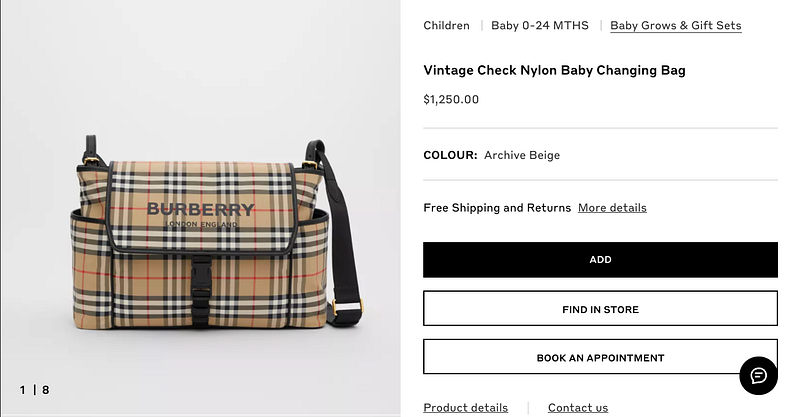
Middle-class people are privileged compared to the poor and working-class; however, they are not “rich.” Middle-class people simply have enough of a consistent disposable income to live comfortably; they’re the ones driving SUVs, sipping Starbucks, and living in the suburbs with neatly-manicured lawns. They aren’t the ones who are carrying their children’s nappies around in designer diaper bags.
The problem with this statement is not its validity. The problem is its implication. By dismissing your comfortable lifestyle as the result of “hard work,” you insinuate that those who do not share your lifestyle are not working hard.
Working-class people (“in-betweeners”) are often referred to as the “working poor,” which means that despite being employed, they still struggle to get by. These are people in jobs that are typically underpaid (i.e., service industry, transportation, child care, manual labor, etc.). These jobs are also rarely appreciated or valued, although many of them are considered “essential” operations in society. People in these jobs work long hours, often on their feet, with few breaks and for little pay.
In-betweeners work as hard as middle-class people. The only difference is they get paid considerably less for their efforts.
I’m going to have to ask that we stop pretending “low pay” means “low exertion.” If you need me to put this in perspective, let me give you a relatable analogy. You drive in your SUV with heated seats to your cushy office, where you sit behind a computer all day. An in-betweener is on their feet all day getting screamed at by Karens or putting in back-breaking labor to build something. If exertion were a factor, then you’d be eating the in-betweener’s dust.

“We should hang out!” (If it always requires spending money.)
Say you have a friend. You both get sidetracked with life, and end up in an endless loop of, “We should totally hang out sometime!” One day, the stars align and your schedules synchronize. Great, right?
Well, there’s a downside: this friend only ever wants to do things that require spending money. Whether it is going out to dinner, getting drinks, going to a concert or show, or even just meeting for coffee… spending time with this person might as well have a cover charge.
Admittedly, this could apply to any socioeconomic status. However, when you’re an in-betweener, it can be particularly rough. As I mentioned previously, being financially underprivileged comes with baggage. There are stigmas around lacking financial security: you’re lazy, you’re a failure, you are bad with money, or you chose avocado toast over investing in real estate. These stigmas are easy to internalize when you’re an in-betweener.
Thus, for some in-betweeners, they are uncomfortable admitting that they don’t want to spend money. Even if they know logically their friend won’t judge them, they can’t shake the feeling that their hesitance to spend money is a testament to their financial foibles. Thus, they’ll either go out and spend the money they shouldn’t… or they’ll lie to get out of the plans because they are too embarrassed to admit that it’s a money issue.
Listen. I’m not saying you shouldn’t ever initiate going out; I am suggesting that maybe it shouldn’t be the only way to access you. Invite them to your house. Go to a free event. Go for a walk. Hell, run errands together — sometimes, doing boring tasks are tolerable when a buddy joins. You don’t have to spend money to enjoy each other.

“Let’s split the check!”
But let’s say you can go out with that friend. You two make a plan to meet for dinner after work. Then, you both decide to invite two mutual friends — because why not?
The night comes. You are all four at the restaurant. You are on a budget, so you order a balsamic chicken salad and water (i.e., $15 worth of items). Everyone else purchases appetizers, steaks, and a couple of cocktails apiece (i.e., $35–40 worth of items). The total bill is about $120.
You enjoy the outing… until one friend declares that everyone will split the check evenly.
Let’s do a little math. A $120 check between four people is $30 per person; if this includes sharing the tip, that bumps it to $36 per person. You only contributed $15 toward the bill. Since your friend insists on splitting, you are therefore being forced to pay double what you contributed.

If you are middle-class, you likely fall into one of two categories. You might think this is fair — in your mind, by agreeing to the outing, everyone agrees to take equal responsibility for the bill. Or, by contrast, you may be mildly annoyed about spending extra money. Why should you have to help pay for your friends’ steaks and booze?
If you’re an in-betweener, this situation is an even bigger problem. We tend to have an “every person for themself” mentality: everyone is responsible for covering his or her own butt, not everyone else’s. Therefore, we tend to have a specific budget in mind for how much we can spend during the outing; if we have to split the bill evenly, that means you’re expecting us to help pay for people who do not consider our budget while they’re chugging overpriced cocktails and hacking into slabs of sizzling bovine that you can’t afford.
And, in most cases, these are people who are not hurt by paying extra money because they don’t have to think about careful budgeting. Like the pretty girls telling their tomboyish friends (i.e., me) they “have to” wear a dress and heels to an event, they only consider their own perspective. They don’t consider how their hyperfeminine dress code — which may be great for them — might make their tomboy friend — who does not enjoy this aesthetic — feel insecure and singled out.
So, dear middle-class friends… don’t be that friend. If you ordered it, then you are the one who gets to pay for it. End of story.
“I want to pay for the person behind me.”
If you’ve ever been to Starbucks, you might be familiar with “pay it forward.” If you’re unfamiliar, this is when someone will pay for the order of the person behind them. The idea is that the person who had their order paid for will now “pay it forward,” thus creating a chain-effect of random acts of kindness.
“Seriously, Lisa?” you roll your eyes. “You’re going to denounce acts of kindness now? God, you are so bitter!”
Correct! I am bitter! But that has nothing to do with this.
I am not the only person who has a problem with this practice. While paying for someone else's order may give you warm fuzzies and make you feel like you did something great, guess who doesn't benefit from it? The in-betweener barista has to navigate this love-fest from behind the counter.
Last September, a former Starbucks employee attracted attention by publicly stating on Facebook that this practice is “extremely annoying”; she went on to say that it “makes everything confusing” for the employees because it throws everything out of sync. She suggested that if you really want to be kind, leave the “understaffed” Starbucks employees a tip.
She’s not alone. About a year prior, one Reddit user complained about the practice in the Starbucks subreddit. “I don’t know how you can look at the underpaid baristas doing all the work and not tip,” the user wrote, “but instead pay for the order of the person sitting in the Mercedes behind you.” The same user also went on to say they once had a 15-car line of people do a pay-it-forward chain; not one of those cars left a tip.
Yeah, doesn’t sound so nice anymore, does it?
Keep this in mind: Starbucks’ customers are not poor. Starbucks’ main demographic is middle-to-high income earners. These people can absolutely afford to pay their tab. Paying their Starbucks bill doesn’t actually make much difference. Tipping the barista, however, could make a huge difference — good tips help make a notoriously thankless job worthwhile, in addition to supplementing the notoriously craptacular pay.
So excuse me, but I (and others) are not buying into this whole “pay-it-forward” nonsense. You’re not doing it to be kind or “serving” others. You’re doing it to serve your own ego. You’re privileged people patting other privileged people on the back so you all feel better about yourselves. All while ignoring the person behind the counter, who you only see as a faceless robot who exists to serve you.

Thank you for reading! If you would like to comment, refer to this post first.
If you would like my work to continue, please consider becoming a Medium member using this link. It would really help me out.
If you’d like to encourage me to write more with a $2 cup of coffee, click here.