
4 Ways Growing Up Working-Class Has Affected Me
We are an odd sort.

I grew up in Central Ohio in a working-class family. My family was in that odd “in-between” stage: too poor for the middle class, yet too rich for the lower class. We are a class that people frequently forget exists.
In general, I had a good childhood. Nonetheless, there are subtle ways growing up as an “in-between” kid has affected my attitudes and behaviors. Some of them are logical, some are admittedly not. Let’s talk about them.
I hate food snobs with a passion.
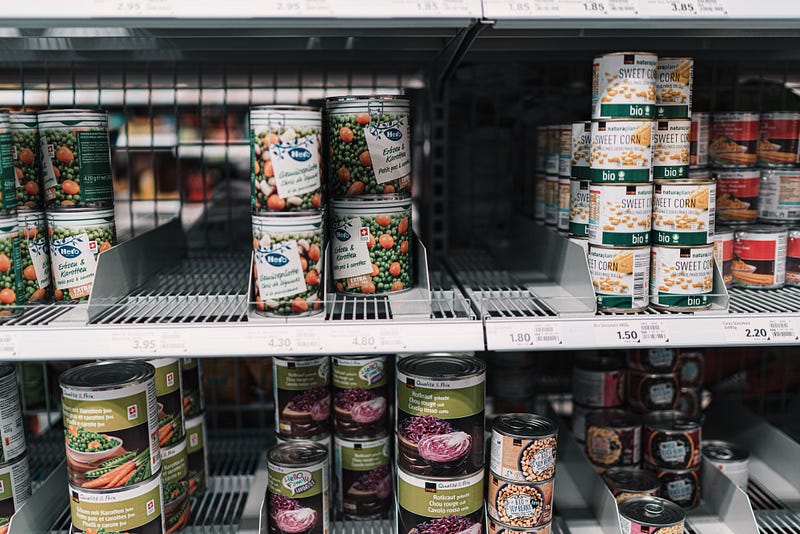
One of the fastest ways to turn me off is to snark about packaged food and/or act superior because you choose to eat fresh, organic foods.
I know what privileged blowhards are going to say about this one. They’re going to insist that fresh food “isn’t that expensive,” usually while comparing the price of organic kale to the price of a 12-pack of soda (or some other false equivalence). They’re going to claim that organic foods are “just a few cents more.” They’re going to finger-wag about how “processed garbage” is bad for your body. (Did I leave anything out, blowhards…?)
However, what these people fail to realize is that they are only looking at part of the picture. No working-class person is refusing to buy fresh food because they’re an uneducated yokel who thinks beer is one of the food groups. They’re buying packaged food because it is practical.
Fresh food has a short lifespan. Keeping up means you not only potentially waste money on a rapidly-depreciating asset, but you now have to schlep back to the grocery store to buy more. Not only does this mean spending more money, but even just traveling to the store costs both time and money — gas ain’t free. And considering that low-income areas tend to have less access to grocery stores, walking or biking there is likely out of the question.
Thus, buying packaged food just makes more sense. It is not only cheaper, but it has a longer shelf-life. It is something you can quickly make for dinner after busting your hump all day in a job that doesn’t involve sitting in a cushy office or cubicle farm.
To my ears, disparaging packaged food just comes across tone-deaf. It’s yet another way privileged people fail to see the world beyond their reconstructed noses. Thus, I have no interest in hearing it. Go back home to your suburban bubble, and take your stupid organic produce with you.
I suffer from spending guilt.
I am convinced that the most emotionally abusive industry out there is personal finance. A lot of it is built on the assumption that if one does not have enough money, it is because you somehow made a mess of your life. Or that you chose cigarettes and beer over groceries. Or that you chose avocado toast over buying a house. Or some equally tone-deaf nonsense.
When the third stimulus check came along, I was fortunate enough to be in a financial position where I didn’t technically “need” it. Thus, I did something I never do: I purchased some new clothes, the Kindle I have wanted for years, and a much-needed laptop. This should have been a happy experience. However, as I looked at my newly acquired items… all I felt was sheer panic rip through me. I cried when I checked my bank account and added up all the money I had just spent. The fact that I still had money to pay my bills was irrelevant; spending guilt is not a rational demon.
My husband and girlfriends had to talk me out of panic-returning every single one of those items.
When you come from a less-than-privileged background, you tend to internalize the attitude that “not rich” equals “you’re a worthless POS who can’t be trusted with money.” Even when you know it is a false belief, or if you’ve done nothing wrong, the money anxiety and shame is hard to shake.
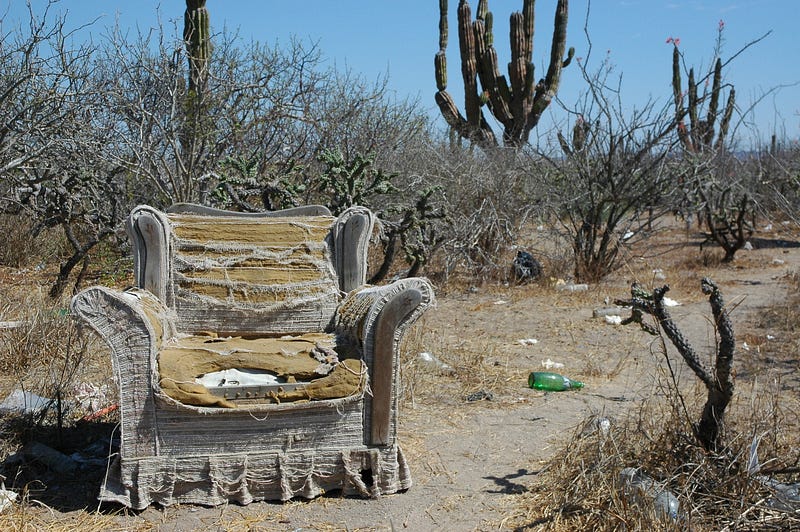
Thus, here I am today. I wear shoes until they fall off. I keep clothes that should have been thrown away years ago. I avoid buying things that would make my life easier simply to avoid paying for it (i.e., I heat the water for my tea in a saucepan simply because I refuse to spend money on a tea kettle). When our couch was falling apart, I had to verify to my credit union’s fraud protection service that yes, it was me who spent $200 at Walmart buying a futon; that is how rare it is for me to spend large amounts of money.
I’m obsessive about checking my money.
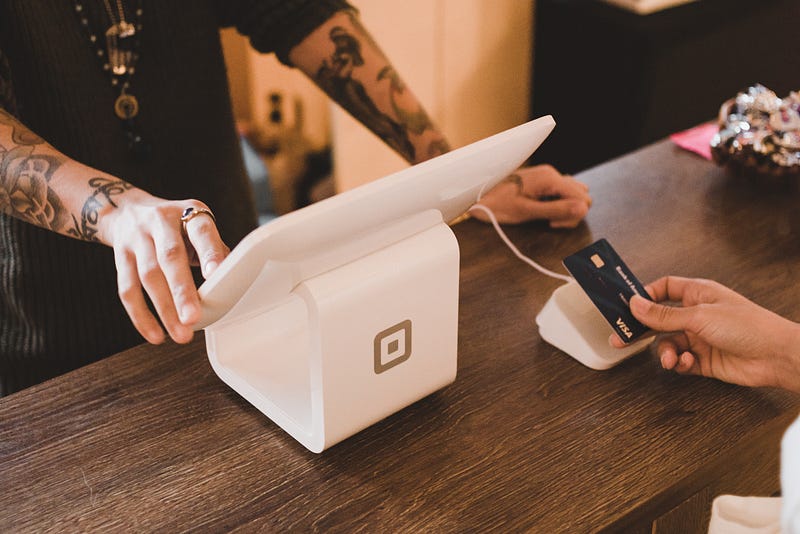
Pretend I’m going to the grocery store. I will check my bank account before I leave, to verify how much money I have. Before I head into the store, I will pull out my phone again and check once more — what if a bill I forgot about just went through? After I complete my shopping, I will go into a less-populated aisle and check again before heading up to the register to pay. Then, as I am walking out of the store, groceries in tow, I will check yet again, just to make sure that I had enough money to cover the cost.
Thus, in one 30-minute trip to the grocery store, I will check my bank account four times.
When you do not have a lot of extra money, you develop a complex that money is perishable. This is made even worse by the fact that some transactions do not always post to your account immediately; thus, the total may not account for the $50 in gas you purchased today. Or when genuine errors take place, like you get double-charged. Or — perhaps the worst thing of all — when you suddenly are charged a monthly fee because you don’t earn enough money to remain above a certain threshold (this is why I switched to a credit union and non-traditional banking).
Thus, I am constantly checking my account balance. I know on a rational level that this is ridiculous, but the anxiety that my money is somehow going to grow legs and walk out of my account always prevails. Again… this is not an easy feeling to shake. To me, money is temporary and cannot be trusted; thus, I have to remain in a state of cat-like readiness to make sure it's still there when I need it.
This is why I am bamboozled by people who “forget” about monthly subscriptions. The idea of having money escape your account without you noticing — even if it’s a small amount — is beyond my comprehension. How do you people live? No, really — how do you live?! Do you just never check your bank account? Do you just stick your card in the reader and cross your fingers that it goes through? I am hyperventilating just thinking about this!
I don’t call professionals unless I have no other choice.
When I purchased the aforementioned futon earlier this year, our original sofa was so far gone that I knew we couldn’t sell it. However, I did not want to have to lug it outside to dump it somewhere — it wasn’t a huge sofa, but it was just big enough to be a nuisance.
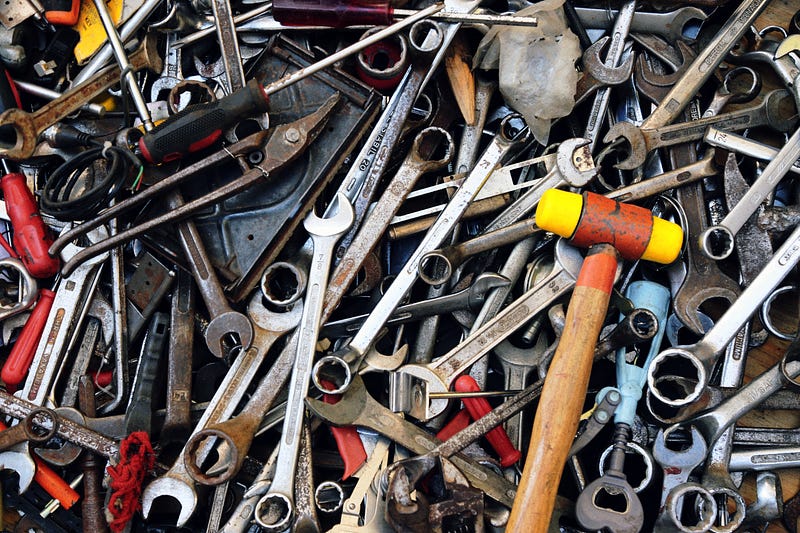
Thus, I devised a plan: I would cut it into small pieces and carry it out of my house — piece by piece —to throw it out. I called my dad and asked to borrow his hacksaw (I didn’t want to buy one that I would only use once); he happily came over with the saw and we made a day of it. By the time my husband came home that evening, the old sofa was gone and the futon was in its place.
I affectionately snapped a picture of my father while he stood outside on my patio, hacking into the sofa. I posted it on social media. I didn’t think much of it until I got a message from a confused friend: “Why is your dad cutting up that couch?”
I briefly explained my ingenious plan to remove the old sofa without having to carry it somewhere.
This friend’s response: “But… why didn’t you just hire a junk removal company?”
I was not aware that what I was doing would be perceived as odd. In my mind, I had found a way to get rid of an old piece of furniture without having to lug it somewhere to dump it. The idea of hiring a professional to haul it away did not even cross my mind.
In working-class environments, there tends to be a “do it yourself” attitude. The typical response for working-class people is to fix a problem on your own — going to a professional or buying a new one is often the last resort. It is what you do when you know you can’t fix it yourself.
Thus, in my view, I was doing something that I felt was natural and normal: I found a creative way to get rid of an item I didn’t need. Sure, I could have paid for it to be removed, but… why? All I needed was the right tools and a good work ethic. Boom. Problem solved.
Thank you for reading! If you would like to comment, refer to this post first.
If you would like my work to continue, please consider becoming a Medium member using this link. It would really help me out.
If you’d like to encourage me to write more with a $2 cup of coffee, click here.